
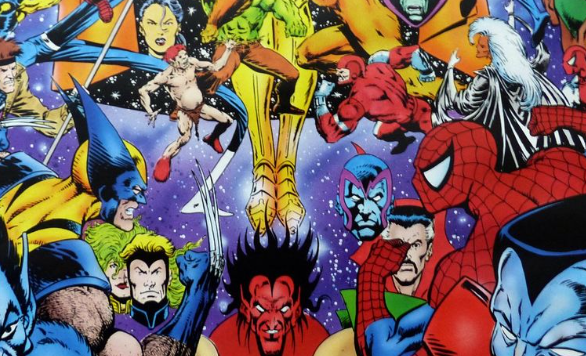
The cosmic tapestry of the Marvel Universe is often defined by its grand trilogies, but none explore the complex intersection of faith, power, and the human psyche quite like the final chapter of the original “Infinity” saga. While its predecessors focused on the lust for power and the darkness of the ego, this story takes a fascinating turn into the dangers of absolute “good.” It asks a chilling question: What happens when a being of pure light decides that the only way to save the universe is to purge it of its own soul?
This narrative masterwork remains a cornerstone for anyone looking to understand the deeper philosophical underpinnings of the Marvel Multiverse. It moves beyond the typical hero-versus-villain dynamic and delves into a civil war fueled by spiritual conviction. Whether you are a newcomer to the cosmic side of the house or a long-time fan of the “Infinity” lore, these ten points will illuminate the complexities of a crusade that nearly rewrote existence itself.
1. The Divine Emergence of The Goddess
To understand this conflict, one must look back at the moment Adam Warlock held the Infinity Gauntlet. In his quest to become a perfectly logical supreme being, Warlock purged himself of both his “evil” and “good” aspects. While the evil half manifested as the Magus, the “good” half became the entity known as the Goddess. She represents Warlock’s feminine side, appearing as a radiant, golden figure who speaks with the authority of a universal savior.
However, “good” in this context is not synonymous with “kind.” The Goddess possesses an unyielding, fanatical devotion to a peaceful universe, but her vision of peace requires the total elimination of free will and the destruction of anything she deems “sinful.” This nuanced portrayal of a “good” villain is a standout element of the story. She isn’t driven by malice or a desire for conquest; she is driven by a terrifyingly pure conviction that she alone knows what is best for the multiverse. Her emergence proves that in a balanced universe, pure light can be just as blinding and destructive as pure darkness.
2. The Architecture of the Cosmic Egg
While Thanos had the Gauntlet and the Magus had his shadows, the Goddess wields a weapon of unique construction: the Cosmic Egg. This artifact was forged from thirty “Cosmic Containment Units” (commonly known as Cosmic Cubes) gathered from across the multiverse. Each of these cubes is capable of warping reality on a local scale; combined into the Egg, they grant the Goddess the power to rewrite the laws of physics and morality across the entire cosmos.
The Cosmic Egg serves as the engine for the Goddess’s crusade. It is more than just a power source; it is a manifestation of her will. With it, she can create entire planets, shield herself from the combined might of Earth’s heroes, and project a “bliss” frequency that pacifies entire civilizations. The existence of the Egg highlights a recurring theme in these cosmic epics: that ultimate power is often gathered rather than found. It also serves as a brilliant narrative foil to the Infinity Gems, showing that there are other ways to achieve godhood within the Marvel structure, each with its own set of rules and costs.
3. Paradise Omega: The Sanctuary Beyond the Sun
The Goddess does not operate from a dark fortress or a hidden dimension. Instead, she uses her power to create a lush, utopian planet named Paradise Omega, situated on the exact opposite side of the sun from Earth. This world is a masterpiece of divine architecture, filled with towering spires, serene landscapes, and an atmosphere of perpetual tranquility. It serves as her base of operations and a gathering place for her chosen followers.
Paradise Omega is more than just a setting; it is a visual metaphor for the Goddess’s goals. It is a world without conflict, but also a world without diversity. Everything on the planet is synchronized to her heartbeat and her ideology. For the heroes brought there, it feels like a literal heaven—but for those looking on from the outside, it is a gilded cage. The “unreachable” nature of the planet (being hidden by the sun) adds a layer of tactical tension to the story, as the resistance must figure out how to assault a stronghold that is both physically and spiritually fortified.
4. The Great Schism: Faith vs. Science
One of the most innovative aspects of the storyline is how it divides the Marvel Universe. The Goddess doesn’t just kidnap people; she issues a spiritual call that only certain individuals can hear. She recruits heroes who possess deep religious faith, a strong sense of spirituality, or those who have had near-death experiences. This “Chosen” army includes heavy hitters like Captain America, Daredevil, Thor, and Silver Surfer.
On the other side of the conflict are the “Sinners”—the heroes who are left behind on Earth. This group is composed of the scientifically minded, the atheistic, or those whose pasts are deemed too “dark” for the Goddess’s paradise. Characters like Mr. Fantastic, Iron Man, Hulk, and Wolverine find themselves in the uncomfortable position of being the “unholy” resistance. This split creates a fascinating dynamic where friends are forced to fight friends not because of a misunderstanding, but because of a fundamental difference in how they perceive the nature of the soul and the universe. It is a rare moment where a comic event tackles the concept of “The Rapture” through a superhero lens.
5. The Brainwashed Crusade of the Faithful
While the heroes on Paradise Omega believe they are following their own convictions, the story makes it clear that the Goddess is subtly amplifying their faith into a form of fanatical brainwashing. Under the leadership of Moondragon, who becomes the Goddess’s most devoted lieutenant, the heroes become aggressive defenders of their new “mother.” They view their former allies on Earth not as friends, but as obstacles to universal peace.
This creates a tragic atmosphere. Seeing a character as morally upright as Captain America or as disciplined as Daredevil willing to kill their comrades in the name of a “higher power” is deeply unsettling. It explores the psychological vulnerability of even the strongest heroes. The Goddess doesn’t use brute force to command her army; she uses their own virtues against them. This “spiritual subversion” is what makes the crusade so dangerous—the heroes aren’t fighting a villain’s minions; they are fighting the best versions of themselves, twisted by a totalizing ideology.
6. Thanos and Warlock: The Unlikely Alliance
As the Goddess’s plan to “purify” the universe approaches its climax, two of the universe’s most complex figures are forced into a reluctant partnership: Adam Warlock and Thanos. This marks a significant evolution in their relationship. Thanos, having learned the hollow nature of godhood in previous encounters, acts as the cynical strategist, while Warlock must confront the fact that his own “good” side is threatening to destroy everything he values.
Their alliance is built on mutual necessity rather than trust. Thanos is perhaps the only being with an intellect vast enough to comprehend the Goddess’s tactical maneuvers, and Warlock is the only one with a spiritual connection to the villain. Their interactions are filled with dry wit and philosophical debate, as they navigate the fine line between saving the universe and appearing as villains themselves. This partnership highlights the central theme of the trilogy: that balance, rather than pure light or dark, is the only sustainable state for existence. It is often the “monsters” who must step up when the “saints” go too far.
7. Mephisto’s Devilish Bargain
In a story about a “Goddess,” it is only fitting that the Marvel Universe’s premier devil figure, Mephisto, makes a calculated appearance. Sensing the shift in cosmic power, Mephisto approaches Thanos and Warlock with an offer of information. He understands the nature of the Cosmic Egg better than anyone, but his help comes with a steep price: he demands one of the Goddess’s Cosmic Containment Units for his own use.
The inclusion of Mephisto adds a layer of “Faustian” tension to the narrative. The heroes (and Thanos) know that giving Mephisto a Cosmic Cube is an act of extreme recklessness, yet they have no other choice if they hope to breach the Goddess’s defenses. This subplot serves as a reminder that in the high-stakes game of cosmic politics, there are no clean hands. It also reinforces the idea that the Goddess is so dangerous that even the Devil himself is worried about her success, as a universe without “sin” would leave Mephisto with no realm to rule and no souls to harvest.
8. The Silver Surfer’s Solar Strike
The Silver Surfer plays a pivotal role as the “bridge” between the two factions. Initially one of the Goddess’s most powerful followers, the Surfer’s inherent nobility eventually allows him to see through her manipulations. His realization is a turning point in the war, but he doesn’t just switch sides; he becomes a tactical nuclear weapon for the resistance.
In a breathtaking display of power, the Surfer absorbs an immense amount of energy from a nearby sun, transforming himself into a living projectile of pure cosmic force. His mission is to bypass Paradise Omega’s nearly impenetrable defense systems to allow the Earth heroes to land. This sequence is a highlight of the “cosmic” genre, showcasing the Surfer’s immense power and his willingness to sacrifice himself for the truth. It also highlights the “scientific” heroes’ ingenuity, as Hulk and Drax the Destroyer must physically redirect the Surfer’s uncontrollable flight path to ensure he hits his target. It is a moment where raw power and precise calculation meet to turn the tide of the war.
9. The Illusion of Universal Destruction
The climax of the conflict is a masterclass in psychological warfare. As the Goddess finally triggers the Cosmic Egg to “purify” the universe, the heroes—and the readers—witness the total annihilation of all stars and planets. For a few terrifying pages, it appears that the Goddess has won, and the Marvel Universe has been erased to make way for a silent, “perfect” void.
However, it is revealed that this was all a massive, multi-dimensional illusion created by Adam Warlock. By using his connection to the Soul Gem and the Goddess herself, Warlock projected the experience of the universe’s end into her mind and the minds of her followers. This trick was essential because the Goddess’s power relied on the “collective will” of her believers. By showing them the horrifying reality of her plan (the destruction of all life), Warlock broke their faith and stripped the Goddess of her focus. This resolution is brilliant because it proves that a god-like entity cannot be defeated by a bigger punch; they must be defeated by the truth of their own flaws.
10. The Eternal Prison of the Soul Gem
The story concludes not with a physical death, but with a spiritual homecoming. After her concentration is broken and the Cosmic Egg is neutralized, the Goddess is drawn back into the Soul Gem, the very place she was “born” from when Warlock first purged her. There, she is reunited with the Magus, the evil half of Warlock’s soul. Both entities are now trapped in a state of limbo, unable to affect the physical world but forced to exist alongside one another.
This ending provides a perfect thematic symmetry. The “good” and “evil” extremes of Adam Warlock are once again contained within the center of his power, reinforcing the idea that these aspects are part of a whole that must be managed, not discarded. The aftermath leaves the heroes on Earth with a lingering sense of unease. They saved the world, but the “Crusade” left deep scars on their relationships and their faith. It serves as a definitive closing chapter for the trilogy, leaving the universe in a state of fragile, hard-won balance, and cementing Adam Warlock’s role as the reluctant shepherd of the cosmic soul.
Further Reading
- The Infinity Crusade (Original Trade Paperback) – Jim Starlin and Ron Lim.
- Warlock and the Infinity Watch Vol. 2 – Jim Starlin.
- Silver Surfer: Epic Collection: The Resurrection – Various Authors.
- Marvel Comics: The Untold Story – Sean Howe.
- 10 Things You Should Know About Kang the Conqueror – Marvel Comics
- 10 Things You Should Know About The Sentry – Marvel Comics
- 10 Things You Should Know About Ghost Rider – Marvel Comics
- 10 Essential Things to Know About The Mole Man – Marvel Comics Lore
- 10 Essential Things to Know About War Machine – Marvel Comics Lore
- 10 Things You Should Know About Doctor Doom (Victor von Doom) – Marvel Comics
- 10 Things You Should Know About Hercules – Marvel Comics
- 10 Things You Should Know About Valeria Richards – Marvel Comics
- 10 Things You Should Know About Franklin Richards – Marvel Comics
- 10 Things You Should Know About The Human Torch (Johnny Storm) – Marvel Comics



