
Beyond the Gore: 10 Bone-Chilling Facts About Hostel That Still Haunt Audiences
When the lights dimmed in theaters for the release of Hostel, audiences weren’t just treated to a standard slasher flick; they were thrust into a visceral, claustrophobic nightmare that redefined the boundaries of modern horror. Directed by Eli Roth and executive produced by Quentin Tarantino, the film didn’t just rely on jump scares. It tapped into a primal, xenophobic fear of the unknown—the terrifying idea that in a far-off land, your life could have a literal price tag.
The film follows three backpackers across Europe who find themselves lured to a Slovakian hostel that promises the party of a lifetime. Instead, they are sold to a shadowy organization known as the Elite Hunting Club, where wealthy clients pay to torture and murder kidnapped tourists. While the premise is enough to make any traveler double-check their door locks, the stories from behind the scenes are often just as unsettling as the footage on screen.
As a cornerstone of the “splatter” subgenre, this film remains a definitive piece of cinematic history for horror enthusiasts. Whether you are a seasoned “gore-hound” or a curious newcomer to the world of extreme cinema, these ten facts pull back the blood-soaked curtain to reveal the dark inspiration, production secrets, and cultural impact of this modern classic.
1. The Disturbing “Human Meat” Website That Started It All
The most terrifying aspect of the film isn’t the fictional Elite Hunting Club, but the real-world inspiration behind it. Director Eli Roth has shared in various interviews that the concept was born from a late-night conversation about the dark corners of the internet. He was shown a website based in Thailand where people could allegedly pay $10,000 to walk into a room and shoot a stranger in the head.
According to the site’s claims, the victims were people who were terminally ill or in extreme debt, and the money would go to support their families. While the veracity of the website remained a subject of intense debate, the mere existence of such a proposition—treating human life as a purchasable commodity for the sake of a thrill—chilled Roth to the core. He initially considered making a documentary about the site but realized that a narrative horror film would be an even more powerful medium to explore the depravity of the human soul when fueled by extreme wealth and boredom.
2. The “Tarantino Touch” That Saved the Script
While the film is undeniably Eli Roth’s vision, its journey to the big screen was heavily influenced by his friendship with Quentin Tarantino. After the success of Roth’s debut film, Cabin Fever, Tarantino became a mentor figure to the young director. When Roth presented the initial concept for a story about a “murder vacation,” Tarantino didn’t just give his approval; he pushed Roth to make it the most uncompromising, “hard-R” version of the story possible.
Tarantino’s name as an Executive Producer provided the film with a level of prestige and marketing power that most independent horror films never achieve. This partnership allowed Roth the creative freedom to lean into the more disturbing elements of the plot without being forced to tone them down for a mainstream audience. The “Presented by Quentin Tarantino” tagline became a seal of quality for viewers, signaling that they were about to witness something bold, stylistic, and unapologetically intense.
3. Shooting Inside an Actual Abandoned Mental Asylum
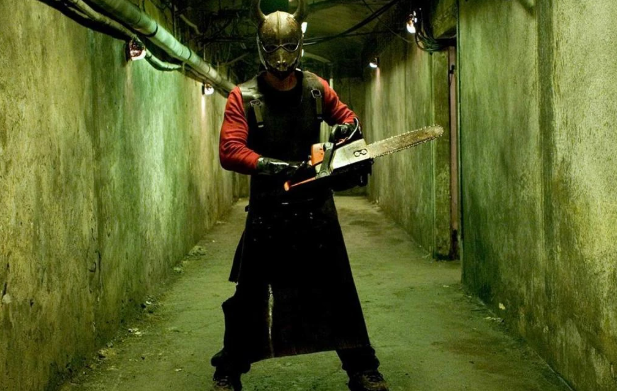
To capture the oppressive, decaying atmosphere of the torture dungeon, the production didn’t rely on a Hollywood soundstage. Instead, they filmed in a real-world setting that was already steeped in misery: the Bohnice Psychiatric Hospital in Prague. This massive complex, which dates back to the early 20th century, provided the perfect backdrop of cold stone, peeling paint, and industrial gloom.
The wing used for the filming had been closed for decades and was famously creepy, even for the crew. Staff and actors reported feeling an intense sense of dread while navigating the halls. To make the environment even more authentic (and terrifying), the art department used very few props that weren’t already consistent with the location’s history. The natural acoustics of the stone building meant that every scream echoed through the halls, creating an organic soundscape that no post-production editing could fully replicate. This choice of location added a layer of psychological weight to the performances, as the actors were physically immersed in a place designed for confinement.
4. The Economic Backlash from the Slovakian Government
While the film is set in Slovakia, its portrayal of the country as a lawless wasteland run by corrupt police and murderous children did not sit well with local officials. After the film gained international notoriety, representatives from the Slovakian government and tourism boards expressed outrage, fearing that the movie would destroy their tourism industry. They argued that the film depicted their nation as a dangerous, backward place, which could deter backpackers and travelers.
Eli Roth defended his creative choices by pointing out that Americans often make movies where horrific things happen in their own backyard (citing films like The Texas Chain Saw Massacre), and that the film was a commentary on American ignorance rather than Slovakian reality. Interestingly, the film was actually shot primarily in the Czech Republic, not Slovakia. Despite the controversy, the film ironically sparked a surge of “dark tourism,” with fans traveling to the region specifically to see the locations that inspired the movie’s gritty aesthetic.
5. Practical Effects Mastery by KNB EFX Group
In an era where many horror films were beginning to lean heavily on Computer Generated Imagery (CGI), Roth insisted on using practical effects to ensure the gore felt “wet” and “real.” To achieve this, he enlisted the legendary KNB EFX Group, led by Greg Nicotero. Nicotero is a titan in the industry, known for his work on iconic horror franchises and major television series.
The commitment to practical effects meant that the actors had to spend hours in the makeup chair, and the set was frequently covered in gallons of stage blood. One of the most infamous scenes involves a high-intensity eye injury; to film this, the team created a highly detailed prosthetic head that could withstand close-up shots. Because the effects were physical, the actors’ reactions were often more visceral. Seeing a mechanical limb or a blood-pumping prosthetic in person allowed the cast to tap into a more authentic sense of revulsion, which translates clearly to the audience through the screen.
6. The Icelandic “Giant” Was a First-Time Actor
One of the most memorable characters in the film is Oli, the jovial Icelandic traveler who accompanies the American protagonists. Oli was played by Eythor Gudjonsson, who was not a professional actor at the time. Roth met Gudjonsson while promoting a previous film in Iceland and was immediately struck by his massive physical presence and infectious personality.
Roth believed that casting a non-actor would add a layer of naturalism to the group’s chemistry. Gudjonsson’s performance provided much of the film’s early levity, making the eventual descent into horror even more jarring. His “Icelandic Giant” persona became a fan favorite, and his casting is a testament to Roth’s ability to find unique talent in unexpected places. The genuine camaraderie seen in the first half of the film was largely due to the real-life friendships formed between the cast members during their time in Prague.
7. The “Torture Porn” Label and Its Lasting Legacy
The film is often credited (or blamed) for the rise of a specific subgenre dubbed “torture porn” by critic David Edelstein. This term was used to describe a wave of horror films in the mid-2000s that focused on the prolonged, graphic suffering of characters rather than traditional supernatural threats or masked slashers. While the label was originally intended to be derogatory, it ended up defining an entire era of cinema.
Roth has often pushed back against the term, arguing that his film is a “socially conscious thriller” that reflects the anxieties of a post-9/11 world. He posited that the film captures the fear of being an American abroad during a time of global political tension. Regardless of the terminology, the film’s success paved the way for other franchises to push the envelope of what was permissible in mainstream cinema, forever changing the landscape of the horror genre and how we perceive cinematic violence.
8. The Chilling Use of Music and Contrast
One of the film’s most effective tools is its soundtrack, which juxtaposes upbeat, often beautiful music with scenes of extreme depravity. Roth utilized classical compositions and traditional European folk music to create a sense of culture and history, which stands in stark contrast to the modern-day brutality occurring within the hunting club.
This technique is most famously used during the scenes involving the “Dutch Businessman.” As he prepares for his gruesome tasks, the environment is treated with a clinical, almost artistic reverence. The music choice reinforces the idea that the villains of the film see themselves as sophisticated connoisseurs of a dark art, rather than simple monsters. This contrast makes the violence feel more calculated and cold-blooded, stripping away the “fun” of a typical horror movie and replacing it with a sense of genuine unease.
9. A Darker, Much More Depressing Original Ending
The theatrical version of the film ends with a moment of cinematic catharsis, as the protagonist, Paxton, manages to escape and enact a small measure of revenge. However, the original scripted ending was significantly bleaker and far less “triumphant.” In the initial version, Paxton finds the daughter of the man who tortured his friend and kidnaps her, implying a cycle of violence that never truly ends.
Test audiences found this ending to be too soul-crushing, even for a film as dark as this one. They wanted to see the protagonist “win,” or at least escape the nightmare. Roth eventually filmed the train station ending that made it into the final cut, which provided a more traditional sense of closure. Despite the change, the existence of the original ending serves as a reminder of just how nihilistic the director’s initial vision truly was.
10. The Mystery of the Bubblegum Children
One of the most unnerving elements of the film is the “Bubblegum Gang”—a group of local children who roam the streets of the town, demanding candy and money. If their demands aren’t met, they retaliate with lethal violence. These children act as a sort of street-level security force for the Elite Hunting Club, disposing of bodies and capturing runaway victims.
Roth included this element to play on the fear of total societal breakdown. In the world of the film, even the innocence of childhood has been corrupted by the promise of wealth. The children aren’t just background characters; they represent the complete moral decay of the environment. Their presence suggests that the entire town is “in on it,” creating a sense of total isolation for the protagonists. There is no one to call for help when even the children are part of the machine.
Further Reading
- Men, Women, and Chain Saws: Gender in the Modern Horror Film – Carol J. Clover
- The Dread of Difference: Gender and the Horror Film – Edited by Barry Keith Grant
- Shock Value: How a Few Eccentric Outsiders Gave Us Nightmares, Processed Society, and Invented Modern Horror – Jason Zinoman
- The Philosophy of Horror: Or, Paradoxes of the Heart – Noël Carroll
- 10 The Exorcist III (1990) Movie Facts You Didn’t Know
- 10 Scream (1996) Movie Facts That Changed Horror
- 10 Hostel (2005) Movie Facts That Shocked Viewers
- 10 Hellraiser (1987) Movie Facts That Built Its Legacy
- 10 Candyman (1992) Movie Facts That Still Give Chills
- 10 Essential Facts About The Texas Chainsaw Massacre (1974)
- 10 Essential Facts That Explain the World of The Walking Dead TV Show
- From – Season 1 Full Recap and Spoilers Explained
- 10 Things You Should Know About The Thing (1982) – Movie Facts and Hidden Details
- 10 Fascinating Supernatural Facts You Probably Missed – TV Show Lore



