
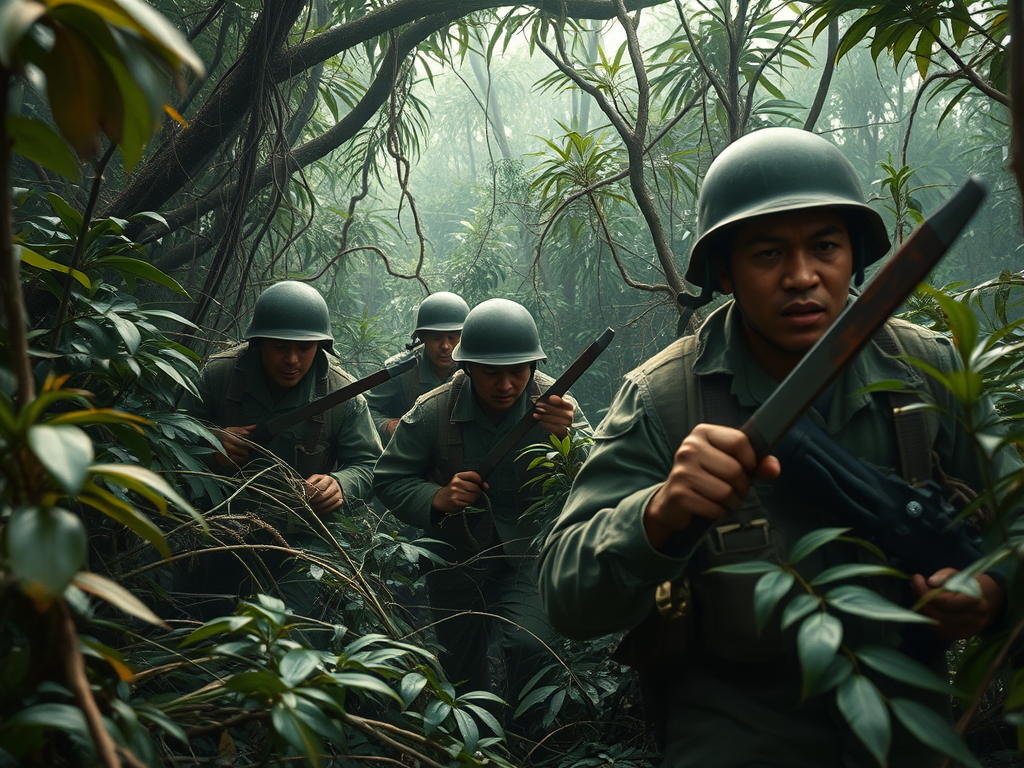
The Vietnam War was a conflict unlike many others the United States military had faced before. It wasn’t fought on clear battlefields or in easily understood landscapes. Instead, a major part of the fighting took place in the dense, hot, and often terrifying jungles of Vietnam.
Imagine a place where the trees are so thick they block out the sun, the air is heavy and wet like a steamy sauna, and the ground is a mix of slippery mud and hidden dangers. That was the reality for soldiers trying to navigate, fight, and survive in this challenging environment. The jungle itself became an enemy, full of unseen threats and making every step a potential risk.
This article will explore some of the most astonishing facts about what it was truly like to fight and survive in the Vietnam jungle, focusing on the incredible Vietnam War jungle challenges that soldiers faced every single day. From clever enemy tactics to the sheer difficulty of the environment, these points highlight the unique struggle of this historical conflict.
1. The Jungle Was a Character Itself: Battling the Vietnam War Terrain
Forget everything you might think a battlefield looks like. The Vietnam jungle was thick, tangled, and seemed to go on forever. It wasn’t just a backdrop; it was an active participant in the conflict, presenting enormous Vietnam War terrain challenges. Dense triple-canopy rainforests meant that sunlight barely reached the jungle floor, making everything dark and disorienting. Movement was incredibly slow, often requiring soldiers to hack their way through thick vines and undergrowth with machetes. This difficult terrain made it hard to see more than a few feet in any direction, perfect for ambushes by an enemy who knew the landscape intimately. Trying to carry heavy equipment, weapons, and supplies through this tangled mess was physically exhausting and mentally draining. Every hill was steeper, every valley deeper, and every patch of ground potentially hiding something dangerous. The sheer effort needed just to move around meant soldiers were often tired before they even encountered the enemy. It was a constant battle against the environment itself, a silent, unyielding force that favored those who understood its secrets.
2. The Sweat and the Rain: Unseen Environmental Vietnam War Challenges
Beyond the tangled plants, the weather in the Vietnam jungle added another layer of misery and danger. It was hot, incredibly hot, and humid year-round. The air hung thick and heavy, making it hard to breathe and causing soldiers to sweat constantly. This wasn’t just uncomfortable; it led to serious problems like heatstroke and dehydration. And then there was the rain. Vietnam has monsoon seasons, where it can rain heavily for hours or even days at a time. This turned the already difficult terrain into a muddy, slippery mess, making movement even harder and increasing the risk of injuries. Everything stayed wet – clothes, gear, food, and even weapons. Constant dampness led to trench foot, skin infections, and made simply staying dry and comfortable an impossible dream. The humidity also meant that wounds healed slowly and were prone to infection. Soldiers were perpetually damp, uncomfortable, and battling the effects of the relentless climate. These unseen environmental factors were just as much a Vietnam War challenge as the enemy soldiers.
3. The Masters of Disguise: The Threat of Guerrilla Warfare Vietnam War Style
The Viet Cong (VC) and North Vietnamese Army (NVA) didn’t fight like a traditional army. They were masters of guerrilla warfare Vietnam War tactics, which meant they avoided large, open battles and instead focused on ambushes, hit-and-run attacks, and using the jungle to their advantage. They blended into the local population and the environment, making it incredibly difficult for American and Allied forces to find and engage them. Imagine trying to fight an enemy you can rarely see, who knows the local area perfectly, and can seemingly disappear into the jungle at a moment’s notice. This constant uncertainty was a huge psychological strain. Soldiers never knew when or where an attack might come from. The enemy used the dense vegetation for cover, setting up ambushes along trails and in unexpected locations. Their understanding of the terrain and their ability to live off the land allowed them to stay hidden and choose the time and place of their engagements, making traditional military strategies less effective and increasing the danger for soldiers just trying to patrol or move through an area.
4. Stepping into Danger: The Pervasive Threat of Vietnam War Booby Traps
One of the most terrifying and constant threats in the Vietnam jungle was the widespread use of Vietnam War booby traps. The Viet Cong became incredibly skilled at creating simple yet devastating traps using readily available materials. These weren’t just random dangers; they were strategically placed along common trails, near water sources, and around potential enemy positions to injure, kill, and demoralize soldiers. Famous examples include Punji sticks – sharpened bamboo stakes hidden in pits, often smeared with Васkpack (feces) or other contaminants to cause infection. There were also tripwires connected to grenades, mines, or even venomous snakes. These traps were often camouflaged perfectly, making them almost impossible to spot until it was too late. The constant fear of stepping on or triggering a booby trap made every single step in the jungle a tense and frightening experience. It slowed down movement, required extreme caution, and added immense psychological pressure. The enemy didn’t need to be seen to inflict casualties; their hidden traps did the work for them, highlighting the unique and insidious nature of the fighting in Vietnam jungle.
5. The War Underground: Exploring the Dangers of Viet Cong Tunnels
Beneath the dense jungle floor lay another hidden world: the extensive network of Viet Cong tunnels. These weren’t just small hideouts; in some areas, the VC dug vast, complex underground systems that stretched for miles. These tunnels served as living quarters, storage areas for weapons and supplies, hospitals, command centers, and even allowed the Viet Cong to move troops and launch surprise attacks from seemingly impossible locations. For soldiers on the surface, finding and clearing these tunnels was an incredibly dangerous task. Special units, known as “tunnel rats,” were formed to go down into the dark, narrow passages to search for enemy fighters, intelligence, and supplies. These tunnels were often tiny, claustrophobic, and filled with their own dangers, including booby traps, venomous creatures, and enemy soldiers waiting in ambush. Navigating the pitch black, sometimes flooded, and often deliberately confusing layouts of the Viet Cong tunnels required immense bravery and skill. It was a terrifying subterranean war that was a critical part of the overall Vietnam War jungle challenges.
6. Insects, Leeches, and Snakes, Oh My!: The Constant Battle Against Nature’s Hazards
The human enemy wasn’t the only threat in the Vietnam jungle. Nature itself presented a constant barrage of hazards. The jungle was teeming with insects, many of which carried diseases (more on that later). Mosquitoes were everywhere, bringing the risk of malaria. Swarms of biting insects made life miserable. Leeches were another constant problem, attaching themselves to soldiers as they waded through water or humid vegetation. Venomous snakes and spiders were also present, their bites potentially deadly in a remote jungle environment far from medical help. Even seemingly harmless plants could cause severe skin irritation. Soldiers had to be constantly vigilant, not just for enemy fighters and booby traps, but for the natural world around them. These small, often overlooked threats added to the overall difficulty and discomfort of fighting in Vietnam jungle, making even resting a challenge. The environment was beautiful in its own way, but it was also unforgiving and full of tiny dangers.
7. The Invisible Enemy Within: Dealing with Vietnam War Diseases
The hot, humid jungle environment was a breeding ground for diseases, making Vietnam War diseases a significant non-combat threat to soldiers’ health. Malaria was a major concern, caused by mosquito bites and leading to recurring fevers, chills, and weakness that could incapacitate soldiers. Dengue fever, dysentery, and various fungal infections were also common due to the poor sanitation and constant exposure to moisture. Skin problems, from jungle rot to infected cuts and insect bites, were rampant and difficult to treat effectively in the field. These illnesses didn’t just cause suffering; they reduced the fighting strength of units and required soldiers to be evacuated, taking them away from their comrades. Even relatively minor ailments could become serious in the challenging jungle conditions. The medical challenges posed by the environment were a constant worry for soldiers and medical personnel alike, highlighting that survival wasn’t just about avoiding bullets and booby traps, but also about fighting off the invisible enemy of disease.
8. Staying Supplied: The Difficulties of Logistics in the Jungle
Getting food, water, ammunition, and medical supplies to soldiers deep in the Vietnam jungle was a monumental logistical challenge. The dense terrain and lack of roads meant that traditional supply lines were often impossible. Helicopters became crucial for transporting supplies and personnel, but they were vulnerable to enemy fire. Moving supplies on foot was slow, exhausting, and dangerous, constantly exposed to ambushes and booby traps. Rivers and waterways were also used, but they too presented risks. The difficulty in reliably resupplying troops meant that soldiers often had to ration their food and water, and getting timely medical aid for the wounded was a constant struggle. The jungle environment actively hindered the ability of the military to support its soldiers, making planning and execution of operations significantly more complex and adding another layer to the Vietnam War jungle challenges. Ensuring soldiers had what they needed to survive and fight was a continuous battle against distance, terrain, and the enemy.
9. The Psychological Toll: Constant Fear and the Unseen Enemy
Beyond the physical dangers, fighting in Vietnam jungle took a heavy psychological toll. The constant threat of the unseen enemy, the fear of booby traps with every step, the disorienting nature of the terrain, and the relentless discomfort of the environment created a pervasive sense of anxiety and stress. Soldiers rarely had a moment of true peace or safety. The enemy could be anywhere, and the jungle provided perfect cover for them. This led to hyper-vigilance, making it hard to relax or get proper rest. The isolation of being deep in the jungle, combined with the intense stress of combat and the difficulty of the environment, contributed to significant psychological strain on soldiers. It wasn’t just about surviving the physical battle; it was about enduring the constant mental pressure of an unpredictable and dangerous environment and an enemy who used it to their maximum advantage.
10. Adapting to Survive: The Skills Learned for Vietnam War Survival
Despite the immense challenges, soldiers in the Vietnam jungle developed incredible skills for Vietnam War survival. They learned to recognize subtle signs of booby traps and enemy presence. They became adept at moving quietly and using the limited cover the jungle provided. They developed methods for navigating the difficult terrain and finding resources. Adapting to the enemy’s guerrilla tactics required new strategies, emphasizing small unit patrols, ambushes, and utilizing technology like helicopters and improved medical care to counter the environmental disadvantages. Soldiers relied heavily on each other, forming strong bonds of camaraderie to face the overwhelming challenges together. The harsh realities of the jungle forced rapid learning and adaptation, teaching valuable lessons in perseverance, vigilance, and relying on one’s training and fellow soldiers to make it through each day in one of the most demanding combat environments imaginable.
Further Reading
For those interested in learning more about the experiences of fighting and surviving in the Vietnam jungle, these books offer further insights:
- Matterhorn by Karl Marlantes
- The Things They Carried by Tim O’Brien
- Chickenhawk by Robert Mason
- Fields of Fire by James Webb
Here at Zentara.blog, our mission is to take those tricky subjects and unlock them, making knowledge exciting and easy to grasp for everyone. But the adventure doesn’t stop on this page! We’re constantly exploring new frontiers and sharing discoveries across the digital universe.
Want to dive deeper into more mind-bending Top 10s and keep expanding your world? Come join us on our other platforms – we’ve got unique experiences waiting for you on each one!
- Get inspired by visual wonders and bite-sized facts: See the world through Zentara’s eyes on Pinterest! Pin our fascinating facts and stunning visuals to your own boards. Explore Pins on Pinterest: https://uk.pinterest.com/zentarablog/
- Discover quick insights and behind-the-scenes peeks: Hop over to Tumblr for snippets, quotes, and unique content you won’t find anywhere else. It’s a different flavour of discovery! Follow the Fun on Tumblr: https://www.tumblr.com/zentarablog
- Ready for deep dives you can listen to or watch? We’re bringing our accessible approach to video and potentially audio! Subscribe to our YouTube channel and tune into future projects that make learning pop! Subscribe on YouTube: https://www.youtube.com/@ZentaraUK
- Seeking even more knowledge in one place? We’ve compiled some of our most popular topic deep dives into fantastic ebooks! Find them on Amazon and keep the learning journey going anytime, anywhere. Find Our Ebooks on Amazon: https://www.amazon.co.uk/s?k=zentara+uk&crid=2273NA7RAJ1EU&sprefix=zentara+uk%2Caps%2C90&ref=nb_sb_noss
- Connect with us and fellow knowledge seekers: Join the conversation on BlueSky! We’re sharing updates, thoughts, and maybe even asking you what wonders we should explore next. Chat with Us on BlueSky: https://bsky.app/profile/zentarablog.bsky.social
- Perfect for learning on the move! We post multiple 10-minute podcasts per day on Spotify. Pop on your headphones and fill your day with fascinating facts while you’re out and about! Listen on Spotify: https://open.spotify.com/show/3dmHbKeDufRx95xPYIqKhJ
Every click helps us keep bringing honest, accessible knowledge to everyone. Thanks for exploring with us today – see you out there in the world of discovery!




Leave a Reply