
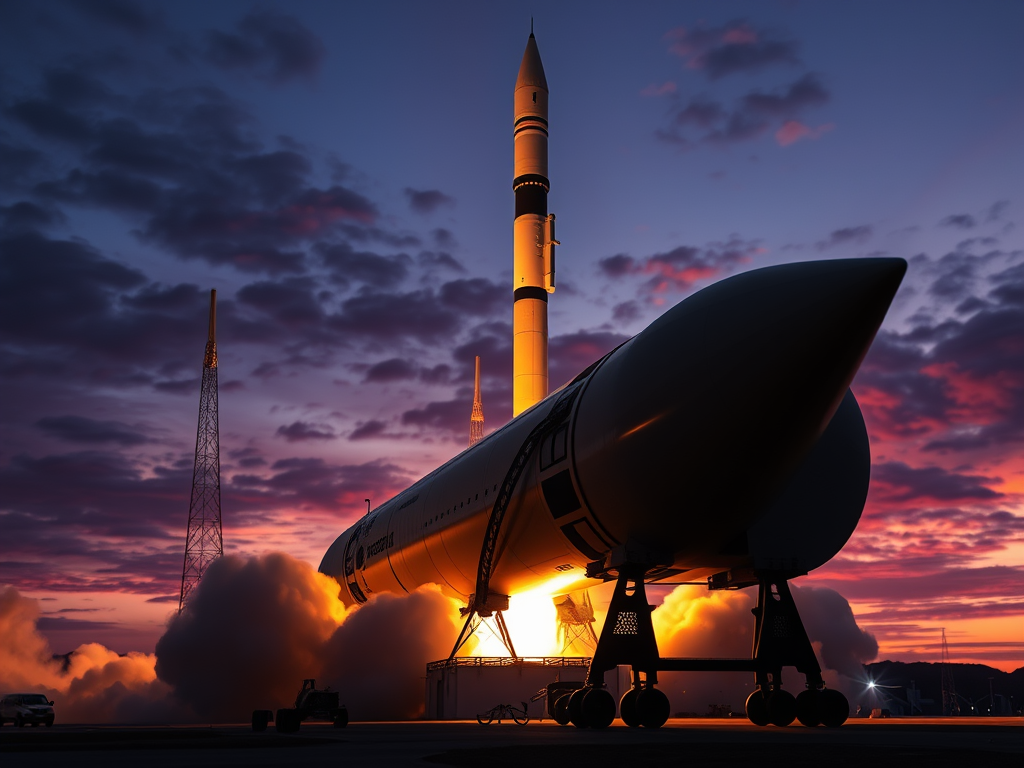
Imagine a time when the world was at war, and brilliant minds were focused on creating machines to win battles. While World War 2 was a terrible conflict, the intense need for new and better weapons led to incredible scientific and technological breakthroughs. Some of these inventions, designed for destruction, actually laid the groundwork for many of the amazing technologies we use today, even sending humans to the Moon!
One of the most famous examples is the V2 rocket, a fearsome weapon developed by Nazi Germany. It was a missile designed to hit targets far away, but its powerful engine and design were groundbreaking. After the war, the scientists who created the V2 were brought to new countries, and their knowledge helped kickstart the space race and lead to organizations like NASA. This article will explore ten fascinating ways World War 2 technology, born out of conflict, unexpectedly shaped our future.
1. The V2 Rocket: The Grandfather of Space Travel
The V2 rocket was a terrifying weapon used by Nazi Germany in the final years of World War 2. It was the world’s first long-range ballistic missile, meaning it flew high into the atmosphere and then fell back down to hit its target, travelling faster than the speed of sound. This made it almost impossible to stop. But beyond its destructive purpose, the V2 was a marvel of engineering. It was powered by a liquid-fuel engine, and its guidance system, though simple, was a huge step forward for rocket technology.
The V2 was designed by a team of German scientists, including Wernher von Braun, who had dreamed of space travel since he was a boy. They learned how to build powerful rocket engines, control a rocket’s flight, and make it go very fast and high. These were exactly the challenges that would later need to be solved to send rockets into space. So, while the V2 brought destruction, its very design and the science behind it were the first big steps on the path to exploring the stars.
2. Operation Paperclip: Bringing Rocket Scientists to America
After World War 2 ended, the Allied powers, especially the United States and the Soviet Union, were very interested in Germany’s advanced rocket technology and the scientists who created it. They knew that rocket science would be important for future defence and exploration. The United States launched a top-secret program called Operation Paperclip. The goal of this operation was to bring German scientists, including Wernher von Braun and his team, to America.
This decision was very controversial because these scientists had worked for the Nazi regime. However, the U.S. government believed their knowledge was vital for America’s future security and scientific progress. Under Operation Paperclip, von Braun and his team were relocated to the United States, where they continued their rocket research, but this time for the American military and, later, for the peaceful exploration of space. It was a difficult choice, but it directly connected the wartime V2 program to the future of American rocketry.
3. Wernher von Braun and NASA: From Missiles to Moon Rockets
Wernher von Braun, the lead designer of the V2 rocket, became a central figure in America’s space program. After working for the U.S. Army on ballistic missiles, he joined NASA when it was created in 1958. His dream was always to send humans to space, and he finally got his chance. At NASA, he led the team that designed and built the mighty Saturn V rocket.
The Saturn V was the biggest and most powerful rocket ever built, standing taller than the Statue of Liberty! It was the rocket that launched the Apollo missions, carrying astronauts to the Moon, including Neil Armstrong and Buzz Aldrin on Apollo 11. Without the foundational knowledge and the brilliant engineering insights gained from the V2 program and the work of von Braun’s team, America’s journey to the Moon would have been much harder, if not impossible. It’s a powerful example of how wartime developments can lead to peacetime achievements.
4. The Birth of Computers: Codebreaking and Calculation
World War 2 wasn’t just fought with bombs and bullets; it was also a war of intelligence and codes. The need to break enemy codes, like Germany’s Enigma code, led to the rapid development of early computers. At Bletchley Park in Britain, brilliant minds like Alan Turing created machines such as the “Bombe” and later, the Colossus – the world’s first electronic digital programmable computer.
These early computers weren’t like the sleek devices we have today; they were enormous machines filling entire rooms. But they were revolutionary. They showed that machines could perform complex calculations and process information incredibly fast. This wartime need for quick calculations and codebreaking laid the essential groundwork for all modern computers, from your smartphone to supercomputers that help design new medicines. Without the urgent demands of WW2, computer technology might have developed much more slowly.
5. Radar Technology: Seeing in the Dark and Guiding Flights
Radar (Radio Detection and Ranging) was a vital technology during World War 2. It allowed Allied forces to detect enemy aircraft and ships even in the dark or through fog, giving them precious warning time. Britain developed radar systems that played a huge role in winning the Battle of Britain, allowing their fighter planes to intercept German bombers.
After the war, radar didn’t disappear. Its principles were adapted for many peaceful uses. Today, radar is essential for air traffic control, helping planes land safely in bad weather. It’s used in weather forecasting to track storms, in police speed guns, and even in some self-driving cars. The technology that helped defend skies during the war now helps us navigate the skies and understand our environment every day.
6. Jet Engines: From Fighter Planes to Commercial Flights
Before World War 2, most airplanes were powered by propellers. But during the war, both Germany and Britain developed the first jet engines. These engines worked by expelling a powerful jet of hot gas, allowing planes to fly much faster than propeller planes. Early jet fighters, like Germany’s Me 262, were incredibly fast for their time.
Although jet aircraft didn’t greatly influence the outcome of World War 2 due to limited production, they completely transformed aviation afterward. The technology was quickly improved upon, leading to the development of commercial jet airliners that made long-distance travel much faster and more accessible for everyone. Today, nearly all large passenger and military aircraft are powered by jet engines, a direct legacy of wartime innovation.
7. Nuclear Power: A New Source of Energy (and a New Threat)
One of the most profound scientific developments born out of World War 2 was the harnessing of nuclear power. The Manhattan Project, a top-secret effort by the United States with support from Britain and Canada, developed the atomic bomb. This weapon, used to end the war in Japan, showed the incredible, destructive power hidden within the atom.
However, scientists quickly realized that the same fundamental principles could be used for peaceful purposes to generate electricity. After the war, the research into nuclear fission led to the development of nuclear power plants, which provide a significant portion of the world’s electricity today. While the atomic bomb’s legacy is one of fear, the underlying science opened up a powerful new energy source that continues to shape our world.
8. Penicillin and Medicine: Saving Lives on and Off the Battlefield
Before World War 2, infections were a leading cause of death, both for soldiers and civilians. Even a small cut could become deadly. While penicillin, the first true antibiotic, was discovered before the war by Alexander Fleming, it was during WW2 that scientists perfected how to mass-produce it. The urgent need to treat wounded soldiers spurred incredible efforts to develop and distribute this “miracle drug.”
The widespread use of penicillin on the battlefield saved countless lives by preventing infections from wounds. This success revolutionized medicine forever. After the war, antibiotics became widely available to everyone, transforming how doctors treated bacterial infections and dramatically increasing life expectancy. So, the war, in its desperate need to keep soldiers alive, paved the way for modern medicine that continues to save lives every day.
9. Synthetic Materials: From Parachutes to Plastics
World War 2 created massive demand for materials, and when natural resources became scarce, scientists raced to create synthetic (man-made) alternatives. This led to the rapid development of new materials like synthetic rubber, nylon, and various plastics. Nylon, originally developed before the war for things like toothbrushes and stockings, became vital for parachutes and ropes during the conflict.
These wartime innovations in material science had a huge impact on post-war consumer products. Synthetic rubber became crucial for tires, nylon revolutionized clothing and many other industries, and the new plastics led to countless everyday items we use today, from toys to car parts to packaging. The scarcity and demands of war pushed scientists to invent materials that are now fundamental to our modern world.
10. The Legacy of Innovation: Continuous Progress
The intense pressure of World War 2 forced engineers and scientists to innovate at an unprecedented pace. The military’s demand for cutting-edge technology meant that research and development were incredibly well-funded, leading to breakthroughs that might have taken decades in peacetime. From the V2 rocket’s propulsion systems influencing space travel to radar’s ability to guide aircraft, the war acted as a massive catalyst for technological advancement.
Many of the everyday items and advanced systems we rely on today—from microwave ovens (developed from radar research) to duct tape (invented for wartime repairs)—have their roots in this era. The war proved that with enough resources and focus, incredible scientific and engineering challenges could be overcome. This legacy of rapid innovation and problem-solving continues to inspire technological progress, reminding us how historical moments, even dark ones, can unexpectedly shape our future.
Further Reading
- “Blast Off! Rockets, Robots, and other Tech to Send You into Space” by Andrea Davis Pinkney (Focuses on space technology for kids)
- “Who Was Wernher von Braun?” by Sarah Fabiny
- “World War II: The Inventions” by Michael Burgan (Explores various wartime inventions)
- “The Story of the Internet: The Story of Our Lives” by James M. Russell (Connects wartime computing to modern tech)
- “The Amazing Story of Medicines” by Richard Platt (Discusses penicillin and other medical advancements)
Here at Zentara.blog, our mission is to take those tricky subjects and unlock them, making knowledge exciting and easy to grasp for everyone. But the adventure doesn’t stop on this page! We’re constantly exploring new frontiers and sharing discoveries across the digital universe.
Want to dive deeper into more mind-bending Top 10s and keep expanding your world? Come join us on our other platforms – we’ve got unique experiences waiting for you on each one!
- Get inspired by visual wonders and bite-sized facts: See the world through Zentara’s eyes on Pinterest! Pin our fascinating facts and stunning visuals to your own boards. Explore Pins on Pinterest: https://uk.pinterest.com/zentarablog/
- Discover quick insights and behind-the-scenes peeks: Hop over to Tumblr for snippets, quotes, and unique content you won’t find anywhere else. It’s a different flavour of discovery! Follow the Fun on Tumblr: https://www.tumblr.com/zentarablog
- Ready for deep dives you can listen to or watch? We’re bringing our accessible approach to video and potentially audio! Subscribe to our YouTube channel and tune into future projects that make learning pop! Subscribe on YouTube: https://www.youtube.com/@ZentaraUK
- Seeking even more knowledge in one place? We’ve compiled some of our most popular topic deep dives into fantastic ebooks! Find them on Amazon and keep the learning journey going anytime, anywhere. Find Our Ebooks on Amazon: https://www.amazon.co.uk/s?k=Zentara+UK&ref=nb_sb_noss
- Connect with us and fellow knowledge seekers: Join the conversation on BlueSky! We’re sharing updates, thoughts, and maybe even asking you what wonders we should explore next. Chat with Us on BlueSky: https://bsky.app/profile/zentarablog.bsky.social
- Perfect for learning on the move! We post multiple 10-minute podcasts per day on Spotify. Pop on your headphones and fill your day with fascinating facts while you’re out and about! Listen on Spotify: https://open.spotify.com/show/3dmHbKeDufRx95xPYIqKhJ
Every click helps us keep bringing honest, accessible knowledge to everyone. Thanks for exploring with us today – see you out there in the world of discovery!




Leave a Reply