
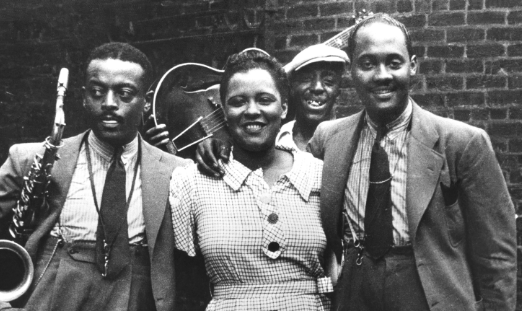
In the aftermath of the First World War, a profound transformation began to take place in the United States. Hundreds of thousands of African Americans, seeking to escape the brutal oppression of the Jim Crow South, migrated to northern cities in a movement that would become known as the Great Migration. One of their primary destinations was a neighbourhood in upper Manhattan: Harlem. Here, in this vibrant, bustling enclave, a cultural, social, and artistic explosion occurred. The Harlem Renaissance, also known as the “New Negro Movement,” was more than just a flowering of the arts; it was a conscious act of self-definition. It was a time when Black artists, writers, musicians, and thinkers collectively rejected the degrading stereotypes of the past and forged a new identity grounded in pride, intellect, and artistic brilliance. This “golden age” of African American culture created a legacy that would resonate for generations, laying the groundwork for the Civil Rights Movement and forever changing the landscape of American art and thought.
At the heart of this movement were the trailblazers—the men and women whose vision, talent, and courage defined an era. Here are the top 10 most influential figures of the Harlem Renaissance.
1. Langston Hughes: The Poet Laureate of the People
If the Harlem Renaissance had a single, defining voice, it belonged to Langston Hughes. More than any other writer, Hughes captured the rhythm, soul, and language of everyday Black America. He rejected the notion that Black poetry needed to imitate classical European forms, and instead drew his inspiration from the vibrant sounds of his community. His verses were infused with the syncopated beats of jazz and the mournful cadences of the blues, creating a style that was utterly new and deeply authentic. In poems like “The Weary Blues,” he gave voice to the musician on the bandstand, while in “Harlem (A Dream Deferred),” he powerfully articulated the simmering frustration of a people denied their aspirations. Hughes didn’t just write about the “New Negro”; he wrote about the janitor, the cook, the laundry worker, and the dancer, celebrating their beauty, resilience, and humanity with a clarity and warmth that made him the true poet laureate of his people.
2. W.E.B. Du Bois: The Intellectual Architect
While the younger generation of artists created the Renaissance’s signature works, it was the towering intellectual W.E.B. Du Bois who laid its philosophical foundation. A sociologist, historian, and co-founder of the NAACP, Du Bois had long championed the idea of the “Talented Tenth”—a belief that an elite class of Black intellectuals and artists had a duty to lead the race forward. As the editor of The Crisis, the official magazine of the NAACP, he created the single most important platform for the movement. The Crisis published the early works of nearly every major Harlem Renaissance writer, from Langston Hughes to Countee Cullen, giving them a national audience and a stamp of intellectual legitimacy. His concept of “double-consciousness”—the internal conflict of being both Black and American—was a central theme that many Renaissance artists explored in their work, making Du Bois the movement’s intellectual godfather.
3. Zora Neale Hurston: The Keeper of Southern Folklore
In an era when many Black leaders were focused on presenting a “respectable,” urban image of the race, Zora Neale Hurston looked to the rural South. A brilliant novelist and trained anthropologist, Hurston dedicated herself to preserving and celebrating the rich dialect, folklore, and cultural traditions of African Americans in places like her native Florida. She saw profound beauty and wisdom in the stories and speech patterns that some of her contemporaries considered unrefined. Her masterpiece, the 1937 novel Their Eyes Were Watching God, is a lyrical and powerful celebration of a Black woman’s journey to independence, written in a rich, poetic dialect that was revolutionary for its time. While her fierce individualism and refusal to write “propaganda” sometimes put her at odds with the movement’s male leadership, Hurston’s work has endured as one of its most authentic and artistically triumphant achievements.
4. Duke Ellington: The Composer and Conductor of the Era
The sound of the Harlem Renaissance was jazz, and the man who elevated that sound to a new level of artistry was Duke Ellington. As the bandleader and composer for the orchestra at the legendary Cotton Club, Ellington was at the epicentre of Harlem’s nightlife. But he was far more than a simple dance-band leader. Ellington was a masterful composer who saw jazz as a serious art form, a unique American music. He created complex, sophisticated compositions that blended the raw energy of the blues with intricate harmonies and orchestration, creating what became known as the “Ellington effect.” His music was the soundtrack of the era, capturing its elegance, its dynamism, and its soul. He gave the “New Negro” a new sound, one that was unmistakably Black, undeniably American, and universally brilliant.
5. Marcus Garvey: The Prophet of Black Pride
No figure ignited the spirit of Black pride and mass mobilization during the Harlem Renaissance quite like Marcus Garvey. While his political vision was often separate from the artistic mainstream, his influence was pervasive. As the founder of the Universal Negro Improvement Association (UNIA), Garvey led the largest mass movement of African Americans in history, promoting a philosophy of Black nationalism, economic self-sufficiency, and Pan-Africanism. His message of “Africa for the Africans” and his celebration of Black history and beauty instilled a powerful sense of racial pride in millions of followers. The magnificent UNIA parades through the streets of Harlem, with their uniformed members and vibrant pageantry, were a visible and powerful declaration of Black dignity. This undercurrent of Garveyite pride was a crucial part of the cultural soil from which the artistic achievements of the Renaissance grew.
6. Alain Locke: The Philosopher Who Defined the Movement
If Langston Hughes was the voice of the Harlem Renaissance, then Alain Locke was its chief theorist and promoter. A Harvard-educated philosopher and the first African American Rhodes Scholar, Locke was the intellectual who gave the movement its name and its mission statement. In 1925, he edited a special issue of Survey Graphic magazine that was dedicated to the explosion of talent in Harlem. Later that year, he expanded it into a seminal anthology titled The New Negro. This book became the definitive text of the movement, a manifesto that collected the poetry, fiction, and essays of its leading figures and declared the arrival of a new, assertive, and self-aware Black identity. Locke argued that through art, African Americans could reshape their image and challenge the racist caricatures that had long defined them, effectively making him the movement’s key architect and curator.
7. Aaron Douglas: The Painter of the “New Negro”
Aaron Douglas created the visual language of the Harlem Renaissance. His distinctive style—a powerful fusion of traditional African art (masks, sculpture), geometric cubism, and the sleek dynamism of Art Deco—became the signature look of the era. His illustrations graced the covers and pages of The Crisis and Opportunity, the leading Black journals of the day, giving a visual identity to the “New Negro.” Douglas’s most famous works are his large-scale murals, such as the epic Aspects of Negro Life series. In these paintings, he used silhouetted figures and radiating bands of colour to create powerful, symbolic narratives of the African American journey from slavery to freedom, and from the rural South to the modern, industrial North. His art was a visual celebration of Black history and a hopeful vision for a new future.
8. Claude McKay: The Militant Voice of Defiance
Born in Jamaica, Claude McKay brought a fiery, international, and politically radical perspective to the Harlem Renaissance. He was one of its earliest and most powerful poetic voices, and his work was defined by its unapologetic anger at racial injustice. His most famous poem, the sonnet “If We Must Die,” was written in response to the bloody race riots of 1919’s “Red Summer.” It is a powerful, universal call to resist oppression with courage and dignity, even in the face of death. The poem’s defiant tone electrified a generation of Black Americans and became an anthem of resistance. McKay’s novels, such as Home to Harlem, also broke new ground with their candid and unsentimental portrayals of Black working-class life, cementing his legacy as a writer who refused to compromise or soften his message.
9. Bessie Smith: The Empress of the Blues
While the literary and artistic elites gathered in Harlem’s salons, the raw, emotional soundtrack for millions of ordinary Black Americans was the blues, and its undisputed queen was Bessie Smith. Though not a permanent resident of Harlem, the “Empress of the Blues” was the highest-paid Black entertainer of her day, and her records were essential listening during the Renaissance. Her powerful, commanding voice and lyrics that spoke of poverty, love, betrayal, and resilience articulated the profound pain and deep strength of the Black experience. In an era that was striving for a new image, Bessie Smith represented a connection to the folk roots of Black culture. She was a symbol of a new kind of Black woman—bold, independent, and sexually liberated—and her music was a foundational element of the artistic spirit that fueled the era.
10. James Weldon Johnson: The Elder Statesman and Mentor
James Weldon Johnson was the ultimate renaissance man of the Harlem Renaissance. A novelist, poet, lawyer, diplomat, and a key leader in the NAACP, he served as the crucial bridge between the older generation of Black intellectuals and the new wave of young artists. He was a respected elder statesman who used his influence to nurture and promote emerging talent. In 1922, he published The Book of American Negro Poetry, a groundbreaking anthology that was one of the first to collect and celebrate the work of Black poets for a mainstream audience. His own novel, The Autobiography of an Ex-Colored Man (published anonymously in 1912 but reissued under his name in 1927), became a key text for its exploration of racial identity. Through his tireless work as a writer, editor, and organizer, Johnson helped build the institutional framework that allowed the Harlem Renaissance to flourish.
Further Reading
For those who wish to dive deeper into this transformative period in American history, these books offer rich and accessible explorations of the era’s art, culture, and key figures:
- The New Negro: The Life of Alain Locke by Jeffrey C. Stewart – A Pulitzer Prize-winning biography that is not only a portrait of Locke but also a sweeping intellectual history of the entire Harlem Renaissance.
- When Harlem Was in Vogue by David Levering Lewis – Considered the definitive history of the period, this Pulitzer Prize-winner vividly captures the excitement, personalities, and cultural ferment of 1920s Harlem.
- Harlem Renaissance: Art of Black America by Mary Schmidt Campbell, David C. Driskell, et al. – A beautifully illustrated book that provides an excellent overview of the visual arts of the movement, focusing on key artists like Aaron Douglas, Palmer Hayden, and Meta Vaux Warrick Fuller.
Here at Zentara.blog, our mission is to take those tricky subjects and unlock them, making knowledge exciting and easy to grasp for everyone. But the adventure doesn’t stop on this page! We’re constantly exploring new frontiers and sharing discoveries across the digital universe. Want to dive deeper into more mind-bending Top 10s and keep expanding your world? Come join us on our other platforms – we’ve got unique experiences waiting for you on each one!
Get inspired by visual wonders and bite-sized facts: See the world through Zentara’s eyes on Pinterest!
Pin our fascinating facts and stunning visuals to your own boards. Explore Pins on Pinterest: https://uk.pinterest.com/zentarablog/
Discover quick insights and behind-the-scenes peeks: Hop over to Tumblr for snippets, quotes, and unique content you won’t find anywhere else. It’s a different flavour of discovery! Follow the Fun on Tumblr: https://www.tumblr.com/zentarablog
Ready for deep dives you can listen to or watch? We’re bringing our accessible approach to video and potentially audio! Subscribe to our YouTube channel and tune into future projects that make learning pop! Subscribe on YouTube: https://www.youtube.com/@ZentaraUK
Seeking even more knowledge in one place? We’ve compiled some of our most popular topic deep dives into fantastic ebooks! Find them on Amazon and keep the learning journey going anytime, anywhere. Find Our Ebooks on Amazon: https://www.amazon.co.uk/s?k=Zentara+UK&ref=nb_sb_noss
Connect with us and fellow knowledge seekers: Join the conversation on BlueSky! We’re sharing updates, thoughts, and maybe even asking you what wonders we should explore next. Chat with Us on BlueSky: https://bsky.app/profile/zentarablog.bsky.social
Perfect for learning on the move! We post multiple 10-minute podcasts per day on Spotify. Pop on your headphones and fill your day with fascinating facts while you’re out and about! Listen on Spotify: https://open.spotify.com/show/3dmHbKeDufRx95xPYIqKhJFollow us on Instagram for bytesize knowledge! We post multiple posts per day on our official Instagram account. https://www.instagram.com/zentarablog/ Every click helps us keep bringing honest, accessible knowledge to everyone. Thanks for exploring with us today – see you out there in the world of discovery!




Leave a Reply