
Table of Contents
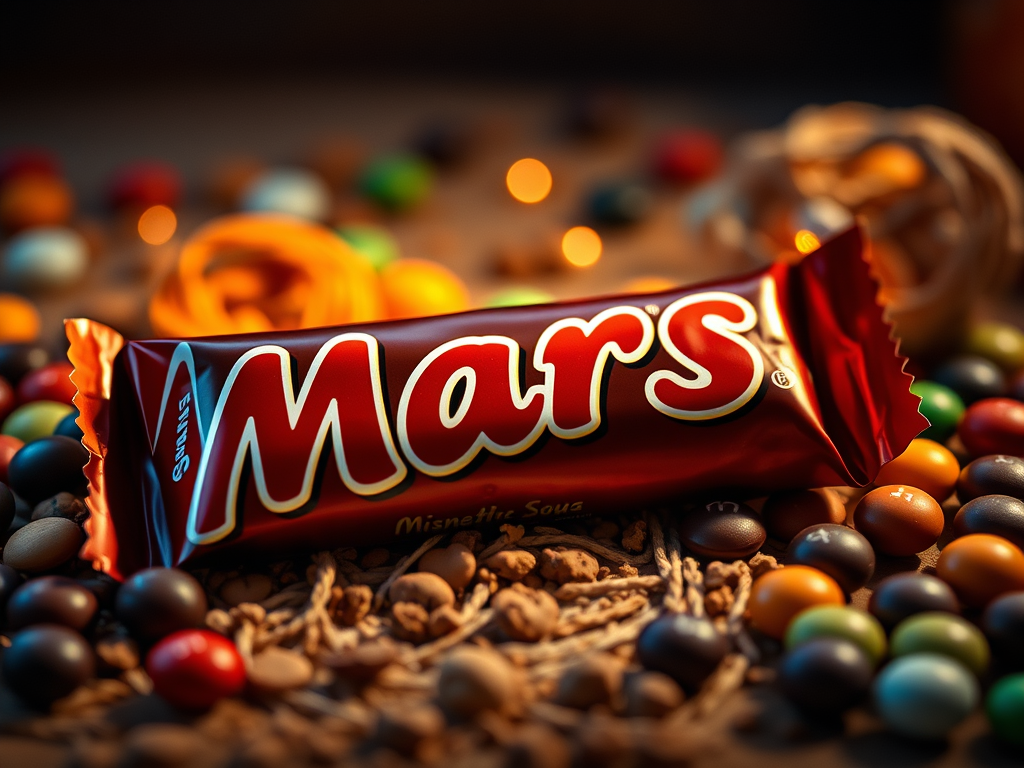
When you grab a Snickers bar at the checkout line or toss a bag of Pedigree dog food into your cart, you are likely not thinking about the secretive, family-owned empire behind the packaging. Mars, Incorporated is one of the largest private companies in the world, yet it remains an enigma compared to its publicly traded rivals like Nestlé or Hershey. It is a company where billionaire owners have historically refused to be photographed, where executives punch time clocks, and where the recipe for global dominance involves a strange mix of chocolate, pet hospitals, and scientific research.
Founded more than a century ago in a humble kitchen in Tacoma, Washington, Mars Inc. has grown into a $45 billion behemoth that silently controls a vast swath of what the world eats and how it cares for its pets. But the road to this empire was paved with bitter family feuds, wartime ingenuity, and a corporate culture so distinct it feels almost like a separate nation. From the trenches of the Spanish Civil War to the veterinary clinics in your neighborhood, the reach of Mars extends far beyond the candy aisle.
In this article, we will unwrap the layers of this private giant to reveal the fundamental and enduring facts that make Mars Inc. a unique case study in business history. We will explore how a father-son rivalry birthed your favorite candy bars, why the company is technically a veterinary giant disguised as a chocolatier, and the strange rules that govern its workforce. Here are 10 facts you didn’t know about Mars Inc., optimized to give you a look inside the “Red Planet” of the corporate world.
1. The “Mars Bar” Was Born Out of a Family Feud
The history of the Mars Bar is actually the story of a bitter split between a father and his son. The company was founded by Frank Mars, who found success with the Milky Way bar in the 1920s. However, his ambitious son, Forrest Mars Sr., wanted to expand the empire abroad. Frank was content with his domestic success and reportedly told his son to take some money and “get the hell out.”
Forrest took $50,000 and the foreign rights to the Milky Way recipe and moved to Slough, England, in the early 1930s. There, he modified his father’s Milky Way recipe to suit British tastes, using sweeter chocolate and different nougat. He called his creation the Mars Bar.
This split explains a confusing global candy fact: the “Mars Bar” sold in the UK and Canada is essentially the same as the “Milky Way” sold in the US. Meanwhile, the US “Mars Bar” (which has been discontinued and reintroduced under various names like Snickers Almond) was a different product entirely. The enduring legacy of this family rift is that two different bars with similar DNA conquered two different continents under two different names.
2. M&M’s Were Inspired by the Spanish Civil War
The origin of M&M’s is a fascinating tale of wartime observation. In the late 1930s, while traveling through Europe during the Spanish Civil War, Forrest Mars Sr. noticed soldiers eating small chocolate pellets encased in a hard sugar shell. He was struck by the fact that the candy didn’t melt in the soldiers’ hands, despite the summer heat.
Realizing the potential for a heat-resistant chocolate in the US (where refrigeration was not yet ubiquitous), he returned home to patent the idea. But he needed a partner with access to rationed chocolate. He approached Bruce Murrie, the son of Hershey executive William Murrie. They formed a partnership, and the candy was named “M&M” standing for Mars and Murrie.
This invention became a crucial part of American military history. During World War II, M&M’s were sold exclusively to the military as part of soldiers’ rations because they were the only chocolate that could survive tropical climates. It wasn’t until the war ended that the general public got their hands on the candy, by which time the returning GIs had already made them a cultural icon.
3. They Are Actually a Pet Care Company in Disguise
While the name Mars is synonymous with chocolate, the company’s financial backbone is actually pet care. Over the last few decades, Mars has quietly pivoted to become the dominant force in the global pet industry. Today, the Petcare division generates more revenue (roughly 60% of total sales) than the confectionery division.
You likely know their food brands: Pedigree, Whiskas, Royal Canin, Sheba, and Iams. But Mars didn’t stop at food; they vertically integrated the entire life of your pet. Mars owns some of the largest veterinary hospital chains in the world, including Banfield Pet Hospital (often found inside PetSmart), VCA Animal Hospitals, and BluePearl.
This shift represents a brilliant long-term strategy. While candy consumption is often scrutinized for health reasons, the “pet parenting” trend has only exploded. By controlling everything from what a dog eats to the doctor who treats it, Mars has built a recession-proof empire that relies on our love for our furry friends rather than our sweet tooth.
4. Executives Punch a Time Clock
One of the most enduring aspects of Mars corporate culture is its radical egalitarianism. In a tradition that dates back to Forrest Mars Sr., there are no private offices, no reserved parking spaces, and no executive dining rooms at Mars Inc. offices. Everyone, from the factory floor worker to the CEO, is referred to as an “Associate.”
Perhaps the most famous symbol of this culture is the time clock. For decades, every employee, regardless of rank, was required to punch in and out. While this specific rule has evolved in some modern offices with flexible working, the principle remains: punctuality and equality are paramount. If the president of the company arrives late, they have to hunt for a parking spot just like everyone else.
This flatness is designed to encourage communication and speed. Without walls and secretaries guarding executives, anyone can walk up to a manager to solve a problem. It reflects the “Five Principles” that govern the company: Quality, Responsibility, Mutuality, Efficiency, and Freedom.
5. Snickers Was Named After a Dead Horse
The Snickers bar, introduced in 1930, is the best-selling candy bar in the world. It was the second major hit for Frank Mars after the Milky Way. But its name has nothing to do with laughter or peanuts; it was a tribute to the Mars family’s beloved racehorse.
The family owned a massive 2,800-acre farm in Tennessee called the “Milky Way Farm,” where they bred thoroughbred horses. Their favorite horse, named Snickers, passed away shortly before the new peanut-and-nougat bar was released. In a sentimental move, Frank named the candy after the horse.
Interestingly, the name didn’t travel well. In the UK, the name “Snickers” was thought to sound too similar to “knickers” (underwear), which was considered slightly improper. For decades, the bar was sold in the UK and Ireland under the name Marathon Bar. It wasn’t until 1990 that Mars standardized the global brand, finally introducing the British public to the name of a Tennessee horse that died sixty years prior.
6. They Own Your Chewing Gum, Too
For most of the 20th century, the chewing gum market was dominated by the Wm. Wrigley Jr. Company. That changed in 2008 when Mars, with the help of billionaire investor Warren Buffett, acquired Wrigley for a staggering $23 billion. This acquisition brought iconic brands like Doublemint, Juicy Fruit, Orbit, Extra, and 5 Gum under the Mars umbrella.
This move was strategic genius. Chewing gum is an “impulse buy” typically placed right next to chocolate bars at checkout counters. By owning the two largest categories of checkout-aisle items (chocolate and gum), Mars secured massive leverage over retailers. They could now negotiate prime shelf space for a massive portfolio of products.
The merger was so significant that for years the division was called “Mars Wrigley,” effectively combining two of the oldest dynasties in American food history into one powerhouse. It ensured that whether you are chewing or chewing-and-swallowing, you are likely a Mars customer.
7. The Family is Notoriously Secretive
The Mars family is one of the richest families in the world, with a combined net worth that frequently rivals the Waltons (of Walmart). However, unlike the Musks or Bezoses of the world, the Mars family has historically gone to extreme lengths to stay out of the public eye. For decades, the company refused to even put a sign on its headquarters in McLean, Virginia.
This secrecy, often referred to as the “Kremlin of the candy world,” was instilled by Forrest Mars Sr. He believed that publicity added no value to the product and only invited scrutiny. He famously refused interviews and kept the company 100% private, meaning they have no shareholders to answer to and do not publish public financial reports.
This privacy allows Mars to make long-term bets that public companies cannot. They can invest in 20-year sustainability goals or restructure entire supply chains without worrying about next quarter’s stock price. While the younger generation has become slightly more visible in recent years, the Mars family remains a “phantom” dynasty in the business world.
8. They Saved British Troops’ Morale in WWII
While M&M’s were fueling American GIs, the Mars Bar was doing the same for the British. During World War II, food rationing in the UK was severe, and luxury items like chocolate were scarce. However, Mars Ltd. (the UK branch founded by Forrest) managed to keep production running, albeit at reduced capacity.
The Mars Bar became a prized possession among British troops. The company distributed a significant portion of its output directly to the armed forces. It was seen as such a vital morale booster that the government allowed the factory to continue operating despite the sugar shortages.
For many British soldiers, a Mars Bar was a rare taste of normalcy and comfort in the trenches. This wartime connection cemented the Mars Bar as an unofficial national symbol in Britain, arguably making it more culturally significant there than in its home country of the US.
9. They Are Obsessed with Cocoa Science
Mars is not just mixing sugar in a vat; they are running one of the most advanced nutritional science programs in the food industry. The company has a division called Mars Edge dedicated to human health and nutrition, with a specific focus on cocoa flavanols.
For decades, Mars has funded research into the cardiovascular and cognitive benefits of cocoa. They have patented processes to preserve the flavanols (beneficial plant compounds) that are usually destroyed during standard chocolate processing. This research led to the creation of CocoaVia, a dietary supplement that is essentially “medical grade” cocoa.
This scientific rigor serves a dual purpose. First, it attempts to “future-proof” the company against anti-sugar regulations by finding health benefits in their raw ingredients. Second, it helps them breed stronger, more disease-resistant cacao trees, ensuring their supply chain survives climate change. They even helped sequence the cacao genome and released it to the public for free to help farmers worldwide.
10. M&M’s Were the First Candy in Space
When NASA’s Space Shuttle Columbia blasted off for its maiden flight in 1981, it carried a special cargo: M&M’s. The astronauts specifically requested them because they were small, bite-sized, and coated—meaning they wouldn’t create a mess of chocolate crumbs floating around the zero-gravity cabin.
Since then, M&M’s have become a staple of the NASA space food menu. They are arguably the most flown candy in history. Mars Inc. leaned into this relationship, but it wasn’t a paid placement; the astronauts genuinely wanted them.
This “space connection” highlights the durability and engineering of the simple candy design. The same hard shell that Forrest Mars designed for soldiers in the Spanish Civil War made the candy perfect for astronauts orbiting the Earth. It is a rare product that has served effectively in foxholes and space stations alike.
Further Reading
To dive deeper into the secretive world of the Mars dynasty and the candy industry, check out these books:
- “The Emperors of Chocolate: Inside the Secret World of Hershey and Mars” by Joël Glenn Brenner – The definitive history of the rivalry between the two candy giants, offering rare access to Mars Inc.
- “Crisis in the Red Zone” by Richard Preston – While primarily about the Ebola virus, this book details how Mars Inc. (specifically the Mars family) quietly funded critical scientific research, showcasing their hidden influence.
- “Chocolate Wars: The 150-Year Rivalry Between the World’s Greatest Chocolate Makers” by Deborah Cadbury – A broader history that places the Mars family in context with the Cadburys and Hersheys of the world.
- “Sweet: The Delicious World of Confectionery” by Tim Richardson – A fun and accessible history of candy making that touches on the innovations of the Mars family.
Keep the Discovery Going!
Here at Zentara, our mission is to take tricky subjects and unlock them, making knowledge exciting and easy to grasp. But the adventure doesn’t stop at the bottom of this page. We are constantly creating new ways for you to learn, watch, and listen every single day.
Watch & Learn on YouTube
Visual learner? We publish 4 new videos every day, plus breaking news shorts to keep you smarter than the headlines. From deep dives to quick facts, our channel is your daily visual dose of wonder. Click here to Subscribe to Zentara on YouTube
Listen on the Go on Spotify
Prefer to learn while you move? Tune into the Zentara Podcast! We drop a new episode daily, perfect for your commute, workout, or coffee break. Pop on your headphones and fill your day with fascinating facts. Click here to Listen on Spotify
Every click, view, and listen helps us keep bringing honest knowledge to everyone. Thanks for exploring with us today—see you out there in the world of discovery!




Leave a Reply