
Table of Contents
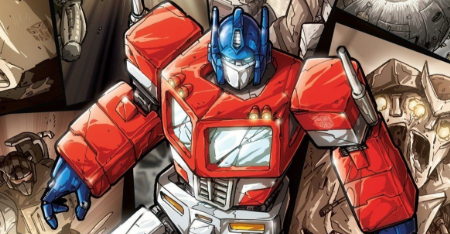
More than just a toy line, Transformers is a vast, sprawling, 40-year epic of war, philosophy, and identity. While the 1980s cartoon introduced the “Robots in Disguise” to a generation, it was the comic books that truly built their universe. From a desperate “work-for-hire” job at Marvel to a critically acclaimed, universe-spanning saga of politics and identity, the Transformers comic history is as complex and ever-changing as the characters themselves.
The comics have been home to four major, distinct continuities across publishers like Marvel, Dreamwave, IDW, and now Skybound. Each era has added profound, essential layers to the lore, often in ways that far surpassed the scope of any other media. From the very origin of their species to their most intimate personal struggles, the comics are where the Transformers story truly became “More Than Meets the Eye.”
We’re opening the Matrix of Leadership to reveal 10 essential facts about the Transformers comic book history that every fan should know.
1. Most Original Transformers Were Named by One Man (For the Toys)
When Hasbro imported the Japanese “Diaclone” and “Micro Change” toy lines in 1984, they had a problem. They had a collection of cool, unrelated transforming robots, but no story. No names. No personalities. They hired Marvel Comics to build a universe. While editor-in-chief Jim Shooter and writer Dennis O’Neil did initial work (O’Neil famously coined the name “Optimus Prime”), the writer who truly built the world was Bob Budiansky.
Handed the project after another writer declined, Budiansky, in a legendary creative sprint, took on the task of writing the original Marvel comic and the character bios. These bios, known as “Tech Specs,” were printed on the back of every toy box. This was where the Transformers personalities were born. Budiansky is the man who looked at a toy jet with a crown and named him Starscream, the arrogant but cowardly usurper. He saw a toy cassette player and envisioned Soundwave, the cold, loyal communications officer. He named Megatron, Ratchet, Prowl, and dozens more, giving each a unique voice, motive, and personality that defined them for all time.
2. The Entire Transformers Creation Myth Was Invented in the UK
Ask any fan for the Transformers origin story, and they’ll likely tell you about Primus and Unicron. This cosmic creation myth—of two warring god-like brothers, one of order and one of chaos—was not from the cartoon. It was not even from the original American Marvel comic. It was invented wholesale for the Marvel UK Transformers comic.
Because the UK comic was published weekly (versus the US’s monthly schedule), writer Simon Furman quickly ran out of American stories to reprint. He was forced to create vast amounts of original content to fill the gaps. He decided to give the Transformers a true, mythological origin. He created Primus, the god of light, who, to fight his dark twin Unicron, trapped them both in metallic asteroid-prisons. Unicron’s prison became his planet-eating form, while Primus’s prison became the planet Cybertron. Primus then created the Transformers as a “warrior race,” the last line of defense against his brother. This story, first told in the UK, was so powerful that it was eventually adopted as the definitive creation myth for almost every Transformers continuity to follow.
3. The “Wreckers” Were a “Suicide Squad” of C-List Autobots
Simon Furman’s “filler” stories in the Marvel UK comic also created another problem: he couldn’t use A-list characters like Optimus Prime or Prowl for major new story arcs, as their fates were tied to the American comic. His solution? He created a team out of the Autobots that the US comic had forgotten: The Wreckers.
Led by the non-toy character Impactor (and later by the Triple Changer, Springer), the Wreckers were an Autobot commando unit, a “suicide squad” long before the term was common. They were the team that took the missions no one else would—or could—survive. Because they were composed of obscure, expendable characters, Furman had total freedom. This meant he could (and did) kill them off, giving their stories a sense of genuine danger and grit that was completely absent from the cartoon. The WRECKERS &Co. motto became “Wreck ‘n’ Rule!” and this concept of a grizzled, high-fatality Autobot team became a fan-favorite staple, most notably in the celebrated IDW series Last Stand of the Wreckers.
4. Bumblebee Was “Killed” by G.I. Joe and Reborn as Goldbug
While the Transformers and G.I. Joe franchises were “brother” properties at Hasbro, they lived in separate universes in their Marvel comics… at first. In 1987, Marvel launched a 4-issue miniseries, G.I. Joe and the Transformers, that brought the two worlds crashing together. The story was a continuity-shaking event. In the first issue, the Joes, mistaking the Autobots for a threat, attack. In the chaos, Bumblebee is unceremoniounsly blasted to pieces by a G.I. Joe vehicle.
This wasn’t just a gimmick. The beloved Autobot scout was dead. But this was a Transformers comic. In a later issue, the Autobots, with help from G.I. Joe, managed to rebuild their fallen friend. He was brought back online in a new, upgraded, shinier body. He was no longer the old Bumblebee; he was a new, more mature bot who took the name Goldbug. This “death” and rebirth had lasting consequences and was directly referenced in the main Transformers comic, making it one of the first and most significant crossovers in comic history.
5. A Transformers Character Fought Doctor Who (Thanks to a Copyright Snag)
This is one of the strangest and most wonderful pieces of comic history. As part of his Marvel UK Transformers run, Simon Furman created a new, original character: Death’s Head. He was a “freelance peace-keeping agent” (a bounty hunter who hated being called a bounty hunter, yes?). He was a giant, horned, robotic mechanoid who debuted by hunting the Decepticon Galvatron.
The character was an instant hit. The Marvel UK editors realized they had a problem: if Death’s Head only appeared in the Transformers comic, he would be the legal property of Hasbro. To prevent this, they rushed a one-page, black-and-white “title page” story called “High Noon Tex” and stuck it in other Marvel UK titles before his Transformers debut, technically making him a pre-existing Marvel character. This legal maneuver worked. Death’s Head was now part of the Marvel Universe. He was shrunk down by the Seventh Doctor in the Doctor Who Magazine comic, fought the Fantastic Four, and became a cult-classic Marvel character in his own right—all because he started as a “throwaway” character in a Transformers story.
6. The 2002 Comic Relaunch Was a Massive Bestseller
After the Marvel comics ended in the early ’90s, Transformers comics went dormant. Then, in 2002, a new publisher, Dreamwave Productions, acquired the license and launched a new Transformers: Generation 1 series. The effect was immediate and explosive. The comic, which brought back the original G1 cast, was a runaway blockbuster, with its first issue becoming the #1 best-selling comic of the entire year.
What made it so revolutionary? The art. Led by artist Pat Lee, the Dreamwave “house style” was a revelation. It was hyper-detailed, glossy, and dynamic, blending the classic G1 designs with a modern anime/manga-influenced aesthetic. It was the first time these characters looked as massive, powerful, and complex on the page as fans had imagined them in their heads. This comic is single-handedly credited with bringing Transformers back to comic-book prominence and sparking a new wave of ’80s nostalgia that arguably helped pave the way for the 2007 live-action movie.
7. The War Within Was the First “Prequel” Series
The Dreamwave era didn’t just look backward; it also built a new, deeper past. While the 2002 G1 series was set on modern-day Earth, Dreamwave also launched a companion series that was a first for the franchise: Transformers: The War Within. Written by the legendary Simon Furman, this was the Transformers “Episode I.” It was set entirely on Cybertron, millions of years before the crash-landing on Earth, and chronicled the early days of the Great War.
It showed the origin of Optimus Prime not as the confident leader, but as a humble archivist named Optronix who is unexpectedly chosen by the Matrix to lead. It depicted Megatron as a revolutionary gladiator, and it was the first series to show all the classic characters in their original “Cybertronian” alternate modes (before they had ever seen an Earth vehicle). This prequel concept was so popular that it became a standard part of the Transformers mythos, influencing countless future stories and toylines.
8. IDW’s War Was Caused by a Fascist Caste System
When Dreamwave went bankrupt in 2005, the license moved to IDW Publishing. IDW decided to do a hard reboot, starting the entire continuity from scratch. But instead of just re-telling the same story, they wanted a deeper, more political “why” for the war. They created the concept of “Functionism.”
In this continuity, Cybertronian society was a rigid, fascist-like caste system where a bot’s “function”—and their entire life—was determined by their alternate mode. This system was enforced by the “Grand Cybertronian Taxonomy.” If you transformed into a microscope, you were a scientist. If you transformed into a jet, you were an elite. But if you transformed into a “useless” object, or a simple mining vehicle, you were a second-class citizen. The Decepticon uprising wasn’t born from pure “evil”; it was a revolutionary, working-class movement led by a charismatic miner-turned-gladiator named Megatron, who was fighting for the right of all sentient beings to choose their own destiny. This complex, political origin gave the IDW universe a depth and maturity unlike any before it.
9. A Critically Acclaimed Series Became a Sci-Fi Epic of PTSD & LGBTQ+ Love
In 2011, IDW’s Transformers line split into two books. One of them, More Than Meets the Eye (MTMTE), became one of the most critically acclaimed and beloved comics of the decade. Written by James Roberts, the series was an outlier. It wasn’t about the war. It was about what happens after.
The story followed a misfit crew of Autobots (and one Decepticon) on a rickety ship, the Lost Light, on a quest to find the mythical “Knights of Cybertron.” It was, in essence, a sci-fi workplace comedy that was secretly a profound story about post-traumatic stress disorder, identity, and found family. Roberts’s run was celebrated for its intricate plotting, sharp wit, and, most notably, its heartfelt exploration of LGBTQ+ relationships. The long-developing love story between the insecure Chromedome and the memory-obsessed Rewind, and later the “odd couple” romance of Cyclonus and Tailgate, became the emotional core of the series, breaking new ground for a mainstream franchise.
10. The Newest Comic Is Part of a Shared “Energon Universe”
After IDW’s continuity concluded in 2022, the license moved to Skybound Entertainment (an imprint of Image Comics). In 2023, fans were reading a new original sci-fi comic from Invincible‘s Robert Kirkman called Void Rivals. On the final page of the first issue, readers were stunned to see a main character stumble upon the talking, disoriented head of… Jetfire. It was a total surprise. Transformers was back, and it was now part of a brand-new shared universe.
This new “Energon Universe” connects Transformers, G.I. Joe, and Void Rivals. The new Transformers #1, by acclaimed writer/artist Daniel Warren Johnson, was a massive sales hit. It shocked readers by immediately killing off Bumblebee and having Starscream take over the Decepticons in the first issue. This new, grounded, and brutal take has become one of the most talked-about series in comics, proving that after 40 years, the Transformers are still full of surprises.
Further Reading
Want to dive deeper into the vast and varied comic book history of Cybertron? These collections are some of the most accessible and essential starting points for any era.
- Transformers Classics (Trade Paperback series) by Bob Budiansky & Simon Furman (Collects the entire original Marvel US run.)
- Transformers: The UK Classics (Trade Paperback series) by Simon Furman (Collects the best original stories from the Marvel UK run, including the Primus/Unicron saga.)
- Transformers: The War Within (Omnibus) by Simon Furman & Don Figueroa
- Transformers: The IDW Collection (Hardcover series) (The best way to read the 2005-2022 continuity in chronological order.)
- Transformers: More Than Meets the Eye, Vol. 1 by James Roberts & Alex Milne
- Transformers: Last Stand of the Wreckers by Nick Roche & James Roberts
Here at Zentara.blog, our mission is to take those tricky subjects and unlock them, making knowledge exciting and easy to grasp for everyone. But the adventure doesn’t stop on this page! We’re constantly exploring new frontiers and sharing discoveries across the digital universe. Want to dive deeper into more mind-bending Top 10s and keep expanding your world? Come join us on our other platforms – we’ve got unique experiences waiting for you on each one!
Get inspired by visual wonders and bite-sized facts: See the world through Zentara’s eyes on Pinterest!
Pin our fascinating facts and stunning visuals to your own boards. Explore Pins on Pinterest: https://uk.pinterest.com/zentarablog/
Discover quick insights and behind-the-scenes peeks: Hop over to Tumblr for snippets, quotes, and unique content you won’t find anywhere else. It’s a different flavour of discovery! Follow the Fun on Tumblr: https://www.tumblr.com/zentarablog
Ready for deep dives you can listen to or watch? We’re bringing our accessible approach to video and potentially audio! Subscribe to our YouTube channel and tune into future projects that make learning pop! Subscribe on YouTube: https://www.youtube.com/@ZentaraUK
Seeking even more knowledge in one place? We’ve compiled some of our most popular topic deep dives into fantastic ebooks! Find them on Amazon and keep the learning journey going anytime, anywhere. Find Our Ebooks on Amazon: https://www.amazon.co.uk/s?k=Zentara+UK&ref=nb_sb_noss
Connect with us and fellow knowledge seekers: Join the conversation on BlueSky! We’re sharing updates, thoughts, and maybe even asking you what wonders we should explore next. Chat with Us on BlueSky: https://bsky.app/profile/zentarablog.bsky.social
Perfect for learning on the move! We post multiple 10-minute podcasts per day on Spotify. Pop on your headphones and fill your day with fascinating facts while you’re out and about! Listen on Spotify: https://open.spotify.com/show/3dmHbKeDufRx95xPYIqKhJFollow us on Instagram for bytesize knowledge! We post multiple posts per day on our official Instagram account. https://www.instagram.com/zentarablog/ Every click helps us keep bringing honest, accessible knowledge to everyone. Thanks for exploring with us today – see you out there in the world of discovery!




Leave a Reply