
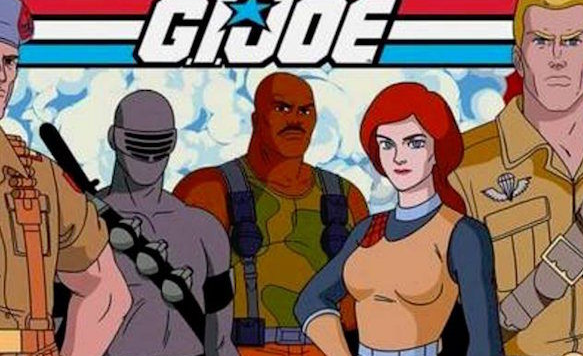
The 1980s was a golden era for Saturday morning cartoons, but few series commanded the playground landscape quite like G.I. Joe: A Real American Hero. It wasn’t just a show; it was a cultural phenomenon that blended high-stakes military adventure with sci-fi ingenuity. While many remember the iconic “Knowing is Half the Battle” segments and the high-pitched cackle of Cobra Commander, the production behind the scenes was as complex and tactical as a mission to infiltrate Cobra Island. From its origins as a groundbreaking marketing experiment to the strict regulations that shaped its unique brand of non-lethal combat, the G.I. Joe animated series holds a treasure trove of hidden history. Whether you were a fan of the stoic Snake Eyes or the silver-tongued Destro, these deep-dive facts reveal how a team of “Real American Heroes” revolutionized the way stories were told to a generation of viewers.
1. The Revolutionary Birth of the “Animated Commercial” Strategy
Before the 1980s, strict regulations prevented toy companies from creating shows specifically to sell products. However, a shift in broadcasting standards opened a window of opportunity that Hasbro and Sunbow Productions jumped through with tactical precision. G.I. Joe wasn’t just an adaptation of a toy line; it was a pioneer of the “program-length commercial” format. To circumvent certain advertising rules, the creators actually produced animated commercials for the Marvel comic book series first. These commercials featured high-quality animation that looked exactly like a television show, effectively “testing” the visual style and building an audience before the actual series debuted. This synergy between Hasbro, Marvel Comics, and Sunbow created a multimedia loop: the toys inspired the comics, the comics inspired the show, and the show drove kids back to the toy aisles in droves. It was a masterpiece of marketing hidden inside a compelling action narrative.
2. Why the Joes and Cobra Never Actually Hit Each Other
If you look closely at the frenetic battles between the Joes and Cobra, you’ll notice a peculiar pattern: despite the thousands of rounds of ammunition fired, almost no one ever gets shot. This wasn’t just “cartoon physics”; it was a calculated response to the Federal Communications Commission (FCC) and parent advocacy groups concerned about violence. To keep the show on the air, the production team utilized “laser” weaponry instead of traditional bullets, creating the iconic red and blue energy beams. Furthermore, every time a vehicle was blown up—be it a H.I.S.S. tank or a Skystriker—the animators were required to show the pilot parachuting to safety or diving out of the wreckage. This led to the “parachuting trope” where even the most devastating aerial explosions resulted in zero casualties. This restriction actually forced writers to get more creative with gadgetry and hand-to-hand combat that relied on throws and disarms rather than direct strikes.
3. The Secret Comic Book Connection of Larry Hama
While the animated series is what many remember visually, its soul was forged in the pages of Marvel Comics by writer Larry Hama. Hama, a veteran himself, was the architect of the “File Cards” found on the back of the toy packaging, which provided the backstories used by the TV writers. Interestingly, Hama’s vision was often much grittier and more grounded in military realism than the flamboyant, sci-fi-leaning cartoon. Many of the show’s most beloved characters, like the silent ninja Snake Eyes or the mysterious Storm Shadow, had their complex histories mapped out by Hama before they ever uttered a word (or didn’t) on screen. The TV writers often had to balance Hama’s deep characterizations with the need for “gadget-of-the-week” plots, creating a fascinating tension between the show’s high-concept sci-fi and its grounded military roots.
4. Cobra Commander’s Voice was Inspired by a Real-Life Legend
The screeching, theatrical, and utterly unforgettable voice of Cobra Commander is one of the most recognizable performances in animation history. Legendary voice actor Chris Latta (also known as Christopher Collins) was the man behind the mask. Latta didn’t just stumble onto that voice; he based the Commander’s unique cadence and high-pitched rasp on a mix of classic villain archetypes and a specific, albeit exaggerated, theatrical flair. Interestingly, Latta also voiced Starscream in the Transformers series during the same era, using a very similar vocal range. This created a “shared DNA” between the two greatest 80s villains. Latta’s ability to make Cobra Commander sound both terrifyingly unhinged and pathetically insecure was a key reason why the character remained a fan favorite despite his constant failures to conquer the world.
5. The “Knowing is Half the Battle” Origins
Perhaps the most enduring legacy of the series is the “Public Service Announcement” (PSA) found at the end of every episode. These segments, which gave kids advice on everything from bike safety to dealing with strangers, always ended with the iconic line: “And knowing is half the battle!” These weren’t just added for educational value; they were a strategic move to appease regulators who were critical of toy-based programming. By including these prosocial messages, Hasbro and Sunbow could argue that the show provided a public service. These segments became so ingrained in the cultural lexicon that they are still parodied and referenced today. They transformed the Joes from simple soldiers into mentors, reinforcing the idea that intelligence and preparation were just as important as physical strength in any conflict.
6. The Mysterious Case of the Two Different Snake Eyes
Snake Eyes is arguably the most popular G.I. Joe character, known for his black tactical gear and total silence. However, in the animated series, the reason for his silence and his relationship with his rival, Storm Shadow, was handled with much more ambiguity than in the comics. In the show’s early miniseries, The MASS Device, Snake Eyes is exposed to radiation, which served as a convenient plot device for his mask and silence. Yet, as the show progressed, the writers leaned into his ninja background. The “Arashikage” ninja clan lore, which is central to his character today, was slowly dripped into the animated series, often clashing with the more standard military themes. This created a dual identity for the character: he was the team’s elite commando, but also a mystical shadow warrior, a duality that kept fans guessing for years.
7. The Global Scale and the “International Heroes” Rebrand
While the title explicitly calls them “Real American Heroes,” the animated series was a massive international hit that required some clever rebranding for overseas markets. In the United Kingdom and parts of Europe, the show was rebranded as Action Force. Because the “American Hero” branding was seen as too specific to the US, the voice acting was sometimes redubbed, and certain symbols were changed. However, the core themes of teamwork and fighting against a global terrorist organization (Cobra) resonated universally. The animated series’ portrayal of Cobra as a stateless, high-tech threat allowed the show to avoid specific real-world political conflicts, making it an “evergreen” action series that could be broadcast in dozens of countries without feeling dated or overly tied to a specific geopolitical era.
8. The Animation Quality Jumped Between Studios
If you’ve ever noticed that some episodes of G.I. Joe look stunningly fluid while others look a bit “off,” your eyes aren’t deceiving you. The series utilized several different animation houses, primarily Toei Animation in Japan. Toei was responsible for some of the most iconic and high-quality sequences in the early miniseries and the first season. Their attention to detail on the mechanical designs of the Rattlers and Conquest X-30s was unparalleled. Later in the series, as budgets shifted and production demands increased, other studios took over, leading to noticeable variations in character models and movement fluidity. This “patchwork” production style was common for the era, but G.I. Joe remains a standout example of how Japanese animation techniques heavily influenced American Saturday morning aesthetics.
9. Frank Welker: The Man of a Thousand Joe Voices
While Chris Latta gave us the voice of Cobra Commander, another voice acting legend, Frank Welker, was the backbone of the series. Welker provided the voices for a staggering number of characters, including Torch, Wild Bill, and even the “voice” of various animals and machines. His ability to switch between the southern drawl of a helicopter pilot and the gruff tones of a Dreadnok was essential for a show with such a massive ensemble cast. The voice sessions for G.I. Joe were famously energetic, with actors often recording together in the same room, allowing them to play off each other’s improvisations. This chemistry is what gave the Joes and Cobra their distinct personalities, turning what could have been generic soldiers into a colorful cast of characters.
10. The MASS Device and the High-Concept Sci-Fi Roots
The series didn’t start with a simple military skirmish; it began with the “MASS Device” miniseries, which featured a giant teleportation machine that required rare elements from around the globe to function. This set the tone for the entire series: G.I. Joe was as much science fiction as it was a military drama. By focusing the plots around “super-weapons” and “weather dominance” machines, the writers could create grand, globe-trotting adventures that necessitated the Joes’ specialized skills. This sci-fi tilt allowed the show to feature increasingly outlandish vehicle designs—like the Cobra Terror Drome or the Joe’s Rolling Thunder—which in turn allowed Hasbro to push the boundaries of what an “action figure” could be. It was this blend of tactical military strategy and “what-if” technology that made the series a permanent fixture in the minds of its audience.
Further Reading
- G.I. Joe: The Complete Silence (The Special Missions) by Larry Hama
- The Toys of He-Man and G.I. Joe by Mark Bellomo
- Each Sold Separately: Action Figures and Collectible Toy Culture by Tim Walsh
- Art of G.I. Joe: A Real American Hero by R. Carson Mataxis




Leave a Reply