
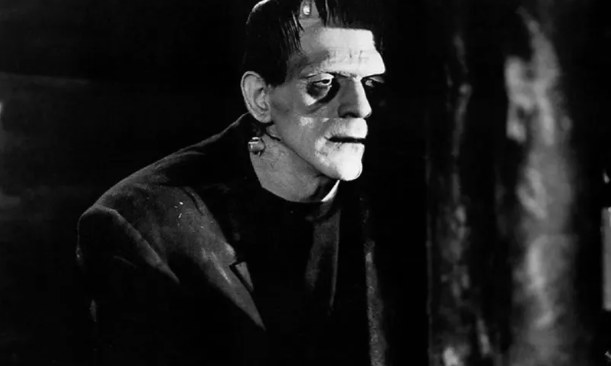
Mary Shelley’s “Modern Prometheus” has haunted the silver screen for over a century, evolving from a silent-era curiosity into a foundational pillar of the horror genre. While everyone recognizes the green skin, the neck bolts, and the flat-top head, the history of Frankenstein movies is far more complex than a simple lab accident. The journey of Victor Frankenstein and his creation across cinema is a tale of accidental icons, legal battles, and groundbreaking special effects that defined how we visualize fear.
To truly understand the “Monster,” one must look past the lightning strikes and into the production stories that shaped these films. From the silent era to the experimental re-imaginings of the modern age, the cinematic Frankenstein is a mirror reflecting our society’s anxieties about science, parenthood, and what it means to be human. Here are ten things you likely didn’t know about the movies that brought this creature to life.
1. The First Frankenstein Movie Was a Lost “Ghost” for Decades
Long before the iconic 1931 Universal production, the first cinematic adaptation of Mary Shelley’s novel was produced by Thomas Edison’s film company. Released during the silent era, this 12-minute short was thought to be lost forever after a fire destroyed much of the studio’s archives. For decades, film historians only had a single still photograph of the Monster—a wild, hairy, and grotesque figure—to prove the movie ever existed.
It wasn’t until a private collector was found to have a nitrate print in the late 20th century that the film was preserved and eventually shared with the public. This version is notable because it eschews the “surgical” approach to the Monster’s creation. Instead of using body parts and electricity, the scientist mixes chemicals in a large cauldron, and the creature slowly forms out of a cloud of smoke and fire—a more “alchemical” interpretation that aligns closely with early gothic stage plays.
2. Boris Karloff’s Iconic Look Was a Heavily Guarded Secret
When Universal Pictures began production on the 1931 masterpiece, they knew they had something special in Jack Pierce’s makeup design. To ensure that the reveal of the Monster would be a genuine shock to audiences, Boris Karloff was required to wear a veil or a cloth over his head whenever he walked between his dressing room and the soundstage. He was essentially a “secret weapon” hidden from the public and even other studio employees.
The makeup itself was a grueling ordeal, taking roughly four hours to apply and two hours to remove every day. Jack Pierce used spirit gum, cotton, and collodion to build up the heavy brow, and the “bolts” in the neck were actually electrodes designed to show where the electricity entered the body. Karloff even had a dental bridge removed to give one side of his face a sunken, more cadaverous appearance. This dedication to the craft turned a relatively unknown actor into a global legend overnight.
3. The Monster’s Iconic Green Skin Was a Practical Choice for Black and White
While the general public envisions the Frankenstein Monster with pale green skin, this color choice was never mentioned in Mary Shelley’s book (where he is described as having yellow skin and black lips). The decision to use green makeup in the early films was actually a technical necessity for the black-and-white filming process.
Under the harsh studio lights of the era, human skin often looked washed out or overly dark on film. Makeup artist Jack Pierce discovered that a specific shade of “greasepaint green” photographed as an eerie, deathly gray on orthochromatic and panchromatic film stock. It provided the perfect contrast to make the creature look unnaturally pale and sickly without appearing “flat.” When the films were eventually colorized or referenced in later color sequels, the green stuck, becoming a permanent part of the character’s visual DNA despite its purely functional origins.
4. Mel Brooks Used the Original 1931 Lab Equipment for “Young Frankenstein”
One of the most beloved entries in the franchise isn’t a horror movie at all, but a parody. When Mel Brooks was filming his 1974 masterpiece Young Frankenstein, he wanted the film to look and feel exactly like the Universal classics of the 1930s. To achieve this, he tracked down Kenneth Strickfaden, the electrical effects expert who had designed the laboratory props for the original Boris Karloff film.
Remarkably, Strickfaden had kept all the original “whirring and buzzing” machines in his garage. Brooks rented the original equipment—including the famous “Tesla coils” and spark generators—to populate his set. This is why the laboratory in the comedy looks so authentically gothic; it literally is the same laboratory from the 1931 film. This dedication to authenticity helped the movie transcend simple parody, making it a beautiful homage to the era of German Expressionism in film.
5. The “Frankenstein Meets the Wolf Man” Legal Tussle
The 1943 film Frankenstein Meets the Wolf Man was a landmark event, as it was the first time two major movie monsters shared the screen, effectively creating the first “cinematic universe.” However, the production was plagued by a strange continuity issue involving the Monster’s ability to speak. In the previous film, The Ghost of Frankenstein, the Monster was given the brain of a character named Ygor, who could talk.
In the original cut of Meets the Wolf Man, the Monster (played by Bela Lugosi) had several lines of dialogue explaining that he was now blind and possessed Ygor’s voice. However, test audiences found Lugosi’s Hungarian accent coming out of the Monster’s mouth to be unintentionally hilarious. The studio made the last-minute decision to cut all of the Monster’s dialogue. This left the Monster appearing to move clumsily and reach out blindly for no explained reason, leading to the “lumbering” walk that many people now associate with the character.
6. Hammer Horror Changed the Monster into a Victim of Class
In the late 1950s, the British studio Hammer Film Productions reinvented the franchise with The Curse of Frankenstein. Unlike the Universal films, which focused on the Monster as the central figure, the Hammer series shifted the focus to Baron Victor Frankenstein, played by the legendary Peter Cushing. In these films, the Doctor is the true villain—a cold, calculating, and often sociopathic scientist.
The Monster in the Hammer series (portrayed first by Christopher Lee) was reimagined as a tragic, pathetic creature. Because Universal held the copyright to the “flat-head and bolts” look, Hammer had to create an entirely new aesthetic. Their Monster looked more like a surgical accident—covered in raw scars and mismatched skin. This version emphasized the “flesh and blood” reality of the experiment, making the horror feel more visceral and grounded compared to the stylized, lightning-driven monsters of the past.
7. The 1931 Film Was Heavily Censored for “Playing God”
When Frankenstein was first released, it faced significant backlash from various censorship boards, particularly regarding a scene where Victor Frankenstein exclaims, “Now I know what it feels like to be God!” This line was considered blasphemous and was often muted or cut entirely from prints for decades.
Another famously censored moment was the “Little Maria” scene, where the Monster accidentally drowns a young girl in a lake. The original cut showed the Monster tossing the girl into the water, thinking she would float like the flowers they were playing with. When she drowned, he panicked. For years, the scene was edited to cut away before the toss, which actually made the scene feel more sinister, as it implied a violent intent that wasn’t there. It wasn’t until the 1980s that fully restored versions of the film allowed audiences to see the Monster’s tragic innocence as originally intended.
8. The First Female Director to Tackle the Mythos
While the story is famous for being written by a teenage girl, Mary Shelley, the film adaptations were dominated by male directors for nearly a century. However, the franchise has seen unique feminine perspectives in later years. Films like Mary Shelley’s Frankenstein (1994) attempted to return to the source material’s focus on the “birth” process and the abandonment of a child, themes deeply rooted in Shelley’s own personal tragedies.
In more modern, independent interpretations, female filmmakers have explored the “Bride” character not as a monster’s mate, but as a symbol of female autonomy. These versions often deconstruct the idea of a man “creating” the perfect woman, turning the gothic horror into a commentary on gender roles and the male gaze. This shift has allowed the franchise to remain socially relevant, proving that the core themes of the story are universal and adaptable to any era’s cultural landscape.
9. The Monster’s “Stiff Walk” Was an Actor’s Invention
The “Frankenstein Walk”—arms outstretched, knees unbending—is a staple of Halloween costumes everywhere. Surprisingly, this walk was never described in the book, nor was it present in the very first films. In the 1931 original, Karloff’s Monster is actually quite fluid and agile. The “stiff” movement mostly originated from the 1943 crossover Frankenstein Meets the Wolf Man.
As mentioned earlier, the Monster was supposed to be blind in that film. Actor Bela Lugosi played the role with his arms outstretched to find his way through the set. Because the dialogue explaining his blindness was edited out, audiences assumed that this was just how the Monster moved. Over time, this “blind stumble” became the definitive way to portray the creature’s lack of motor skills, even though the original intention was to show a character who simply couldn’t see where he was going.
10. The Franchise Pioneered the “Sympathetic Villain”
Before Frankenstein, movie monsters were typically portrayed as pure manifestations of evil—vampires, demons, or ghosts with malicious intent. Frankenstein (1931) changed the landscape of cinema by introducing the “sympathetic monster.” Boris Karloff’s performance emphasized the creature’s confusion, fear, and longing for companionship.
This shift influenced every monster movie that followed. Without the success of a creature that audiences felt sorry for, we might never have had King Kong, The Creature from the Black Lagoon, or even modern anti-heroes. The films taught audiences that the real “monster” is often the society that rejects the “other,” or the creator who refuses to take responsibility for their creation. This psychological depth is the reason the franchise has survived for over a hundred years while other monster movies have faded into obscurity.
Further Reading
- Frankenstein: The First Two Hundred Years by Christopher Frayling
- The Monster Show: A Cultural History of Horror by David J. Skal
- The Lady and Her Monsters by Roseanne Montillo
- Universal Horrors: The Studio’s Classic Films, 1931–1946 by Tom Weaver, Michael Brunas, and John Brunas
Leave a Reply to 10 Things You Need To Know About History Of Mummy Movies – Zentara – Pop Culture IntelCancel reply