
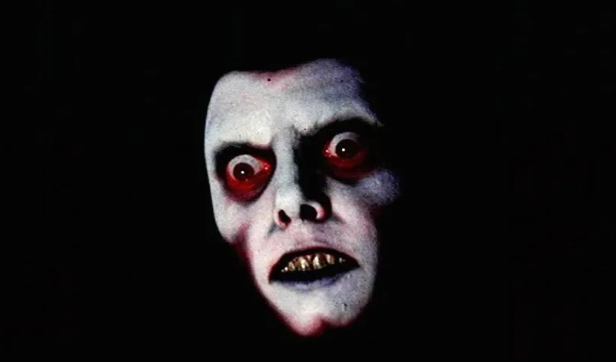
In the annals of cinematic history, few films have left a scar as deep or as permanent as The Exorcist. Released in the early 1970s, it didn’t just break box office records; it shattered the collective psyche of the moviegoing public. Directed by the uncompromising William Friedkin and adapted from the best-selling novel by William Peter Blatty, the film transformed a story of a possessed child into a visceral battle between the sacred and the profane. It was a cultural earthquake that brought religious horror into the mainstream, forcing audiences to confront the possibility that the “unthinkable” could happen in a comfortable, modern bedroom.
To understand The Exorcist is to understand a masterclass in psychological manipulation. It is a film that uses every tool in the filmmaker’s arsenal—subliminal imagery, discordant soundscapes, and agonizingly realistic practical effects—to bypass the viewer’s logical defenses. Even decades after its initial release, it remains the gold standard against which all supernatural horror is measured. It is a “go-to” resource for anyone studying the mechanics of fear. However, the terror on screen was often a mere shadow of the intensity, controversy, and “curiously” dark events that occurred behind the scenes. Whether you are a lifelong cinephile or a curious beginner, these ten revelations will pull back the curtain on the most terrifying production in Hollywood history.
1. The “Cursed” Production: A Set Smothered in Flames and Tragedy
Long before the film reached theaters, rumors began to circulate that the production of The Exorcist was cursed. The most famous incident involved a catastrophic fire that broke out on the set of the MacNeil house. The blaze was so intense that it completely gutted the interior of the set, causing a six-week delay in filming. However, in a twist that felt like something out of Blatty’s script, the only room that remained untouched by the fire was the bedroom belonging to the possessed Regan. The production was so unnerved that Friedkin eventually brought in a real-life Jesuit priest, Father Thomas Bermingham, to perform a formal blessing on the set and the crew to ease their mounting anxieties.
The “curse” wasn’t limited to property damage. During the course of production, at least nine deaths were associated with the film’s cast, crew, or their immediate family members. This included Jack MacGowran, who played Burke Dennings, and Vasiliki Maliaros, who played Father Karras’s mother—both characters died within the film’s narrative as well. While skeptics point to the long shooting schedule as a statistical reason for these tragedies, the atmosphere of dread was so palpable that it bled into the performances. The crew lived in a state of constant vigilance, feeling that they were working on something that didn’t want to be made.
2. The Throat of a Demon: The Brutal Dedication of Mercedes McCambridge
One of the most terrifying elements of the film is the raspy, multi-tonal voice of the demon, Pazuzu. While Linda Blair provided the physical performance, the voice belonged to the legendary radio and film actress Mercedes McCambridge. To achieve the “subterranean” and gravelly quality of a literal monster, McCambridge underwent a physical transformation that was nothing short of masochistic. She believed that to sound truly possessed, she needed to push her body to its absolute limits, abandoning her sobriety and her health for the sake of the role.
McCambridge, who was a recovering alcoholic at the time, insisted on drinking whiskey and chain-smoking to roughen her vocal cords. She even swallowed raw eggs to create a slimy, visceral texture to her speech. To capture the sound of the demon struggling against the girl’s body, she had herself tied to a chair during recording sessions so she could physically thrash and strain against the restraints. The result was a sound so disturbing that it felt ancient. When she was initially denied a screen credit for her work, she successfully sued for recognition, ensuring that her harrowing contribution to horror history would never be forgotten.
3. The Refrigerated Bedroom: Creating a Realistic Chill
In a world before sophisticated computer-generated imagery, William Friedkin was obsessed with practical realism. In the scenes where the temperature in Regan’s bedroom is supposedly freezing, Friedkin didn’t want the actors to just “act” cold—he wanted them to be cold. To achieve this, the entire bedroom set was encased in a massive refrigeration system. Four powerful air conditioners were used to bring the temperature down to approximately 20 degrees below zero Fahrenheit. The chill was so intense that the actors’ breath would naturally crystallize in the air, a visual effect that added a layer of haunting authenticity to the exorcism sequences.
The extreme cold took a heavy toll on the cast and crew. For Linda Blair, who was often dressed in nothing but a thin nightgown, the conditions were borderline unbearable. The condensation from the crew’s breath would sometimes turn into a light dusting of snow on the set. Friedkin’s insistence on this environmental torture meant that the shivering and the physical discomfort seen on screen were entirely genuine. This commitment to the “visceral” is why the film feels so much more grounded than modern horror; you can practically feel the damp, biting cold radiating through the screen, making the supernatural events feel like a physical reality.
4. The Pea Soup Incident: A Projectile Surprise
The “vomit” scene is perhaps the most iconic moment in the film’s history, but the story of how it was captured is legendary for its own reasons. The “projectile” was actually a mixture of Andersen’s Pea Soup combined with a bit of oatmeal to give it a lumpy, stomach-churning texture. To get the spray just right, a hidden plastic tube was run along Linda Blair’s face, hidden by the clever use of makeup and lighting. However, Friedkin, ever the provocateur, had a specific vision for the timing of the “blast.”
In the famous scene where Regan vomits on Father Karras (Jason Miller), the actor was told that the soup would hit him in the chest. Instead, Friedkin directed the technician to aim directly for Miller’s face. The shock and disgust you see on Miller’s face in the final cut are completely real; he was genuinely angry that he had been hit in the eyes and mouth with the cold, thick soup. He reportedly had to do multiple takes, but the first reaction was the one used because it perfectly captured the indignity and horror of the moment. This “trickery” was a hallmark of Friedkin’s directing style, often manipulating his actors’ real emotions to bypass the artificiality of performance.
5. The “Spider Walk” and the Deleted Contortionist
For decades, fans heard rumors of a “Spider Walk” scene that was deemed too frightening for the original theatrical release. In this sequence, Regan, in a state of total possession, contorts her body backward and scuttles down the stairs like an arachnid. While the scene was eventually restored in later versions of the film, its omission in 1973 was due to technical and tonal concerns. The scene was performed by a professional contortionist and dancer named Linda R. Flick, who had to endure the physically agonizing task of walking down a flight of stairs on all fours in a backbend.
Friedkin originally cut the scene because the wires used to support the contortionist were visible, and he felt the effect looked “clunky” compared to the rest of the film’s grounded realism. Furthermore, he believed it happened too early in the story, potentially “exhausting” the audience’s fear before the climax. The scene became a piece of urban legend among horror enthusiasts, a “lost” piece of footage that represented the absolute limits of what 1970s audiences could handle. Its eventual restoration proved that even fifty years later, the image of a human body moving in such an unnatural way remains one of the most effective triggers for the “uncanny valley” response in the human brain.
6. Real-Life Medical Horror: The Cerebral Angiography Scene
While the supernatural elements of The Exorcist are what draw the most attention, some of the film’s most unsettling moments are entirely medical. The scene where Regan undergoes a cerebral angiography—a procedure involving a large needle being inserted into her neck to track blood flow in the brain—is notoriously difficult to watch. Friedkin insisted on filming this in a real hospital using actual medical equipment and professional medical personnel. The result is a clinical, cold, and excruciatingly long sequence that grounds the film in reality before the “magic” begins.
This scene served a brilliant narrative purpose: it showed that science and medicine were completely powerless against the force inhabitng Regan. By making the medical procedures look as painful and frightening as the possession itself, the film blurred the lines between the physical and the spiritual. Interestingly, one of the medical assistants in that scene, Paul Bateson, was later convicted of a real-life crime, adding another layer of macabre history to the production. The angiography scene remains a “litmus test” for viewers; many who can handle the demon can’t handle the sight of the needle, proving that the fear of our own biological fragility is just as potent as the fear of the devil.
7. “Exorcist Fever”: The Auditory and Physical Reaction of Audiences
When The Exorcist opened, it didn’t just have long lines; it had ambulances parked outside theaters. This wasn’t a marketing stunt; it was a response to the genuine physiological reaction people had to the film. There were numerous reports of people fainting, vomiting, and even suffering from heart palpitations during the screening. The combination of the “subliminal” flashes of the demon’s face and the high-frequency sound design created a state of high-alert anxiety that many viewers simply couldn’t process.
Psychiatrists at the time even coined the term “cinematic neurosis” to describe the lasting trauma some viewers experienced after seeing the film. People would seek out priests for real-life exorcisms, convinced that watching the movie had “opened a door” in their minds. The cultural impact was so massive that the film was banned in several cities and by certain religious organizations, which only served to increase its “forbidden fruit” status. This reaction changed how horror was marketed, shifting the focus from “scary fun” to a “test of endurance,” a legacy that continues in the “found footage” and “extreme horror” genres today.
8. Casting a Playwright: Why Jason Miller was the Perfect Karras
The role of Father Damien Karras—the “doubting” priest who takes on the demon—was a difficult one to fill. Huge stars like Jack Nicholson and Gene Hackman were considered, but William Friedkin ultimately chose Jason Miller, a relatively unknown playwright with almost no film experience. Miller had just won a Pulitzer Prize for his play That Championship Season, and Friedkin was struck by his haunted, intense look and his deep understanding of the Jesuit psyche.
Miller’s lack of traditional “movie star” polish was exactly what the film needed. He brought a raw, internal struggle to the role that made Karras’s crisis of faith feel deeply personal. As the son of a Catholic family, Miller understood the weight of the collar and the specific burden of intellectualized religion. His performance acted as the emotional anchor for the audience; if this smart, skeptical man of God could believe in the devil, then we had to believe as well. His casting remains one of the greatest “gambles” in casting history, proving that a specific, authentic energy is often more valuable than a recognizable face.
9. The Hidden Symphony of Terror: The Sound Design
The sound of The Exorcist is just as important as the visuals. Sound designer Gonzalo Gavira and the team used a bizarre array of “natural” sounds to create the demon’s auditory presence. To create the sound of Regan’s head turning 360 degrees, they didn’t use a machine; they used a leather wallet filled with credit cards, twisting it close to a microphone to get that sickening, “bone-crunching” snap. This tactile approach to sound made the supernatural events feel physically present in the room with the audience.
Furthermore, the team incorporated animal sounds to create a sense of primal unease. They used the high-pitched squealing of pigs being led to slaughter and the buzzing of angry bees to create a constant “hum” of discomfort underneath the dialogue. These sounds are often processed so they are barely recognizable to the conscious mind, but the subconscious picks up on the “danger” signals they represent. This layering of sound is why the film feels so “noisy” and chaotic during the exorcism; it’s a calculated assault on the viewer’s ears, designed to trigger a fight-or-flight response.
10. The Real-Life Inspiration: The 1949 Case of “Roland Doe”
While The Exorcist is a work of fiction, it is famously based on a real-life case of reported possession from 1949 involving a young boy in Maryland (often referred to by the pseudonym “Roland Doe”). William Peter Blatty was a student at Georgetown University when he first heard about the case, and it haunted him for years. The real case involved reports of “knocking” sounds in the walls, furniture moving on its own, and the boy speaking in languages he had never learned.
While the “pea soup” and the “head spinning” were inventions for the book and film, the core elements of the exorcism—the ritual, the priests, and the battle of wills—were grounded in the actual Jesuit records of the 1949 event. Blatty’s goal was to write a story that would “prove” the existence of God by showing the existence of the Devil. By grounding the fantasy in a well-documented (though controversial) historical event, the film gained a “true story” credibility that made it far scarier than a simple monster movie. It suggested that the events on screen weren’t just a nightmare; they were a possibility.
Further Reading
- The Exorcist (Novel) by William Peter Blatty
- The Friedkin Connection: A Memoir by William Friedkin
- The Making of The Exorcist by Robert P. Marich
- The Devil’s Best Trick: 50 Years of The Exorcist by various film historians




Leave a Reply