
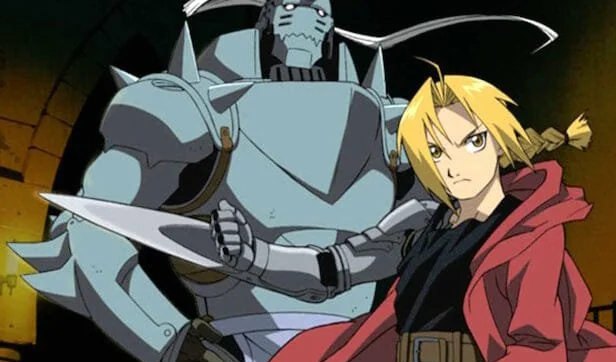
In the vast landscape of manga and animation, few stories carry the weight, philosophical depth, and emotional resonance of Fullmetal Alchemist. It is a narrative that begins with a simple, heartbreaking premise: two brothers, Edward and Alphonse Elric, attempt to bring their deceased mother back to life through the forbidden art of human transmutation. This single act of desperation sets them on a journey across a nation teetering on the edge of conspiracy, forcing them to confront the very nature of the soul, the cost of ambition, and the unbreakable laws of the universe.
To the uninitiated, it may seem like a standard adventure tale. However, to those who have delved into its intricate lore, Fullmetal Alchemist is a masterclass in world-building. It blends historical aesthetics—reminiscent of the industrial revolution—with a “hard magic” system known as alchemy. Unlike the whimsical magic found in other series, alchemy is governed by the rigid Law of Equivalent Exchange, which dictates:
“In order to obtain or create something, something of equal value must be lost or destroyed.”
This principle isn’t just a plot device; it is the moral compass of the series. As we peel back the layers of this masterpiece, we find a story rich with real-world symbolism, military history, and profound character studies. Whether you are revisiting the Elric brothers’ quest or discovering the secrets of Amestris for the first time, these ten insights will provide a deeper understanding of why this series remains an evergreen titan of the medium.
1. The “Cow” Behind the Alchemy: Hiromu Arakawa’s Farm Roots
One of the most fascinating aspects of Fullmetal Alchemist is the perspective of its creator, Hiromu Arakawa. Unlike many creators who draw inspiration solely from other media, Arakawa’s worldview was forged on a dairy farm in Hokkaido. This upbringing is the secret ingredient that gives the series its grounded, unsentimental view of life and death. On a farm, the cycle of life is visible every day; animals are born, they work, and eventually, they are harvested or die.
This practical experience birthed the series’ core philosophy. Arakawa often uses a cow as her self-portrait in bonus comics, a nod to her agricultural background. She has mentioned in interviews that the concept of “Equivalent Exchange” came naturally from the idea that if you don’t feed and care for a cow, it won’t give you milk. This translates into the narrative’s refusal to give the characters “easy wins.” When Edward and Alphonse fail, they suffer tangible, permanent consequences. The series treats the “value of a life” not as a poetic abstract, but as a biological and spiritual reality, making the stakes feel far more visceral than your average fantasy epic.
2. The Military Might: Character Names Rooted in History
For a series centered on a military-industrial complex like the nation of Amestris, the nomenclature of the cast is remarkably deliberate. Most fans recognize the names, but few realize that nearly every high-ranking officer is named after real-world military aircraft, tanks, or naval vessels, primarily from the mid-20th century. This subtle naming convention reinforces the atmosphere of a world constantly on the brink of war.
For instance, Colonel Roy Mustang takes his name from the P-51 Mustang, one of the most famous long-range fighters. Jean Havoc is named after the A-20 Havoc light bomber. Even the stoic Riza Hawkeye and the formidable Olivier Mira Armstrong follow this pattern, with names linked to the Grumman E-2 Hawkeye and the Armstrong Whitworth aircraft company, respectively. By grounding these characters in the names of machines built for conflict, Arakawa subtly signals their roles as “tools” of the state. It highlights the internal conflict many of them face: are they humans with independent wills, or are they simply weapons designed to follow orders and cause destruction?
3. The Real-World Alchemy of the Flamel Symbol
The striking cross-and-serpent symbol emblazoned on Edward Elric’s red coat and Alphonse’s armor is not just a cool design—it is the Flamel. This symbol has deep roots in real-world alchemical history, attributed to the 14th-century scrivener and legendary alchemist Nicolas Flamel. While Flamel is a frequent figure in fiction, his inclusion in Fullmetal Alchemist serves a specific thematic purpose regarding the “fixing of the volatile.”
In traditional alchemy, the serpent draped over a cross represents the process of “crucifying” a volatile element to make it stable. In the context of the Elric brothers, this is a beautiful metaphor for their journey. They begin as “volatile” children, fueled by reckless emotion and the desire to bypass the laws of nature. Through their suffering and eventual growth, they become “fixed”—stable individuals who understand their place in the world. The symbol acts as a constant reminder that their quest for the Philosopher’s Stone is as much a spiritual refinement as it is a physical search. It connects the fictional world of Amestris to the centuries of human thought regarding the transformation of the soul.
4. The Duality of the Two Unique Storylines
A unique point of confusion for beginners is the existence of two distinct versions of the story’s journey into animation. Because the first adaptation began while the manga was still being written, the story eventually diverged into a completely original narrative. This version explores a darker, more melancholic tone, focusing on the heavy emotional toll of the brothers’ actions and offering a different origin for the primary antagonists, the Homunculi.
In contrast, the second adaptation was created to follow the manga’s conclusion with absolute fidelity. This version is more grand in scope, introducing characters from the neighboring nation of Xing and delving into the deep political conspiracies of the Amestrian government. Both versions are highly regarded, but they offer vastly different interpretations of the core themes. One focuses on the intimate, personal tragedy of the Elrics, while the other presents a sprawling epic about the fate of the world. Understanding that these are two different artistic “translations” of the same starting point is key to appreciating the franchise’s versatility and the depth of the original source material.
5. The Seven Sins: A Dark Reflection of Humanity
The primary antagonists of the series are the Homunculi, artificial humans who are each named after one of the Seven Deadly Sins: Lust, Gluttony, Envy, Greed, Sloth, Wrath, and Pride. While using these sins as character archetypes is common in literature, Fullmetal Alchemist adds a layer of irony to their roles. Each Homunculus often dies in a manner that ironically contradicts or fulfills their namesake sin.
For example, Greed eventually finds satisfaction not in material wealth, but in the intangible bonds of friendship—the one thing he cannot “own.” Envy, a creature who despises humans for their perceived weakness, is revealed to actually be jealous of the human spirit’s ability to persevere despite that weakness. These characters aren’t just monsters for the heroes to fight; they are mirrors held up to the human condition. They represent the “impurities” that alchemists try to purge from themselves. By personifying these vices, the story explores whether humanity can truly overcome its darkest impulses or if those impulses are an inseparable part of what makes us whole.
6. The Psychological Weight of the “Gate of Truth”
The Gate of Truth is perhaps the most surreal and philosophical concept in the series. It is a void-like space that alchemists enter when they attempt the forbidden. Within this space, they meet “Truth,” a cryptic, god-like entity that is essentially a reflection of the person standing before it. The Gate represents the totality of all knowledge, but accessing it comes at a steep price, often manifesting as the loss of a body part that symbolizes the alchemist’s specific hubris.
Edward Elric loses his leg so he can “stand” on his own, and his arm so he can “hold” his brother. This trade-off is the ultimate application of Equivalent Exchange. The Gate suggests that human knowledge has limits, and trying to play God results in a loss of one’s humanity. It serves as a psychological threshold; every character who has “seen the Truth” carries a physical and mental scar that separates them from ordinary society. It turns alchemy from a mere science into a burden of enlightenment, suggesting that true wisdom isn’t gained through books, but through the sacrifice of one’s ego and the acceptance of one’s limitations.
7. Breaking the Mold: Winry Rockbell and the Strength of “Automail”
In many adventure stories, the female lead is relegated to a supporting or romantic role. However, Winry Rockbell is a vital pillar of the series who represents the “mechanical” side of the world. As an expert in Automail—the advanced prosthetic limbs used by Edward—she is a master engineer. Without her, Edward is literally powerless, as his ability to perform alchemy is tied to the integrity of his mechanical arm.
Winry’s character highlights the intersection of biology and engineering in the series. She provides a grounded, human perspective to the brothers’ high-stakes alchemical battles. Her strength isn’t found in combat, but in her capacity for empathy and her technical brilliance. She represents the “repairers” of the world—those who have to put people back together after the “breakers” (the alchemists and soldiers) are done. Her presence ensures that the story never loses sight of the human cost of war. She proves that in a world of magic and monsters, the ability to build, fix, and care is just as powerful as the ability to transmute matter.
8. The Tragedy of Nina Tucker: The Emotional Turning Point
No discussion of Fullmetal Alchemist is complete without mentioning the “Chimera” incident involving Nina Tucker. For many fans, this is the moment the series transforms from a lighthearted adventure into a profound moral tragedy. When a desperate State Alchemist fuses his young daughter with the family dog to create a talking Chimera, it shatters the Elric brothers’ idealism. It is a horrifying violation of the laws of nature and a grim reminder of the darkness inherent in the pursuit of scientific “progress.”
This event serves a crucial narrative purpose: it defines what Edward and Alphonse will not become. It sets a boundary for their ethics. They realize that while alchemy can do almost anything, there are things it should never do. The tragedy of Nina haunts the characters throughout the entire story, serving as a catalyst for their growth. It forces the audience to ask: at what point does the search for knowledge become a crime against life? By introducing such a heavy theme early on, the series establishes that it is not afraid to explore the darkest corners of the human heart to find a glimmer of true morality.
9. The Linguistic Secrets of “Ishvalan” Culture
The conflict between the Amestrian military and the Ishvalan people is a central plot point that mirrors real-world histories of colonization and religious persecution. The Ishvalans are a deeply religious people who view alchemy as a sacrilege—an insult to their god, Ishvala. This cultural clash is depicted with incredible nuance, avoiding a simple “good vs. evil” dynamic.
Arakawa drew inspiration from various indigenous cultures and historical conflicts to create the Ishvalans. Their struggle for survival and the trauma of the “Ishvalan Civil War” provide a backdrop for the characters’ personal redemptions. Scar, an Ishvalan survivor, begins as a vengeful assassin but evolves into a complex figure seeking a way to break the cycle of hatred. The series uses this conflict to critique the dangers of blind nationalism and the dehumanization that occurs during wartime. It teaches that understanding a different culture’s language, beliefs, and history is the only way to achieve a lasting peace that “Equivalent Exchange” alone cannot provide.
10. The Ultimate Lesson: The “One is All, All is One” Philosophy
At the heart of the series lies the cryptic mantra: “One is All, All is One.” Early in their training, the Elric brothers are left on a deserted island to figure out the meaning of this phrase. They eventually realize that they are small parts of a much larger, interconnected system. If they die, their bodies rot and nourish the grass; the grass feeds the animals; the cycle continues. They are the “One” (individuals), and the universe is the “All.”
This realization is the true “secret” of the series. It shifts the focus from the selfish desire to “get back what was lost” to the selfless act of contributing to the world. By the end of their journey, the brothers understand that the Law of Equivalent Exchange isn’t just a rule of chemistry—it’s a way of living. To gain something, you must give of yourself. This philosophical shift is what allows them to find peace. The story concludes not with a gain of ultimate power, but with the humble acceptance of their place in the grand tapestry of life. It’s a message that resonates long after the final page is turned: we are all connected, and our actions ripple through the “All” in ways we may never fully comprehend.
Further Reading
- Fullmetal Alchemist (Manga Series, Volumes 1-27) by Hiromu Arakawa
- The Art of Fullmetal Alchemist by Hiromu Arakawa
- Fullmetal Alchemist: Under the Faraway Sky (Light Novel) by Makoto Inoue
- The Science of Anime: Mecha-Noids and AI-Super-Bots by Charles I. Brown (for context on Automail)

Leave a Reply