
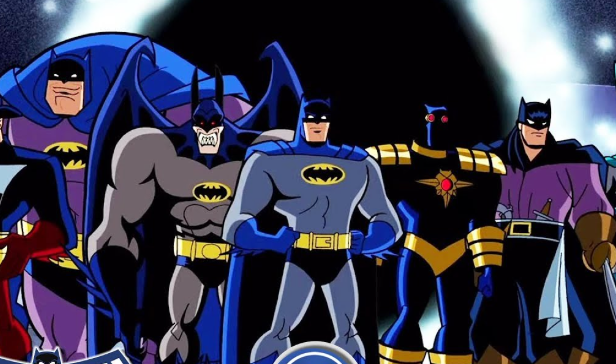
For decades, the Caped Crusader was defined by the shadows. From the gothic architecture of the 1990s animated masterpieces to the gritty, grounded realism of the live-action blockbusters, the world had grown accustomed to a Batman who was a solitary, brooding creature of the night. But then, a vibrant, neon-colored bolt of lightning hit the airwaves, bringing with it a version of the World’s Greatest Detective that many fans hadn’t seen in half a century. Batman: The Brave and the Bold didn’t just break the mold; it shattered the gargoyles and replaced them with high-flying, jet-packed adventures.
This franchise serves as a spectacular love letter to the “Silver Age” of comic books—a time when stories were filled with cosmic oddities, whimsical transformations, and a sense of wonder that prioritized imagination over gritty realism. It dared to ask: “What if Batman wasn’t just a ninja in the dark, but a global (and sometimes universal) adventurer who teamed up with every hero imaginable?” The result was a series that blended high-octane action with a sophisticated, meta-textual understanding of superhero history.
Whether you grew up on the “grim and gritty” Batman or you’re a newcomer looking for a fun entry point into the DC Multiverse, this franchise offers a treasure trove of hidden depths. From its revolutionary take on neglected characters to its deep-seated roots in comic book artistry, here are ten things you likely never knew about the boldest Batman adventure ever told.
1. A Visual Masterpiece Rooted in the Golden and Silver Ages
The aesthetic of this franchise is unmistakable—thick lines, vibrant primary colors, and a Batman with a barrel chest and a heavy jaw. This wasn’t an accidental choice or a simplification of modern techniques; it was a deliberate, meticulous homage to the legendary comic book artist Dick Sprang. Sprang was one of the primary Batman artists during the mid-20th century, known for his “Golden Age” style that emphasized bold, expressive shapes and massive, imaginative vehicles.
By channeling Sprang’s artwork, the showrunners created a visual language that stood in direct opposition to the sleek, angular “Dark Deco” of previous iterations. This Batman looks like he stepped right off a newsstand from the 1950s. The backgrounds often feature the “Kirby Krackle”—a specific artistic technique of using black dots to represent cosmic energy, popularized by the great Jack Kirby. This commitment to the history of the medium allowed the show to feel nostalgic for older fans while appearing fresh and energetic to younger audiences. It turned the screen into a moving comic book, celebrating the tactile feel of ink and paper.
2. The “Outrageous” Rebirth of Aquaman
Before this franchise arrived, the King of the Seven Seas was often the target of many jokes in the superhero community. Many viewers saw Aquaman as a “boring” hero who could only talk to fish. The Brave and the Bold single-handedly changed that perception by reinventing Arthur Curry as a boisterous, adventure-seeking, larger-than-life “sea-king” who refers to every exciting event as “Outrageous!”
Voiced with infectious energy by John DiMaggio, this version of Aquaman became the breakout star of the series. He was reimagined as a hero who tells tall tales, sings his own theme songs, and treats every battle like a grand feast. This characterization was so successful that it influenced how the character was handled in later media across the DC landscape. By leaning into the absurdity of the character rather than trying to make him “edgy,” the writers found the true heart of the hero. He became a symbol of joy and heroism, proving that you don’t need a dark backstory to be the most compelling person in the room.
3. The Cinematic Architecture of the “Cold Open”
One of the most unique structural elements of the franchise is the “cold open”—a self-contained mini-adventure that occurs before the opening credits. These segments often have absolutely nothing to do with the main plot of the episode. Instead, they serve as a way to showcase even more obscure corners of the DC Universe that wouldn’t normally get their own full-length stories.
This format was inspired by the James Bond film series, which traditionally begins with a high-stakes action sequence before the theme song rolls. In this animated world, the cold opens allowed the creators to pair Batman with heroes like Kamandi (the last boy on Earth), the Doom Patrol, or even the obscure G’nort. It created the feeling that Batman’s life is an endless series of adventures occurring simultaneously. It gave the series an incredible sense of scale, suggesting that for every 22-minute episode we saw, there were dozens of other “brave and bold” team-ups happening just off-camera.
4. A Voice That Balanced Camp and Authority
Replacing a legendary voice like Kevin Conroy is a daunting task for any actor. However, Diedrich Bader stepped into the cowl and delivered a performance that was perfectly calibrated for this specific tone. Bader’s Batman is the ultimate “straight man” in a world of chaotic absurdity. He speaks with a deadpan, stoic authority that makes even the most ridiculous situations—like traveling back in time to fight dinosaurs—seem like just another day at the office.
Bader’s performance was influenced by the 1960s live-action portrayal by Adam West, but with a crucial difference: his Batman never feels like a joke. He is 100% committed to the mission, no matter how “Silver Age” it gets. This balance allowed the show to be funny without becoming a parody. Batman remains a formidable, intelligent, and serious hero, while the world around him provides the humor. This “straight-faced” approach to the fantastic is what allowed the show to maintain its stakes while still being one of the most entertaining versions of the character ever produced.
5. The “Mayhem of the Music Meister” Phenomenon
Perhaps the most iconic single moment in the franchise is the musical episode, “Mayhem of the Music Meister!” Starring Neil Patrick Harris as a villain who can control people through song, this episode became a cultural touchstone for the series. It wasn’t just a gimmick; the music was genuinely high-quality, featuring a variety of styles from Broadway-esque showtunes to 1960s pop.
The episode was so well-received that the soundtrack actually charted on major music platforms, a rare feat for a Saturday morning cartoon. It also served as a brilliant exploration of the characters’ inner lives, particularly the unrequited feelings between Black Canary and Batman. The success of this episode proved that the franchise was capable of taking massive creative risks and executing them with professional-grade polish. It remains a fan-favorite, often cited as one of the best musical episodes in the history of television, and it solidified the show’s reputation for being “fearless” in its storytelling.
6. The Meta-Textual Genius of Bat-Mite
One of the most daring episodes of the series features Bat-Mite, a reality-warping imp from the Fifth Dimension who is also Batman’s biggest “fan.” In the episode “Mitefall!”, Bat-Mite becomes bored with the show’s lighter tone and tries to make Batman “dark and gritty” to please a specific segment of the fan base. He literally tries to cancel the show from within the show itself.
This was a brilliant piece of meta-commentary on the state of the Batman fandom. The writers used Bat-Mite to address the criticisms of the show’s “un-serious” nature, arguing that there is room for all versions of the character—both the dark knight and the bright knight. It was a sophisticated way of talking to the audience, acknowledging that while the brooding version of the character is valid, the colorful, imaginative version is just as essential to the mythos. By breaking the fourth wall so effectively, the franchise secured its place as one of the most self-aware superhero stories ever told.
7. Resurrecting the “Rule of Two” with a Twist
In the original comic book series The Brave and the Bold, the hook was always a team-up between two heroes. The animated series stayed remarkably faithful to this “team-up” philosophy, but it used the opportunity to highlight characters that the general public had largely forgotten. While icons like Green Lantern and The Flash appeared, the show truly shined when it featured “C-List” heroes like Blue Beetle (Jaime Reyes), B’wana Beast, and Plastic Man.
By pairing Batman with these lesser-known characters, the show acted as a primer for the vastness of the DC Universe. It didn’t just tell Batman stories; it told DC Universe stories through the lens of Batman. This allowed the writers to explore a massive variety of genres, from space operas and westerns to supernatural horror and high-school drama. Batman acted as the “anchor” that made these more obscure concepts accessible to the audience, effectively functioning as a gateway drug for comic book lore.
8. The Secret Connections to the “DCAU”
While The Brave and the Bold is a completely separate continuity from the famous 1990s “Animated Universe” (DCAU), the creators couldn’t resist dropping several hints and cameos for long-time viewers. Many of the voice actors from previous series returned to play different roles, creating a sense of “vocal legacy.” For example, Kevin Conroy and Mark Hamill—the definitive Batman and Joker for many—appeared together in an episode, but in a heartwarming twist, they played the Phantom Stranger and the Spectre.
Furthermore, the show occasionally referenced the “darker” history of the characters in ways that only seasoned fans would catch. This created a layer of “Easter eggs” that made the show feel like it was in conversation with everything that came before it. It wasn’t trying to replace the previous shows; it was acting as a vibrant companion piece, proving that the multiverse is big enough to hold every version of these characters simultaneously.
9. A Masterclass in Propulsive Storytelling
One of the reasons the franchise remains so rewatchable is its incredible pacing. Because the show was unburdened by the need for “gritty realism,” it could jump from location to location with breathtaking speed. In a single episode, Batman might travel from the depths of the ocean to the center of a black hole, stopping briefly in 19th-century London along the way.
This sense of “propulsive storytelling” was a direct reflection of the way Silver Age comics were written—where the “rule of cool” took precedence over the laws of physics. However, the writers were careful to ensure that the emotional beats still landed. Even in the middle of a chaotic battle with a giant star-conqueror, the show would take a moment to explore the mentor-student relationship between Batman and the young Blue Beetle. This combination of “crazy” ideas and grounded character work is what made the show feel more like a high-speed roller coaster than a standard cartoon.
10. The Legacy of the “Bright Knight”
When the series eventually reached its conclusion, it didn’t go out with a whimper. The final episode was a celebratory, emotional farewell that acknowledged the show’s place in history. The franchise’s lasting legacy was its success in proving that Batman doesn’t have to be miserable to be interesting. It reclaimed the “Bright Knight” persona, showing that heroism can be synonymous with fun, color, and community.
This philosophy paved the way for future projects that leaned into the lighter side of the DC Universe, such as Justice League Action and the LEGO Batman films. It reminded creators and fans alike that at his core, Batman is a character who represents hope and the triumph of the human spirit over darkness. By embracing the “boldness” of its title, this franchise ensured that the Silver Age would never truly die, but would live on in the hearts of a new generation of wayfinders and adventurers.
Further Reading
- The Brave and the Bold: The Bronze Age Omnibus by Various Authors
- Dick Sprang: Batman – The Golden Age Artist by Eric Nolen-Weathington
- The Silver Age of Comics by William Schoell
- Modern Masters Volume 25: James Tucker by Eric Nolen-Weathington (Explores the showrunner’s vision)




Leave a Reply