
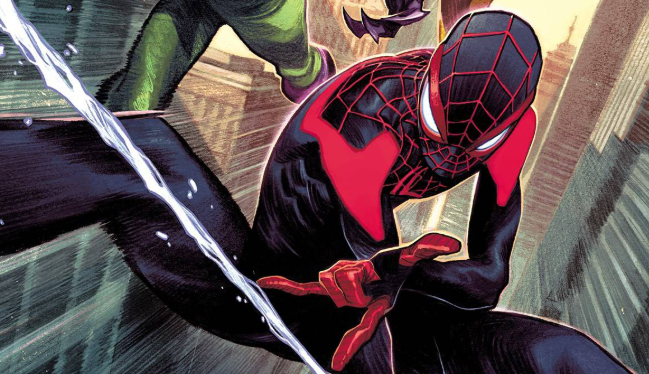
In the sprawling, web-tangled history of Marvel Comics, few characters have captured the global imagination as rapidly or as profoundly as Miles Morales. When he first leaped onto the page, he wasn’t just another hero in a mask; he was a revolutionary shift in the Spider-Man mythos. For decades, the name “Spider-Man” was synonymous with Peter Parker, the hard-luck kid from Queens. But in a bold narrative stroke, the Marvel Universe expanded to include a teenager from Brooklyn who brought a new culture, a new set of powers, and a new weight to the iconic mantra: “With great power comes great responsibility.”
To know Miles Morales is to understand the evolution of the modern superhero. He is a character born of tragedy but defined by his community and his unique heritage. As an Afro-Latino teenager navigating the complexities of high school while hiding a world-altering secret, Miles provides a grounded, contemporary perspective on what it means to be a hero. Whether you’ve seen him swinging through the multiverse on the big screen or discovered him through his gripping comic book runs, there is a deep well of lore to explore. This guide breaks down the ten most vital aspects of Miles’s history, his abilities, and his enduring legacy as a premier wall-crawler.
1. The Tragic Catalyst of the Ultimate Universe
Miles Morales did not begin his journey in the primary Marvel Universe (Earth-616). Instead, he emerged from the “Ultimate Marvel” imprint (Earth-1610), a reality designed to reimagine classic characters for the 21st century. The most defining moment of Miles’s origin is not actually his own spider-bite, but the death of his predecessor. In this universe, Peter Parker died a hero’s death, succumbing to injuries sustained while saving his family from the Green Goblin. This was a seismic event that left a vacuum in the world of heroism.
Miles had actually gained his powers prior to Peter’s death but had initially chosen to hide them, wanting nothing more than to be a normal kid. However, witnessing the funeral of a legend—and realizing he could have helped—transformed his reluctance into a burden of guilt. This “Peter Parker-shaped hole” in his world provided Miles with his primary motivation. He didn’t just want to be a hero; he felt he owed it to the memory of the man who paved the way. This origin distinguishes him from the original Spider-Man; while Peter was motivated by a personal failure to save his uncle, Miles is motivated by the collective loss of a symbol, making his journey one of honoring a legacy while forging a new one.
2. A Genetic Upgrade: Beyond the Standard Spider-Powers
While Miles possesses the classic suite of Spider-Man abilities—superhuman strength, the ability to cling to walls, and an uncanny “Spider-Sense” that warns him of danger—his biology offers several “upgrades” that Peter Parker never had. These powers were the result of a specific strain of the Oz Formula, the same serum that created the Ultimate version of the Green Goblin. One of his most iconic tools is the “Venom Strike,” a bio-electric charge he can release from his hands. This isn’t actual venom; it’s a focused burst of electricity that can temporarily paralyze enemies or short-circuit electronics.
Furthermore, Miles possesses a “Spider-Camouflage” ability, allowing him to turn himself and his clothing completely invisible. This grants him a stealth advantage that changes the way he approaches combat, often allowing him to strike from the shadows or escape overwhelming odds. In more recent developments, Miles has even shown the ability to create “energy threads,” effectively manifesting organic webbing made of pure bio-electricity. These powers make him a more versatile combatant than the original Spider-Man, though they often require significant stamina to maintain. Learning to balance these “extra” gifts with the standard physical requirements of being a web-swinger is a recurring theme in his training and growth as a fighter.
3. The Shadow of the Prowler: A Family Divided
Every Spider-Man has a complicated relationship with their uncle, but Miles’s situation is particularly fraught. His uncle, Aaron Davis, is the notorious career criminal known as the Prowler. In a cruel twist of fate, it was actually Aaron who inadvertently caused Miles’s transformation; a genetically modified spider crawled into Aaron’s bag during a heist at Oscorp, only to bite Miles later during a visit. Aaron is the “black sheep” of the family, a man whose life of crime stands in direct opposition to Miles’s father, Jefferson, a dedicated police officer.
The relationship between Miles and Aaron is a dark mirror of the Peter-Ben dynamic. While Uncle Ben was a moral compass, Uncle Aaron was a cautionary tale—and at times, an outright antagonist. Aaron attempted to manipulate Miles into using his powers for crime, leading to a tragic confrontation that resulted in Aaron’s death. This loss was a formative trauma for Miles, teaching him that the suit doesn’t just come with responsibility; it comes with the danger of being used by those you love. Even though later multiversal resets brought Aaron back in various forms, the specter of the Prowler remains a constant reminder for Miles of the fine line between being a hero and becoming a villain.
4. The Cheeseburger that Saved the Multiverse
One of the most bizarre and famous stories in Miles’s history occurred during the massive Secret Wars event. When the multiverse was collapsing, Miles found himself aboard a “life raft” that survived the destruction of all reality. He eventually landed on Battleworld, a patchwork planet ruled by the god-like Doctor Doom. During the final conflict, Miles encountered the Molecule Man, a nearly omnipotent being who was being used as a power source. In a display of his characteristic kindness and relatable humanity, Miles offered the starving Molecule Man a three-week-old cheeseburger he had kept in his pocket.
This small act of charity had cosmic consequences. When reality was eventually restored, the Molecule Man showed his gratitude by ensuring that Miles and his supporting cast survived the transition into the main Marvel Universe (Earth-616). Not only did Miles find a home in this new reality alongside Peter Parker, but the Molecule Man also resurrected Miles’s mother, Rio, who had previously died in the Ultimate Universe. This “soft reboot” allowed Miles to exist in a world with a living mentor and a complete family, solidifying his place as a permanent fixture of the primary Marvel timeline. It serves as a reminder that for Miles, the most powerful acts are often the most human ones.
5. Ganke Lee: The Ultimate Best Friend and “Guy in the Chair”
Behind every great Spider-Man is a support system, and for Miles, that starts and ends with Ganke Lee. Ganke was the first person Miles trusted with his secret, and his role cannot be overstated. Unlike the often-isolated Peter Parker of the early years, Miles has a partner in his heroics. Ganke is a genius-level student with a passion for Legos and technology, often acting as the technical support and emotional anchor that Miles needs to survive the pressures of a double life.
Ganke provides more than just technical help; he offers a perspective that keeps Miles grounded. He is the one who helps Miles design his suits, researches his enemies, and covers for him when he’s late to class. Their friendship is one of the most celebrated in modern comics because it reflects a genuine, supportive bond between two young men of color. Ganke isn’t just a sidekick; he is the co-architect of the Miles Morales identity. Without Ganke’s enthusiasm and loyalty, Miles might have given up on being Spider-Man long ago. He represents the importance of community and the idea that being a hero isn’t a solitary burden, but a collective effort.
6. A Spider of Two Worlds: Sharing the Mantle
One of the most unique aspects of Miles’s current status is that he is not a “replacement” Spider-Man, but a co-holder of the title. In the current Marvel landscape, both Peter Parker and Miles Morales are active as Spider-Man. This dynamic has allowed for a “mentor and protégé” relationship that has enriched both characters. Peter often views Miles with a sense of pride, seeing in him the future of the hero’s legacy, while Miles looks to Peter for guidance on the impossible moral choices that come with the mask.
Sharing the name “Spider-Man” was initially a source of anxiety for Miles, who worried about being seen as a “knock-off.” However, over time, he has carved out a distinct identity. While Peter often handles global or cosmic threats, Miles is frequently seen as the “neighborhood” Spider-Man, specifically focusing on the streets of Brooklyn and Harlem. This duality allows Marvel to tell two very different kinds of stories under the same banner. Miles has earned his place through countless battles, proving that Spider-Man is not just a person, but an ideal that can be inhabited by anyone with the courage to do what is right.
7. The Cultural Impact of the Afro-Latino Web-Slinger
Miles Morales was created with the specific intention of reflecting the world as it actually looks. As the son of a Black American father and a Puerto Rican mother, his identity is a core part of his narrative. He is a bilingual hero who navigates different cultural spaces, often code-switching between his home life, his school at Brooklyn Visions Academy, and the superhero community. This representation has made him a cultural icon for millions of fans who had never seen themselves reflected in a character as prominent as Spider-Man.
His heritage isn’t just a background detail; it influences his stories, his dialogue, and his worldview. From the music he listens to—hip-hop and R&B—to the food his mother cooks and the way his father views the police force, Miles’s life is textured with the realities of the Afro-Latino experience. This authenticity is a major reason for his massive success across all media. He represents a “New York” that feels lived-in and diverse. For a new generation of readers, Miles is not “the Black Spider-Man” or “the Hispanic Spider-Man”—he is simply their Spider-Man, a hero whose very existence celebrates the beauty of a multicultural world.
8. Leading the Champions: A New Era of Heroism
Miles is not just a solo act; he is a founding member of the Champions, a team of young heroes who decided to strike out on their own after becoming disillusioned with the adult Avengers. Alongside heroes like Ms. Marvel (Kamala Khan) and Nova (Sam Alexander), Miles helped form a group dedicated to social justice and positive change, rather than just punching supervillains. The Champions represent the “activist” side of the Marvel Universe, focusing on issues like human trafficking, climate change, and corporate corruption.
As a leader and core member of this team, Miles has shown a level of maturity that rivals his adult counterparts. His time with the Champions has allowed him to develop his own leadership style—one based on empathy and cooperation rather than authority. This team has become a surrogate family for Miles, providing him with a peer group that understands the unique pressures of being a teenage superhero. Through the Champions, Miles has proved that his influence extends beyond his own neighborhood; he is a voice for his entire generation, pushing for a world where heroes are judged by their hearts rather than their powers.
9. The “Spider-Verse” and Multiversal Destiny
Miles has become the central figure in the concept of the “Spider-Verse,” the idea that there is a vast web of Spider-themed heroes across infinite realities. While the concept began with Peter Parker, Miles has frequently been the emotional heart of these multiversal crossovers. Whether he is teaming up with Spider-Gwen (Gwen Stacy of Earth-65) or leading an army of “Spider-People” against the Inheritors, Miles often finds himself as the “Nexus” character who bridges the gap between different worlds.
This multiversal connection has also led to a romantic tension and deep friendship with Spider-Gwen, a fan-favorite pairing that highlights the “multiversal” nature of modern romance. For Miles, the Spider-Verse is a reminder that he is part of something much larger than himself. It reinforces the idea that the “Spider-Mask” belongs to no single person and no single universe. His interactions with other versions of himself—including “Evil” versions or older, more cynical versions—have forced him to define his own morality and decide exactly what kind of Spider-Man he wants to be. He is the hero who proves that even in an infinite multiverse, a single person can still make a difference.
10. The Mystery of the Oz Formula and Immortality
One of the most intriguing and potentially game-changing aspects of Miles’s biology is the suggestion that he may be immortal. This stems from the nature of the Oz Formula that gave him his powers. In the Ultimate Universe, it was revealed that the Oz Formula grants a form of cellular regeneration that prevents aging and allows individuals to return from seemingly fatal injuries. This was seen most clearly when the Peter Parker of Earth-1610 eventually returned from the grave, revealing he had never truly died.
While this plot point hasn’t been fully explored in the main Marvel 616 continuity, it remains a “ticking clock” in Miles’s lore. The idea that he might outlive everyone he loves adds a layer of existential tragedy to his character. It raises questions about the long-term cost of his powers and whether he is truly human or something more. This “super-soldier” aspect of his origin provides a sci-fi edge to his stories, moving him slightly away from the “radioactive” origins of Peter Parker and closer to the experimental science of characters like Captain America. As Miles continues to age and evolve, the true nature of the Oz Formula remains one of the greatest mysteries in his life.
Further Reading
- Ultimate Comics: Spider-Man Vol. 1 by Brian Michael Bendis
- Spider-Men by Brian Michael Bendis
- Miles Morales: Spider-Man by Saladin Ahmed
- Miles Morales: Suspended by Jason Reynolds
- Spider-Verse by Dan Slott




Leave a Reply