
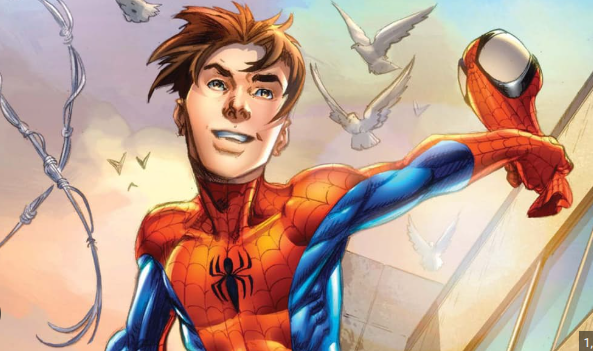
While the world knows the red-and-blue blur that swings between the skyscrapers of Manhattan, the true soul of the legend lies in the quiet, often-struggling life of a boy from Queens. Peter Parker is not just a secret identity; he is the emotional anchor that makes the superhero fantasy feel real. He is the personification of the struggle between personal desire and moral obligation. To understand Spider-Man, one must first understand the triumphs and tribulations of Peter Parker.
This guide serves as a deep-dive exploration into the character of Peter Benjamin Parker. We will strip away the spandex to look at the psychology, the history, and the enduring humanity of the most relatable character in literary history. Whether you are a lifelong fan or a newcomer to the mythos, this is the definitive look at the man behind the mask.
1. The Burden of Intellectual Brilliance
Long before a radioactive spider bite altered his DNA, Peter Parker was defined by his extraordinary intellect. Growing up as a social outcast in high school, his refuge was the laboratory. Peter represents the “science nerd” archetype, but with a layer of depth that transcends tropes. His intelligence is both his greatest tool and his social barrier. It allowed him to invent his iconic web-shooters—a feat that many professional scientists in his universe could not replicate—but it also marked him as a target for bullying.
This brilliance creates a fascinating internal conflict. Peter is often tempted to use his mind for personal gain or to escape his financial hardships, yet his ethics always pull him back. His scientific curiosity drives him to understand his enemies rather than just punch them. This intellectual foundation ensures that Peter is never just a “brawler”; he is a problem-solver who views every battle as a high-stakes experiment where the variables are lives and the conclusion must be justice.
2. The Mid-Century Modern Orphan
The core of Peter Parker’s psyche is shaped by loss. The disappearance or death of his parents, Richard and Mary Parker, left him with a deep-seated need for stability and approval. Raised by his Uncle Ben and Aunt May, Peter found a surrogate family that prioritized kindness and humility over status and wealth. This upbringing in a modest household in Forest Hills, Queens, instilled in him a blue-collar work ethic that defines his adult life.
Being an orphan gives Peter a unique perspective on the world. He values the bonds of chosen family above almost everything else. However, it also creates a lingering fear of abandonment. This fear often manifests in his adult relationships, where he struggles to let people in for fear that his life as a hero will lead to their eventual loss. Understanding Peter means understanding that every heroic act is, in some small way, an attempt to protect the “family” he has left and to be the son his parents and guardians would be proud of.
3. The Foundation of Forest Hills
Geography plays a massive role in who Peter Parker is. While Spider-Man is a creature of Manhattan’s heights, Peter Parker is a product of the residential streets of Queens. Forest Hills represents the grounded, “real world” that Peter fights to return to every night. It is a place of picket fences, aging houses, and the smell of Aunt May’s cooking. This setting contrasts sharply with the high-tech towers of the city, acting as a constant reminder of his humble roots.
This connection to his neighborhood is what makes him the “Friendly Neighborhood” hero. Peter isn’t interested in cosmic hierarchies; he cares about the local shopkeeper and the neighbor whose car was stolen. His loyalty to his roots prevents him from becoming detached from the people he protects. Even when he becomes a world-renowned hero, his heart remains in that small house in Queens, proving that you can take the boy out of the neighborhood, but you can never take the neighborhood out of the man.
4. The Psychology of the “Parker Luck”
In the world of Peter Parker, “The Parker Luck” is a recurring theme that borders on the supernatural. It is the cosmic tendency for things to go wrong for Peter at the exact moment they seem to be going right. If he finally lands a high-paying job, a supervillain will attack during his first hour. If he has a perfect date planned, he will inevitably end up covered in sewer water after a fight with the Lizard.
“The ‘Parker Luck’ is the ultimate literary device for relatability; it mirrors the universal human experience of ‘two steps forward, one step back.’”
This isn’t just a gag; it’s a vital part of his character resilience. Most people would give up after the tenth time their personal life collapsed due to external circumstances. Peter, however, possesses a dogged persistence. He accepts his “luck” with a weary sigh and a sarcastic joke, but he never lets it stop him. This endurance in the face of mundane misery—unpaid bills, broken relationships, and bad luck—is what makes his eventual victories feel earned and profoundly moving.
5. The Ethical Weight of Secret Identities
For many heroes, a secret identity is a convenience. For Peter Parker, it is a moral prison. He keeps his identity secret not out of a desire for mystery, but out of a desperate need to shield his Aunt May and his friends from his enemies. This creates a life built on a foundation of lies. Peter is constantly forced to play the role of the flake, the coward, or the unreliable friend to ensure the safety of those he loves.
The psychological toll of this deception is immense. Peter often has to listen to people he cares about criticize Spider-Man, unable to defend himself. He has to endure the disappointment in his Aunt’s eyes when he misses a dinner for the “hundredth time.” This sacrifice of his reputation is perhaps his most heroic trait. He allows the world to see him as a loser so that the world can have a hero. It is a lonely existence that highlights his immense capacity for self-sacrifice.
6. The Lens of the Daily Bugle
Peter’s career as a freelance photographer for the Daily Bugle is one of the most brilliant ironies in fiction. To pay his bills, he takes photos of himself as Spider-Man and sells them to a man, J. Jonah Jameson, who uses those very photos to smear his name. This dynamic places Peter in the unique position of being a witness to his own public vilification.
Working at the Bugle also connects Peter to the pulse of the city. It keeps him informed about crime and social issues, but it also exposes him to the power of the media. Peter sees firsthand how truth can be twisted, yet he remains a part of the machine because he needs the money to support his Aunt. This professional struggle adds a layer of modern realism to his story. He is a gig-economy worker before the term existed, juggling multiple “hustles” just to survive while performing a thankless public service.
7. The Tragic Romantic Narrative
Peter Parker’s love life is rarely a fairy tale. From his first crush on Betty Brant to his legendary romances with Gwen Stacy and Mary Jane Watson, his relationships are always shadowed by his life as a hero. The tragedy of Gwen Stacy is the defining moment of his young adulthood, a brutal reminder that his powers cannot protect everyone. It instilled in him a deep sense of caution and a fear of intimacy.
However, his relationship with Mary Jane Watson provides the ultimate counterbalance. Where Gwen represented the “innocence” of his youth, MJ represents the resilience of his maturity. She is often the only person who truly knows him, providing a sanctuary where he doesn’t have to be a hero or a “loser”—he can just be Peter. These relationships humanize him, showing his vulnerability and his deep desire for a “normal” life that he knows he can never fully have.
8. The Shield of Quips and Sarcasm
A hallmark of Spider-Man is the constant stream of jokes he cracks during battle. While many think this is just a personality trait, it is actually a psychological defense mechanism for Peter Parker. Peter is naturally shy and anxious. When he puts on the mask, he adopts a persona that allows him to channel that nervous energy into humor. The quips serve two purposes: they distract and annoy his enemies, making them prone to mistakes, and they keep Peter from succumbing to his own fear.
Behind the jokes is a man who is often terrified. Peter faces monsters, gods, and assassins on a nightly basis. The humor is his way of whistling in the dark. It is a tool for survival. By making his enemies seem ridiculous, he makes them less intimidating. This wit is an essential part of the “Peter Parker” side of the hero; it’s the voice of a kid from Queens using his street-smarts and humor to stand up to bullies who are ten times his size.
9. The Evolution from Student to Teacher
One of the most rewarding aspects of Peter’s history is his growth. He doesn’t stay a high school student forever. Over the decades of his publication history, we have seen him graduate college, become a high school science teacher, a researcher, and even a CEO. His stint as a teacher is particularly poignant, as it allows him to give back to the next generation of “outcasts” and “nerds.”
As a teacher, Peter finds a way to use his intelligence and his experiences to guide others without needing a mask. It shows that his desire to help people isn’t tied solely to his superpowers. He is a mentor at heart. Whether he is teaching a student how to balance a chemical equation or teaching a young hero like Miles Morales how to swing between buildings, Peter’s journey from a lost boy to a guiding light is a testament to his character development and his enduring relevance.
10. The Unbreakable Spirit of Queens
Ultimately, what defines Peter Parker is his inability to stay down. In one of the most famous sequences in comic book history, Peter is trapped under tons of machinery, exhausted and nearly defeated. He thinks of Aunt May, he thinks of his responsibility, and through sheer force of will, he lifts the impossible weight. This isn’t a victory of muscle; it’s a victory of spirit.
Peter represents the idea that your circumstances do not define you—your choices do. He could easily have become a villain or a cynical hermit given the tragedies he has faced. Instead, he chooses to be a hero every single day. He chooses to get back up after every heartbreak and every defeat. This unbreakable spirit is why he matters. He is the proof that even the most “ordinary” person carries within them an extraordinary capacity for greatness, provided they have the courage to keep moving forward.
Further Reading
- Spider-Man: No More! (The Amazing Spider-Man #50) by Stan Lee and John Romita Sr.
- The Night Gwen Stacy Died (The Amazing Spider-Man #121-122) by Gerry Conway and Gil Kane
- Spider-Man: Parallel Lives by Gerry Conway and Alex Saviuk
- Peter Parker: Spider-Man – Revelations by Paul Jenkins and Mark Buckingham



One response to “Unmasking the Everyman: 10 Essential Truths About the Man Behind Spider-Man”
[…] Unmasking the Everyman: 10 Essential Truths About the Man Behind Spider-Man […]