
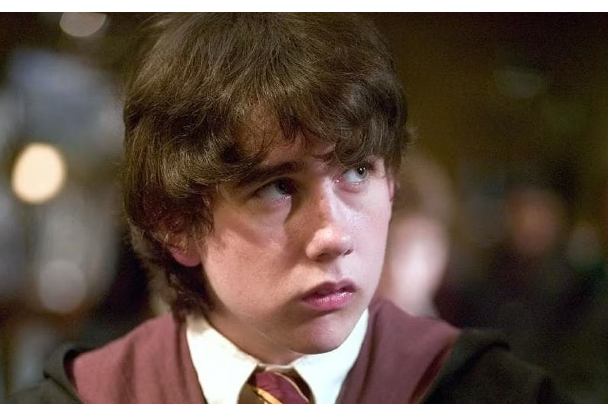
In the hallowed, moving hallways of Hogwarts, it is easy to be dazzled by the boy with the lightning-bolt scar. But if you look closely at the edges of the frame, there is another boy—one who started his journey dropping his toad and failing his potions, only to end it as the defiant warrior who stood alone against the greatest Dark wizard of all time. Neville Longbottom’s story is perhaps the most relatable and inspiring arc in the entire Wizarding World. It is a narrative of the “late bloomer,” a testament to the fact that bravery isn’t always loud; sometimes, it’s a quiet, stubborn refusal to give up.
Neville is a character of immense depth, serving as a foil to Harry Potter in ways that many casual fans might miss. While Harry was the “Chosen One” by fate, Neville was the hero by choice. He wasn’t born with natural athletic prowess or an intuitive grasp of combat magic. He had to claw his way toward confidence through layers of grief, family pressure, and self-doubt. Understanding Neville is key to understanding the core themes of the series: that our choices, far more than our abilities, show what we truly are. This guide explores the ten most critical aspects of Neville’s life, from the prophecy that almost changed everything to his lasting legacy as a protector of the wizarding world.
1. The “Other” Chosen One: The Shared Prophecy
The most shocking revelation in Neville’s history is that the prophecy delivered by Sybill Trelawney could have referred to him just as easily as it did to Harry Potter. The prophecy spoke of a boy born at the end of July to parents who had “thrice defied” the Dark Lord. Both Harry and Neville fit this description perfectly. Had Lord Voldemort chosen to attack the Longbottoms instead of the Potters on that fateful night, Neville might have been the one with the scar, and Harry might have grown up in a different world entirely.
Voldemort’s choice was based on a perceived similarity; as a Half-Blood himself, he chose the Half-Blood Harry, seeing him as the greater threat. Neville, a Pure-Blood from an established magical family, was spared the initial burden of the “Chosen One” mantle, but he carried the weight of that potential destiny nonetheless. This connection highlights the role of “intent” in magic. Neville’s eventual heroism wasn’t dictated by a prophecy, but by his own character. He proved that even if you aren’t the “chosen” hero by fate, you can still become the hero when the world needs you most.
2. The Living Tragedy of Frank and Alice Longbottom
While Harry Potter grew up as an orphan, Neville faced a different, arguably more painful, reality. His parents, Frank and Alice Longbottom, were highly respected Aurors and members of the original Order of the Phoenix. Shortly after Voldemort’s first fall, they were captured and tortured to the point of insanity by Bellatrix Lestrange and a group of Death Eaters using the Cruciatus Curse. They didn’t die; they were left as shells of their former selves, confined to the Janus Thickey Ward at St. Mungo’s Hospital for Magical Maladies and Injuries.
Neville grew up visiting parents who did not recognize him. The most heartbreaking detail of these visits is Alice Longbottom’s habit of giving Neville empty chewing gum wrappers. While his grandmother, Augusta, told him to throw them away, Neville secretly pocketed them, treasuring these meaningless scraps as the only “gifts” his mother could give him. This background of profound, silent grief fueled Neville’s inner strength. Unlike Harry, whose parents were legends of the past, Neville’s parents were a daily reminder of the cost of the war, making his eventual confrontation with their torturers a deeply personal mission of justice.
3. Under the Vulture Hat: The Pressure of Augusta Longbottom
Neville was raised by his paternal grandmother, Augusta Longbottom. A formidable and stern witch known for her tall, vulture-topped hat and her unwavering expectations, Augusta was a double-edged sword in Neville’s life. She loved him dearly, but she constantly compared him to his father, Frank. For much of his childhood, Neville felt like a disappointment, a boy who lacked the “natural” talent of his heroic parents. This pressure was so intense that his family actually feared he might be a Squib—a non-magical person born to wizards—until he was accidentally dropped out of a window and bounced, proving his magical abilities.
Augusta’s shadow cast a long pall over Neville’s self-esteem. He was often seen as “clumsy” or “forgetful” because he was constantly anxious about failing the Longbottom name. However, as the war progressed, Augusta’s perception changed. When Neville began leading the resistance at Hogwarts, she famously expressed her pride, stating that he was finally living up to his parents. Their relationship illustrates the complex nature of family legacy: it can either be a weight that crushes you or the foundation upon which you build your own strength.
4. The Wand Mystery: Why Early Magic Was a Struggle
For the first five years of his education at Hogwarts, Neville struggled significantly with his spellcasting. Many students (and Severus Snape) attributed this to a lack of talent. However, there was a technical reason for his difficulties: Neville was using his father’s old wand. In the world of wandlore, “the wand chooses the wizard.” While a wizard can use a secondhand wand, it will never perform as well as one that has specifically chosen them, especially if the original owner was a powerful and accomplished wizard like Frank Longbottom.
It wasn’t until his father’s wand was broken during the Battle at the Department of Mysteries that Neville obtained his own wand—a cherry and unicorn hair wood from Ollivander’s. This change coincided with a massive leap in his magical ability and confidence. The cherry wand reflected Neville’s true self: resilient, surprisingly powerful, and uniquely his. This detail serves as a metaphor for his entire arc; Neville couldn’t truly shine as long as he was trying to be a carbon copy of his father. He had to break the old tools and find his own path to become the wizard he was meant to be.
5. Herbology: Finding Sanctuary in the Greenhouses
While Neville struggled in the dark dungeons of Potions or the precise movements of Transfiguration, he was a natural prodigy in Herbology. Under the guidance of Professor Pomona Sprout, the Hogwarts greenhouses became Neville’s sanctuary. Plants didn’t judge him for his stutter or his memory lapses; they simply required care, patience, and a steady hand—traits Neville possessed in abundance. His deep knowledge of magical flora often provided practical solutions for his friends during their many adventures.
Neville’s talent for Herbology was more than just a school subject; it was where he first discovered his self-worth. He was the one student who could handle a Mandrake with ease or identify a rare Venomous Tentacula. This affinity for living things highlighted his nurturing nature, which stood in stark contrast to the destructive tendencies of the Death Eaters. His eventual career path was cemented in these soil-stained rooms, proving that there are many different types of intelligence and power in the magical world beyond just “dueling” or “charms.”
6. The 10-Point Bravery: Standing Up to Friends
One of the most defining moments of Neville’s first year—and the entire series—was his decision to stand up to Harry, Ron, and Hermione as they tried to sneak out of the Gryffindor common room. Clad in his pajamas and trembling with fear, he attempted to stop them from breaking school rules, fearing they would lose more points for their house. Albus Dumbledore famously noted during the end-of-year feast: “It takes a great deal of bravery to stand up to our enemies, but just as much to stand up to our friends.”
This moment earned Gryffindor the 10 points needed to win the House Cup, but its significance goes deeper. It established that Neville’s moral compass was already fully formed, even if his magical skills were not. He valued loyalty and rules not out of a desire for control, but out of a genuine love for his community. This “small” act of courage was the seed that eventually grew into the defiance he showed Voldemort years later. It proved that heroism isn’t just about fighting monsters; sometimes, it’s about doing what is right when it’s socially uncomfortable.
7. Leader of the Underground: The D.A. Revival
When Harry, Ron, and Hermione were forced to go on the run to hunt Horcruxes, Hogwarts fell under the tyrannical control of the Carrows—Death Eaters who served as professors. During this dark period, Neville stepped into the vacuum of leadership. Along with Ginny Weasley and Luna Lovegood, he revived Dumbledore’s Army (D.A.), turning the Room of Requirement into a headquarters for student resistance. Neville became the face of the rebellion, enduring physical torture and “punishments” rather than bowing to the new regime.
This era saw Neville’s transformation from a follower into a general. He used the secret passages of the school to smuggle food and keep morale high. He showed a tactical mind and a fearless spirit that inspired the younger students. When Harry finally returned to Hogwarts, he found a Neville who was battle-scarred but unbroken. Neville’s leadership during this year proved that he was no longer the boy who lost his toad; he was a pillar of strength who kept the flame of hope alive when the world seemed to have forgotten it.
8. The Mimbulus Mimbletonia: A Symbol of Growth
In his fifth year, Neville received a rare plant from his Great Uncle Algie: the Mimbulus mimbletonia. A pulsating, grey cactus-like plant covered in boils, it was an odd-looking thing that squirted “Stinksap” when poked. To many, it was as awkward and off-putting as Neville himself seemed to be. However, Neville cared for it with immense pride, and by the end of his time at school, the plant had grown significantly, much like its owner.
The plant serves as a perfect analogy for Neville’s character. It appears unattractive and defensive on the outside, but it is rare, resilient, and possesses unique properties. Neville’s obsession with this plant showed his willingness to find beauty and value in things others overlooked. Just as the Mimbulus mimbletonia thrived under his care, Neville thrived when he finally found an environment (the D.A. and the war effort) where his specific brand of quiet, persistent strength was valued. It is a reminder that being “different” or “thorny” doesn’t mean you lack worth.
9. The Executioner: The Sword of Gryffindor and Nagini
The climax of Neville’s journey occurred during the Battle of Hogwarts. When Voldemort presented Harry’s “dead” body to the defenders of the castle and demanded their surrender, it was Neville who stepped forward. Even when Voldemort mocked him and set the Sorting Hat on fire upon his head, Neville did not flinch. Because of his selfless bravery, he achieved the ultimate mark of a “true Gryffindor”: he pulled the silver Sword of Godric Gryffindor out of the burning hat.
In one fluid motion, Neville decapitated Nagini, the giant serpent and Voldemort’s final Horcrux. This act was mechanically essential to Voldemort’s defeat, as it stripped the Dark Lord of his last anchor to immortality. But symbolically, it was the moment Neville fully stepped into his destiny. He destroyed the creature that had been a source of terror for so many, using the weapon of his house’s founder. It was a full-circle moment where the boy who was once too afraid to speak in class became the executioner of evil.
10. Professor Longbottom: The Legacy at Hogwarts
Following the end of the Second Wizarding War, Neville briefly served as an Auror, helping to round up the remaining Death Eaters and bring justice to the world his parents had fought for. However, his true calling eventually led him back to the place where he first found himself: Hogwarts. Neville became the Professor of Herbology, succeeding Professor Sprout. He eventually married Hannah Abbott, who became the landlady of the Leaky Cauldron, and the couple lived in a flat above the pub.
As a teacher, Neville became a mentor to a new generation of witches and wizards, including Harry’s own children. He was no longer the clumsy student but a respected authority figure who understood, better than anyone, the struggles of those who don’t fit in right away. His legacy is one of endurance. He proved that a “disastrous” start doesn’t dictate a disastrous finish. Neville Longbottom remains a beacon of hope for every student who ever felt they weren’t “enough,” showing that with enough heart and a little bit of soil, anyone can grow into a giant.
Further Reading
- Harry Potter and the Order of the Phoenix by J.K. Rowling (Essential for the Neville/Prophecy connection and the St. Mungo’s scene).
- Harry Potter and the Deathly Hallows by J.K. Rowling (Covers Neville’s leadership of the D.A. and the Battle of Hogwarts).
- The Unofficial Harry Potter Character Compendium by The Editors of MuggleNet (Detailed bio and trivia).
- The Psychology of Harry Potter: An Unauthorized Examination of the Boy Who Lived by Neil Mulholland (Analyzes the trauma and growth of supporting characters like Neville).
- Unlock the Magic: The Ultimate Guide to Watching the Harry Potter Movies in Perfect Order
- The Boy Who Lived Returns: Everything We Know About the Epic Harry Potter TV Series Adaptation
- Beyond the Seven Books: The Definitive Chronological Journey Through the Harry Potter Universe
- The Boy Who Lived: The Ultimate Guide to the Harry Potter Saga and Its Hidden Depths
- 10 Things You Should Know About Fantastic Beasts: The Secrets of Dumbledore (2022)




One response to “10 Things You Should Know About Neville Longbottom – Harry Potter Lore”
[…] 10 Things You Should Know About Neville Longbottom – Harry Potter Lore […]