
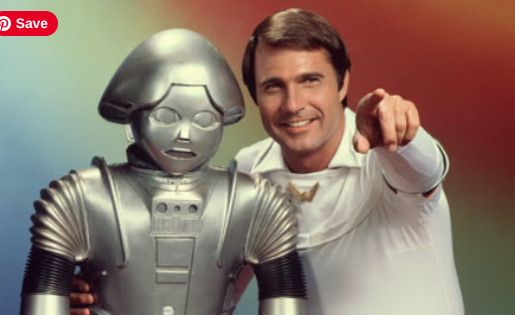
Imagine a world where the disco lights of the late seventies meet the gleaming chrome of a distant future. A world where a single man, frozen in the cold vacuum of space, awakens to find his home planet transformed into a high-tech utopia defended by sleek starfighters and governed by sentient computers. This was the vibrant, campy, and undeniably cool world of Buck Rogers in the 25th Century.
Born from the pulp magazines of the 1920s, the character of Buck Rogers has been reinvented countless times, but perhaps no version captured the public’s imagination quite like the television series that debuted at the tail end of the seventies. It arrived at the height of the space opera boom, offering a lighter, more adventurous alternative to the grit of other cinematic universes. With its blend of James Bond-style suave, Saturday morning serial thrills, and a heavy dose of “space disco” aesthetics, the show became an instant cultural touchstone.
To truly understand the DNA of modern science fiction television, one must look back at this colorful vision of the future. From its groundbreaking female leads to its iconic robotic sidekicks, the series remains a masterclass in escapist storytelling. Whether you are a newcomer curious about the man from the 20th century or a lifelong fan who still has a crush on Wilma Deering, these ten deep dives offer a comprehensive look at the legend of Buck Rogers.
1. Captain William “Buck” Rogers: The Ultimate Fish Out of Water
At the center of the spectacle is Captain William “Buck” Rogers, portrayed by Gil Gerard with a mix of rugged masculinity and a playful, 20th-century wit. The premise is legendary: in the year 1987, NASA pilot Buck Rogers is launched into deep space on the Ranger 3 mission. A freak mishap freezes his life support systems, leaving him drifting in a state of suspended animation for 504 years. When he is revived in the year 2491, he is a man out of time, a relic of a primitive past navigating a world he barely recognizes.
Gil Gerard’s Buck was far from a brooding hero. He was charming, slightly rebellious, and often used his “old-fashioned” intuition to outsmart the hyper-logical computers of the future. This “fish out of water” dynamic provided the show with its best comedic and dramatic beats. Buck brought 20th-century concepts like dancing, slang, and gut-instinct tactics to a sterile, orderly society. This contrast made the character relatable; even as he piloted advanced starcraft, he remained the audience’s surrogate, reminding the future that a little bit of humanity and “gut feeling” is often better than a thousand lines of code.
2. Colonel Wilma Deering: A Trailblazer for Female Heroes
While Buck was the face of the show, Colonel Wilma Deering, played by Erin Gray, was its backbone. As the commander of Earth’s defense forces, Wilma was a high-ranking military officer who was every bit as capable—and often more disciplined—than Buck. In an era when female characters in science fiction were frequently relegated to “damsel in distress” roles, Wilma Deering was a revolutionary figure. She was a skilled pilot, a strategic genius, and a leader who commanded absolute respect from her subordinates.
Erin Gray brought a sophisticated, steely grace to the role. Wilma served as the perfect foil to Buck’s impulsive nature. Their relationship was built on mutual professional respect that slowly evolved into a deep, underlying romantic tension, but the show never let the romance overshadow her competence. Wilma Deering paved the way for future sci-fi icons like Captain Janeway or Ellen Ripley, proving that a female lead could be glamorous, authoritative, and the most dangerous person in the room simultaneously. Her presence ensured that the show appealed to a broad audience, offering a vision of the future where merit, not gender, determined one’s place in the stars.
3. Twiki and Dr. Theopolis: The Robotic Dynamic Duo
No science fiction series of this era would be complete without its mechanical companions, and Buck Rogers offered two of the most memorable in the genre. Twiki, the small “ambiquad” robot voiced by the legendary Mel Blanc, became the show’s breakout star. With his signature “beedi-beedi-beedi” electronic chirp and his street-smart attitude, Twiki provided the comic relief and a sense of wonder. He was often seen wearing Dr. Theopolis, a sentient computer disk belonging to the Computer Council, around his neck.
This partnership was a fascinating take on artificial intelligence. While Twiki was the mobile, physical presence, Dr. Theopolis (voiced by Eric Server) represented the high-minded, intellectual logic of the 25th century. Together, they showcased a future where machines were not just tools, but valued members of society with distinct personalities and eccentricities. Twiki’s frequent mimicry of Buck’s 20th-century slang added a layer of charm, illustrating how Buck’s influence was “corrupting” the rigid machines of the future in the best possible way. The duo remains a hallmark of 80s creature and robot design, blending practical puppetry with voice acting excellence.
4. The Earth Defense Starfighter: A Masterpiece of Miniature Effects
The visual identity of the series was defined by the Earth Defense Starfighter. Sleek, white, and featuring a distinctive needle-nose design with rear-mounted wings, the Starfighter looked like a high-speed interceptor meant for the vacuum of space. These ships were used in the show’s many dogfights, usually against the sinister Draconian Marauders. The miniature effects work, led by veteran artists, gave the ships a weight and realism that made the space battles feel visceral and exciting.
The Starfighter wasn’t just a vehicle; it was a symbol of Earth’s technological peak. The cockpit interiors were filled with blinking lights and CRT monitors, creating a “lived-in” high-tech aesthetic. Interestingly, the show frequently reused high-quality footage and models from other contemporary space productions to save on costs, a common practice that helped maintain the high production values for which the show was known. For many fans, the Starfighter remains one of the most beautiful ship designs in television history, capturing the optimistic, aerodynamic futurism of the late 70s and early 80s perfectly.
5. Princess Ardala and the Draconian Empire
Every great space hero needs a formidable antagonist, and the Draconian Empire provided a glamorous, dangerous threat. At the head of the Draconian forces was Princess Ardala, played with seductive villainy by Pamela Hensley. Ardala was not your typical world-conquering tyrant; her motivations were often personal, driven by her obsession with Buck Rogers and her desire to prove her superiority over Earth. Accompanied by her hulking, silent bodyguard Tigerman and her advisor Kane, Ardala brought a touch of “pulp” melodrama to the series.
The Draconians represented the classic “outer space invaders” trope but updated with the high-fashion sensibilities of the era. Their ships, costumes, and technology were gilded and opulent, contrasting with Earth’s more functional, utilitarian designs. Ardala’s constant attempts to lure Buck to the dark side—often with the promise of power and luxury—added a layer of “James Bond villain” energy to the show. Her character highlighted the series’ roots in adventure serials, where the villains were as charismatic and memorable as the heroes they opposed.
6. The Tonal Shift: Season 1 vs. Season 2
One of the most discussed aspects of the series among enthusiasts is the radical shift in tone between the first and second seasons. The first season was a campy, high-energy adventure set primarily on Earth, focusing on the defense of the planet and the glamorous world of New Chicago. It was filled with “space disco” scenes, humor, and a lighthearted vibe. However, for the second season, the producers decided to take the show in a more serious, Star Trek-esque direction.
In the second season, the action moved from Earth to the deep-space exploration vessel The Searcher. New characters were introduced, including the wise Admiral Asimov and the enigmatic Birdman, Hawk. The tone became more somber and philosophical, focusing on the search for the lost tribes of Earth. While this shift was jarring for some fans, it allowed the show to explore deeper sci-fi themes and different types of storytelling. This dual identity makes the series unique; it effectively contains two different visions of the future within a single production run, offering something for fans of both campy adventure and serious exploration.
7. Hawk the Birdman: A New Breed of Alien Ally
The introduction of Hawk in the second season brought a new level of depth to the show’s mythology. Played by Thom Christopher, Hawk was the last of a race of sentient bird-people. His character was defined by a tragic backstory—his people had been hunted to near extinction by humans—leading to an initial conflict with Buck. However, they eventually formed a powerful bond, with Hawk becoming the team’s most formidable warrior and a spiritual guide.
Hawk’s design was a marvel of the era’s makeup and costume work. His feathered headpiece and intense, piercing performance made him feel truly “other.” Unlike the more human-centric characters of the first season, Hawk provided a perspective on the universe that was rooted in nature and tribal tradition. His presence allowed the show to address themes of prejudice, environmentalism, and redemption. Hawk quickly became a fan favorite, standing as a testament to the show’s ability to evolve and introduce compelling new lore even late in its run.
8. The “Space Disco” Aesthetic and 80s Futurism
To watch the series today is to take a trip back to a very specific vision of the future—one heavily influenced by the fashion and music of the late 70s and early 80s. This is often referred to as “Space Disco.” From the shimmering spandex jumpsuits and feathered hair to the neon-lit nightclubs and pulsing electronic soundtracks, the show was a direct reflection of the culture that produced it. The architecture of “New Chicago” featured clean lines, white domes, and transparent tubes, representing a sanitized, optimistic future.
This aesthetic is what gives the show its “evergreen” charm. It doesn’t try to be gritty or hyper-realistic; it embraces the spectacle. The use of bright colors and high-gloss sets created a world that felt vibrant and full of life. While modern sci-fi often leans into “used universe” realism, Buck Rogers presents a future that you actually want to live in—a world of high adventure where everyone looks fantastic and the party never ends. This visual style has had a massive influence on modern “retrowave” aesthetics, proving that the 25th century was as much about style as it was about science.
9. Reusing the Legends: The Battlestar Galactica Connection
In the world of television production, efficiency is key, and Buck Rogers shared a deep DNA with another legendary space series: Battlestar Galactica. Both shows were produced by Glen A. Larson, and they shared more than just a creator. If you look closely at the background of many Buck Rogers episodes, you will see costumes, props, and even entire cockpit sets that were originally built for the Galactica production.
This “shared universe” of props helped give both shows a consistent, high-budget feel. The Cylon “Centurion” suits were even repurposed for different robotic roles, and much of the starship footage was meticulously edited to fit the new narrative. This connection is a fascinating piece of industry history, showcasing how creators maximized their resources to deliver big-screen thrills on a television budget. For enthusiasts, spotting the “Galactica” Easter eggs in the 25th century is a popular pastime that adds another layer of enjoyment to the viewing experience.
10. The Legacy: From Pulp Magazines to TV Legend
The ultimate significance of the series lies in how it successfully bridged the gap between different eras of science fiction. It took a character from the 1920s pulp magazines and 1930s radio serials and made him relevant for a modern audience. It showed that the “Man Out of Time” trope was timeless, capable of being adapted to reflect the hopes and anxieties of any generation.
The series remains a cornerstone of the “golden age” of television sci-fi. It proved that space opera could be successful on the small screen, paving the way for the wave of serialized genre shows that followed in the late 80s and 90s. Its influence can be felt in shows like Farscape, Stargate SG-1, and even modern superhero films that balance humor with high-stakes action. Buck Rogers in the 25th Century remains a shining example of pure imagination—a show that invited us all to look at the stars and wonder what it would be like to wake up 500 years in the future and save the world.
Further Reading
- The History of Buck Rogers by Ray Williams
- Erin Gray: My Life in the 25th Century by Erin Gray
- Space Disco: The Visual History of 70s Sci-Fi by Marcus J. Leadley
- The Glen A. Larson Guide to Television Production by Christopher Thomas
- 10 Twin Peaks TV SHOW Facts That Still Puzzle Fans
- 10 Poltergeist (1982) Movie Facts That Are Still Creepy
- 10 Hellraiser (1987) Movie Facts That Built Its Legacy
- 10 Essential Facts About Predator (1987) – Movie Facts
- 10 Things You Probably Didn’t Know About The Actor Eddie Murphy
- 10 Things You Should Know About Ferris Bueller’s Day Off (1986) – Movie Facts and Hidden Details
- 10 Things You Should Know About Beverly Hills Cop (1984) – Movie Facts and Hidden Details
- 10 Things You Should Know About Ghostbusters 2 (1989) – Movie Facts and Hidden Details
- 10 Things You Should Know About The Thing (1982) – Movie Facts and Hidden Details
- Stranger Things – Season 5 Full Recap and Spoilers Explained



