
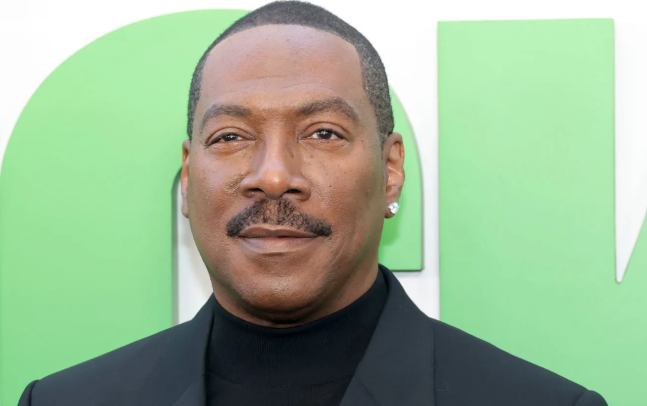
The King of Comedy: 10 Surprising Truths About the Legendary Eddie Murphy
Westeros has its kings, but Hollywood has its icons—and few have ever ruled the screen with the sheer charisma and versatility of Eddie Murphy. From his meteoric rise as a teenager on live television to becoming one of the highest-grossing actors in cinematic history, Murphy’s career is a masterclass in evolution. He didn’t just tell jokes; he redefined the “blockbuster” and proved that one man could lead an entire army of characters—often within the same movie.
While the world knows his infectious laugh and his wisecracking detectives, the story behind the man is filled with unexpected turns, record-breaking gambles, and a surprising musical legacy. Whether he was saving a legendary comedy institution from the brink of extinction or voicing the most beloved sidekick in animation history, Murphy’s impact on global culture is undeniable. Here are ten things you probably didn’t know about the man who turned comedy into a billion-dollar empire.
1. The Teenager Who Saved Saturday Night Live
In the early years of the 1980s, the legendary sketch show Saturday Night Live was facing a dire crisis. With the original cast and creators gone, the show was struggling to find its footing and was dangerously close to being canceled. Enter a 19-year-old kid from Brooklyn. Eddie Murphy was so young when he joined the cast that he hadn’t even reached the legal drinking age, making him one of the youngest performers in the show’s history.
His impact was instantaneous. Characters like the cynical “Grown-up Buckwheat,” the street-smart “Mr. Robinson,” and his surly version of “Gumby” became cultural touchstones. Critics and historians frequently credit Murphy with being the sole reason the show survived that “wilderness” period. His talent was so undeniable that he eventually became the only cast member in the show’s history to host an episode while still being a regular performer—a feat necessitated when the scheduled host fell ill. Without this teenager’s comedic brilliance, the landscape of late-night television might look entirely different today.
2. A Multi-Million Dollar Record-Breaking Debut
Most actors spend years working for small paychecks before seeing a significant payday, but Murphy’s transition from television to the big screen was historic. For his very first film, the gritty action-comedy 48 Hrs., he received a staggering $1 million. This made him the first actor ever to receive a seven-figure salary for a film debut.
The gamble paid off for the studio, as Murphy’s chemistry with Nick Nolte reinvented the “buddy cop” genre. His performance was so electric that it immediately propelled him to A-list status. Interestingly, Murphy wasn’t even the first choice for the role—several established stars were considered before the producers took a chance on the young comedian. That single million-dollar check didn’t just set a record; it signaled the arrival of a box-office powerhouse who would go on to gross over $6 billion globally throughout his storied career.
3. The Musical Bet with Richard Pryor
While the world knows him as a comedian, Murphy has always harbored a serious passion for music. His foray into the recording studio wasn’t just a whim; it reportedly began with a high-stakes bet. Legendary comedian Richard Pryor supposedly bet Murphy that he couldn’t actually sing or have a hit record. Murphy, never one to back down from a challenge, took the bet seriously and leaned into his musical talents.
The result was the 1985 hit single “Party All the Time,” produced by the “Super Freak” himself, Rick James. The song wasn’t just a vanity project; it reached number two on the Billboard Hot 100, held off from the top spot only by a Lionel Richie classic. Murphy released several studio albums, proving he had the vocal chops to match his comedic timing. Even to this day, “Party All the Time” remains a staple of pop culture, proving that Murphy’s talent extended far beyond the stand-up stage and into the realm of legitimate chart-topping success.
4. A Master of Disguise Inspired by Peter Sellers
One of Murphy’s most recognizable trademarks is his ability to play multiple characters in a single film, often disappearing under layers of sophisticated prosthetics. This isn’t just a gimmick; it’s a deeply rooted tribute to his acting hero, Peter Sellers, known for his multi-role performances in Dr. Strangelove.
Beginning with Coming to America, Murphy pushed the boundaries of what was possible with practical effects. In that film alone, he played four distinct characters, including the elderly Jewish man in the barbershop, Saul. This tradition continued in The Nutty Professor and Norbit, where he would often play an entire family of characters. These roles required him to spend upwards of six hours in the makeup chair every morning before filming even began. His commitment to these transformations helped him win over a wider, more general audience, blending high-concept comedy with incredible physical acting that made audiences forget they were looking at the same man.
5. The Voice That Defined a Decade of Animation
In the realm of voice acting, Murphy is responsible for two of the most iconic animated characters in history: Mushu the dragon in Mulan and Donkey in the Shrek franchise. While many celebrities provide voices for animated films, Murphy’s performance as Donkey is widely considered a gold standard. He brought a fast-talking, soul-singing energy to the character that became the heart of the film.
His work on Shrek was so acclaimed that he earned a BAFTA Award nomination for Best Actor in a Supporting Role—a rare feat for a voice-only performance. Fans have often pointed out a hilarious “meta” connection between his two most famous voice roles: in Mulan, he plays a dragon, and in Shrek, his character Donkey famously falls in love and marries a dragon. This unintentional synergy has led to countless fan theories and remains a favorite piece of trivia for animation enthusiasts who grew up with his voice as a constant presence.
6. The Sylvester Stallone Connection to Beverly Hills Cop
It is impossible to imagine anyone other than Murphy as the fast-talking Detroit detective Axel Foley. However, Beverly Hills Cop was originally written as a much darker, gritty action movie intended for Sylvester Stallone. In that version, the character was a rugged, serious lawman, and the script lacked the comedic wit that eventually defined the movie.
When Stallone left the project just weeks before filming began to pursue other ventures, the producers decided to pivot the tone of the movie to fit Murphy’s style. They hired a new writer to inject humor and allowed Murphy to improvise many of his most famous lines—including the legendary “banana in the tailpipe” routine. This last-minute change transformed what could have been a standard action flick into a cultural phenomenon that topped the box office for months. It proved that Murphy wasn’t just a supporting actor; he was a leading man who could carry a massive franchise on his own.
7. He Has a Secret Philanthropic Legacy
Behind the scenes, Murphy has a long history of quiet philanthropy, specifically regarding the health crises that affected his close friends. In the early 1990s, he became a vocal advocate for research and awareness during the height of the AIDS crisis. This personal mission was fueled by the loss of his close friend and fellow comedian, Arnel Schwerner.
Murphy didn’t just donate funds; he used his massive platform to help destigmatize the disease at a time when many public figures remained silent. He has also been a major supporter of the Screen Actors Guild’s various foundations and has consistently worked to provide opportunities for underrepresented voices in the entertainment industry. While he rarely seeks publicity for his charitable work, his peers often cite him as one of the most generous and supportive figures in Hollywood, deeply committed to the well-being of the creative community.
8. The Youngest Person to Receive the Mark Twain Prize
In the world of comedy, there is no higher honor than the Mark Twain Prize for American Humor. It is awarded to those who have had a profound impact on American society in the way of the great 19th-century novelist and humorist. In 2015, Murphy was honored with this prestigious award, joining the ranks of the greatest comedic minds in history.
The ceremony was a testament to his influence, as a “who’s who” of modern comedy—including Chris Rock, Dave Chappelle, and Arsenio Hall—gathered to pay tribute to the man who paved the way for them. Many of these comedians grew up watching Murphy on television and in film, and they credit his “Raw” and “Delirious” specials as the blueprints for their own careers. His win solidified his legacy as more than just a funny actor; he was recognized as a foundational pillar of American humor whose influence will be felt for generations.
9. He Replaced a Sick Host While Still a Cast Member
In December 1982, a unique moment in television history occurred. Actor Nick Nolte was scheduled to host Saturday Night Live to promote 48 Hrs. alongside his co-star, Eddie Murphy. However, Nolte became too ill to perform at the last minute. Instead of scrambling for a new celebrity host, the producers did something unprecedented: they let Eddie Murphy host.
This made Murphy the first and only person to ever host the show while still being a member of the regular cast. He famously opened the show by saying, “Live from New York, it’s the Eddie Murphy Show!” This moment was a formal acknowledgment of what everyone already knew: Murphy was the star of the program. His ability to step into the spotlight and carry the entire 90-minute broadcast on his shoulders cemented his status as a prodigy and signaled to the world that he was ready for much bigger stages.
10. His Traumatic Childhood Influenced His Humor
While Murphy often projects an aura of effortless confidence, his early life was marked by significant challenges. After his father passed away and his mother became ill, Murphy and his brother spent time in foster care. This period of instability was deeply influential in the development of his sense of humor. He has stated in interviews that his ability to make people laugh was a survival mechanism that he honed during those difficult years.
Later, he was raised by his mother and stepfather in Roosevelt, New York, where he began imitating his heroes like Charlie Chaplin and Muhammad Ali. He was performing stand-up in clubs by the age of 15, often having to be driven to gigs by his mother because he wasn’t old enough to drive. This early exposure to the realities of life, combined with a fierce drive to succeed, gave his comedy an edge and an authenticity that resonated with people from all walks of life.
Further Reading
- Eddie Murphy: The Life and Times of a Comic Icon by Frank Sanello
- Saturday Night: A Backstage History of Saturday Night Live by Doug Hill and Jeff Weingrad
- The History of Stand-Up: From Hippocrates to George Carlin by Wayne Federman
- Wild and Crazy Guys: How the Comedy Mavericks of the ’80s Changed Hollywood Forever by Nick de Semlyen
- 10 Things Every Fan Should Know About Sabrina Carpenter
- 10 Things Every Fan Should Know About Bad Bunny
- 10 Things Every Fan Should Know About The Weeknd
- 10 Things Every Fan Should Know About Taylor Swift
- 10 Things You Probably Didn’t Know About The Actor Eddie Murphy
- 10 Things You Need To Know About Tom Hiddleston
- 10 Things You Should Know About The Band Oasis
- 10 Shocking Movie Performances by Singers Who Proved Everyone Wrong
- 10 Things You Should Know About Keeping Up With The Kardashians TV Empire
- 10 Things You Should Know About Bruno Mars



