Beyond the Slime: 10 Shocking Secrets and Hidden Details You Never Noticed in Ghostbusters II
When the proton packs were first holstered, many believed the supernatural threats to New York City had been permanently neutralized. However, the 1989 sequel to the paranormal phenomenon proved that you can’t keep a good spirit down—especially when there’s a river of psychomagnotheric slime flowing beneath the streets. While the original film often overshadows its successor in the cultural zeitgeist, Ghostbusters II is a masterclass in world-building, practical effects, and character-driven comedy.
Revisiting this chapter of the franchise is like opening a time capsule filled with “New Jack Swing” beats and neon-pink goo. It presents a New York that has grown cynical, having forgotten the heroes who saved it from a giant marshmallow man. This narrative mirror reflects a universal truth: yesterday’s hero is often today’s nuisance. To truly appreciate the depth of this sequel, one must look past the surface-level scares and dive into the intricate production details that define its legacy. From the grueling physical demands of the “slime blowers” to the complex layering of the film’s primary antagonist, there is a wealth of history buried under the Manhattan Museum of Art.
1. The Metaphorical Weight of the “Psychomagnotheric” Mood Slime
The primary antagonist of the film isn’t just a painting or a river of goo; it is the collective negativity of New York City. The “Mood Slime” serves as a brilliant narrative device, acting as a physical manifestation of human emotion. In the world of the Ghostbusters, if you are rude to a waiter or yell at a taxi driver, you are literally fueling a supernatural apocalypse. This concept of “pyschomagnotheric” energy—material that reacts to human feelings—was a creative way to ground the supernatural in relatable human behavior.
Producing this slime on set was no small feat. The crew used various substances, including methocel (a food thickener) and massive amounts of pink pigment, to create a texture that looked both organic and alien. When the characters interact with the slime, the actors had to convey a sense of genuine repulsion or, in the case of the “positively charged” slime, an almost drug-like euphoria. This duality represents the core theme of the movie: the power of human connection versus the destructive nature of isolation. The slime is a mirror; it shows the city exactly what it is putting out into the universe. By making the villain a byproduct of urban rudeness, the film offers a satirical take on the “mean streets” of the big city, suggesting that a little kindness might actually be the ultimate ghost-hunting tool.
2. The Complex Dual Performance of Vigo the Carpathian
Vigo the Carpathian remains one of the most imposing villains in cinema history, a “Scourge of Carpathia” and “Sorrow of Moldavia.” However, many fans are surprised to learn that Vigo was brought to life by two different men. On camera, the physical presence of Vigo was provided by Wilhelm von Homburg, a former boxer and wrestler whose stern features and hulking frame gave the character a palpable sense of dread. Von Homburg’s performance was intense, but there was a significant hurdle: his voice did not match the ancient, booming authority required for a 16th-century sorcerer.
To solve this, the production brought in the legendary Max von Sydow to provide the character’s voice. Von Sydow, known for his work in high-art cinema and epic fantasies, lent a gravitas to Vigo that elevated him from a mere movie monster to a legendary threat. This “Frankensteined” performance created a character that felt both physically grounded and mythologically vast. Furthermore, von Homburg was reportedly unaware that his voice was being replaced until he saw the finished film, a behind-the-scenes drama that mirrors the treachery of the character he portrayed. The painting itself was a masterpiece of set design, created with subtle optical illusions to ensure that Vigo’s eyes seemed to follow the characters—and the audience—around the room, creating a persistent sense of unease.
3. The Grueling Reality of the Heavy Slime Blowers
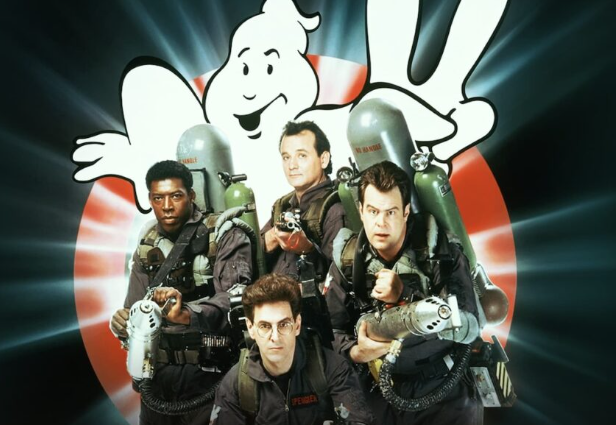
In the original film, the Ghostbusters utilized proton packs that were iconic but relatively streamlined. For the sequel, the team introduced “Slime Blowers”—massive tanks designed to spray positively charged goo. While they look fantastic on screen, these props were a nightmare for the actors. Each Slime Bower weighed approximately 60 to 70 pounds when fully loaded. Unlike the proton packs, which were mostly hollow shells, the Slime Blowers were dense, cumbersome, and required the actors to move with a specific lumbering gait that wasn’t entirely scripted—it was a result of physical exhaustion.
The actors, particularly Dan Aykroyd and Ernie Hudson, had to endure long days of filming while strapped into these heavy rigs. The physical toll was significant, contributing to the “blue-collar” feel of the characters. These weren’t polished superheroes; they were paranormal plumbers doing the heavy lifting. The use of practical slime added another layer of difficulty, as the sets became incredibly slippery and hazardous. This commitment to physical props over early CGI gives the film a tactile, “lived-in” quality that modern digital effects struggle to replicate. When you see the Ghostbusters struggling to aim those nozzles, you aren’t just seeing acting—you’re seeing the reality of hauling industrial-grade equipment through a movie set.
4. The Statue of Liberty’s “Walking” Practical Effects
One of the most ambitious sequences in the film involves the Ghostbusters using positively charged slime and a high-powered sound system to animate the Statue of Liberty. While modern audiences might expect this to be a purely digital creation, the production relied heavily on a mixture of massive physical models and clever camera perspectives. A scale model of Lady Liberty’s head and torch was constructed, allowing the actors to physically stand inside and interact with the “controls” (which famously included an NES Advantage controller).
To simulate the statue’s movement through the streets of New York, the special effects team used a combination of “man-in-a-suit” techniques and intricate puppetry. A performer in a detailed Statue of Liberty suit walked through a miniature New York City set, which was filmed at a high frame rate to create a sense of massive scale and slow, heavy movement. This blending of techniques—large-scale sets, miniatures, and suit performance—created a sequence that feels surprisingly grounded despite its absurd premise. The decision to use the Statue of Liberty was also a symbolic one; she is the ultimate icon of New York, and using her to combat the “hate” flowing through the city’s veins provided a powerful, if slightly campy, emotional climax that resonated with the themes of unity and hope.
5. The Hidden Cameos and Family Connections
The production of the sequel was very much a family affair, with several cameos hidden in plain sight. One of the most notable is the appearance of Jason Reitman, the son of the film’s director, Ivan Reitman. He plays the “brown-haired boy” at the birthday party who tells the Ghostbusters they are “full of it” and that his dad says they are “frauds.” This meta-commentary on the Ghostbusters’ fading fame is even funnier knowing the real-life connection between the actor and the director. Additionally, Catherine Reitman, Ivan’s daughter, also appears in the film as a girl on the street.
The family ties extend beyond the director’s chair. Bill Murray’s brother, Brian Doyle-Murray, plays the character of Jack Hardemeyer, the Mayor’s meddling assistant. Brian brings a perfect “bureaucratic foil” energy to the role, clashing with the Ghostbusters at every turn. These connections contributed to the palpable chemistry on set. The actors weren’t just colleagues; they were a tight-knit group that had already conquered the world once. This sense of familiarity allowed for a great deal of improvisation, particularly in the courtroom scene and the banter within the Ghostbusters’ firehouse, making the characters feel like a genuine, albeit dysfunctional, family unit.
6. The Lost Scenes and the “Original” Darker Tone
The version of the film that reached theaters was significantly different from some of the earlier drafts and filmed sequences. Originally, the movie had a much darker tone, including a sequence where the “jogger ghost” was a more prominent threat. There were also extended scenes involving the character of Louis Tully (Rick Moranis) attempting to capture a ghost on his own, which would have showcased his growth from a possessed accountant to a bumbling but brave “fifth Ghostbuster.”
One of the most famous “lost” sequences involved a possessed fur coat attacking a woman on the street—a scene that was teased in promotional materials but largely trimmed in the final edit. The editing process focused on keeping the pacing brisk and the tone balanced between comedy and light horror. However, these deleted snippets, many of which have surfaced in behind-the-scenes documentaries, reveal a film that was willing to push the boundaries of “PG” horror. The shift toward a more family-friendly, optimistic ending (the city singing together to defeat Vigo) was a deliberate choice to provide a more uplifting conclusion than the more chaotic, action-heavy finales considered during pre-production.
7. The Evolution of the Ecto-1A and the New Gear
The Ghostbusters didn’t just return; they returned with an upgrade. The Ecto-1, the iconic 1959 Cadillac Miller-Meteor ambulance, was revamped into the Ecto-1A. This version of the car featured more elaborate roof racks, digital scrolling signs, and a more cluttered, high-tech aesthetic that reflected the team’s attempt to modernize their business. The car itself became a character, representing the “more is more” philosophy of the late 1980s.
Beyond the car, the uniforms also saw a subtle but important change. The team swapped their tan jumpsuits for a darker, navy blue/charcoal grey variant during certain parts of the film. This change was meant to signify a more “professional” and “tactical” approach to their work, though they eventually reverted to the classic tan for the finale. The introduction of the “Giga-meter”—a device used to measure supernatural energy—added more scientific “technobabble” to the script, helping to ground the fantastical elements in a pseudo-scientific reality. These aesthetic shifts were essential for making the sequel feel like a progression of the story rather than a mere carbon copy of the first outing.
8. The Soundtrack’s Pivot to New Jack Swing
While the first film’s theme song by Ray Parker Jr. is legendary, the sequel took a bold step by leaning into the contemporary sound of the era: New Jack Swing. The soundtrack featured Bobby Brown, who was at the height of his fame. His hit “On Our Own” became the anthem for the film, blending hip-hop beats with pop sensibilities. This musical choice was a reflection of the changing landscape of New York City itself—moving from the gritty, post-punk feel of the early 80s to a more polished, urban sound.
Bobby Brown even made a cameo in the film as a doorman at the Mayor’s mansion. The integration of the music into the film’s identity was a savvy marketing move, but it also served a narrative purpose. The upbeat, energetic tracks provided a counterpoint to the “negativity” of the mood slime. The music represented the vibrant, living pulse of the city that Vigo was trying to suppress. Even the incidental score by Randy Edelman (replacing the first film’s Elmer Bernstein) moved away from the orchestral, spooky tones of the original toward something more whimsical and synth-driven, reinforcing the film’s unique identity within the franchise.
9. The Subterranean World: The Pneumatic Transit Line
One of the most visually striking elements of the film is the discovery of the abandoned “New York Pneumatic Railroad.” This was not entirely a work of fiction; it was based on the real-life Beach Pneumatic Transit, New York’s first attempt at an underground transit system. In the film, this tunnel serves as the conduit for the river of slime. The production design of the tunnel—with its arched brickwork and Victorian-industrial aesthetic—provides a hauntingly beautiful backdrop for the team’s exploration.
The “Van Horne” station mentioned in the film is a nod to the historical layers of New York. By placing the source of the supernatural threat in the city’s forgotten history, the filmmakers tapped into the “urban legend” vibe that makes ghost stories so effective. The tunnel sequence, featuring the “severed heads on spikes,” remains one of the most frightening moments in the franchise. It serves as a reminder that beneath the modern, cynical exterior of the city lies a dark, forgotten past. This blend of real-world history and supernatural fiction is a hallmark of the series, making the world feel expansive and deeply rooted in the soil (and slime) of Manhattan.
10. The Theme of Redemption and the “Ordinary Hero”
At its core, the sequel is a story about redemption. When the movie begins, the Ghostbusters are at their lowest point—sued into oblivion, performing at children’s parties, and largely forgotten by the public. This narrative choice was bold; it stripped the characters of their “world-saver” status and forced them to prove their worth all over again. It speaks to the “blue-collar” spirit of the franchise: these are men who do a job that no one else wants to do, for a city that doesn’t always appreciate them.
The finale, where the citizens of New York sing “Auld Lang Syne” to weaken Vigo’s shell of hate, is the ultimate payoff for this theme. It suggests that the Ghostbusters don’t just save the city with lasers; they save it by reminding people of their shared humanity. This emphasis on the power of collective positivity was a direct response to the “greed is good” era of the late 80s. By the time the credits roll, the team hasn’t just defeated a medieval sorcerer; they’ve restored the soul of New York. This emotional resonance is why the film continues to find new fans—it’s a reminder that even when things are at their slimiest, there is always a way back to the light.
Further Reading
- Ghostbusters: The Ultimate Visual History by Daniel Wallace
- Making Ghostbusters by Don Shay
- The Art and Making of Ghostbusters by Insight Editions
- Ghostbuster’s Daughter: Life with My Dad, Harold Ramis by Violet Ramis Stiel
- 10 Essential Facts About Pulp Fiction (1994) – Movie Facts
- 10 Essential Facts About Predator (1987) – Movie Facts
- 10 Essential Facts About The Texas Chainsaw Massacre (1974)
- 10 Things You Probably Didn’t Know About The Actor Eddie Murphy
- 10 Things You Should Know About Ferris Bueller’s Day Off (1986) – Movie Facts and Hidden Details
- 10 Things You Should Know About Beverly Hills Cop (1984) – Movie Facts and Hidden Details
- 10 Things You Should Know About Ghostbusters 2 (1989) – Movie Facts and Hidden Details
- 10 Things You Should Know About The Thing (1982) – Movie Facts and Hidden Details
- 10 Things You Should Know About Jaws (1975) – Movie Facts and Behind-the-Scenes Insights
- Stranger Things – Season 5 Full Recap and Spoilers Explained