
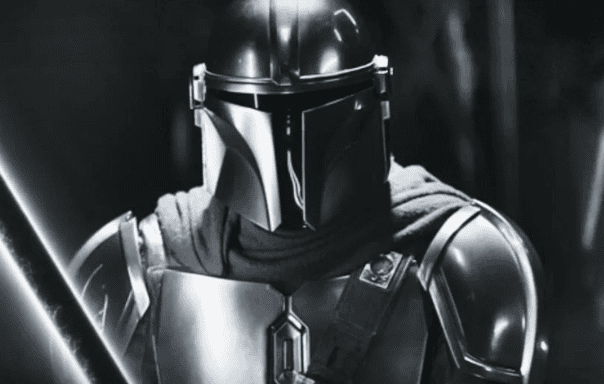
In the lawless expanses of the Outer Rim, where the authority of the New Republic thins into a whisper, a silver-clad figure emerged to redefine what it means to be a hero in the Star Wars galaxy. Din Djarin—known to many simply as “The Mandalorian” or “Mando”—is more than just a bounty hunter in high-end plating. He represents a bridge between the ancient, war-torn traditions of Mandalore and a future where compassion outweighs the cold calculations of a Guild contract.
Din’s journey is a masterclass in character evolution, taking a man who was once a rigid instrument of his creed and transforming him into a father figure and a pivotal player in galactic history. To understand Din Djarin is to understand the heart of the Mandalorian diaspora: a culture scattered by tragedy but bound by an unbreakable code. Whether you are a newcomer to the frontier or a seasoned chronicler of the Force, this deep dive explores the core tenets of the man behind the mask.
1. The Tragic Origin of a Dathomirian Foundling
Din Djarin was not born on the planet Mandalore. His story begins on the world of Aq Vetina, a settlement that fell victim to a brutal Separatist attack during the height of the Clone Wars. As Super Battle Droids decimated his village, Din’s parents made the ultimate sacrifice, hiding him in a cellar moments before they were lost to the carnage. This trauma left an indelible mark on his psyche, fueling a lifelong distrust of droids and a profound sense of debt to those who eventually pulled him from the wreckage.
The “Mandalorians” who rescued him were specifically members of Death Watch, a martial splinter group. In accordance with their traditions, he was taken in as a “Foundling”—an orphan of war raised in the ways of the Mandalore. This upbringing is the foundation of his identity; he wasn’t born into a lineage, but rather earned his place through blood, sweat, and the strict adherence to the culture that gave him a second chance at life.
2. Adherence to the Strict Creed of the Children of the Watch
One of the most defining—and controversial—aspects of Din Djarin’s life is his membership in the “Children of the Watch.” This group is a religious cult that broke away from mainstream Mandalorian society to return to the “Ancient Way.” While many Mandalorians in the modern era view their armor as heritage and remove their helmets freely, Din’s sect follows a much more rigorous path.
For Din, “The Way” dictates that no living soul may see his face, nor can he remove his helmet in the presence of others. This isn’t just a rule; it is a fundamental part of his existence. To break this vow is to forfeit his identity as a Mandalorian. This strict dogma initially made him a social pariah among other Mandalorian factions, but it also granted him a singular focus and a moral compass that, while rigid, ensured he remained honorable in a galaxy full of opportunistic scum.
3. The Sacred Art of Forging Beskar Armor
To a Mandalorian, armor is more than protection—it is a second skin and a religious icon. Din’s quest for Beskar (Mandalorian Iron) drives much of his early career. Beskar is one of the few materials in the galaxy capable of withstanding direct blaster fire and even resisting the strike of a lightsaber. It is incredibly rare, much of it having been plundered by the Galactic Empire during the “Great Purge.”
The process of obtaining and forging this armor is a ceremonial act performed by the Armorer. Every piece of Beskar Din earns is a testament to his prowess as a warrior. When he receives his full suit of shimmering, unpainted plate, he isn’t just upgrading his defense; he is reclaiming the lost glory of his people. The armor is “property of the Mandalore,” and Din views himself merely as its custodian, tasked with ensuring it is used to uphold the honor of his creed.
4. The Razor Crest: A Pre-Imperial Workhorse
Before his travels took him to more nimble craft, Din Djarin was inseparable from the Razor Crest. This ST-70 Assault Ship was a relic from the days before the Empire’s rise, used primarily for local military patrols. For a bounty hunter like Din, it was the perfect mobile base. It featured a carbonite freezing chamber for securing high-value targets and enough living space to survive long stints in the vacuum of space.
The Razor Crest symbolized Din’s DIY, utilitarian lifestyle. Unlike the sleek vessels of the New Republic or the oppressive geometry of Imperial ships, the Crest was rugged, scarred, and functional. It reflected its pilot: a man who preferred mechanical reliability and manual controls over automated systems. The ship served as his only true home, a sanctuary in a galaxy that offered very few safe harbors for a man of his profession.
5. A Professional Hunter Guided by the Guild
Din Djarin spent the majority of his adult life as a top-tier operative of the Bounty Hunters’ Guild, operating out of the planet Nevarro. Under the direction of Greef Karga, Din earned a reputation as the best in the parsec. He lived by the Guild’s code: “No questions asked.” This professional detachment allowed him to survive, as he viewed his targets not as people, but as “assets” to be moved from one location to another.
However, this cold professionalism was the very thing his journey eventually dismantled. His status in the Guild provided him with the resources to support his “Covert” (his hidden Mandalorian community), but it also kept him isolated. The shift from a man who follows the “puck” (bounty tracking device) to a man who follows his conscience is the primary emotional arc of his story, proving that even the most disciplined hunter can be changed by a single act of compassion.
6. The Life-Altering Bond with the Child
The trajectory of Din Djarin’s life changed forever when he accepted a high-stakes contract to retrieve a “fifty-year-old asset.” Expecting a grizzled criminal, he instead found a vulnerable, Force-sensitive infant of the same species as the legendary Grand Master Yoda. While his training told him to hand the asset over and collect his pay, his instincts as a Foundling took over.
Din’s decision to rescue the Child (later revealed to be named Grogu) from an Imperial remnant turned him into a galactic fugitive. This bond transformed the “lone wolf” into a father. The relationship is a beautiful analogy for adoption and chosen family; despite the vast differences in their biology and abilities, Din and Grogu became a “Clan of Two.” Din’s willingness to sacrifice his status, his safety, and eventually even his anonymity for the boy’s well-being is the heart of his heroism.
7. Mastery of an Arsenal: More Than Just a Blaster
While a Jedi relies on a single blade, a Mandalorian is a walking armory. Din Djarin’s combat style is a sophisticated blend of technological superiority and raw martial arts. His “Whistling Birds”—tiny, guided munitions launched from his gauntlet—are designed to clear a room of multiple enemies in seconds. He also utilizes a flamethrower, a grappling line, and a vibro-blade for close-quarters engagement.
One of his most iconic weapons is the Amban Phase-Pulse Blaster, a long-range disruptor rifle capable of disintegrating targets. This weapon, which features a dual-pronged barrel that can also be used as a melee shock prod, requires immense skill to operate. Din’s ability to switch seamlessly between these tools shows a tactical mind that is always three steps ahead of his opponents. He doesn’t just fight; he systematically dismantles threats using the most efficient tool for the job.
8. The Accidental Claim to the Darksaber
In a twist of fate that Din Djarin never desired, he became the rightful wielder of the Darksaber—an ancient, black-bladed lightsaber created by Tarre Vizsla, the first Mandalorian Jedi. According to tradition, the blade cannot be given; it must be won in combat. By defeating Moff Gideon in a duel, Din inadvertently became the technical leader of all Mandalorians.
This weapon is a heavy burden, both physically and metaphorically. The Darksaber responds to the thoughts and emotions of the wielder; if the mind is cluttered or the heart is hesitant, the blade feels heavy and difficult to swing. For Din, a man who never sought power or political office, the Darksaber represents a conflict between his desire for a simple life and the destiny his actions have carved out for him. It forced him to interact with other Mandalorian leaders, like Bo-Katan Kryze, and confront the fractured state of his people.
9. Transitioning to the N-1 Starfighter
Following the loss of his original ship, Din Djarin moved away from the bulky assault craft of his past and into the cockpit of a heavily modified Naboo N-1 Starfighter. With the help of the mechanic Peli Motto, he stripped away the yellow paint and finery of the Royal Naboo engineering, leaving a raw, chrome-and-beskar speedster that is arguably the fastest ship in its class.
The N-1 represents Din’s evolution. It is a ship built for a pilot who no longer needs a carbonite chamber for bounties, but instead needs a fast, agile craft to protect his ward and traverse the galaxy with purpose. The modification of the droid socket to accommodate a small seat for Grogu is the ultimate symbol of his new life. It is a “hot rod” of the stars, reflecting a man who has moved beyond the mundane life of a hunter and into the realm of a galactic knight-errant.
10. A Bridge Between Divided Worlds
Perhaps the most important thing to know about Din Djarin is his role as a unifier. The Mandalorian people have spent centuries divided by civil war, differing ideologies, and Imperial interference. Din, as a member of the Children of the Watch who has also fought alongside “mainstream” Mandalorians and even Jedi, occupies a unique middle ground.
He has proven that “The Way” is not just about the helmet or the armor, but about the spirit of the individual. He has befriended former Imperials, worked with the New Republic, and sought the help of the Jedi, all while maintaining his core identity. Din Djarin is the living proof that one can honor ancient traditions while still evolving to meet the challenges of a changing galaxy. He isn’t just a survivor of the Great Purge; he is the catalyst for the resurgence of his people.
Further Reading
- The Art of The Mandalorian by Phil Szostak – A stunning visual exploration of the character’s design and the world-building of the Outer Rim.
- The Mandalorian: The Ultimate Visual Guide by Pablo Hidalgo – An essential reference for understanding the gear, ships, and lore surrounding Din Djarin.
- Star Wars: The Mandalorian Junior Novel by Joe Schreiber – A focused retelling of Din’s early adventures, perfect for getting a handle on the narrative beats.
- The Bounty Hunter Code by Daniel Wallace – While not exclusively about Din, this book provides the essential background on the Guild and the rules he lived by for years.
- 10 Things You Should Know About Kang the Conqueror – Marvel Comics
- 10 Things You Should Know About The Sentry – Marvel Comics
- 10 Things You Should Know About Starlight From The Boys TV Show
- 10 Things You Should Know About Ghost Rider – Marvel Comics
- DC Comics: 10 Essential Things to Know About Shazam
- DC Comics: 10 Essential Things to Know About Sinestro
- DC Comics: 10 Essential Things to Know About The Reverse Flash
- DC Comics: 10 Essential Things to Know About Hal Jordan
- DC Comics: 10 Essential Things to Know About The Green Lanterns
- DC Comics: 10 Essential Things to Know About Mr Freeze



