
The Tragedy of Sub-Zero: 10 Heartbreaking Secrets About Batman’s Most Iconic Cold-Hearted Villain
In the neon-lit, rain-slicked sprawl of Gotham City, most villains are driven by greed, madness, or a chaotic desire to see the world burn. But amidst the cackling clowns and riddle-obsessed egoists, one figure stands apart in a chilling, silent dignity. Mr. Freeze is not a man who seeks to rule the underworld; he is a man trapped in a localized ice age of his own making, driven by a love so profound it has frozen his very soul.
To the uninitiated, Mr. Freeze might look like a relic of a campier era—a man with a glass dome and a ray gun. However, modern storytelling has transformed Victor Fries into one of the most complex and emotionally resonant characters in the DC Universe. He is a Shakespearean tragedy wrapped in a cryogenic suit, a brilliant scientist who sacrificed his humanity to save the only thing that gave his life meaning. To understand Mr. Freeze is to understand the terrifying lengths a human heart will go to when it refuses to say goodbye.
1. The Chilling Transformation of Dr. Victor Fries
Before he was the “Prince of Permafrost,” he was Dr. Victor Fries, a world-class molecular biologist and cryogenics expert. His childhood was marked by a peculiar obsession with “preserving” things, often freezing small animals to keep them from the decay of time. This wasn’t born of malice, but of a deep-seated fear of loss. As an adult, this brilliance led him to GothCorp, where he worked on cutting-edge technology designed to put humans into suspended animation.
His life changed forever when his wife, Nora, was diagnosed with a terminal, incurable illness. Desperate, Victor used his employer’s equipment to cryogenically freeze her, hoping to buy enough time to find a cure. When the corrupt CEO of GothCorp attempted to shut down the unauthorized experiment, a violent struggle erupted. Victor was doused in experimental coolants and left for dead in a sub-zero environment. He survived, but his biology was irrevocably altered. He can now only exist in temperatures below freezing. This origin story is the cornerstone of his character: he is a villain created by corporate greed and a desperate, dying love.
2. Nora Fries: The Heart Inside the Ice
Nora Fries is arguably the most important “non-character” in the Batman mythos. For decades of comic history, she remained a silent figure suspended in a block of ice, serving as Victor’s North Star and his ultimate justification. Everything Mr. Freeze does—every diamond heist, every cryogenic weapon he builds, every life he threatens—is ostensibly for her. She is the literal embodiment of his motivation, a “frozen angel” that keeps him anchored to his former humanity while simultaneously driving him to commit monstrous acts.
This dynamic creates a unique moral dilemma for Batman. When the Dark Knight faces Freeze, he isn’t just fighting a criminal; he is fighting a man trying to save a life. This makes Nora a powerful narrative tool. She represents the “what if” of Bruce Wayne’s own life—the refusal to accept death. However, Nora’s presence also highlights Victor’s greatest flaw: his selfishness. By keeping her in stasis without her consent for years, he arguably treats her as an object of his obsession rather than a person with her own agency. This complexity elevates their story from a simple romance to a haunting study of grief and control.
3. “Heart of Ice” and the Great Character Resurrection
It is impossible to discuss Mr. Freeze without mentioning his radical reinvention in the early 1990s. Prior to this, “Mr. Zero” (as he was originally known) was a one-dimensional “gimmick” villain who used ice-themed puns and wore colorful jumpsuits. He was a fringe character who lacked depth or staying power. That changed with the seminal television episode “Heart of Ice,” written by Paul Dini. This story introduced the tragic backstory involving Nora and the cryogenic accident, instantly turning a joke character into a fan favorite.
The impact of this single story was so profound that DC Comics officially integrated this backstory into the main comic book continuity (a process known as a “retcon”). It is one of the rare instances where a television adaptation fundamentally and permanently improved the source material. “Heart of Ice” stripped away the camp and replaced it with a cold, clinical melancholy. It gave Freeze a voice—monotone, precise, and devoid of warmth—that matched his physical condition. From that point forward, Freeze was no longer just a thief; he was a force of nature fueled by an unbreakable, icy resolve.
4. The Life-Sustaining Engineering of the Cryo-Suit
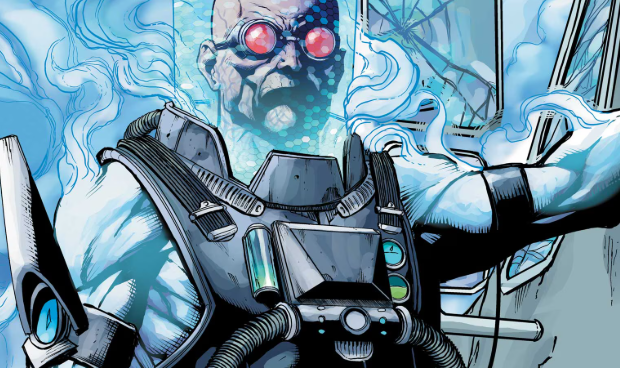
Mr. Freeze’s suit is not just armor; it is a mobile life-support system. Because his body temperature must remain at absolute zero (or very close to it) for him to survive, the suit is a marvel of thermal engineering. It circulates liquid refrigerants through a complex network of internal pipes, regulated by a massive power pack on his back. The transparent dome is made of high-impact, reinforced glass, designed to maintain a pressurized environment while providing the wearer with a 360-degree field of vision.
Beyond survival, the suit grants Victor superhuman strength and durability. The mechanical exoskeleton allows him to lift several tons and shrug off small-arms fire with ease. However, the suit is also his greatest prison. He cannot feel the touch of another human being, nor can he experience the simple warmth of a sunbeam without dying. This physical isolation is a metaphor for his emotional state. He is a man who has built a wall of ice between himself and the rest of humanity, and the suit is the literal manifestation of that barrier. For Victor, the suit is a constant reminder that he is no longer part of the living, breathing world.
5. The Science of the Freeze Gun
The “Freeze Gun” is more than a simple sci-fi laser; it is a sophisticated cryogenic projector that utilizes diamonds to focus its beam. In the DC Universe, diamonds are the perfect conductors for the specific thermal energy Victor uses. This explains his frequent “clichés” of robbing jewelry stores; he isn’t looking for wealth, he is looking for industrial-grade fuel for his weaponry. The gun works by instantly stripping the kinetic energy from molecules in its path, causing them to cease movement and drop to temperatures that shatter steel.
Victor’s mastery of cryogenics allows him to use the gun with surgical precision. He can create ice bridges for transport, encase enemies in a layer of ice thin enough to keep them alive but thick enough to paralyze them, or create massive shards of ice as projectiles. Unlike the Joker’s gas or the Penguin’s umbrellas, Freeze’s weapon is an extension of his scientific mind. It is cold, efficient, and logical. He doesn’t want to cause pain for the sake of it; he simply wants to remove obstacles with the same clinical detachment a surgeon uses to remove a tumor.
6. A Villain of Moral Ambiguity
What makes Mr. Freeze a “top-tier” rogue is his lack of traditional villainous intent. He doesn’t want to take over Gotham, he doesn’t care about the “order” of the city, and he rarely holds a grudge against Batman unless the hero stands in the way of Nora’s cure. This makes him a wild card in the Gotham underworld. He has occasionally worked alongside Batman when a threat endangered the city’s medical facilities or when a cure for a different disease was at stake.
This moral gray area often puts the audience in a position of rooting for him. When he robs a lab to steal a rare isotope, we understand the “why” even if we disagree with the “how.” He is a man who has decided that the laws of man are irrelevant when compared to the laws of biology. This single-minded focus makes him incredibly dangerous. A man who wants money can be bribed; a man who wants power can be negotiated with. But a man who wants to save his dying wife will walk through fire—or in this case, ice—to achieve his goal, regardless of the cost to society.
7. The Contrast and Respect Between Batman and Freeze
The relationship between Batman and Mr. Freeze is one of the most respectful rivalries in the DC Universe. Batman, a man defined by the loss of his parents, sees a kindred spirit in Victor Fries. Both men are defined by a singular moment of trauma that ended their “normal” lives. Batman recognizes that while Victor is a criminal, he is also a man of immense intellect and potential who could have been one of the world’s greatest healers.
Consequently, Batman often approaches Freeze with a level of restraint he doesn’t show to others. The Dark Knight has frequently offered to use Wayne Enterprises’ resources to help Nora, provided Victor surrenders. There is a silent understanding between them: both are prisoners of their pasts. Batman wears a cape to honor his parents; Freeze wears a suit to save his wife. In many stories, Batman is the only person who treats Victor like a human being rather than a monster. This dynamic adds a layer of pathos to their encounters, making their battles feel less like “good vs. evil” and more like a tragic intervention.
8. The Controversial “New 52” Revision
In one of the most debated shifts in his history, a certain era of DC storytelling attempted to rewrite Victor’s connection to Nora. In this version, it was revealed that Nora was not actually Victor’s wife, but a woman from the 1940s who had been cryogenically frozen long before Victor was born. In this telling, Victor’s “love” was actually a delusional obsession with a stranger, making him a more traditional, “crazy” stalker-villain rather than a tragic widower.
This change was met with significant pushback from fans who felt it stripped away the character’s unique heart. While it made him more “villainous,” it removed the relatability that made him a standout in the rogues’ gallery. Most modern interpretations have since returned to the “classic” version of the story, recognizing that the genuine love for Nora is what makes Freeze a compelling character. This era serves as a fascinating example of how important a character’s core motivation is to their identity. Without the genuine tragedy of Nora, Freeze becomes just another cold man with a gun.
9. A Peerless Scientific Mind
While Gotham is full of geniuses, Mr. Freeze is in a league of his own when it comes to cryobiology and thermal physics. He has achieved scientific breakthroughs that the rest of the world considers impossible. He has successfully mapped the human nervous system’s reaction to extreme cold and developed ways to keep cells alive in states that should cause them to burst. His laboratory, often hidden in abandoned cold-storage facilities or Arctic hideouts, is a testament to his resourcefulness.
Victor’s intelligence makes him a strategic threat. He doesn’t just attack; he plans his strikes around weather patterns, thermal vents, and structural weaknesses in buildings that are susceptible to freezing. He is one of the few villains who can truly challenge Bruce Wayne’s intellect. In some stories, his research into life extension has even caught the eye of other immortals in the DC Universe, like Ra’s al Ghul. Freeze is a reminder that in the world of superheroes, a high IQ can be just as formidable as a superpower, especially when it is backed by a cold, unwavering focus.
10. The Loneliness of the Absolute Zero
At the end of the day, the most essential thing to know about Mr. Freeze is his profound isolation. He is a man who exists in a world he can never touch. He cannot eat a warm meal, he cannot feel the skin of another person, and he cannot step outside without a protective shell. This physical coldness has seeped into his personality, leaving him detached from the “passion” of humanity. He speaks in a cold, logical manner because any display of heat—emotional or physical—is a threat to his existence.
This loneliness is what makes his occasional moments of humanity so powerful. Whether it is showing a brief moment of mercy to a child or shedding a single, frozen tear for his wife, these cracks in the ice remind us that there is still a man inside the machine. Mr. Freeze is a warning about what happens when we let our grief consume us. He has preserved his wife, but in doing so, he has frozen his own life in a state of eternal, cold stasis. He is a character who asks the audience: “How much of yourself would you give up to keep the one you love forever?”
Further Reading
To explore the frozen depths of Victor Fries’ history, these books and stories are highly recommended:
- Batman: Mr. Freeze by Paul Dini and Mark Buckingham
- Batman: Snow by J.H. Williams III and Dan Curtis Johnson
- Batman: White Knight by Sean Murphy (Features a unique and powerful take on Freeze)
- Batman: Heart of Ice (The graphic novel adaptation of the animated masterpiece)
- 10 Things You Should Know About Kang the Conqueror – Marvel Comics
- 10 Things You Should Know About The Sentry – Marvel Comics
- 10 Things You Should Know About Starlight From The Boys TV Show
- 10 Things You Should Know About Ghost Rider – Marvel Comics
- DC Comics: 10 Essential Things to Know About Shazam
- DC Comics: 10 Essential Things to Know About Sinestro
- DC Comics: 10 Essential Things to Know About The Reverse Flash
- DC Comics: 10 Essential Things to Know About Hal Jordan
- DC Comics: 10 Essential Things to Know About The Green Lanterns
- DC Comics: 10 Essential Things to Know About Mr Freeze



