
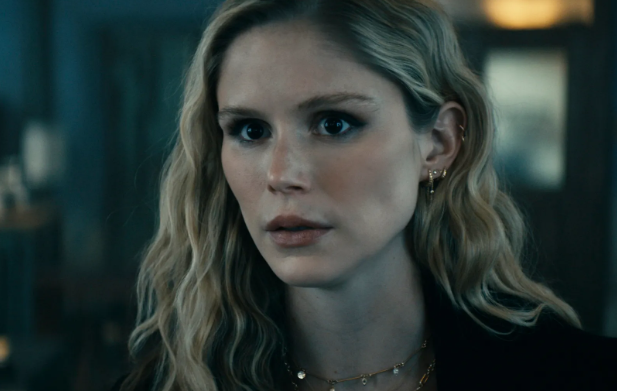
The Light in the Darkness: 10 Essential Truths About Starlight from The Boys That Every Fan Needs to Know
In a television landscape saturated with caped crusaders and invincible icons, The Boys arrived like a lightning bolt to the system. It presents a world where superheroes—affectionately and derisively called “Supes”—are not selfless guardians, but rather corporate assets managed by the multi-billion-dollar conglomerate Vought International. At the heart of this cynical, high-stakes satire is Annie January, better known by her superhero moniker, Starlight.
While many characters in this universe are defined by their corruption, narcissism, or trauma, Starlight serves as the show’s moral compass. She is the audience’s surrogate, entering the ivory tower of The Seven with wide-eyed optimism only to find the rot beneath the gold plating. Understanding Starlight is essential to understanding the show’s central conflict: the battle for the soul of heroism in a world dominated by profit and PR. Whether you are a casual viewer or a die-hard member of the “Starlight House,” these ten pillars of her character provide a comprehensive overview of the hero who refused to let her light be dimmed.
1. The Small-Town Origins of Annie January
Before she was a global icon and a member of the elite “Seven,” Starlight was simply Annie January from Des Moines, Iowa. Her backstory is rooted in the “Heartland” aesthetic that Vought International loves to exploit for marketing purposes. Raised in a deeply religious household, Annie’s early life was dominated by superhero pageants and church functions. This background is crucial because it established her initial worldview: she genuinely believed that her powers were a “God-given gift” intended to help the world.
This religious upbringing provided her with a rigid moral framework, but it also made her incredibly naive to the realities of the corporate world. For Vought, Annie was the “perfect” recruit—wholesome, photogenic, and seemingly easy to manipulate. However, this small-town girl possessed a backbone of steel that her corporate handlers underestimated. Her origin story is a classic “fish out of water” tale, where her sincere desire to do good becomes her greatest liability in the shark-infested waters of Vought Tower. By understanding where she came from, fans can better appreciate the magnitude of her disillusionment and the strength it took for her to maintain her integrity.
2. The Biological Truth: The Compound V Revelation
One of the most shattering moments in Annie’s life was the discovery that her powers were not a divine miracle, but the result of a chemical intervention. Like almost every Supe in the series, Annie was injected with Compound V as an infant. This revelation serves as a major turning point for her character, as it effectively dismantled her entire sense of identity and her relationship with her mother, who had hidden the truth from her for decades.
This plot point is foundational to the lore of The Boys. It highlights the commodification of children by Vought and the lengths to which parents will go for a chance at fame and fortune. For Annie, the truth about Compound V turned her “destiny” into a corporate product. It forced her to grapple with the fact that her life was a curated experiment. This realization is what ultimately fueled her rebellion; once she understood that she was “made” rather than “chosen,” she felt empowered to redefine what her life and her powers should actually stand for.
3. The Science of Light: Understanding Her Superpowers
Starlight’s power set is both visually stunning and strategically complex. She possesses the ability to absorb ambient electricity from the world around her—whether from light bulbs, power lines, or even a car battery—and project it as blinding bursts of energy from her hands. This makes her a formidable opponent in urban environments where electricity is plentiful. Additionally, she possesses the standard suite of “Supe” traits, including enhanced strength and extreme durability, allowing her to survive impacts that would be fatal to a normal human.
However, her powers have a distinct limitation: she is a battery, not a generator. If she is in a location without an electrical source, her offensive capabilities are significantly diminished. This vulnerability adds a layer of tension to her action sequences. Unlike Homelander, whose power seems limitless, Starlight must be tactical about her environment. Her eyes also glow with a brilliant white light when she is “charged,” serving as a physical manifestation of her emotional state. This connection between her internal light and her external power is a recurring visual metaphor for her role as the “moral light” of the series.
4. Navigating the Toxic Culture of The Seven
Joining The Seven was Annie’s lifelong dream, but the reality was a nightmare of corporate misogyny and systemic abuse. From her very first day in Vought Tower, she was subjected to a culture that valued her “marketability” over her heroism. The show uses Starlight’s experience to provide a biting critique of real-world workplace dynamics and the “Me Too” movement. Her early interaction with The Deep, which involved a horrific abuse of power, set the tone for her journey as a survivor who refuses to stay silent.
The Seven is not a team; it is a collection of egos managed by a legal department. Annie’s struggle to find even one genuine ally in the group highlights the isolation of being a “good” person in a “bad” system. She was forced to wear a hyper-sexualized costume against her will and follow scripts that prioritized stock prices over public safety. Her refusal to play along made her a pariah within the group, but it also made her a hero to the audience. Her resilience in the face of this toxic culture is what transformed her from a pageant queen into a revolutionary leader.
5. The Hughie Campbell Connection: Love in a Time of Chaos
The relationship between Annie and Hughie Campbell is the emotional anchor of the series. They represent the rare instance of genuine human connection in a world defined by cynical manipulation. Their romance began under false pretenses—Hughie was initially using her to gain intel for “The Boys”—but it evolved into something deeply sincere. They are both “normal” people caught in extraordinary circumstances, trying to maintain their humanity while fighting a war.
Their dynamic is fascinating because it subverts the traditional “damsel in distress” trope. Starlight is objectively the more powerful of the two, often having to physically protect Hughie. This creates a unique set of challenges for Hughie, who struggles with feelings of inadequacy, and for Annie, who has to navigate the danger her association brings to him. Their relationship is a constant negotiation of power, trust, and shared trauma. In a show filled with betrayal, their commitment to one another provides a glimmer of hope that intimacy can survive even the most hostile environments.
6. The Visual Language of the “Starlight” Identity
Vought International is a master of branding, and Starlight’s visual identity was one of their most carefully managed assets. Throughout the series, her appearance serves as a battlefield for control. Initially, she wore a modest, white-and-gold costume that reflected her religious roots. Vought eventually forced her into a “rebranding” that involved a much more revealing outfit, designed to appeal to a specific male demographic.
Annie’s eventual decision to ditch the corporate-mandated look in favor of her original costume (or her own civilian clothes) is a powerful symbol of her reclaiming her agency. Her hair, makeup, and even the way she stands change as she moves from a “puppet” of Vought to an independent operative. This attention to visual detail allows the show to tell a story of empowerment through costume design. Every time she puts on the “Starlight” suit, she is making a choice about which version of herself the world gets to see, and her evolution toward a more functional, self-determined look mirrors her internal growth.
7. The High-Stakes Rivalry with Homelander
While The Boys are the primary antagonists to the “Supes,” Starlight’s most dangerous enemy is her own teammate: Homelander. Their rivalry is a study in ideological opposites. Homelander represents narcissism, unchecked power, and the dark side of American exceptionalism. Starlight represents empathy, accountability, and the “true” spirit of heroism. Because she is a member of The Seven, she has to navigate this rivalry while living in the same building as a murderous psychopath.
The tension between them is palpable in every scene they share. Homelander views Starlight’s morality as a weakness, while Starlight views Homelander’s god complex as a threat to humanity. Their conflict is often a cold war of psychological maneuvers and public relations battles. Starlight is one of the few people who isn’t entirely paralyzed by fear in his presence, often using her public popularity as a shield against his violent impulses. This “check and balance” dynamic is a crucial part of the show’s political commentary, illustrating how public opinion can be the only thing holding back a tyrant.
8. Her Role as a Whistleblower and Public Figure
Starlight’s greatest weapon isn’t her light blasts—it’s her voice. As her disillusionment with Vought grew, she transitioned from a compliant hero to a dangerous whistleblower. By leveraging her massive social media following and her public platform, she began to expose the truth about Vought’s crimes, including the existence of Compound V and the reality of Homelander’s instability.
This aspect of her character reflects the modern era of information warfare. She understands that in a world where Vought controls the media, she must speak directly to the people. Her decision to “go live” on social media to tell the truth is a recurring motif that shifts the power balance in the show. She transformed herself from a corporate mascot into a symbol of truth, inspiring a movement of “Starlighters” who demand accountability. This role as a whistleblower makes her a target, but it also makes her untouchable in a way that physical combat never could. She is a reminder that in the age of the internet, the truth is the most disruptive force of all.
9. The Moral Cost of “The Boys” Alliance
While Starlight eventually joins forces with Billy Butcher and his crew, her relationship with “The Boys” is fraught with moral tension. She is often the only person willing to call out Butcher’s ruthless methods and his “eye for an eye” philosophy. She represents the “middle ground”—someone who wants to take down Vought but refuses to become a monster in the process.
This friction is essential to the show’s exploration of ethics. Starlight is frequently put in positions where she must compromise her values for the “greater good.” Whether it’s stealing or allowing someone to get hurt to achieve a larger goal, she feels the weight of these decisions in a way that characters like Butcher do not. This makes her the “conscience” of the group. Her presence forces the other characters (and the audience) to ask if the ends truly justify the means. Her journey with The Boys is a story of how to fight a corrupt system without losing your soul, a struggle that remains relevant across all seasons of the series.
10. The Transformation into a Global Symbol of Hope
By the later stages of her journey, Starlight is no longer just a superhero; she is a movement. She has moved beyond the “Starlight” persona created by Vought and has become a symbol of genuine resistance. Her arc is one of the most complete in modern television, moving from a naive girl to a victim, to a survivor, and finally to a leader. She proves that heroism isn’t about the powers you have, but about the courage to stand up when it would be easier to stay seated.
Her impact on the world of the show is immeasurable. She has shifted the public’s perception of Supes and has become a beacon for those who feel oppressed by Vought’s shadow. As she continues to navigate the dangerous world of superheroes and politics, her character remains a testament to the power of integrity. Starlight is the “evergreen” hero of the story—the one who reminds us that even in the darkest, most cynical world, a single light can still make a difference. Her legacy is defined not by the villains she defeated, but by the people she inspired to be better.
Further Reading
- The Boys: The Definitive Edition, Vol. 1 by Garth Ennis and Darick Robertson
- Superheroes and Philosophy: Truth, Justice, and the Socratic Way by Tom Morris and Matt Morris
- The Art of the Boys by Various Authors
- The Boys: Name of the Game by Garth Ennis
- 10 The Crown TV SHOW Facts That Keep People Watching
- 10 Futurama TV SHOW Facts That Still Hold Up
- 10 Things You Should Know About Speedy Gonzales – Looney Tunes
- 10 Things You Should Know About Yosemite Sam – Looney Tunes
- 10 Things You Should Know About Kang the Conqueror – Marvel Comics
- 10 Things You Should Know About The Sentry – Marvel Comics
- 10 Things You Should Know About Starlight From The Boys TV Show
- 10 Things You Should Know About Ghost Rider – Marvel Comics
- 10 Things You Should Know About Road Runner – Looney Tunes
- 10 Things You Should Know About Wile E. Coyote – Looney Tunes



