
In a cinematic landscape often dominated by traditional heroes and fairy-tale princesses, a tall, bald man with a sharp nose and a thick, indeterminate accent managed to steal the world’s heart. When the world first met Gru, he wasn’t trying to save the planet; he was trying to steal the moon. The Despicable Me movie franchise, produced by Illumination Entertainment, represents one of the most significant shifts in animated history. It proved that audiences were hungry for something a little more “despicable”—a story where the villain is the protagonist and where the chaos of small, yellow, pill-shaped henchmen could become a multi-billion-dollar cultural phenomenon.
The series has grown from a risky original concept into the highest-grossing animated film franchise of all time. Its success is rooted in a perfect alchemy of slapstick humor, heart-tugging family dynamics, and a visual style that prioritizes fun over photorealism. To understand the gravity of this “Yellow Fever,” one must look into the machinery behind the movies. From the linguistic gymnastics of the Minions to the business strategies that built a studio from the ground up, the story of Despicable Me is as fascinating as Gru’s elaborate schemes. Here is a comprehensive look at the pillars that support this animated empire.
1. The Subversion of the Classic Villain Archetype
The core brilliance of the franchise lies in its protagonist, Felonious Gru. Traditionally, animated films featured clear-cut heroes fighting against cackling antagonists. Despicable Me flipped the script by putting the “bad guy” front and center. Gru is a professional supervillain, equipped with freeze rays and a massive laboratory, yet the story treats his villainy as a career choice rather than a moral absolute. This subversion allows for a unique narrative arc: we aren’t watching a hero learn to fight; we are watching a villain learn to love.
By making Gru the focal point, the franchise tapped into a relatable sense of professional inadequacy. Early in the series, Gru is struggling to stay relevant in a world of younger, “hipper” villains like Vector. This “villain vs. villain” dynamic creates a safe space for humor while slowly peeling back Gru’s layers. His transformation from a cold-hearted moon-thief to a devoted father of three adopted girls—Margo, Edith, and Agnes—remains the emotional heartbeat of the series. It serves as an evergreen reminder that one’s past or profession does not dictate their capacity for kindness.
2. The Accidental Stardom of the Minions
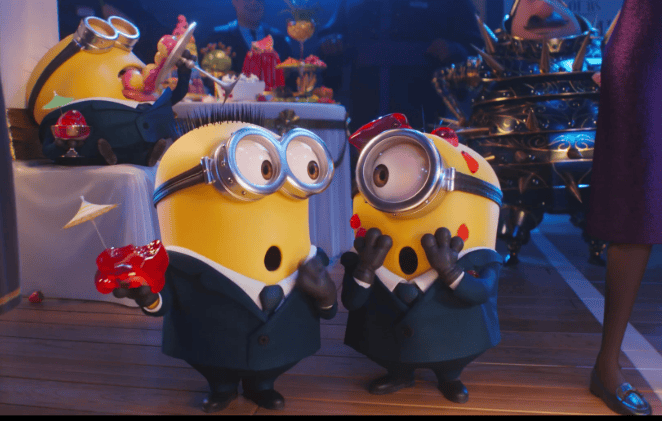
It is nearly impossible to separate the franchise from the Minions, but these yellow icons were almost entirely different. In the early stages of development, Gru’s henchmen were envisioned as large, hulking, troll-like creatures. However, the production team realized that making the henchmen more appealing and “accident-prone” would make Gru more likable. The design was simplified into the iconic yellow “capsule” shape we see today. What was intended to be a group of background characters quickly became the most marketable assets in the history of animation.
The Minions work because they embody pure, unfiltered chaos. They are essentially a collective of toddlers with heavy machinery. Their design—simple shapes, bright colors, and goggles—makes them instantly recognizable across every culture. They represent a “universal language” of comedy, relying on physical gags rather than complex dialogue. This simplicity allowed them to transcend the movies themselves, appearing on everything from giant parade floats to household appliances. Their accidental stardom is a testament to the power of character design in building a lasting legacy.
3. The Linguistic Genius of Minion-ese (Banana Language)
While the Minions may sound like they are speaking gibberish, their dialogue is a meticulously crafted linguistic soup. Known as “Minionese” or “Banana Language,” the dialect was created and voiced primarily by Pierre Coffin, one of the franchise’s directors. Instead of using a single language, Coffin mixed together words and phonetics from French, English, Spanish, Italian, Indonesian, and Japanese. This polyglot approach ensures that regardless of where a viewer is in the world, they will likely hear a word or a sound that feels familiar.
The brilliance of Minion-ese is that it conveys emotion through tone and context rather than literal meaning. When a Minion says “Bello!” for hello or “Poopaye!” for goodbye, the audience understands the intent through their expressive eyes and frantic gestures. This linguistic choice was a strategic masterstroke for global distribution. Because the Minions don’t rely on a specific language, their humor is “baked-in” to the animation, making the films just as funny in Tokyo or Paris as they are in New York. It is a rare example of a fabricated language that feels organic and deeply integrated into the character’s identity.
4. Steve Carell’s Transformative Voice Performance
While the Minions provide the slapstick, Steve Carell provides the soul. Bringing Gru to life required a voice that was both menacing and vulnerable, and Carell’s performance is widely cited as one of the best in modern animation. The accent itself is intentionally ambiguous—a mix of Eastern European tones that Carell described as a cross between Dracula and a grumpy neighbor. This vocal choice allowed Gru to sound like a classic “scary” villain while maintaining a comedic rhythm that fits the film’s fast-paced energy.
Carell’s dedication to the character often involved physical performance in the recording booth to capture Gru’s unique mannerisms. His ability to switch from a growling command to a high-pitched, affectionate tone when speaking to Agnes is what makes the character’s redemption arc believable. The franchise’s success is heavily tied to this central performance; without Carell’s specific blend of warmth and grumpiness, Gru might have remained a one-dimensional caricature. His work proves that voice acting is not just about “doing a voice,” but about building a personality from the inside out.
5. Illumination Entertainment’s Rise to Industry Dominance
The Despicable Me franchise did more than just tell a story; it built a studio. Before the first film, Illumination Entertainment was a relatively unknown player in the animation space. Founder Chris Meledandri pursued a strategy of “efficient excellence,” producing high-quality animation at a fraction of the budget used by competitors like Pixar or DreamWorks. By focusing on strong character design and broad comedic appeal rather than cutting-edge technical complexity, Illumination was able to maximize its return on investment.
This business model turned the franchise into a financial juggernaut. Each entry in the series has consistently outperformed expectations, leading to a sprawling universe of sequels and prequels. The success of Gru and his Minions allowed Illumination to expand into other properties, but Despicable Me remains their flagship. It serves as a case study in the film industry for how to build a global brand through smart budgeting, aggressive marketing, and a deep understanding of what audiences—both children and adults—find genuinely entertaining.
6. The Musical Influence and Pharrell Williams
Music is an essential component of the franchise’s DNA. Unlike many animated films that rely on orchestral scores or Broadway-style show tunes, Despicable Me leaned into a funky, pop-infused sound. Musician Pharrell Williams has been a primary collaborator since the first film, providing original songs that define the series’ “cool” aesthetic. His music provides a rhythmic backbone that complements the fast-paced animation, moving away from traditional “kiddy” music toward something that feels contemporary and upbeat.
The peak of this musical collaboration was the song “Happy,” written for the second film. The track became a global phenomenon, topping charts and becoming an anthem of positivity. While many movie songs fade after the credits roll, Pharrell’s contributions have become evergreen hits. The music serves a narrative purpose, too—the groovy, bass-heavy tracks underscore Gru’s “bad boy” persona, while the lighter, melodic tunes highlight his burgeoning fatherhood. This auditory identity is a key reason why the franchise feels so vibrant and modern compared to its peers.
7. A Masterclass in Visual Slapstick and Physical Comedy
At its heart, the franchise is a love letter to the era of classic silent films and Looney Tunes-style slapstick. The directors utilized the medium of 3D animation to push the boundaries of physical comedy. Whether it’s a Minion getting stuck in a vacuum cleaner or Gru attempting to navigate a high-tech security system with his large frame, the humor is visual and kinetic. This type of comedy is difficult to execute because it requires perfect timing and “squash and stretch” animation techniques.
By prioritizing physical gags, the films appeal to the most basic human funny bone. You don’t need to understand a complex plot to laugh at a character falling down or a gadget malfunctioning in a spectacular way. This “visual-first” approach ensures that the movies remain accessible to very young children while the clever situational irony keeps adults engaged. The franchise’s commitment to high-energy, chaotic action sequences has become its visual signature, distinguishing it from the more dialogue-heavy or emotional dramas of other animation houses.
8. The Heart of the Story: The Power of Found Family
Despite all the gadgets and yellow henchmen, the franchise is fundamentally about “found family.” Gru is a loner who believes he is content with his life of crime until he meets Margo, Edith, and Agnes. The trio of sisters—each with their own distinct personality—serves as the catalyst for his change. Margo is the protective older sister, Edith is the rebellious middle child, and Agnes is the innocent youngest who loves unicorns. Their chemistry with Gru is what gives the movies their emotional weight.
The adoption theme is handled with a surprising amount of sincerity for a comedy. The films explore the idea that a family isn’t defined by blood, but by the choice to care for one another. Gru’s struggle to balance his supervillain responsibilities with “parent-teacher nights” and bedtime stories is a relatable exaggeration of the modern work-life balance. This core relationship provides the series with its “evergreen” quality; even when the technology and pop-culture references in the films age, the theme of a grumpy man being softened by the love of his children will always remain timeless.
9. Iconic Gadgetry and Supervillain Aesthetics
The world of Despicable Me is filled with imaginative technology that defines the “Supervillain” aesthetic. From the massive “Grumobile” to the “SR-6” rocket, the gadgetry is a mix of retro-futurism and absurdism. These inventions aren’t just props; they are extensions of the characters’ personalities. Gru’s “Freeze Ray,” for instance, is his go-to tool for avoiding minor inconveniences, like waiting in a coffee line, which perfectly illustrates his selfish-yet-harmless brand of villainy.
The creative team put immense effort into making the “evil” tech look clunky, heavy, and metallic, contrasting it with the bright, soft world of the suburbs. This visual contrast helps define the “fish out of water” feel when Gru tries to integrate into normal society. The gadgets also provide a playground for the Minions, who often find ways to use high-tech weaponry for mundane tasks like making copies or lightbulb maintenance. This focus on “creative destruction” and inventive machinery adds a layer of “cool” that appeals to the imagination of aspiring young inventors and fans of sci-fi alike.
10. Global Box Office Domination and Cultural Impact
The scale of the franchise’s success is difficult to overstate. It has consistently shattered box office records, becoming a rare example of a property that maintains—or even increases—its popularity with each subsequent release. This dominance is not just limited to ticket sales; the franchise has a massive presence in Universal Studios theme parks, where “Minion Land” and dedicated rides allow fans to step into Gru’s world. The Minions themselves have become a “shorthand” for internet culture, appearing in millions of social media posts and memes.
The cultural impact of the series lies in its ability to be “everything to everyone.” It is a comedy, an action movie, and a family drama all rolled into one. It has influenced the way animated films are marketed, emphasizing character-driven “moments” that are easily shareable. The legacy of Despicable Me is one of joy and irreverence. It taught the industry that you don’t need a classic fairy tale to win the hearts of the public—sometimes, all you need is a grumpy genius, a few orphans, and an army of yellow friends who really, really like bananas.
Further Reading
- The Art of Despicable Me by Tara Bennett
- Animation to the Max: The Story of Illumination Entertainment by R.C. Harvey
- Creating Characters with Personality by Tom Bancroft
- The Pixar Touch: The Making of a Company by David A. Price (For industry context)
- Podcast Episode: Classic Films And Horror Icons
- 10 The Exorcist III (1990) Movie Facts You Didn’t Know
- 10 Scream (1996) Movie Facts That Changed Horror
- 10 The Lion King (1994) Facts That Made It Iconic – Classic Movie
- 10 Forrest Gump (1994) Facts That Make It Timeless – Classic Movie
- 10 Fight Club (1999) Facts That Still Surprise Fans – Classic Movie
- 10 Hostel (2005) Movie Facts That Shocked Viewers
- 10 Avatar (2009) Facts That Changed Cinema – Classic Movie
- 10 Hellraiser (1987) Movie Facts That Built Its Legacy
- 10 Jurassic Park (1993) Facts That Changed Movies Forever – Classic Movie



