
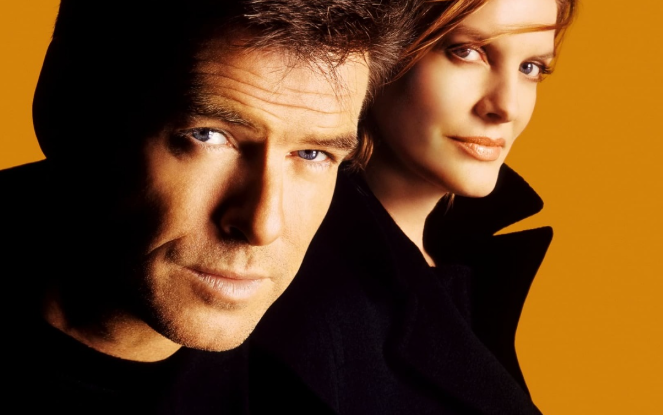
In the pantheon of cinematic heists, few films possess the sheer elegance and intellectual playfulness of the 1999 reimagining of The Thomas Crown Affair. While many crime thrillers lean into the gritty underworld or the high-octane violence of a score gone wrong, this film chose a different path—one paved with fine art, high-thread-count tailoring, and a sophisticated cat-and-mouse game that redefined the “gentleman thief” trope for a new generation. It is a movie that treats crime as a grand sport and romance as the ultimate gamble, set against the backdrop of a gleaming, upper-crust New York City.
The film follows Thomas Crown, a self-made billionaire who has conquered the world of business and found it wanting. To alleviate his profound boredom, he orchestrates the theft of a priceless Monet from the Metropolitan Museum of Art. What follows is not a standard police procedural, but a dazzling duel of wits between Crown and Catherine Banning, a brilliant insurance investigator who is his only true intellectual match. For those looking to understand why this film remains a “go-to” resource for fans of the heist genre, these ten insights peel back the layers of its production, its symbolism, and its enduring stylish legacy.
1. The Sophisticated Evolution of a Cinematic Remake
To truly appreciate the 1999 version of The Thomas Crown Affair, one must understand its roots in the 1968 classic starring Steve McQueen. While many remakes struggle to justify their existence, this film succeeded by evolving the core concept to fit a more modern, fast-paced landscape. The original film focused on a bank heist—a cold, calculated crime driven by a desire for control. The 1999 iteration pivoted to the world of high art, which allowed for a more vibrant, colorful, and intellectually stimulating narrative.
This shift transformed Thomas Crown from a mere criminal into an aesthete. By stealing a Monet instead of cash, the character’s motivations became more complex; he wasn’t looking for wealth, as he already possessed it in abundance. He was looking for beauty and the thrill of the challenge. This evolution allowed the film to lean into a more sophisticated visual style, utilizing the museum setting to create a “Trojan Horse” narrative that felt fresh and inventive. The 1999 version didn’t just copy the original; it refined the “heist-as-sport” philosophy, making the game more intricate and the stakes more personal for a contemporary audience.
2. Pierce Brosnan’s Masterclass in Post-Bond Charm
At the time of production, Pierce Brosnan was the reigning face of the world’s most famous spy franchise. Taking on the role of Thomas Crown allowed him to play a character who shared many traits with a certain secret agent—the suits, the cars, the international flair—but without the burden of government service or a “license to kill.” Brosnan’s Crown is a man who operates entirely on his own terms. His performance is a masterclass in restrained charisma, using subtle smiles and unwavering eye contact to convey a man who is always three steps ahead of everyone else in the room.
Brosnan also served as a producer on the film, showing his deep commitment to the project. He understood that Crown needed to be more than just a charming thief; he needed to be a man who felt the weight of his own success. His portrayal balances the character’s arrogance with a genuine sense of loneliness that only surfaces when he encounters Catherine Banning. This performance solidified Brosnan’s status as a leading man who could carry a sophisticated thriller, proving that he could be just as dangerous with a clever plan as he was with a gadget-laden car.
3. The Peerless Equality of Catherine Banning
In many heist films, the female lead is often relegated to the “femme fatale” or the “damsel in distress.” The 1999 Thomas Crown Affair shattered this convention with the character of Catherine Banning, played with fierce intelligence and magnetic energy by Rene Russo. Banning is not a police officer bound by red tape; she is an independent insurance investigator who is just as ruthless and brilliant as Crown himself. From the moment she arrives on the scene, it is clear that she is the only person capable of seeing through his elaborate smoke and mirrors.
Russo’s performance is revolutionary because she plays Banning as a woman who enjoys the chase just as much as the thief does. She isn’t intimidated by Crown’s wealth or his charm; she uses them as clues. The chemistry between Russo and Brosnan is the film’s primary engine, fueled by mutual respect and a shared love for the “game.” Banning is a character who owns her sexuality and her intellect in equal measure, making her a formidable protagonist who stands as a true peer to the titular character. This dynamic elevated the film from a simple heist movie to a high-stakes romantic duel.
4. The Heist of the Monet: A Technical Marvel
The initial theft of the Monet from the museum is one of the most clever and technically interesting sequences in heist cinema. Unlike many films that rely on high-tech lasers or impossible acrobatics, Crown’s plan relies on “low-tech” psychology and thermal physics. By hiding his team inside a customized, heat-reflective Trojan Horse (a literal wooden crate), he bypasses the museum’s thermal sensors. The sequence is a brilliant example of how a filmmaker can build tension using silence, timing, and the simple mechanics of a folding briefcase.
What makes this heist truly memorable is its audacity. Crown doesn’t sneak in through the vents; he hides in plain sight. The use of a simple thermal blanket to mask the thieves’ body heat is a grounded, believable tactic that makes the audience feel like the crime is actually possible. This sequence sets the tone for the rest of the film: Thomas Crown doesn’t just want the painting; he wants to prove that his mind is superior to the most advanced security systems in the world. It is a quintessential “brain over brawn” moment that defines the character’s ethos.
5. The Symbolism of Magritte’s “The Son of Man”
The film’s visual identity is inextricably linked to René Magritte’s surrealist masterpiece, The Son of Man. The painting, which depicts a man in a suit and a bowler hat with a green apple obscuring his face, serves as a recurring motif throughout the movie. It is more than just a piece of art that Crown admires; it is a representation of the character himself—a man who hides his true identity behind a conventional, “corporate” exterior. The painting symbolizes the anonymity and the “poker face” that Crown maintains in his daily life.
This motif culminates in the film’s legendary finale, where the museum is flooded with dozens of men dressed exactly like the figure in the painting. This “living art” sequence is a brilliant narrative payoff, using the imagery of the bowler hat to create a chaotic, confusing environment where Crown can disappear. By weaving a specific piece of art into the very fabric of the plot, the filmmakers elevated the movie’s aesthetic. It transformed the bowler hat from a vintage fashion accessory into a symbol of intellectual defiance and cinematic trickery.
6. The Glider Sequence: A Moment of Serene Danger
One of the most visually stunning scenes in the film involves Thomas Crown taking Catherine Banning for a ride in a high-performance glider. This sequence serves several purposes: it showcases Crown’s love for “pure” flight—unpowered and reliant entirely on his skill—and it provides a rare moment of peace amidst the tension of the investigation. Filmed with breathtaking aerial cinematography, the scene emphasizes the freedom that Crown craves, far removed from the boardrooms and museum corridors.
The glider sequence is also a metaphor for the relationship between the two leads. It is a dance in the air that requires total trust and precision. There is a inherent danger in the silence of the glider, much like the danger in their growing romantic entanglement. Interestingly, Pierce Brosnan performed many of the close-up shots himself, adding to the authenticity of the scene. This moment of tranquility stands in stark contrast to the hectic energy of the city, illustrating that for a man like Crown, the ultimate luxury is not money, but the ability to disconnect and soar above the world.
7. The Faye Dunaway Cameo: A Full-Circle Moment
In a brilliant nod to the original 1968 film, the 1999 version features a significant cameo by Faye Dunaway. In the original, Dunaway played the role of the investigator, Vicki Anderson (the precursor to Catherine Banning). In the remake, she portrays Thomas Crown’s psychiatrist. This casting choice is more than just an “Easter egg” for fans; it provides a fascinating bridge between the two generations of the story. Seeing the former investigator now analyzing the mind of the new Thomas Crown adds a meta-textual layer of depth to the narrative.
Dunaway’s character provides the audience with some of the only direct insights into Crown’s psyche. Their sessions are a battle of wits in their own right, as she attempts to peel back the layers of his boredom and his “need to win.” Her presence lends the film a sense of history and gravitas, acknowledging the legacy of the McQueen era while firmly passing the torch to the new production. It is a rare example of a remake honoring its predecessor in a way that feels organic and narratively significant rather than gimmicky.
8. “Sinnerman” and the Power of the Soundtrack
A great heist sequence requires the perfect rhythm, and the 1999 Thomas Crown Affair found its heartbeat in Nina Simone’s “Sinnerman.” The song’s driving, percussive energy and soulful vocals are used to masterful effect during the final museum sequence. The repetitive, hypnotic beat of the track mirrors the clockwork precision of Crown’s plan and the frantic efforts of the police to catch him. The music doesn’t just sit in the background; it dictates the pace of the editing and the movement of the actors.
The choice of “Sinnerman” was a stroke of genius by the production team. It brings a sense of timeless coolness to the film, blending the classic soul of the past with the modern visuals of the present. The song’s lyrics, which deal with a man trying to hide from divine judgment, subtly echo Crown’s own attempts to evade the consequences of his actions. This marriage of sound and image is so iconic that it is now almost impossible to hear the song without thinking of a man in a bowler hat strolling through a museum, embodying the film’s unique blend of energy and sophistication.
9. The Aesthetic of Luxury: Wardrobe and Production Design
The 1999 film is widely considered one of the most stylish movies of its decade. The production design and wardrobe were carefully curated to reflect the “old money” elegance of Thomas Crown and the modern, sharp professionalism of Catherine Banning. Crown’s wardrobe, consisting of impeccably tailored suits and casual linen wear, set a standard for “billionaire chic” that remains influential. The clothing wasn’t just about fashion; it was about armor. Every suit Crown wears is a signal of his power and his control over his environment.
Similarly, Catherine Banning’s wardrobe was a revelation. Clad in high-end designers like Michael Kors and Celine, her outfits were sophisticated, powerful, and unashamedly feminine. The film used color palettes—muted greys, deep blues, and striking blacks—to create a visual cohesion that made every frame look like a spread in a luxury magazine. This commitment to aesthetic excellence extended to the locations, from the glass towers of Manhattan to the lush estates of Martinique. The film taught audiences that a heist isn’t just about the crime; it’s about the lifestyle that surrounds it.
10. The Trojan Horse Ending: A Masterful Narrative Twist
The brilliance of the film’s conclusion lies in its “double heist” logic. Throughout the movie, the audience is led to believe that Crown’s ultimate goal is simply to return the stolen Monet to avoid being caught. However, the finale reveals a much more intricate plan. The “return” of the painting is itself a heist, used as a diversion to steal an entirely different masterpiece. This “Trojan Horse” strategy is the ultimate expression of Crown’s character: he doesn’t just want to win the game; he wants to rewrite the rules while everyone is watching him.
This twist works because it rewards the attentive viewer. It utilizes the museum’s own security protocols against itself, turning the fire suppression system into a tool for the crime. The ending is satisfying not because of the theft itself, but because of the way it resolves the emotional arc between Crown and Banning. It proves that Crown is willing to risk everything for the woman he loves, but he’s still not willing to lose the game. This balance of romantic vulnerability and intellectual arrogance provides a perfect, high-style finish to a film that remains the gold standard for the sophisticated thriller.
Further Reading
- The Thomas Crown Affair: The Screenplay by Leslie Dixon
- Heist: The Art of the Steal by various contributors
- Pierce Brosnan: The Biography by York Membery
- The Art of the Heist: Confessions of a Master Thief by Myles J. Connor Jr.
- 10 Things You Didnt Know About Logans Run (1976)
- Podcast Episode: Classic Films And Horror Icons
- 10 Things You Didnt Know About The Fifth Element (1997)
- 10 Things You Didnt Know About 2001 A Space Odyssey (1968)
- 10 Things Every Fan Should Know About Sabrina Carpenter
- 10 Things You Should Know About Foghorn Leghorn – Looney Tunes
- 10 Things Every Fan Should Know About Bad Bunny
- 10 The Exorcist III (1990) Movie Facts You Didn’t Know
- 10 Scream (1996) Movie Facts That Changed Horror
- 10 The Crown TV SHOW Facts That Keep People Watching



