
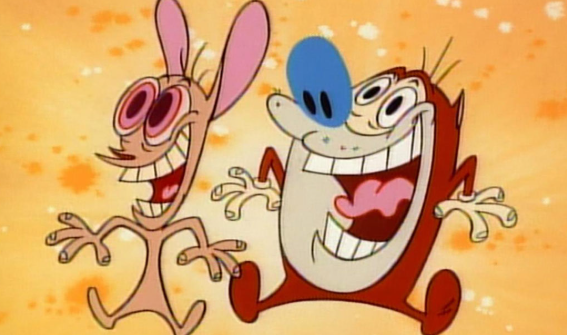
Beyond the Gross-Out: 10 Shocking Facts About the Chaos and Genius of The Ren & Stimpy Show
In the vast landscape of television history, few programs have dared to be as unapologetically bizarre, viscerally detailed, and artistically rebellious as the story of a “asthmatic” hound and a “bloated” cat. When this series first flickered onto screens, it didn’t just break the rules of animation—it set the rulebook on fire and danced in the ashes. While many cartoons of its era focused on moral lessons or toy advertisements, this show leaned into the grotesque, the surreal, and the hilariously uncomfortable.
The impact of this series on the medium of animation cannot be overstated. It served as a bridge between the classic, high-energy theatrical shorts of the mid-twentieth century and the modern era of creator-driven content. It was a show that felt like a secret shared between the creators and the audience, often pushing the boundaries of what was considered “appropriate” for a younger demographic. Behind the scenes, the production was just as chaotic as the on-screen antics, marked by creative friction, revolutionary art techniques, and a complete reimagining of how a cartoon should look and feel.
To understand the genius of this series, one must look past the surface-level grime and “gross-out” humor. At its heart, the show was a love letter to the craft of hand-drawn animation, a satirical take on suburban life, and a masterclass in character acting. This article explores ten essential facets of the show’s history and creative philosophy that solidified its status as an immortal titan of the industry.
1. The Spümcø Manifesto and the Death of “Model Sheets”
In traditional television animation, consistency is king. Studios typically utilize “model sheets”—strict blueprints that dictate exactly how a character must look from every angle. This ensures that different animators can work on the same character without the audience noticing a change in style. This show, however, threw that concept out the window. Under the leadership of the original production studio, Spümcø, the philosophy was “on-model is boring.”
The animators were encouraged to push the characters’ expressions to the absolute limit. In one frame, Ren might look like a shivering, skeletal wreck; in the next, his face might melt into a puddle of neurotic fury. This fluid approach to character design meant that the characters were defined by their personalities and “acting” rather than a static physical appearance. This rejection of industry standards was a radical act of artistic freedom that allowed every scene to feel hand-crafted and unique, a far cry from the assembly-line feel of many contemporary programs.
2. The Grotesque Glory of the “Gross-Out” Close-Up
If there is one visual element that defines this series in the public consciousness, it is the hyper-detailed “gross-out” close-up. While the general animation was often bright and rubbery, the show would frequently cut to a static, highly rendered painting of a character’s face or a specific object. These “inserts” would highlight every stray hair, every glistening sweat drop, and every yellowed tooth with uncomfortable clarity.
These shots were not merely for shock value; they were a revolutionary use of the “repulsive” as an aesthetic. By juxtaposing simple animation with intricate, gritty paintings, the creators forced the audience to confront the physical reality of the characters’ world. This technique was a nod to the “ugly-cool” aesthetic found in underground comix and early lowbrow art. It influenced an entire generation of later animators who realized that “ugly” could be just as expressive and visually interesting as “pretty.”
3. A Tale of Two Voices: The Neurotic and the Naive
The vocal performances in the series are legendary for their range and intensity. The character of Ren, a “High-Fashion Chihuahua,” was defined by a voice that oscillated between a sinister, Peter Lorre-inspired whisper and a banshee-like scream of pure rage. Stimpy, the “Manx Cat,” provided the perfect counterpoint with a voice that was thick, slow, and perpetually optimistic, often punctuated by a vacant “Happy Happy Joy Joy” demeanor.
The vocal production was unique because the actors were encouraged to improvise and push their voices to physical breaking points. This wasn’t “safe” voice acting; it was high-stakes performance art. When the lead creator was famously removed from the project later in the show’s run, the vocal duties shifted, leading to one of the most famous “voice-match” performances in history. This transition proved how vital the specific cadence and rhythm of the characters were to the show’s success, as the voices were just as “elastic” as the animation itself.
4. The Relentless War with Standards and Practices
Producing this show was a constant game of cat and mouse with the network’s “Standards and Practices” department. The creators were constantly pushing the limits of what was allowed regarding violence, bathroom humor, and suggestive themes. The tension between the studio’s desire for total creative anarchy and the network’s need for “kid-friendly” content created a unique energy that fueled the show’s subversion.
Many of the most famous gags in the series were born from these battles. When a certain joke was censored, the animators would often replace it with something even weirder or more abstract that technically bypassed the rules while remaining equally “edgy.” This friction is a key part of the show’s DNA; it feels like a program that is constantly trying to break out of the television set and cause trouble, making the viewer feel like they are watching something they aren’t supposed to see.
5. The “Man’s Best Friend” Incident and the George Liquor Legacy
Perhaps the most famous piece of lore in the show’s history involves an episode that was so controversial it was banned from airing for years. The episode, titled “Man’s Best Friend,” introduced the character George Liquor, an ultra-masculine, intense “man’s man” who tries to discipline Ren and Stimpy. The episode culminated in a scene of cartoon violence that the network deemed too intense for television at the time.
This banned episode became a “holy grail” for fans and collectors, circulating through underground tape-trading circles for a long time. It represented the ultimate clash between creator intent and corporate oversight. The character of George Liquor, despite the ban, became a cult icon, representing the show’s refusal to compromise on its specific brand of satirical, high-octane Americana. The “Man’s Best Friend” incident remains a landmark case study in the history of television censorship.
6. A Symphony of Chaos: The Show’s Unexpected Musical Pedigree
While the visuals were often chaotic, the soundtrack of the series was incredibly sophisticated. Rather than using standard cartoon music, the show frequently utilized “library music”—pre-recorded tracks of classical, jazz, and mid-century lounge music. This gave the series an air of timelessness and a strange, cinematic dignity that contrasted hilariously with the low-brow humor occurring on screen.
The use of classical pieces by composers like Rossini or Tchaikovsky during scenes of absolute mayhem created a “mock-epic” feel. Additionally, the show’s original songs, such as the infectious and unsettling “Happy Happy Joy Joy,” became massive hits in their own right. The music wasn’t just background noise; it was a character in itself, dictating the pacing and tone of every segment and proving that the creators had a deep appreciation for high-culture even as they were wallowing in the mud.
7. The Painterly Beauty of a Grimy World
Despite its reputation for being “gross,” the series is undeniably beautiful from a technical standpoint. The background art was heavily influenced by the “Golden Age” of animation and the illustrators of the 1940s and 50s. The artists used rich, saturated colors and textured, painterly techniques to create a world that felt lived-in and tangible.
The contrast between the “grungy” subject matter and the high-quality craftsmanship of the backgrounds created a visual tension that was mesmerizing. You might see a scene set in a literal garbage dump, but that dump would be painted with the care and lighting of a fine-art masterpiece. This commitment to quality ensured that the show appealed to art students and animation professionals just as much as it did to the general public, setting a new bar for what television animation could achieve on a technical level.
8. The “Log” Phenomenon and the Satire of Consumerism
One of the most brilliant recurring segments in the show was the “Log” commercial. A parody of the toy advertisements that cluttered children’s programming, “Log” was literally just a piece of wood. The jingle—proclaiming it was “better than bad, it’s good”—mocked the way corporations could market absolutely anything to a gullible public.
This satire of consumerism was a recurring theme throughout the series. Whether it was “Powdered Toast Man” or “Gritty Kitty Litter,” the show was constantly biting the hand that fed it (the advertising-driven television industry). By creating fictional products that were absurdly useless or dangerous, the show encouraged its audience to look critically at the media they consumed, all while providing some of the catchiest and most memorable moments in the series.
9. Elastic Animation and the Rejection of the Status Quo
The movement in the series is often described as “elastic.” This refers to the “squash and stretch” principle of animation, taken to a logical extreme. The characters’ bodies are not solid; they are made of whatever material the joke requires them to be. Ren can be stretched like a rubber band, or Stimpy can be flattened into a pancake, and the physics of the world adapt instantly.
This fluidity allowed for a type of physical comedy that hadn’t been seen since the heyday of directors like Bob Clampett or Tex Avery. In an era where many cartoons were using “limited animation” to save money (resulting in stiff, repetitive movements), this show was a vibrant, moving explosion of energy. It reminded the world that the “animation” part of “animated series” was supposed to be the main attraction, not just a delivery system for dialogue.
10. Paving the Path for the Adult Animation Boom
The legacy of this series is visible in almost every major animated hit that followed it. By proving that there was a massive audience for cartoons that were “weird,” “edgy,” and “artistically sophisticated,” it paved the way for the “creator-driven” revolution. Shows that appealed to both children (through slapstick) and adults (through satire and art) became the new gold standard.
Without the boundary-pushing success of the Chihuahua and the Cat, many of the most popular animated sitcoms and surrealist comedies of the following decades might never have been greenlit. It proved that “cartoons” were a medium, not a genre, and that this medium could be used to explore the darkest, funniest, and most bizarre corners of the human (and animal) experience. The show remains a North Star for animators who want to prioritize artistic vision over corporate safety.
Further Reading
- Sick Little Monkeys: The Unauthorized Ren & Stimpy Story by Thad Komorowski
- Not Just Cartoons: Nicktoons! by Jerry Beck
- The Art of Spümcø by John Kricfalusi (Note: Out of print but highly sought after by collectors)
- Animation: A World History by Giannalberto Bendazzi
- 10 The Crown TV SHOW Facts That Keep People Watching
- 10 Futurama TV SHOW Facts That Still Hold Up
- 10 Things You Should Know About Speedy Gonzales – Looney Tunes
- 10 Things You Should Know About Yosemite Sam – Looney Tunes
- 10 Things You Should Know About Starlight From The Boys TV Show
- 10 Things You Should Know About Road Runner – Looney Tunes
- 10 Things You Should Know About Wile E. Coyote – Looney Tunes
- 10 Things You Should Know About Tweety Pie – Looney Tunes
- 10 Things You Should Know About Sylvester The Cat – Looney Tunes
- 10 Things You Should Know About Porky Pig – Looney Tunes



