
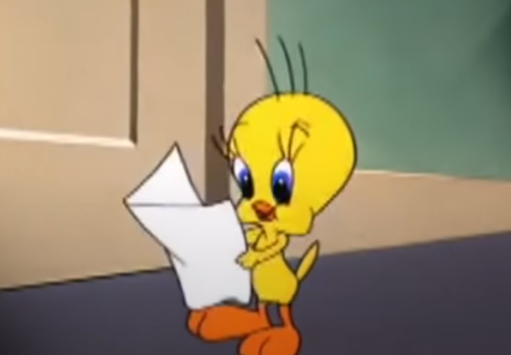
“I Tawt I Taw A… Secret?” 10 Surprising Truths About Tweety Bird You Never Knew
In the golden era of animation, few characters possess a visual shorthand as potent as the large-headed, blue-eyed, yellow canary known as Tweety. At first glance, he is the picture of innocence—a vulnerable songbird perched safely (or precariously) in a golden cage. Yet, beneath those fluttery eyelashes lies one of the most strategic, resilient, and occasionally devious minds in the Looney Tunes universe. Tweety is not merely a victim of feline hunger; he is a master of the “defensive offense,” turning the domestic landscape into a tactical playground where he almost always emerges victorious.
Created during a time when animation was shifting from simple gag-reels to character-driven storytelling, Tweety evolved from a wild, featherless hatchling into a global cultural icon. His appeal transcends language and age, rooted in the universal theme of the “small vs. the large.” While his rival, Sylvester, represents the relentless struggle of the underdog, Tweety represents the triumph of wit over brute force. To understand Tweety is to understand the art of the subverted expectation. This guide peels back the yellow feathers to reveal the history, the controversy, and the enduring genius of Hollywood’s most famous canary.
1. The “Naked” Truth: Tweety’s Featherless Origins
Long before he was the soft yellow bird we recognize, Tweety made his debut in a significantly different form. Created by director Bob Clampett, the original Tweety (initially named “Orson”) was not yellow at all; in fact, he wasn’t even feathered. He was a pink, jowly, and somewhat aggressive baby bird. This early version of the character was much more “wild” and prone to physical violence, often initiating the conflict rather than simply reacting to a predator.
The decision to add feathers and change his color to yellow was not purely an aesthetic choice. Standards and Practices during the early days of animation were surprisingly strict regarding “nudity,” even when applied to a cartoon bird. By covering him in yellow feathers, the studio made the character appear more “infant-like” and adorable, which served to sharpen the comedic contrast when he would inevitably drop an anvil on an opponent’s head. This transition from a “naked” pink hatchling to a fluffy canary marked the beginning of Tweety’s journey toward becoming a household name.
2. The Great Gender Debate: Is Tweety a Boy or a Girl?
One of the most persistent questions among casual fans is whether Tweety is male or female. This confusion stems from his long, feminine eyelashes, high-pitched voice, and overall “cute” aesthetic. However, within the lore of the cartoons and according to the animators who brought him to life, Tweety is male. In several classic shorts, characters refer to him using male pronouns, and his voice, while high, was intentionally designed by Mel Blanc to sound like a young boy with a speech impediment.
The ambiguity was somewhat intentional. By giving Tweety features that are traditionally associated with “cuteness” and “vulnerability”—traits often coded as feminine in early 20th-century media—the animators were able to trick both the audience and his feline adversaries into a false sense of security. Tweety’s “pretty” appearance is his primary weapon; it makes his sudden bursts of tactical brilliance and occasionally ruthless behavior much funnier. He is a prime example of character design being used to subvert gendered expectations of behavior.
3. The Sadistic Streak of a “Sweet” Canary
While modern interpretations often lean into Tweety’s sweetness, the classic era of animation frequently highlighted a much darker, more mischievous side of the character. Tweety is rarely a passive observer of his own peril. Instead, he often takes great joy in the physical misfortune of his pursuers. Whether he is lighting a match under a cat’s paw or calculating the exact trajectory of a falling piano, Tweety displays a level of cold, calculated precision that borders on the Machiavellian.
This “sadistic” streak was a hallmark of the Bob Clampett era. Clampett’s characters were known for their high energy and lack of inhibition. When Friz Freleng took over the character’s direction, Tweety became slightly more refined and “innocent,” but that glimmer of mischief never truly vanished. He is a character who understands the rules of the “chase” better than anyone else, and he isn’t afraid to get his wings dirty to ensure he remains the one inside the cage looking out, rather than the one inside the cat looking for an exit.
4. The Linguistic Genius of “I Tawt I Taw”
Tweety’s speech pattern is one of the most recognizable “impediments” in fiction. Characterized by the replacement of “s” and “z” sounds with “t” and “d” sounds, Tweety’s voice was a masterclass in vocal performance by Mel Blanc. The phrase “I tawt I taw a puddy tat!” (I thought I saw a pussy cat) is a phonetic delight that reinforces his “baby-like” persona while making his dialogue instantly memorable. This choice of speech reinforces the “innocence” trap that Tweety sets for his enemies.
The brilliance of the voice lies in its contrast with Tweety’s actions. Hearing a high-pitched, lisping voice deliver a line about a cat being crushed by a steamroller creates a cognitive dissonance that is the engine of the character’s humor. Blanc reportedly developed the voice by taking his “Daffy Duck” voice and raising the pitch while softening the explosive “p” sounds. This created a sound that felt both vulnerable and oddly authoritative, a vocal signature that has been imitated by millions of fans across generations.
5. The Oscar-Winning Pairing with Sylvester
While Tweety had appeared in shorts with other cats (such as Babbit and Catstello), his career truly skyrocketed when he was paired with Sylvester the Cat. Their first appearance together, titled “Tweety Pie,” was a revelation. It moved the action from the wild into a domestic setting—usually the home of a sweet old lady—which added stakes to their rivalry. If Sylvester was caught, he didn’t just lose a meal; he lost his status as a “good kitty.”
The chemistry between the two was so effective that “Tweety Pie” won the Academy Award for Best Short Subject: Cartoons. This victory established the duo as a flagship property for Warner Bros. The formula was perfect: Sylvester provided the physical comedy and the “Aha!” moments of planning, while Tweety provided the “Oh no!” moments of realization. Their rivalry is essentially a game of chess played with hammers and dynamite, and it remains one of the most successful pairings in the history of the medium.
6. The Role of Granny: The Ultimate Enforcer
Every great protagonist needs an ally, and for Tweety, that ally is Granny. Clad in her Victorian-style dress, spectacles, and a bun, Granny is the quintessential protective owner. She represents the “law” in Tweety’s world. While Tweety is more than capable of defending himself, Granny’s presence adds a layer of social peril for Sylvester. He isn’t just fighting a bird; he is fighting the person who provides his kibble and shelter.
Granny also serves as the audience’s surrogate in terms of seeing Tweety as “helpless.” She is often oblivious to Tweety’s more devious actions, seeing only a “poor little birdy” being harassed by a “naughty cat.” This creates a hilarious dynamic where Sylvester is essentially gaslit by both the bird and their owner. Granny’s umbrella, which she frequently uses to swat Sylvester, became as much a part of the show’s iconography as Tweety’s cage itself, representing the domestic boundaries that Sylvester is constantly trying to breach.
7. The Science of the Canary: Myth vs. Reality
Is Tweety actually a canary? In the context of the show, yes. However, his design takes massive liberties with avian anatomy. A real canary is a small, energetic songbird, but Tweety’s head-to-body ratio is more akin to a human infant than a bird. This “neoteny” (the retention of juvenile features) is a psychological trick used by animators to trigger a protective instinct in the viewer. Large eyes and a large forehead are universal signals for “this is a baby.”
Furthermore, Tweety’s yellow color is the standard for the “domestic” canary, which was bred for its vibrant plumage and singing ability. In the wild, canaries are often a more subdued greenish-brown. By making Tweety a bright, domestic yellow, the animators placed him firmly in the “tame” world, which makes his survival in the face of “predatory” cats all the more impressive. He is a domesticated creature using the instincts of a wild one to navigate the perils of the living room.
8. A Fashion Icon and Streetwear Legend
In the latter half of the 20th century, Tweety experienced a massive resurgence, but not just on television. He became an unlikely icon in the world of fashion and streetwear. Particularly in the 1990s, Tweety’s image—often portrayed with a “tough” attitude, wearing oversized clothes or sporting a defiant expression—was ubiquitous on t-shirts, jackets, and accessories. This version of Tweety leaned into his “don’t mess with me” personality, making him a symbol of “attitude” for a younger generation.
This merchandising phenomenon proved that Tweety’s appeal was modular. He could be the “cute” bird for children and the “sassy” icon for teenagers and adults. His silhouette is so distinct that even a minimalist representation of his large blue eyes and yellow head is immediately recognizable. This versatility has allowed him to remain relevant in the retail space long after his theatrical heyday, proving that a good character design can live many lives across different mediums.
9. The Transition to the Silver Screen and Beyond
While Tweety is a star of short-form animation, his influence extended into feature films and modern series. He played a pivotal role in the live-action/animation hybrid films of the late 20th century, often acting as a bridge between the classic “cartoon” logic and the “real” world. In these appearances, his character often serves as the moral compass or the surprising “ace in the hole” during high-stakes climaxes.
Furthermore, his presence in various “mystery-themed” spin-offs showed that Tweety could function outside of the simple “cat-and-bird” chase. These series allowed him to interact with a wider cast of characters, proving that his personality was strong enough to carry dialogue-heavy scenes and complex plots. Whether he is a detective’s sidekick or a basketball-playing hero, Tweety adapts to his environment without ever losing the core traits—the lisp, the eyelashes, and the wit—that made him a star.
10. The Eternal Legacy of the “Puddy Tat” Hunter
Why does Tweety endure? It is because he represents the triumph of the underestimated. In a world that often favors the big, the loud, and the aggressive, Tweety is a reminder that being small and quiet doesn’t mean being weak. He uses his perceived limitations as his greatest advantages. Every time Sylvester tries to grab him, he isn’t just fighting a cat; he is fighting the very idea that he is a victim.
Tweety’s legacy is found in every “clever” character who follows in his wake. He taught audiences that you can be “cute” and “tough” at the same time. As long as there are people who feel like they are “too small” to make a difference, Tweety will remain a relevant and beloved figure. He is the ultimate survivor, a yellow speck of defiance in a world of hungry cats, proving once and for all that a “wittle birdy” can be the most dangerous player in the room.
Further Reading
- That’s Not All Folks! by Mel Blanc and Philip Bashe
- The 50 Greatest Cartoons: As Selected by 1,000 Animation Professionals edited by Jerry Beck
- Hollywood Cartoons: American Animation in Its Golden Age by Michael Barrier
- Chuck Amuck: The Life and Times of an Animated Cartoonist by Chuck Jones
- 10 Things You Should Know About Foghorn Leghorn – Looney Tunes
- 10 Futurama TV SHOW Facts That Still Hold Up
- 10 Things You Should Know About Speedy Gonzales – Looney Tunes
- 10 Things You Should Know About Yosemite Sam – Looney Tunes
- 10 Things You Should Know About The Looney Tunes
- 10 The Incredibles (2004) Facts That Made It Unique – Classic Movie
- 10 Things You Should Know About Road Runner – Looney Tunes
- 10 Things You Should Know About Wile E. Coyote – Looney Tunes
- 10 Things You Should Know About Tweety Pie – Looney Tunes
- 10 Things You Should Know About Sylvester The Cat – Looney Tunes



