
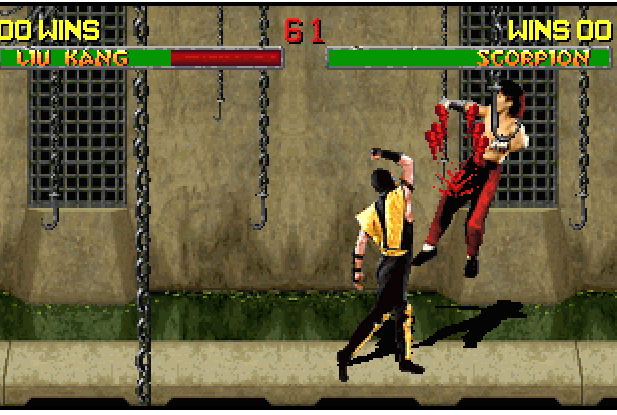
FINISH THEM! 10 Mind-Blowing Facts About Mortal Kombat II That Redefined Gaming History
The early 1990s were a transformative era for entertainment, but perhaps no industry felt the seismic shift more than the world of arcade gaming. When the original Mortal Kombat arrived, it sent shockwaves through culture with its digitized graphics and visceral violence. However, it was the sequel, Mortal Kombat II, that truly solidified the franchise as a cultural juggernaut. It wasn’t just a game; it was a phenomenon that filled arcades with thick crowds, sparked national debates, and pushed the boundaries of what home consoles were thought capable of delivering.
Walking into an arcade during the height of its popularity was an experience in sensory overload. The rhythmic “thud” of the bass, the iconic screams of the fighters, and the sight of a crowd huddled around a cabinet waiting for a “Fatality” created an electric atmosphere. Mortal Kombat II took everything that worked in the first game and amplified it—faster gameplay, a deeper roster, more complex lore, and secrets that felt like urban legends come to life. To understand the history of gaming is to understand this pivotal sequel. Here are ten essential facts about the development, controversy, and legacy of this fighting game masterpiece.
1. The “Empire Strikes Back” of Fighting Games
In the world of sequels, there is a rare phenomenon where a second installment doesn’t just iterate on the original but completely eclipses it in scope and execution. Mortal Kombat II is often cited as the “Empire Strikes Back” of its genre. While the first game provided the foundation, the sequel expanded the roster from seven playable characters to twelve, introducing fan favorites like the razor-hat-wielding Kung Lao, the regal but deadly Princess Kitana, and the terrifying Baraka.
This expansion wasn’t just about quantity; it was about refining the mechanics. The game felt faster and more responsive, allowing for air throws and improved combo possibilities. The developers at Midway realized that to stay ahead of the competition, they needed to deepen the “kombat” system while maintaining the accessibility that made the first game a hit. By adding more diverse fighting styles and special moves, they ensured that every player could find a character that suited their specific tactical approach. This leap in quality set a new standard for what players expected from a video game sequel, moving beyond a simple “map pack” to a total reimagining of the experience.
2. The Secret of Noob Saibot and the Hidden Challengers
Long before the internet made every game secret available at the click of a button, Mortal Kombat II thrived on playground rumors and arcade whispers. One of the most enduring legacies of the game is its hidden characters: Jade, Smoke, and the mysterious Noob Saibot. These characters weren’t selectable on the main screen; instead, they required specific, often difficult, actions to encounter, such as winning rounds using only the kick button or looking for clues in the “Living Forest” stage.
Noob Saibot, a pitch-black silhouette of a ninja, holds a special place in gaming history due to his name—a reverse spelling of the game’s creators, Ed Boon and John Tobias. These hidden fights added a layer of mystery and “replayability” that was virtually unheard of at the time. Players would spend countless quarters just trying to trigger a fight with Smoke, who appeared as a grey-clad ninja emitting puffs of vapor. This culture of secrets helped build a community of enthusiasts who shared tips and tricks, turning a solitary gaming experience into a collaborative social hunt for hidden content.
3. Friendships and Babalities: The Answer to Controversy
As the violence in Mortal Kombat began to draw fire from concerned parents and politicians, the developers at Midway responded with a stroke of genius: a sense of humor. Instead of just scaling back the gore, they added “Friendships” and “Babalities.” These were alternative finishing moves that allowed players to show mercy in the most ridiculous ways possible. Instead of ripping out an opponent’s heart, a character might offer a bouquet of flowers or transform the loser into a crying infant.
These additions served two purposes. First, they were a cheeky “middle finger” to the critics, showing that the developers didn’t take themselves too seriously. Second, they added a layer of psychological warfare to the game. Being “Babality-ed” was often seen as more humiliating than a standard Fatality, as it signaled that the winner was so dominant they could afford to toy with their opponent. This blend of dark ultraviolence and absurdist comedy became a hallmark of the series, proving that the franchise had a personality that extended far beyond simple shock value.
4. The Real-Life Actors Behind the Digits
One of the primary reasons Mortal Kombat II looked so much more realistic than its contemporaries—which mostly used hand-drawn sprites—was its use of digitized actors. Real martial artists and actors were filmed performing moves in front of a blue screen, and those frames were then converted into the game’s characters. This gave the movements a “weight” and human quality that was revolutionary for 1993.
Daniel Pesina famously portrayed Johnny Cage, Sub-Zero, Scorpion, and Reptile, while Anthony Marquez brought the speed of Kung Lao to life. The process was grueling; actors often had to perform the same kick or punch dozens of times to ensure the frames would transition smoothly in the game engine. Because the budget was still relatively modest compared to modern standards, the actors often assisted with costume design and choreography. This human element meant that players weren’t just controlling cartoons; they were controlling digital representations of real people, which added to the visceral impact of every hit and special move.
5. The “Toasty!” Guy and the Art of the Inside Joke
If you have ever played Mortal Kombat II and heard a high-pitched voice yell “Toasty!” as a small face popped up in the corner of the screen, you’ve experienced one of the most famous inside jokes in gaming history. The face belongs to Dan Forden, the game’s sound designer. The joke originated during development; whenever a particularly devastating move was landed during testing, Forden would yell “You’re toast!” which eventually morphed into the iconic “Toasty!”
This quirk is a perfect example of the “indie” spirit that still resided within Midway’s development team. They weren’t just making a commercial product; they were making something for themselves and their friends. The inclusion of such a bizarre, fourth-wall-breaking element became a signature part of the Mortal Kombat identity. It rewarded players for performing well (usually by landing an upper-cut) and added a lighthearted, almost surreal rhythm to the otherwise grim proceedings of the tournament. It remains one of the most recognizable “Easter eggs” in the history of the medium.
6. A New Realm: Designing the Dark Fantasy of Outworld
The first game took place on Earthrealm, in Shang Tsung’s island fortress. For the sequel, the developers decided to transport the players to “Outworld,” a desolate, magical, and oppressive dimension ruled by the emperor Shao Kahn. This shift allowed the art team to move away from traditional martial arts movie tropes and into the realm of dark, high fantasy.
The stages in Mortal Kombat II are characters in their own right. From the “Living Forest” with its snarling, sentient trees to the “Dead Pool” filled with bubbling acid, the environments felt alive and dangerous. The use of a richer color palette—deep purples, vibrant greens, and hellish reds—made the game pop on arcade monitors. This world-building was essential for the longevity of the franchise. It established that Mortal Kombat wasn’t just a tournament; it was an interdimensional epic with high stakes. By making the world feel larger and more threatening, the developers ensured that the story felt like a significant escalation from the events of the original game.
7. The Technological Leap of the Midway T-Unit
Behind the blood and the ninjas lay a significant piece of hardware: the Midway T-Unit arcade board. At the time of the game’s release, this hardware was a powerhouse, capable of handling the large, high-color digitized sprites and the complex layers of scrolling backgrounds that defined the MK2 look. This technology allowed for more fluid animation and a higher resolution than the first game, which utilized the older Y-Unit board.
The T-Unit also excelled at audio processing, which was crucial for the game’s atmospheric soundscapes. The deep, booming voice of the narrator (Shao Kahn himself) saying “Round One… Fight!” or “Flawless Victory” became iconic, largely because the hardware could deliver that audio with such clarity and power. While home consoles like the Super Nintendo and Sega Genesis tried their best to replicate the arcade experience, the raw power of the T-Unit meant that the “true” version of Mortal Kombat II remained an arcade exclusive for quite some time, driving foot traffic to businesses around the world.
8. Stage Fatalities and Environmental Storytelling
While the original game had the “Pit” fatality where players could knock opponents onto spikes, Mortal Kombat II took environmental hazards to a gruesome new level. The sequel introduced multiple stage-specific finishing moves, allowing players to interact with the background in lethal ways. You could knock an opponent into the ceiling spikes of the “Kombat Tomb” or submerge them in the corrosive vats of the “Dead Pool.”
These stage fatalities weren’t just cool visual flourishes; they were a form of environmental storytelling. They reinforced the idea that Outworld was a place where the very architecture was designed for slaughter. To perform these moves, players had to learn specific button combinations that were different from their character’s standard fatalities, adding another layer of mastery to the game. It encouraged players to pay attention to their surroundings and made the choice of stage feel more tactically significant during a match. This interaction between the players and the environment would become a staple of the fighting game genre for decades to come.
9. The Controversy that Created the ESRB
It is impossible to discuss Mortal Kombat II without mentioning its impact on the real world. The game, along with titles like Night Trap and Lethal Enforcers, became the focal point of United States Senate hearings on video game violence. Politicians argued that the realistic graphics and violent content were harmful to minors, leading to a massive media firestorm that put the game on the evening news almost every night.
Rather than destroying the industry, this controversy led to the creation of the Entertainment Software Rating Board (ESRB). This independent body was established to provide age-based ratings for video games, similar to the movie rating system. Mortal Kombat II was effectively the “patient zero” for this new era of regulation. Interestingly, the controversy acted as free marketing; the more the media told children they shouldn’t play the game, the more they flocked to it. The game’s legacy is therefore twofold: it was a landmark in digital entertainment and a catalyst for how modern society treats and categorizes interactive media.
10. The Secret Pong Game and Hidden Easter Eggs
In a final display of the developers’ playful nature, Mortal Kombat II contained a secret within a secret. If two players engaged in a staggering 250 consecutive matches in the arcade version, the game would suddenly stop and transition into a version of Pong. This was a nod to the very origins of video games, juxtaposing the hyper-violent, cutting-edge graphics of 1993 with the simplest form of digital entertainment.
Beyond Pong, the game was riddled with “red herrings” and teasing messages designed to keep players guessing. After beating the game, players might see cryptic text like “ERMAC WHO?” or “CEAMR ODOW,” fueling rumors about even more hidden characters (Ermac would eventually become a real character in later installments, based purely on a glitch rumor from the first game). These layers of meta-commentary and hidden content showed that the developers were deeply in tune with their fanbase. They knew that in the world of Mortal Kombat, the fight didn’t end when the screen went black; it continued in the imaginations and theories of the players.
Further Reading
- The Ultimate History of Video Games: From Pong to Pokémon and Beyond by Steven L. Kent
- Service Games: The Rise and Fall of SEGA by Sam Pettus
- I Am Error: The Nintendo Family Computer / Entertainment System Platform by Nathan Altice
- Game Over: Press Start to Continue by David Sheff
- 10 Things You Should Know About The Making Of And History Of The Video Game – Diablo II
- 10 Things You Should Know About The Making Of And History Of The Video Game – God of War (2018)
- 10 Things You Should Know About The Making Of And History Of The Video Game – The Legend of Zelda: Ocarina of Time
- 10 Things You Should Know About The Making Of And History Of The Video Game – Portal 2
- 10 Essential Facts About Assassin’s Creed (2007) – Video Game Facts
- 10 Essential Facts About Mortal Kombat 2 – Video Game (1993)
- 10 Essential Facts About the Making and History of ARK: Survival Evolved – Video Game Lore
- 10 Essential Facts About the Making and History of Tomb Raider (1996) – Video Game Lore
- 10 Essential Facts About the Making and History of Mario Kart – Video Game Lore
- 10 Things You Should Know About Skyrim – Video Game



