
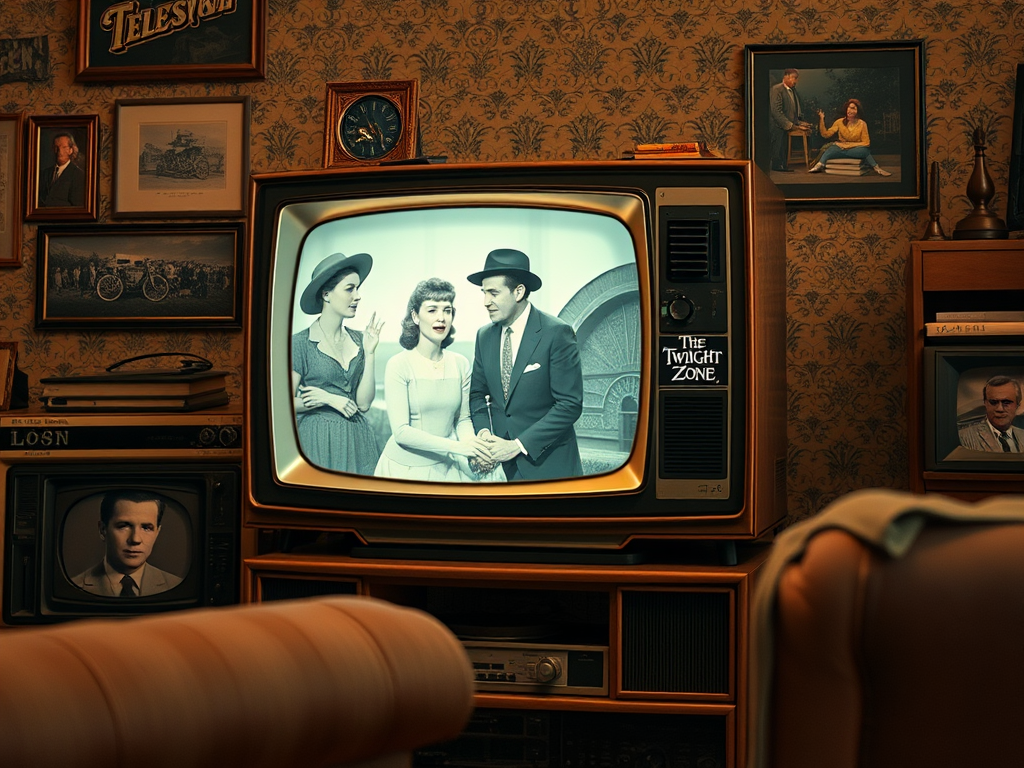
Television. It’s the glowing box in the corner of the room, the screen in our pocket, the shared cultural campfire we’ve gathered around for nearly a century. But this medium is not a static monolith; it’s a constantly evolving art form, shaped and reshaped by audacious creators who dared to break the rules. Certain shows arrived not just to entertain, but to fundamentally alter the DNA of television itself. They introduced new ways to tell stories, new technologies to capture them, and new ideas that challenged audiences to think differently about the world and the medium they were watching.
From the foundational sitcoms that invented the rulebook to the complex dramas that tore it up, this is a journey through the pivotal moments in television history. These ten shows weren’t just popular; they were revolutionary. They left an indelible mark, creating new genres, pioneering new formats, and proving that television could be more than just disposable entertainment. They are the trailblazers whose influence can still be seen in almost every series we watch today, the true game-changers that made television what it is.
1. I Love Lucy (1951-1957): Inventing the Blueprint for the Modern Sitcom
Before I Love Lucy, television comedy was largely a live, New York-based affair, often a transplant from radio. Then Lucille Ball and Desi Arnaz came along and, out of a desire to stay in California and raise their family, completely revolutionized the industry. To achieve a higher quality image suitable for broadcast nationwide, they insisted on filming their show on 35mm film in front of a live studio audience. This was a radical departure from the live kinescope recordings common at the time. To do this efficiently, their company, Desilu Productions, pioneered the three-camera setup, a technique that allowed them to capture multiple angles simultaneously and edit them together seamlessly. This not only gave the show its dynamic, cinematic feel but also became the standard production method for sitcoms for the next 70 years. Furthermore, by retaining ownership of the film prints, Desilu created the concept of the “rerun” and invented the incredibly lucrative business of television syndication. I Love Lucy didn’t just give us iconic moments of comedy; it created the foundational business and production model upon which the television industry was built.
2. The Twilight Zone (1959-1964): Proving Television Could Be High-Concept Art
In an era dominated by Westerns and wholesome family comedies, Rod Serling’s The Twilight Zone was a bolt from the blue. It was an anthology series, meaning each week brought a new story, new characters, and a new reality. This format allowed Serling and his gifted team of writers to explore complex, often controversial themes without the constraints of ongoing characters or plotlines. Under the guise of science fiction, fantasy, and horror, the show became a powerful vehicle for social commentary. It tackled racism, censorship, nuclear paranoia, and the nature of humanity itself, using allegory to slip profound ideas past network censors. Serling proved that television could be a writer’s medium, a place for intelligent, thought-provoking drama that treated its audience with respect. It legitimized genre storytelling on the small screen and created a space for shows that aimed to do more than just comfort and entertain—they aimed to make you think. Its influence is immeasurable, paving the way for everything from Black Mirror to The X-Files.
3. Star Trek: The Original Series (1966-1969): Charting a Future of Diversity and Ideas
On the surface, Star Trek was a pulpy sci-fi adventure about exploring “strange new worlds.” But Gene Roddenberry’s creation was a vessel for something far more profound. Launching during the turbulent 1960s, a time of immense social upheaval and the height of the Cold War, Star Trek presented a radical vision of an optimistic future. Its greatest innovation was its unapologetically diverse crew. On the bridge of the Starship Enterprise, an African-American woman, a Japanese-American man, a Scotsman, and even a Russian worked alongside each other in positions of authority, with an alien as the second-in-command. This wasn’t just casting; it was a powerful statement about humanity’s potential to overcome prejudice and work together. The show used science fiction as a lens to examine contemporary issues, from war and racism to colonialism. It famously featured one of television’s first interracial kisses, a groundbreaking moment that cemented its place in cultural history. Star Trek transformed science fiction into a platform for social allegory and inspired generations to look to the future with hope.
4. All in the Family (1971-1979): Injecting Gritty Realism into the Sitcom
For decades, the television sitcom was a place of gentle escapism, populated by idealized, middle-class families who rarely faced a problem that couldn’t be solved in 22 minutes. Norman Lear’s All in the Family shattered that mold with the force of a slammed door. It centered on Archie Bunker, a bigoted, working-class patriarch constantly clashing with his liberal son-in-law, “Meathead.” For the first time, a sitcom tackled the real, divisive issues of the day head-on: racism, the Vietnam War, women’s liberation, homosexuality, and political polarization. The humor was born from the uncomfortable friction of these conflicting worldviews, forcing audiences to confront their own prejudices. It was loud, controversial, and utterly revolutionary. All in the Family proved that comedy could be a powerful tool for social commentary, sparking national conversations and dragging the sitcom format into the real world. It demonstrated that audiences were ready for complex, flawed characters and challenging topics, paving the way for countless socially-conscious comedies to come.
5. Saturday Night Live (1975-Present): Redefining Comedy and Late-Night Television
When Saturday Night Live (then called NBC’s Saturday Night) premiered in 1975, it was unlike anything else on television. It was live, unpredictable, and aimed squarely at the counter-culture generation that had grown up with television but felt unrepresented by it. Created by Lorne Michaels, SNL broke the established rules of variety shows by featuring a young, rebellious cast of “Not Ready for Prime Time Players” who wrote much of their own material. Its blend of topical political satire, absurdist sketches, and live musical performances created a cultural institution. For nearly five decades, the show has served as a mirror to American society, its political cold opens and recurring characters becoming part of the national lexicon. It became the single most important launchpad for comedic talent in North America, with its alumni dominating the comedy landscape for generations. SNL proved the enduring power of live television and created a format for sketch comedy and political satire that remains the gold standard to this day.
6. The Simpsons (1989-Present): Making Animation a Primetime Powerhouse
Animation in American primetime was largely considered children’s fare until a dysfunctional, yellow-skinned family from Springfield changed everything. The Simpsons elevated the animated sitcom into a sophisticated art form capable of sharp social satire and deep emotional resonance. It broke ground by being relentlessly clever, layering jokes-within-jokes and pop culture references at a dizzying pace that rewarded attentive viewing. The show wasn’t afraid to bite the hand that fed it, satirizing its own network, television tropes, and the very fabric of American life. Its success single-handedly opened the floodgates for a wave of adult animated sitcoms, from Family Guy and South Park to BoJack Horseman, proving that cartoons could be a legitimate and powerful medium for adult storytelling. By creating a sprawling, beloved universe of characters, it demonstrated a longevity previously thought impossible for any scripted show, let alone an animated one, becoming the longest-running scripted series in American primetime history and a true global phenomenon.
7. The Sopranos (1999-2007): Ushering in the Golden Age of Television
With its very first episode, The Sopranos announced that a new era of television had arrived. This was not just a mob show; it was a complex, novelistic exploration of a man, a family, and a nation in decline at the turn of the 21st century. Creator David Chase utilized the creative freedom of premium cable (HBO) to craft a show with the depth and complexity of a great film. It popularized the figure of the television anti-hero—a charismatic but deeply flawed protagonist who audiences rooted for in spite of his monstrous deeds. The show’s commitment to long-form, serialized storytelling, its moral ambiguity, and its cinematic production values set a new standard for what television drama could be. The Sopranos is widely credited with kicking off the “Golden Age of Television” or “Prestige TV,” proving that the small screen could be a home for ambitious, author-driven art. Its influence is seismic, laying the groundwork for other legendary series like The Wire, Mad Men, and Breaking Bad.
8. Survivor (2000-Present): Launching the Reality TV Revolution
While not the very first reality show, Survivor was the show that turned the format into a global, ratings-devouring behemoth. When it premiered in the summer of 2000, it was a genuine cultural event. The concept was simple but brilliant: strand sixteen ordinary Americans in a remote location and have them “outwit, outplay, and outlast” each other for a million-dollar prize. It combined the drama of a documentary, the strategy of a game show, and the social dynamics of a soap opera into an addictive new package. Survivor pioneered many of the staples of the reality competition genre: strategic alliances, dramatic “tribal council” eliminations, and confessional interviews where contestants revealed their inner thoughts to the camera. Its astronomical success demonstrated the massive appetite for unscripted programming and triggered an explosion of reality television that has dominated network schedules ever since, fundamentally and permanently altering the economic and creative landscape of the entire industry.
9. Lost (2004-2010): Redefining Narrative Complexity and Fan Engagement
Lost crash-landed onto television screens and immediately changed the way audiences watched and talked about TV. It was a high-concept, heavily serialized storytelling behemoth, weaving a sprawling mystery-box narrative filled with flashbacks, flash-forwards, and a dense, intricate mythology. The show demanded close attention and rewarded it with clues, Easter eggs, and endless questions. It was perfectly timed for the dawn of the social media age, becoming one of the first shows to generate a massive online community of fans dedicated to dissecting every frame, debating theories on message boards, and creating podcasts. This level of fan engagement was unprecedented. Lost proved that mainstream audiences had an appetite for complex, non-linear narratives and that a show’s life could extend far beyond the weekly broadcast through online discourse. While its ending proved divisive, its influence on serialized genre shows and its role in fostering modern fandom culture is undeniable.
10. House of Cards (2013-2018): Igniting the Streaming Wars and Binge-Watching Culture
While The Sopranos proved premium cable could beat the movies at their own game, House of Cards was the show that proved a tech company could do the same. It was Netflix’s first major foray into original programming, a high-profile, big-budget political drama starring a bona fide movie star, Kevin Spacey. But its true innovation lay in its distribution model. Netflix released the entire 13-episode season at once, shattering the decades-old model of weekly, appointment viewing. This move didn’t just accommodate a new way of watching; it actively created it. The term “binge-watching” entered the popular lexicon, and a new standard for content delivery was set. The critical and commercial success of House of Cards legitimized Netflix as a major content creator, fired the starting pistol for the streaming wars, and fundamentally altered how television is produced, released, and consumed in the 21st century.
Further Reading
For those who want to dive deeper into the history and cultural impact of the small screen, these books offer fascinating insights:
- Amusing Ourselves to Death: Public Discourse in the Age of Show Business by Neil Postman
- The Revolution Was Televised: The Cops, Crooks, Slingers, and Slayers Who Changed TV Drama Forever by Alan Sepinwall
- Difficult Men: Behind the Scenes of a Creative Revolution: From The Sopranos and The Wire to Mad Men and Breaking Bad by Brett Martin
- TV (The Book): Two Experts Pick the Greatest American Shows of All Time by Matt Zoller Seitz and Alan Sepinwall
- Tube of Plenty: The Evolution of American Television by Erik Barnouw
Here at Zentara.blog, our mission is to take those tricky subjects and unlock them, making knowledge exciting and easy to grasp for everyone. But the adventure doesn’t stop on this page! We’re constantly exploring new frontiers and sharing discoveries across the digital universe. Want to dive deeper into more mind-bending Top 10s and keep expanding your world? Come join us on our other platforms – we’ve got unique experiences waiting for you on each one!
Get inspired by visual wonders and bite-sized facts: See the world through Zentara’s eyes on Pinterest!
Pin our fascinating facts and stunning visuals to your own boards. Explore Pins on Pinterest: https://uk.pinterest.com/zentarablog/
Discover quick insights and behind-the-scenes peeks: Hop over to Tumblr for snippets, quotes, and unique content you won’t find anywhere else. It’s a different flavour of discovery! Follow the Fun on Tumblr: https://www.tumblr.com/zentarablog
Ready for deep dives you can listen to or watch? We’re bringing our accessible approach to video and potentially audio! Subscribe to our YouTube channel and tune into future projects that make learning pop! Subscribe on YouTube: https://www.youtube.com/@ZentaraUK
Seeking even more knowledge in one place? We’ve compiled some of our most popular topic deep dives into fantastic ebooks! Find them on Amazon and keep the learning journey going anytime, anywhere. Find Our Ebooks on Amazon: https://www.amazon.co.uk/s?k=Zentara+UK&ref=nb_sb_noss
Connect with us and fellow knowledge seekers: Join the conversation on BlueSky! We’re sharing updates, thoughts, and maybe even asking you what wonders we should explore next. Chat with Us on BlueSky: https://bsky.app/profile/zentarablog.bsky.social
Perfect for learning on the move! We post multiple 10-minute podcasts per day on Spotify. Pop on your headphones and fill your day with fascinating facts while you’re out and about! Listen on Spotify: https://open.spotify.com/show/3dmHbKeDufRx95xPYIqKhJFollow us on Instagram for bytesize knowledge! We post multiple posts per day on our official Instagram account. https://www.instagram.com/zentarablog/ Every click helps us keep bringing honest, accessible knowledge to everyone. Thanks for exploring with us today – see you out there in the world of discovery!




Leave a Reply