
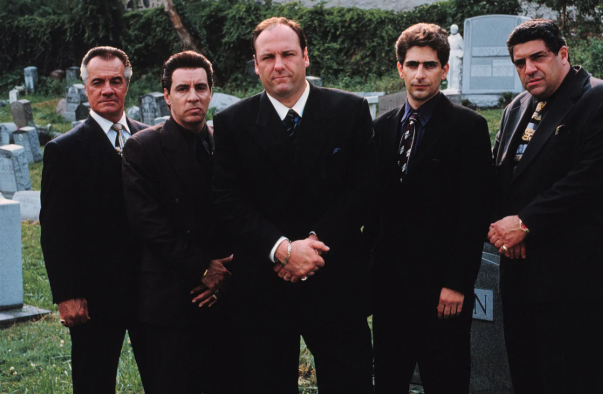
When the first notes of “Woke Up This Morning” rumbled through television sets in the late nineties, the landscape of visual storytelling changed forever. The Sopranos was not merely a show about the mafia; it was a seismic cultural event that dismantled the traditional hero narrative and replaced it with something far more complex, troubling, and human. Centered on a suburban New Jersey mob boss who suffers from panic attacks and enters psychotherapy, the series defied every convention of the medium. It traded easy resolutions for psychological depth and replaced moral certainty with a haunting ambiguity.
To watch The Sopranos is to witness the birth of the “Golden Age of Television.” It is a masterwork of character study, social satire, and domestic realism that remains as potent today as it was during its original broadcast. Whether you are embarking on your first viewing or returning for a deep-dive analysis, understanding the architecture of this series is vital. It is a show that demands your full attention, rewarding viewers who look beyond the violence to see the profound existential struggle underneath.
1. The Birth of the Modern Anti-Hero: The Tony Soprano Archetype
Before Tony Soprano, television protagonists were generally expected to be inherently moral or, at the very least, redeemable. Tony shattered that mold. As portrayed by James Gandolfini in a performance of unparalleled depth, Tony is a murderer, a philanderer, and a thief—yet he is also a loving (if flawed) father, a stressed executive, and a man grappling with his own mortality. He became the blueprint for the “modern anti-hero,” paving the way for future characters like Walter White or Don Draper.
The genius of the character lies in the audience’s complicity. We find ourselves rooting for a man who commits heinous acts, largely because we see the mundane, relatable facets of his life. We watch him struggle with a rebellious daughter, an overbearing mother, and a stagnant marriage. Tony represents the duality of the human condition: the capacity for extreme tenderness and extreme brutality existing within the same heart. He isn’t a caricature of a mobster; he is a fully realized human being whose “business” happens to involve organized crime. By centering the story on a man who is essentially “bad,” the show forced audiences to confront their own moral boundaries and the seductive nature of power.
2. Therapy as the Narrative Engine: The Melfi-Soprano Dynamic
The central conceit of the series—a mob boss in therapy—is far more than a clever hook. It is the primary tool used to excavate the show’s deeper themes. Dr. Jennifer Melfi serves as the audience’s surrogate, attempting to apply logic and healing to a man whose lifestyle is fundamentally predicated on chaos and destruction. Their sessions are a battleground of ideas, exploring the roots of depression, the impact of generational trauma, and the possibility (or impossibility) of genuine change.
Through these sessions, the show deconstructs the “tough guy” mythos. Tony’s panic attacks are a physical manifestation of his repressed emotions and the cognitive dissonance of his life. However, the series also poses a chilling question: Does therapy actually help a sociopath become a better person, or does it simply give them better tools to manipulate others? The relationship between Tony and Melfi is one of the most intellectual and emotionally charged pairings in fiction. It elevates the show from a genre piece to a psychological epic, proving that the most dangerous territory Tony navigates isn’t the streets of Newark, but the inner workings of his own mind.
3. The Deconstruction of the American Dream and Suburban Decay
The Sopranos is a searing critique of American life at the turn of the millennium. While classic mob cinema often focused on the rise of immigrants or the glamour of the underworld, this series focuses on the “end of the line.” Tony frequently laments that he “came in at the end,” sensing that the glory days of the mafia—and perhaps the American Dream itself—are over. The setting of Northern New Jersey, with its sprawling strip malls, McMansions, and industrial decay, serves as a metaphor for this spiritual stagnation.
The show highlights the hollowness of material success. The characters have the big houses and the expensive cars, but they are plagued by boredom, anxiety, and a sense of purposelessness. It captures the tension between traditional old-world values and the consumerist, individualistic reality of modern life. By placing a criminal organization within the context of a suburban family, the series suggests that the lines between “legitimate” business and “the life” are thinner than we care to admit. It portrays a society that has traded its soul for a home theater system, leaving its citizens feeling hollow in the midst of plenty.
4. David Chase and the “No Lessons Learned” Philosophy
One of the most radical aspects of the series is its refusal to provide closure or moral lessons. Creator David Chase steered the show with a firm belief that life is often messy, repetitive, and devoid of grand epiphanies. Unlike traditional dramas where characters experience “arcs” that lead to growth, the characters in The Sopranos often circle the same drain, making the same mistakes and falling back into old habits. This isn’t a failure of writing; it is a profound commitment to realism.
This philosophy extends to the show’s narrative structure. Plot threads are sometimes introduced and then dropped, mimicking the way things happen in real life. Characters might have a moment of clarity in one episode, only to be even more self-absorbed in the next. Chase challenged the audience to accept ambiguity and to sit with the discomfort of unresolved conflict. This approach made the show feel less like a scripted program and more like a lived-in reality. It respects the intelligence of the viewer, refusing to wrap up the story with a neat bow or a “very special episode” moral. In the world of the Sopranos, change is hard, and most people don’t want to do the work.
5. Domestic Realism: The Soprano Family as a Traditional Unit
Strip away the guns and the garbage routes, and The Sopranos is a domestic drama. The domestic life of the Soprano household—Tony, Carmela, Meadow, and A.J.—is rendered with startling accuracy. The show captures the mundane rhythms of family life: the arguments over dinner, the anxiety of college applications, and the silent tensions that simmer beneath the surface of a marriage. Carmela Soprano, in particular, is a groundbreaking character—a woman who is fully aware of the blood money that pays for her lifestyle but chooses to look the other way in exchange for security and status.
The children, Meadow and A.J., represent the next generation’s struggle to find their own identity in the shadow of their father’s reputation. Their storylines explore the burden of legacy and the ways in which the sins of the father are visited upon the children. The show brilliantly illustrates how the family unit can be both a source of immense strength and a suffocating trap. By grounding the “mob” elements in these relatable family dynamics, the series makes the stakes feel incredibly personal. We aren’t just watching a criminal organization; we are watching a family unit slowly erode under the weight of its own secrets.
6. Dream Sequences, Surrealism, and the Influence of Fine Art
While it is often praised for its realism, The Sopranos frequently dips into the surreal. David Chase utilized elaborate dream sequences and hallucinations to explore the characters’ subconscious minds, drawing inspiration from filmmakers like Federico Fellini. These sequences—most notably in episodes like “The Test Dream” or the “Join the Club” coma arc—are rich with symbolism and provide deeper insights into Tony’s psyche than any dialogue could.
This use of surrealism separates the show from standard police procedurals or crime dramas. It acknowledges that our internal lives are often strange, frightening, and nonsensical. Through Tony’s dreams, we see his fear of his mother, his guilt over his friends’ deaths, and his existential dread about the future. These moments elevate the series to the level of high art, using visual metaphors to explore complex psychological states. The show understands that the “truth” of a character isn’t just what they do in the light of day, but what haunts them in the dark of night. This blending of the mundane and the metaphysical is a hallmark of the show’s creative ambition.
7. Food as a Symbol of Connection, Power, and Mortality
In the world of the Sopranos, food is never just food. It is a language of its own. It represents love, heritage, and community, but it also serves as a tool for manipulation and a signifier of excess. The frequent scenes of the “crew” eating at Satriale’s Pork Store or the family gathered around the Sunday dinner table emphasize the Italian-American identity that anchors the characters. For Tony, food is a source of comfort and a way to fill the emotional void, mirroring his various other addictions.
Conversely, the preparation and consumption of food are often juxtaposed with extreme violence. A hit might be planned over a plate of linguine, or a character might be “whacked” while picking up groceries. This contrast highlights the absurdity and the horror of the characters’ lives. Food is the glue that holds the family together, but it is also a reminder of their physicality and their eventual mortality. The meticulous detail paid to the meals—the sound of the fork against the plate, the steam rising from the lasagna—contributes to the show’s immersive atmosphere, making the world feel tangible and lived-in.
8. The “Whacked” Culture and the High Stakes of the Lifestyle
One of the most tension-filled elements of the series is the constant threat of violence. In many shows, main characters are protected by “plot armor,” but The Sopranos established early on that no one was safe. The term “whacked” became part of the cultural lexicon, but the show treated these deaths with a weight that was often devastating. When a character died, it wasn’t just a plot point; it was the loss of a relationship we had watched develop for seasons.
The violence in the show is rarely “cool” or stylized in the way it is in many action movies. It is often sudden, clumsy, and ugly. It serves as a reminder of the brutal reality of the characters’ choices. The paranoia that Tony and his associates live with—wondering if a friend is wearing a wire or if a business partner is about to betray them—creates a low-level hum of anxiety that permeates the entire series. This high-stakes environment forces the characters to constantly evaluate their loyalties, making every conversation and every handshake a potential life-or-death situation. It keeps the audience on edge, never knowing when the ax might fall.
9. The HBO Revolution and the Freedom of the Small Screen
The Sopranos was the catalyst that turned HBO into a destination for high-quality, adult-oriented programming. Before this, television was often seen as the “lesser” sibling to cinema. David Chase’s series proved that the small screen could host a narrative that was just as complex, visually stunning, and intellectually rigorous as any feature film. The lack of commercials and the freedom from broadcast standards allowed the creators to use profanity, nudity, and violence—not for shock value, but for authenticity.
This creative freedom extended to the storytelling itself. HBO allowed for a slower pace, serialized narratives that didn’t reset every week, and characters that remained stubbornly unlikable. This shift changed the industry’s entire business model, leading to the rise of the “auteur” showrunner. Without the success of Tony Soprano, we likely wouldn’t have had many of the landmark series that followed. The show demonstrated that there was a massive audience for challenging, unconventional stories that didn’t follow the traditional network “rules.” It fundamentally raised the bar for what television could achieve as an art form.
10. The Ending: The Masterstroke of Ambiguity
No discussion of The Sopranos is complete without addressing its final scene. The “cut to black” remains perhaps the most debated moment in television history. By ending the series in such an abrupt and ambiguous fashion, David Chase forced the audience to confront the themes of the entire show one last time. Was Tony killed? Did his life simply go on in a state of perpetual paranoia? The brilliance of the ending is that the answer doesn’t actually matter as much as the feeling it evokes.
The ending suggests that for a man like Tony, the “end” is always lurking just out of sight. Whether it happens in that diner or years later, the tension is his permanent reality. It was a final act of defiance against the audience’s desire for a neat resolution or a moral judgment. It left the story in the minds of the viewers, ensuring that the conversation would continue for decades. By refusing to show the “end,” the series became immortal, existing in a state of eternal, breathless suspense. It was the perfect conclusion to a show that spent its entire run exploring the spaces where there are no easy answers.
Further Reading
- The Sopranos Sessions by Matt Zoller Seitz and Alan Sepinwall
- Woke Up This Morning: The Definitive Oral History of The Sopranos by Michael Imperioli and Steve Schirripa
- The Sopranos Family Cookbook: As Compiled by Artie Bucco by Allen Rucker
- The Psychology of The Sopranos: Love, Death, Desire, and Betrayal in America’s Favorite Gangster Family by Glen O. Gabbard
- 10 The Crown TV SHOW Facts That Keep People Watching
- 10 Futurama TV SHOW Facts That Still Hold Up
- 10 Things You Should Know About Speedy Gonzales – Looney Tunes
- 10 Things You Should Know About Yosemite Sam – Looney Tunes
- 10 Things You Should Know About Starlight From The Boys TV Show
- 10 Things You Should Know About Road Runner – Looney Tunes
- 10 Things You Should Know About Wile E. Coyote – Looney Tunes
- 10 Things You Should Know About Tweety Pie – Looney Tunes
- 10 Things You Should Know About Sylvester The Cat – Looney Tunes
- 10 Things You Should Know About Porky Pig – Looney Tunes



