
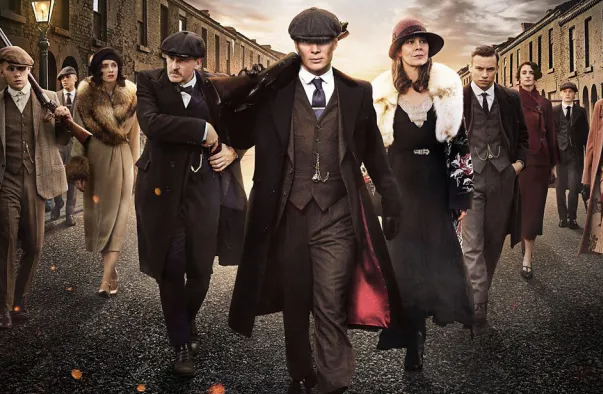
In the soot-stained heart of industrial Birmingham, where the roar of furnaces competes with the rhythmic clatter of horse hooves, a legend was forged in the shadow of the Great War. Peaky Blinders is not just a crime drama; it is a visceral, stylised exploration of a family’s ascent from the gutter to the halls of power. It is a story told in smoke, whiskey, and blood, anchored by a visual language that feels both historical and aggressively modern. Since its debut, the series has redefined the “period piece,” stripping away the polite veneer of British costume dramas and replacing it with the raw, jagged energy of a Western set in the West Midlands.
The saga of the Shelby family is a masterclass in atmospheric storytelling. At its core, the show examines the heavy toll of ambition and the inescapable gravity of one’s past. It asks whether a man can ever truly “wash the blood off his hands” or if the pursuit of legitimacy is simply a more sophisticated form of warfare. For the uninitiated, the world of Thomas Shelby can be as intimidating as a razor-lined peaky hat. For the devotee, there are always deeper layers to uncover within the smoke-filled rooms of The Garrison. This guide delves into the essential elements that make the series a perennial powerhouse of television.
1. The Myth vs. The Reality of the Historical Peaky Blinders
To appreciate the series, one must first distinguish the fictional Shelbys from the real-life gangs of Birmingham. While the show is set in the 1920s, the actual “Peaky Blinders” were primarily a Victorian-era phenomenon, peaking in the 1890s. The real gang members were often younger and less organized than the formidable criminal empire depicted on screen. They were “sloggers” known for street fighting and petty theft rather than international arms deals and political machinations.
The show’s creator, Steven Knight, drew inspiration from stories passed down by his own family, who lived in Small Heath. These tales transformed the street thugs of history into the folk heroes of the screen. One of the most famous myths—that the gang sewed razor blades into their caps to blind opponents—is largely considered a fictional flourish. In reality, razor blades were a luxury item at the time, and the “peaky” name likely referred to the style of the hat itself. However, by embracing this myth, the series elevates its characters to a near-mythological status, blending gritty historical textures with the heightened reality of a legend.
2. Thomas Shelby: The Haunted Architect of Ambition
Thomas “Tommy” Shelby is the gravity around which the entire series orbits. Portrayed with chilling intensity by Cillian Murphy, Tommy is a character defined by a profound internal silence. Having survived the hellish tunnels of World War I, he returned to Birmingham “hollowed out,” a man who has already looked death in the face and found it unremarkable. This lack of fear makes him exceptionally dangerous; he is a strategist who treats life like a game of chess where he is always three moves ahead.
Tommy’s character arc is a relentless pursuit of “more.” He represents the classic American Dream transplanted into a rigid British class system. No matter how much wealth he acquires or how many titles he earns, he remains an outsider—too “gypsy” for the aristocracy and too “royal” for the streets. His cold exterior is punctuated by moments of intense vulnerability, usually involving his horses or his fractured family. To understand Tommy is to understand the cost of survival; he is a man who builds a kingdom but finds that the crown is made of thorns.
3. The Enduring Shadow of the Great War and Shell Shock
One of the most profound themes of the series is the psychological legacy of the First World War. Nearly every male character in the show is a veteran, and the trauma they carried back from the trenches of France informs every decision they make. In the 1920s, “Post-Traumatic Stress Disorder” was not a recognized medical term; instead, men suffered from “shell shock” in silence, often self-medicating with opium and alcohol.
This trauma is visually represented through Tommy’s recurring nightmares of the “tunnellers.” The war stripped these men of their innocence but replaced it with a ruthless efficiency for violence. It also created a unique bond of brotherhood that supersedes even family ties at times. The series brilliantly illustrates how a generation of men was “broken” by the state, only to return home and use those broken pieces to build their own systems of power. The war didn’t just end in 1918 for the Shelbys; it simply moved to the streets of Birmingham.
4. Polly Gray: The Spiritual and Strategic Matriarch
If Tommy is the brain of the Peaky Blinders, Polly Gray is its soul and its conscience. As the matriarch of the Shelby clan, Aunt Pol ran the business while the men were away at war, and she is loath to relinquish that power upon their return. Her character is a magnificent subversion of the “gangster’s wife” trope; she is a partner, a treasurer, and a visionary in her own right.
Polly also brings a touch of “magical realism” to the show through her Romanichal heritage. Her belief in spirits, omens, and the “second sight” provides a haunting counterpoint to the industrial machinery of the city. Her struggle is often the most tragic, as she balances her fierce love for her family with the guilt of the violence they perpetrate. Polly represents the strength of the women who kept the world turning during the war, and her presence ensures that the Shelbys never lose sight of their roots, even as they ascend to the highest echelons of society.
5. Anachronistic Style as a Narrative Device
One of the most striking elements of the series is its aesthetic. Unlike many period dramas that strive for archival dullness, this show is vibrant, loud, and stylized. The decision to use a modern, rock-infused soundtrack—featuring artists like Nick Cave, The White Stripes, and PJ Harvey—was a revolutionary choice. It bridges the gap between the 1920s and the present day, suggesting that the rebellious spirit of the Peaky Blinders is the same energy found in modern counterculture.
This stylization extends to the cinematography, which often uses slow-motion “power walks” and high-contrast lighting to make the muddy streets of Small Heath look like a fashion runway. The show’s visual language communicates the characters’ internal state: the fire of the furnaces reflects their burning ambition, and the constant fog represents the moral ambiguity of their world. By rejecting a strictly “authentic” presentation, the series creates a timeless atmosphere that feels immediate and electric, proving that history is most effective when it feels alive.
6. The “Peaky Look” and Its Global Fashion Impact
Few television shows have influenced men’s fashion as profoundly as this one. The “Peaky Look”—characterized by the undercut hairstyle, the detachable-collar shirts, heavy wool overcoats, and, of course, the newsboy cap—has become a global phenomenon. This fashion isn’t just about looking sharp; it was a uniform of defiance. In the early 20th century, your clothes signaled your class, and the Shelbys used their tailored suits as armor to demand respect from a society that looked down on them.
The haircut itself—shaved sides with length on top—had a practical origin: it helped prevent the spread of lice in the slums and made it harder for victims to identify gang members by their hair. However, in the context of the show, it serves as a mark of tribal belonging. The resurgence of these styles in the modern day speaks to the show’s ability to romanticize the working-class aesthetic, turning the “uniform of the poor” into a symbol of rugged, masculine elegance that transcends time.
7. A Gallery of Iconic and Philosophical Antagonists
A hero is only as good as his villains, and the Shelbys face a rotating gallery of antagonists who are as complex as they are dangerous. From the righteous, zealot-like Major Campbell to the calculated, terrifyingly charismatic Oswald Mosley, the villains of the show represent the various forces trying to crush the Peaky Blinders: the Law, the State, and the creeping shadow of Fascism.
Perhaps the most beloved “frenemy” is Alfie Solomons, the Jewish gang leader from Camden Town. His rambling, philosophical monologues and unpredictable outbursts provide a chaotic mirror to Tommy’s stoic planning. These antagonists aren’t just obstacles; they are ideological challengers. They force Tommy to question his own morality and his place in the world. The interactions between these power players are often more explosive than any gunfight, turning the series into a high-stakes intellectual battleground where the prize is the very soul of England.
8. The Intersection of Crime, Class, and Politics
While it functions as a crime thriller, the series is deeply invested in the political landscape of the post-war era. It navigates the rise of Communism among the factory workers, the Irish struggle for independence, and the eventual threat of the British Union of Fascists. The Shelbys find themselves caught in the gears of these global movements, often acting as reluctant pawns for the British Intelligence services.
The show highlights the hypocrisy of the ruling class, who are often more corrupt and violent than the gangsters they condemn. Tommy’s journey from a street-level bookie to a Member of Parliament serves as a scathing critique of the “legitimate” world. It suggests that politics is simply “gangsterism by another name,” where the weapons are laws instead of Lewis guns. By grounding the Shelby family in these real-world tensions, the series provides a comprehensive overview of a country in flux, struggling to define itself in a new century.
9. The Sacred Bond of Family: “In the Bleak Midwinter”
“Small Heath, 1919” is where it begins, and “Family” is why it continues. The Shelby siblings—Tommy, Arthur, John, and Ada—operate as a single unit, bound by blood and shared trauma. Their mantra, “In the Bleak Midwinter,” serves as a reminder of their shared experience in the trenches and their commitment to one another. Arthur Shelby, the eldest and most volatile brother, acts as the family’s “enforcer,” his internal demons often boiling over into explosive violence.
The family dynamic is the show’s greatest strength and its greatest weakness. The Shelbys are fiercely loyal, yet they are also each other’s most frequent tormentors. Their internal power struggles, betrayals, and reconciliations provide the emotional stakes that make the violence meaningful. The show explores the idea that you can never truly leave your family behind; they are the people who know your original name and your darkest secrets. In the world of the Peaky Blinders, blood is the only thing that doesn’t wash away in the Birmingham rain.
10. The Cinematic Evolution of the British Drama
Before the Shelbys arrived, British drama was often synonymous with “polite.” This series shattered that perception, bringing a “cinematic” scale to the small screen. Every episode feels like a feature film, with high production values and a commitment to “show, don’t tell.” It proved that a story about the British working class could be as epic and visually stunning as any Hollywood blockbuster.
The series has left an indelible mark on the landscape of prestige television. It paved the way for more experimental and stylised historical dramas, showing that audiences have a hunger for complex, difficult characters and “un-pretty” history. Its legacy is found in the way we now expect more from television—more depth, more style, and more uncompromising grit. The Shelbys didn’t just take over Birmingham; they took over the global cultural imagination, ensuring that their name will be remembered long after the smoke clears.
Further Reading
- The Real Peaky Blinders by Carl Chinn
- Peaky Blinders: The Real Story of Birmingham’s Most Notorious Gangs by Carl Chinn
- By Order of the Peaky Blinders: The Official Companion to the Hit TV Series by Mattstein & various authors
- The World of Peaky Blinders by Dan Whitehead
- 10 The Crown TV SHOW Facts That Keep People Watching
- 10 Futurama TV SHOW Facts That Still Hold Up
- 10 Things You Should Know About Speedy Gonzales – Looney Tunes
- 10 Things You Should Know About Yosemite Sam – Looney Tunes
- 10 Things You Should Know About Starlight From The Boys TV Show
- 10 Things You Should Know About Road Runner – Looney Tunes
- 10 Things You Should Know About Wile E. Coyote – Looney Tunes
- 10 Things You Should Know About Tweety Pie – Looney Tunes
- 10 Things You Should Know About Sylvester The Cat – Looney Tunes
- 10 Things You Should Know About Porky Pig – Looney Tunes



