
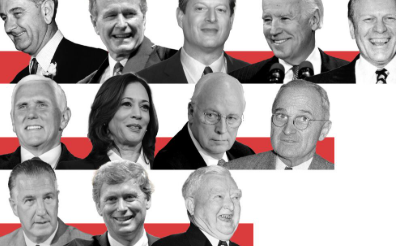
For much of American history, the vice presidency was an office of little consequence, often ridiculed as a political dead end. The first Vice President, John Adams, famously wrote that his role was “the most insignificant office that ever the invention of man contrived.” For generations, this view held true. The Vice President was a constitutional afterthought, waiting in the wings for a presidential tragedy that might never come. However, the modern era has witnessed a dramatic transformation of the office. Beginning in the mid-20th century, the vice presidency has evolved from a ceremonial post into a true centre of power and influence within the executive branch. Today’s Vice President is a key advisor, a policy driver, a public advocate, and a crucial partner to the President. Understanding the roles and responsibilities of the Vice President is essential to understanding the workings of modern American government.
1. To Preside Over the Senate
The one major responsibility explicitly given to the Vice President by the U.S. Constitution is to serve as the President of the Senate. In this capacity, the Vice President attends Senate sessions and formally presides over the proceedings. However, in day-to-day practice, this is largely a ceremonial role. The Vice President does not typically sit in the chamber for hours on end; this duty is usually delegated to the president pro tempore or other senators.
The true power of this role lies in the Vice President’s authority to cast a tie-breaking vote. When the 100-member Senate is evenly divided on a piece of legislation or a nomination, the Vice President’s vote becomes the deciding factor. This power, though used relatively infrequently throughout history, can be profoundly significant, particularly in a closely divided Senate. A single vice-presidential vote can determine the fate of major policy initiatives, confirm a Supreme Court justice, or pass a critical budget. This constitutional duty ensures that a legislative stalemate can be broken and provides the executive branch with a crucial point of influence within the legislative process.
2. To Be Ready for Presidential Succession
The most solemn and critical responsibility of the Vice President is to be prepared to assume the presidency at a moment’s notice. The U.S. Constitution is clear: “In Case of the Removal of the President from Office, or of his Death, Resignation, or Inability to discharge the Powers and Duties of the said Office, the Same shall devolve on the Vice President.” This line of succession has been invoked nine times in American history. Eight vice presidents have ascended to the presidency following the death of a sitting president, and one, Gerald Ford, took office after President Richard Nixon’s resignation.
This responsibility means the Vice President must be fully informed on all major domestic and foreign policy issues and be ready to lead the nation without hesitation. This is a primary reason why the modern vice presidency has become so integrated into the executive branch. Presidents now ensure their vice presidents are active participants in cabinet meetings, National Security Council briefings, and other high-level discussions. The potential for a sudden transfer of power makes it essential that the Vice President is not just a standby but a fully engaged and prepared partner in governance.
3. To Count the Electoral College Votes
Every four years, on January 6th following a presidential election, the Vice President performs a unique and constitutionally mandated ceremonial duty: presiding over a joint session of Congress to formally count the submitted votes of the Electoral College. The Vice President opens the sealed certificates from each state in alphabetical order and hands them to “tellers” from the House and Senate to be read aloud. At the end of the count, it is the sitting Vice President who officially announces the winner of the presidential election.
For most of American history, this was a routine and procedural event. However, the role came under intense scrutiny following the 2020 election. The process is governed by the Electoral Count Act, and the Vice President’s role is purely ministerial—to open and announce. They do not have the power to accept or reject votes. This ceremony, while largely symbolic, serves as the final, formal step in the peaceful transfer of power, representing a cornerstone of American democracy.
4. To Act as a Key Presidential Advisor
Perhaps the most significant evolution in the vice presidency is the transition from a remote figure to the president’s most trusted advisor. Beginning with the partnership of Jimmy Carter and Walter Mondale in the late 1970s, presidents have increasingly treated their vice presidents as senior counselors and confidants. Mondale was the first Vice President to have an office in the West Wing of the White House, a practice that has continued ever since and symbolises the office’s newfound proximity to power.
Modern vice presidents are typically the last person in the room with the president before a major decision is made. They offer private counsel on a wide range of issues, from domestic policy to national security. Because the Vice President is the one official who cannot be fired by the president and does not have a specific departmental agenda to push, they are uniquely positioned to provide frank and unvarnished advice. This role as a top-level advisor has transformed the vice presidency into a position of immense influence, with its power directly linked to the strength of the personal relationship with the president.
5. To “Balance the Ticket” in an Election
In the realm of presidential politics, the choice of a running mate is one of the most important strategic decisions a candidate makes. The vice-presidential nominee is often chosen to “balance the ticket,” meaning they compensate for a perceived weakness or appeal to a different demographic than the presidential candidate. This balance can take several forms.
It could be ideological, with a moderate presidential candidate choosing a more conservative or liberal running mate to appeal to the party’s base. It could be experiential, where a candidate with a background as a governor might choose a running mate with extensive foreign policy experience in Washington. It can also be demographic, using the choice to appeal to voters of a different age, gender, race, or geographic region. For example, a younger candidate might choose an older, more seasoned running mate to project an image of experience and stability. While the ultimate goal is to win the election, this initial strategic choice sets the stage for the potential partnership in the White House.
6. To Serve as a Public Advocate and “Attack Dog”
The Vice President is often the administration’s most prominent public spokesperson and advocate, second only to the president. They travel the country and the world, giving speeches, attending events, and promoting the administration’s policy agenda. This public-facing role allows the administration to have a high-level presence at multiple places at once.
Furthermore, the Vice President often takes on the role of the political “attack dog,” particularly during election campaigns. While the president aims to remain “above the fray,” the Vice President can go on the offensive, criticising the opposition party and defending the administration’s record in more aggressive terms. This allows the administration to push its political message forcefully without compromising the “presidential” image of the commander-in-chief. This role requires a deft political touch, as the Vice President must be a loyal cheerleader and a tough political fighter, all while representing the administration on the national stage.
7. To Lead on Specific Policy Issues
Modern presidents frequently delegate responsibility for major policy initiatives to their vice presidents. By assigning a specific portfolio, the president signals that the issue is a high priority and empowers the Vice President to coordinate the administration’s efforts. This allows for a more efficient division of labour within the executive branch.
For example, Al Gore became a leading voice on environmental issues and technological development during the Clinton administration. Dick Cheney wielded immense influence over foreign policy and national security in the George W. Bush administration. Joe Biden was tasked by Barack Obama with overseeing the implementation of the 2009 economic Recovery Act and led efforts on gun control policy. More recently, Kamala Harris has been tasked with addressing issues such as voting rights and migration at the southern border. This responsibility transforms the Vice President from a general advisor into a hands-on policy leader, giving them a tangible legacy and deep expertise in specific areas of governance.
8. To Act as a Key Liaison to Congress
Given their constitutional role as President of the Senate, vice presidents are uniquely positioned to act as a bridge between the White House and Capitol Hill. Many vice presidents have previously served in the House or Senate, giving them a deep understanding of the legislative process and personal relationships with key lawmakers.
This experience is invaluable to a president. The Vice President can act as a crucial liaison to Congress, negotiating with members of both parties, whipping votes for the administration’s priorities, and providing the president with real-time intelligence on the mood and machinations of the legislature. They can smooth over disputes, build coalitions, and help shepherd controversial legislation through the often-contentious maze of Capitol Hill. This role as a top-level lobbyist and legislative strategist is a critical component of a successful presidential agenda.
9. To Serve as a Diplomat and Emissary
The Vice President plays a significant role in American foreign policy, serving as a high-level diplomat and personal emissary for the president. While the Secretary of State is the nation’s chief diplomat, the Vice President travels the world to meet with foreign leaders, attend summits, and convey messages directly from the president.
A visit from the Vice President carries more weight and significance than a visit from a cabinet secretary. It signals the importance the United States places on its relationship with that country and provides an opportunity for direct, high-level discussions. They can be sent to reassure allies, confront adversaries, attend the funerals of world leaders, or lead delegations on specific international issues. This diplomatic role expands the reach of the White House and provides the president with a trusted, high-ranking representative to manage foreign relations and advance American interests abroad.
10. To Help Govern and Manage the Executive Branch
Beyond specific policy portfolios, the modern Vice President is often deeply involved in the day-to-day management and governance of the sprawling executive branch. They participate in a wide range of meetings, from the Cabinet to the National Security Council, offering their input and ensuring that the president’s agenda is being implemented by the various federal agencies.
This role as a “super-manager” or troubleshooter allows the Vice President to help oversee the vast federal bureaucracy. They might be tasked with chairing commissions, leading inter-agency task forces, or simply using their influence to break through bureaucratic logjams. This deep integration into the machinery of government ensures that the Vice President has a comprehensive understanding of how the administration functions. It is the ultimate expression of the office’s evolution from a ceremonial post to a true governing partner, fully prepared to lead if necessary and deeply influential even if they never have to.
Further Reading
For those interested in a deeper exploration of the American vice presidency and the executive branch, these books offer valuable and insightful perspectives:
- The American Vice Presidency: From Irrelevance to Power by Jules Witcover
- The Modern American Vice Presidency: The Transformation of a Political Institution by Joel K. Goldstein
- Team of Rivals: The Political Genius of Abraham Lincoln by Doris Kearns Goodwin (for insight into executive branch dynamics)
- The President’s Club: Inside the World’s Most Exclusive Fraternity by Nancy Gibbs and Michael Duffy
Here at Zentara.blog, our mission is to take those tricky subjects and unlock them, making knowledge exciting and easy to grasp for everyone. But the adventure doesn’t stop on this page! We’re constantly exploring new frontiers and sharing discoveries across the digital universe. Want to dive deeper into more mind-bending Top 10s and keep expanding your world? Come join us on our other platforms – we’ve got unique experiences waiting for you on each one!
Get inspired by visual wonders and bite-sized facts: See the world through Zentara’s eyes on Pinterest!
Pin our fascinating facts and stunning visuals to your own boards. Explore Pins on Pinterest: https://uk.pinterest.com/zentarablog/
Discover quick insights and behind-the-scenes peeks: Hop over to Tumblr for snippets, quotes, and unique content you won’t find anywhere else. It’s a different flavour of discovery! Follow the Fun on Tumblr: https://www.tumblr.com/zentarablog/
Ready for deep dives you can listen to or watch? We’re bringing our accessible approach to video and potentially audio! Subscribe to our YouTube channel and tune into future projects that make learning pop! Subscribe on YouTube: https://www.youtube.com/@ZentaraUK
Seeking even more knowledge in one place? We’ve compiled some of our most popular topic deep dives into fantastic ebooks! Find them on Amazon and keep the learning journey going anytime, anywhere. Find Our Ebooks on Amazon: https://www.amazon.co.uk/s?k=Zentara+UK&ref=nb_sb_noss
Connect with us and fellow knowledge seekers: Join the conversation on BlueSky! We’re sharing updates, thoughts, and maybe even asking you what wonders we should explore next. Chat with Us on BlueSky: https://bsky.app/profile/zentarablog.bsky.social
Perfect for learning on the move! We post multiple 10-minute podcasts per day on Spotify. Pop on your headphones and fill your day with fascinating facts while you’re out and about! Listen on Spotify: https://open.spotify.com/show/3dmHbKeDufRx95xPYIqKhJFollow us on Instagram for bytesize knowledge! We post multiple posts per day on our official Instagram account. https://www.instagram.com/zentarablog/ Every click helps us keep bringing honest, accessible knowledge to everyone. Thanks for a exploring with us today – see you out there in the world of discovery!




Leave a Reply