
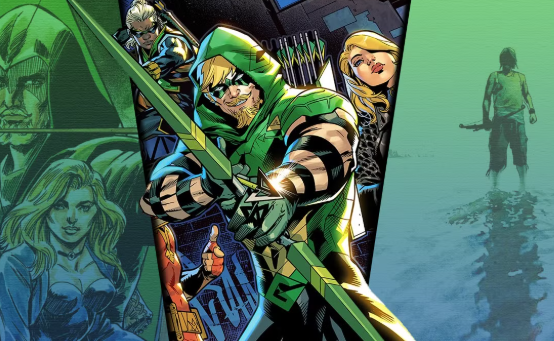
In the pantheon of DC Comics, where gods fly through the stars and monsters lurk in the shadows, stands a man with a piece of ancient technology: a bow and arrow. Oliver Queen, known to the world as Green Arrow, is often simplified as a “modern-day Robin Hood.” While the aesthetic fits—the green tunic, the expert marksmanship, and the penchant for wealth redistribution—the reality of the Emerald Archer is far more complex, gritty, and politically charged than most beginners realize.
Green Arrow isn’t just a guy who never misses; he is the moral conscience of the Justice League. He is the loud-mouthed activist who reminds the “super-gods” that they often forget the people living on the streets. Since his introduction in the Golden Age of comics, Oliver Queen has evolved from a Batman-clone with an “Arrow-car” into a deeply flawed, fiercely loyal, and uncompromisingly human hero. To understand Green Arrow is to understand the intersection of social justice and superheroics. This guide uncovers the essential layers of the man behind the mask, proving that his greatest weapon isn’t his aim, but his heart.
1. The Island: A Crucible of Character, Not Just Skill
Every hero has an origin, but Oliver Queen’s time on “Starfish Island” is more than a training montage; it is a total spiritual rebirth. Before the shipwreck, Oliver was a spoiled, thrill-seeking billionaire who cared little for anyone but himself. When he was betrayed or accidentally lost at sea, he found himself stranded on a deserted island with nothing but a broken bow. He didn’t just learn how to hunt to survive; he learned what it meant to be a human being without the cushion of a trust fund.
The island stripped away the “playboy” facade and forced Oliver to confront his own uselessness. He spent months mastering the bow out of necessity, transforming his greatest hobby into a survival tool. This period is the “evergreen” core of his character: the idea that true strength is forged in isolation and adversity. When he finally returned to civilization, he didn’t just bring back archery skills; he brought back a burning hatred for those who exploit the vulnerable. The island didn’t create a hero; it destroyed a narcissist and left a man of purpose in his place.
2. The Social Activist of the Superhero World
Unlike Batman, who operates as a silent guardian of the status quo, or Superman, who represents an aspirational ideal, Green Arrow is a loud, proud, and often abrasive social activist. In the history of DC Comics, Oliver Queen is famously “left-leaning,” frequently clashing with his teammates over political and social issues. He is the hero of the “little guy,” focusing his efforts on systemic problems like corporate greed, government corruption, and urban poverty in his home of Star City.
This political identity defines his interactions with the Justice League. He often views the League as being too detached from reality, sitting in a satellite high above the Earth while people starve below. Oliver has been known to give away his entire fortune to help the disenfranchised, choosing to live in run-down apartments to better understand the people he protects. He isn’t interested in saving the world from alien invasions if the world itself is fundamentally broken for the people living in it. This “street-level” perspective makes him an essential, if sometimes annoying, anchor for the DC Universe’s more powerful entities.
3. The Absurdity and Genius of Trick Arrows
One of the most recognizable aspects of Green Arrow’s arsenal is his collection of “trick arrows.” While a standard broadhead is lethal, Oliver’s quiver is a Swiss Army knife of tactical options. From the iconic (and often mocked) Boxing Glove Arrow to EMP arrows, flare arrows, cryo-arrows, and even “Kryptonite” arrows for emergencies, his equipment allows him to remain relevant in a world of super-powered beings.
The trick arrows serve a dual purpose. Tactically, they allow Oliver to take down opponents without resorting to lethal force—a key tenet of his heroic code. Symbolically, they represent his ingenuity and adaptability. He is a man who brings a medieval weapon to a laser fight and wins because he is smarter and more prepared than his enemies. The Boxing Glove Arrow, specifically, has become a symbol of the character’s ability to balance the inherent silliness of comic books with the serious nature of his mission. It’s a non-lethal “punch from a distance” that perfectly encapsulates his desire to stop crime without becoming a killer.
4. Black Canary: A Partnership of Equals
The relationship between Green Arrow and Black Canary (Dinah Lance) is widely considered one of the most iconic and enduring romances in comic book history. However, to call her a “love interest” is a massive understatement. Dinah is an elite martial artist and a powerful meta-human with her “Canary Cry,” and she is often the superior combatant of the two. Their dynamic is built on mutual respect, fierce independence, and a shared passion for justice.
Unlike many superhero couples who are defined by their domesticity, Oliver and Dinah are “battle-mates.” They challenge each other constantly; Dinah often serves as the grounding force when Oliver’s temper or political zealotry gets the better of him. Their relationship has weathered breakups, deaths, and resurrections, but they always gravitate back toward one another. They represent the “Modern Couple” of the DC Universe—two powerful, opinionated individuals who choose to be together not because they need to be, but because they are better together than they are apart.
5. The Hard Travelin’ Heroes Legacy
One of the most pivotal eras for Green Arrow was his partnership with Hal Jordan, the Green Lantern. Known as the “Hard Travelin’ Heroes” era, this storyline saw the two friends trekking across America in a beat-up truck to rediscover the heart of the country. This was a “clash of ideologies”: Hal Jordan was the conservative lawman who followed orders from the Guardians of the Universe, while Oliver Queen was the radical rebel who questioned every authority figure.
This journey forced the DC Universe to confront real-world issues like racism, overpopulation, and environmental destruction. It transformed Green Arrow from a secondary character into a leading intellectual force in comics. The tension between the “Space Cop” and the “Archer” provided a blueprint for how superheroes could be used to discuss complex societal problems. This era proved that Oliver Queen’s mouth is just as dangerous as his bow—he is the only hero who can make a galactic peacekeeper feel guilty about not doing enough for a single neighborhood.
6. The Tragedy of Roy Harper and the “Speedy” Dilemma
Green Arrow’s history is marked by a significant failure as a mentor. His original sidekick, Roy Harper (Speedy), became the subject of one of the most famous and controversial storylines in comic history when it was revealed he had developed a drug addiction. While Oliver was busy traveling the country and fighting for “the people,” he neglected the person closest to him.
When Oliver discovered Roy’s addiction, his reaction was not one of support, but of rage and abandonment. He kicked Roy out, a decision that has haunted their relationship ever since. This failure humanizes Oliver in a way few heroes are—he is prone to hypocrisy and emotional outbursts. Roy eventually overcame his demons and became the hero Arsenal (and later Red Arrow), but the rift between mentor and student remains a poignant reminder that being a hero in public doesn’t always make you a hero at home. It’s a cautionary tale about the cost of obsession and the weight of the “Green Arrow” legacy.
7. Losing the Fortune: The Working-Class Hero
While Bruce Banner loses his mind and Bruce Wayne loses his parents, Oliver Queen frequently loses his money. At various points in his history, Oliver has been stripped of his billions, either through corporate sabotage or by his own choice to fund social programs. Unlike Batman, who uses his wealth as a primary tool, Green Arrow is often most effective when he is “broke.”
Living without a financial safety net forces Oliver to stay connected to the streets of Star City. It removes the barrier between him and the people he represents. When he is a billionaire, he is a benefactor; when he is struggling to pay rent, he is a neighbor. This cycle of “wealth to rags” reinforces his identity as the “Man of the People.” It also highlights his skill—he doesn’t need a multi-billion dollar cave or a fleet of vehicles to be a hero; he just needs his bow and his conviction. This financial instability is what keeps him grounded and relatable to a general audience.
8. Death and the “Quiver” Resurrection
In the mid-1990s, Oliver Queen made the ultimate sacrifice, dying in a plane explosion to prevent a terrorist attack. For several years, he was absent from the DC Universe, replaced by his son, Connor Hawke. His eventual return in the “Quiver” storyline is one of the most celebrated resurrections in comics. It wasn’t just a “magic trick”; it was a philosophical exploration of his soul.
The resurrection story dealt with the idea that Oliver’s soul was in a “heavenly” state, but he was brought back to Earth without his memories of his later, more cynical years. This allowed the character to “reset” to a more idealistic version of himself while eventually having to reconcile with his past mistakes. It solidified Green Arrow as a character who is “too stubborn to stay dead.” His return emphasized his necessity in the DC Universe—the world simply felt incomplete without its loudest, most argumentative conscience.
9. The Longbow Hunters: A Gritty Reinvention
In the late 1980s, the Longbow Hunters miniseries redefined Green Arrow for a mature audience. This story moved Oliver from Star City to Seattle and stripped away many of the traditional superhero tropes. He traded his trick arrows for lethal ones and moved into a darker, more “noir” setting. This era focused on the physical and psychological toll of being a vigilante.
During this time, Oliver dealt with human traffickers, serial killers, and personal trauma. It was a stark departure from the “Boxing Glove Arrow” days, proving that the character could thrive in a gritty, realistic environment. This reinvention influenced almost every modern interpretation of the character, balancing the “superhero” with the “urban hunter.” It showed that Green Arrow could be as terrifying as he is noble, and that his “Robin Hood” persona has a very sharp, very dangerous edge when pushed to the limit.
10. The Dynasty: Connor Hawke, Emiko Queen, and Beyond
Green Arrow is not just a solo act; he is the patriarch of a complicated “Arrow Family.” His biological son, Connor Hawke, is a master martial artist and a monk-like figure who took over the mantle during Oliver’s death. Later, the character of Emiko Queen—Oliver’s half-sister and a lethal archer in her own right—was introduced, adding a new layer of family drama and redemption.
The “Arrow Family” represents the different facets of Oliver’s legacy. Connor represents his discipline and skill, while Emiko represents his rebellious spirit and the burden of the Queen name. These characters ensure that the “Green Arrow” is more than just one man; it is a philosophy of accountability and precision. By mentoring others (or being mentored by them), Oliver ensures that his fight for the “little guy” will continue long after he finally hangs up his bow. The family legacy turns the Emerald Archer from a lone vigilante into the head of a movement.
Further Reading
- Green Arrow: Year One by Andy Diggle & Jock – The definitive modern retelling of Oliver’s time on the island.
- The Green Lantern/Green Arrow Collection by Dennis O’Neil & Neal Adams – The “Hard Travelin’ Heroes” stories that defined Oliver’s political identity.
- Green Arrow: The Longbow Hunters by Mike Grell – A gritty, grounded take that shifted the character into the modern era.
- Green Arrow: Quiver by Kevin Smith – The epic story of Oliver Queen’s return from the dead.
- 10 Things You Should Know About Kang the Conqueror – Marvel Comics

- 10 Things You Should Know About The Sentry – Marvel Comics

- 10 Things You Should Know About Starlight From The Boys TV Show

- 10 Things You Should Know About Ghost Rider – Marvel Comics

- DC Comics: 10 Essential Things to Know About Shazam




