
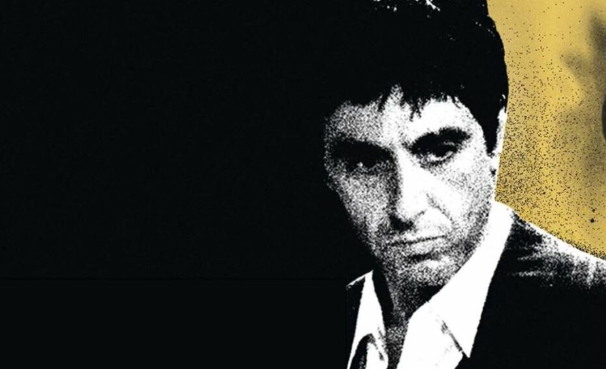
In the pantheon of cinematic legends, few films pulse with as much raw energy, neon-soaked excess, and controversial history as Brian De Palma’s 1983 masterpiece, Scarface. While it was met with polarizing reviews upon its initial release, the film has since ascended to the status of a cultural phenomenon, influencing everything from the aesthetics of modern hip-hop to the narrative structures of open-world video games.
To watch Scarface is to witness the ultimate deconstruction of the American Dream. It is a Shakespearean tragedy dressed in a silk shirt and fueled by a mountain of white powder. Al Pacino’s portrayal of Tony Montana—a political refugee turned drug kingpin—remains one of the most studied performances in film history. But the story behind the camera is just as volatile and fascinating as the one on screen. From battles with censorship boards to the literal physical toll the production took on its stars, these ten pillars of Scarface lore explain how a movie about a Cuban immigrant became a global symbol of ambition and downfall.
1. A Masterpiece Born from a 1932 Classic
While many fans view the film as a purely modern 1980s tale, Scarface is actually a remake of a 1932 film of the same name. The original, directed by Howard Hawks, was loosely based on the rise and fall of Al Capone. When Al Pacino saw the 1932 version at the Tiffany Theater in Los Angeles, he was so struck by the performance of Paul Muni that he immediately called his manager and producer Martin Bregman to suggest a remake.
The brilliance of the 1983 version lies in how it translated the Prohibition-era gangster tropes into the modern era of the Mariel boatlift and the Miami cocaine trade. It shifted the focus from Italian-American bootlegging to the Cuban-American drug influx, proving that the core story of a ruthless immigrant climbing the social ladder through violence is a universal narrative. By acknowledging its roots in classic cinema, the film maintains a “Golden Age” structural integrity while layering on the grit and excess of the modern world. This transition from “booze” to “blow” updated the stakes for a new generation of moviegoers.
2. Oliver Stone’s Battle with Real-Life Addiction
The screenplay for Scarface was penned by Oliver Stone, who would later become a legendary director in his own right. At the time of writing, Stone was struggling with a severe addiction to the very substance that Tony Montana peddles in the film. Stone has stated in various interviews that he moved to Paris to write the script specifically to escape the drug-heavy environment of the United States and get sober.
This personal struggle imbued the script with a visceral, jagged edge that a “clean” writer might have missed. Stone’s proximity to the darkness of addiction allowed him to write Tony Montana not just as a cool gangster, but as a man spiraling out of control. The dialogue isn’t just flashy; it’s the language of obsession and paranoia. The screenplay is a reflection of Stone’s own “exorcism” of his demons, which explains why the film feels so authentically dangerous. When Tony Montana stares into a literal mountain of cocaine in the final act, it is a visual representation of the excess that Stone was fighting to leave behind in his own life.
3. The Literal Burn of Method Acting
Al Pacino is famous for his immersion into his characters, and Tony Montana was no exception. To prepare for the role, Pacino worked extensively with a language coach to master the specific Cuban-Spanish accent, but he also stayed in character on set to maintain the volatile energy required for the role. However, this commitment led to a literal injury during the filming of the climactic shootout.
During the final battle at the Montana mansion, Pacino grabbed the barrel of his “Little Friend” (the M16 rifle) after firing several rounds. The barrel was so hot from the blanks that it severely burned Pacino’s hand, bonding his flesh to the metal. The injury was so significant that production had to be shut down for two weeks while the star recovered. This incident highlights the raw, unpolished nature of the production. The intensity you see on Pacino’s face during that sequence isn’t just acting; it is the adrenaline of a man physically pushing himself to the brink for the sake of the art.
4. The War with the Ratings Board
Scarface is synonymous with violence, and the Motion Picture Association of America (MPAA) noticed. The film was originally given an X rating (now the equivalent of NC-17) three separate times. Director Brian De Palma was forced to cut several scenes, including the infamous chainsaw sequence, multiple times to appease the board. Each time, the board refused to grant it an R rating, which would have been a death sentence for the film’s commercial prospects.
De Palma eventually grew frustrated and brought in a panel of experts, including real-life narcotics officers, to testify that the film’s violence was an accurate depiction of the drug trade. He argued that the film’s excess served a moral purpose—to show the ugliness of that lifestyle. Remarkably, the board finally relented and gave the third cut an R rating. However, in a legendary move of defiance, De Palma reportedly released the first (more violent) cut anyway, figuring the board wouldn’t be able to tell the difference between the various edits. This battle paved the way for more mature, uncompromising storytelling in mainstream Hollywood.
5. The Record-Breaking “F-Bomb” Count
Beyond the physical violence, the linguistic violence of Scarface set new benchmarks for cinema. For a long time, the film held the record for the most frequent use of the “F-word” in a feature-length movie. While other films have since surpassed it, the sheer density of the profanity in 1983 was shocking to audiences and critics alike. Estimates suggest the word is used over 200 times throughout the 170-minute runtime.
This wasn’t just for shock value. Oliver Stone and Brian De Palma used the language to establish the “lower-class” origins of the characters and their rejection of polite society. Tony Montana uses profanity as a tool of intimidation and a badge of his identity; he refuses to “clean up” his speech for the wealthy bankers or politicians he encounters. This linguistic barrage contributed to the film’s “street” credibility and helped it resonate with audiences who felt marginalized by traditional, more sanitized Hollywood heroics. It made the world of the film feel inhabited and unfiltered.
6. The Mystery of the Fake Cocaine
Given the central role that drugs play in the film, the production crew had to find a way to make the fake cocaine look convincing on camera. For decades, rumors swirled about what the white powder actually was, with some fans jokingly suggesting the crew used the real thing. In reality, the “powder” was primarily powdered milk, though the exact blend changed depending on the scene’s lighting requirements.
Interestingly, Al Pacino has noted that snorting the powdered milk for months on end had a negative effect on his nasal passages. He has joked in retrospectives that his nose “has never been the same” since the production. The sheer volume of fake drugs needed for the final scene—where Tony buries his face in a pile of it—required the props department to source massive quantities of the substitute. This detail adds a layer of irony to the production; while the film warned against the dangers of the drug, the actors were still physically suffering from the “fake” version to bring the story to life.
7. Miami’s Refusal to Host the Kingpin
While Scarface is the definitive “Miami movie,” much of the film was actually shot in Los Angeles. When the production originally scouted locations in Miami, the local Cuban-American community and the city council were outraged. They felt that the film’s depiction of Cubans as drug-running criminals would damage the city’s reputation and incite prejudice against refugees.
Protests were organized, and the city government made it increasingly difficult for the production to obtain permits. Rather than compromise the script, the producers moved the majority of the shoot to California. This forced the production design team to perform miracles, transforming Santa Barbara and Los Angeles streets into the neon-lit strips of South Beach. The fact that the film feels so authentically “Miami” is a testament to the cinematography and the set design. It proves that the “vibe” of a movie is often more about the creative vision than the actual geographical coordinates of the camera.
8. The Giorgio Moroder Synth Revolution
The legacy of Scarface is inextricably linked to its pulsating, electronic score by Giorgio Moroder. At a time when many gangster films were still using traditional orchestral arrangements or jazz, Moroder brought the sound of the disco and the emerging “New Wave” into the world of crime. The synth-heavy tracks, such as “Tony’s Theme” and “Push It to the Limit,” perfectly captured the high-energy, artificial nature of the 1980s drug culture.
Moroder’s music acts as the heartbeat of the film. It feels cold, mechanical, and relentless—much like Tony Montana himself. The score was a major factor in the film’s later adoption by the hip-hop community, as the electronic beats were easily sampled and felt more “modern” than the music in films like The Godfather. By choosing a futuristic sound for a story about a man living in the “now,” De Palma ensured that Scarface would feel evergreen, never losing its rhythmic, hypnotic quality even decades after its release.
9. Steven Spielberg’s Secret Contribution
In one of the most interesting “Easter eggs” in film history, legendary director Steven Spielberg actually directed one shot in the film. Spielberg and De Palma were close friends (part of the “Movie Brats” generation that included Coppola and Scorsese) and frequently visited each other’s sets. During the filming of the massive final shootout, Spielberg was visiting and De Palma invited him to direct a low-angle shot of the attackers entering the house.
While it is only a single shot in a massive sequence, it represents the collaborative spirit of 1970s and 80s filmmaking. Having the director of Jaws and Raiders of the Lost Ark contribute to one of the most violent scenes in cinema history is a fascinating footnote. It also highlights the technical complexity of that final sequence; it was such a massive undertaking that even a visiting Steven Spielberg could find a way to lend a hand in managing the chaos.
10. The Cultural Resurrection via Hip-Hop
Upon its release, Scarface was not a massive hit with critics, and it had a modest showing at the box office. Its status as a “legendary” film was actually built in the years that followed, largely due to its immense popularity in the hip-hop community. Artists found a deep connection to Tony Montana’s “started from the bottom” narrative. He was an outsider who took what he wanted from a system that didn’t want him, a theme that resonated with the burgeoning rap scene of the late 80s and early 90s.
The film became a staple on tour buses and in lyrics, with everyone from The Notorious B.I.G. to Jay-Z referencing Montana. This second life on home video and through cultural references transformed Scarface from a “failed remake” into a foundational text of modern pop culture. It is the ultimate example of a film finding its true audience long after the cameras stopped rolling. Today, the “The World is Yours” statue is a universal icon of ambition, recognized by millions who may not have even seen the film in a theater.
Further Reading
- Scarface: The Ultimate Guide – Glenn Hopp
- Al Pacino: In Conversation with Lawrence Grobel – Lawrence Grobel
- De Palma on De Palma – Ian Christie and Brian De Palma
- The Making of Scarface – Martin Bregman
- Podcast Episode: Classic Films And Horror Icons

- 10 The Exorcist III (1990) Movie Facts You Didn’t Know

- 10 Scream (1996) Movie Facts That Changed Horror

- 10 The Lion King (1994) Facts That Made It Iconic – Classic Movie

- 10 Forrest Gump (1994) Facts That Make It Timeless – Classic Movie




