
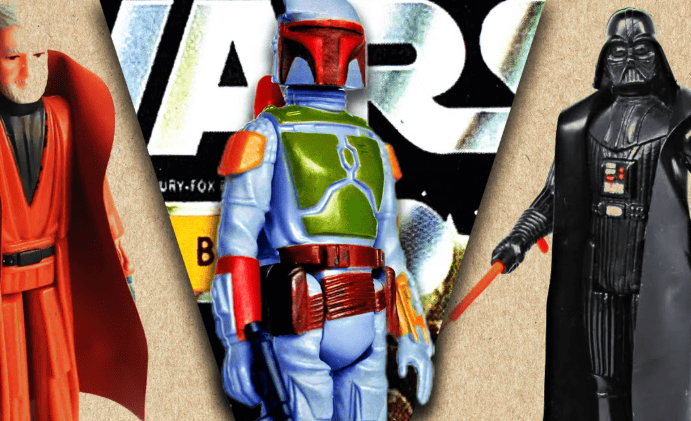
If you think Star Wars is merely a cinematic masterpiece, you’re only seeing half the galaxy. In reality, Star Wars is a revolutionary merchandising empire that just happens to have a really good film series attached to it. Before a certain farm boy looked at twin suns, movie tie-ins were usually an afterthought—cheap trinkets or cardboard masks that vanished from shelves before the film left theaters. George Lucas changed all that, turning a space fantasy into a lifestyle that lives on our shelves, in our closets, and under our beds.
The history of Star Wars merchandise is a saga of desperate gambles, industrial accidents, and a total rewriting of the contract between creators and studios. It’s a story about how a “failed” toy launch became a marketing stroke of genius and how a specific scale of plastic figures fundamentally altered the way children—and eventually, very dedicated adults—interact with stories. Let’s dive into the fascinating, occasionally weird, and undeniably lucrative history of the stuff that made the galaxy far, far away feel close to home.
1. The Kenner Gamble and the Handshake That Changed Toys
In the mid-1970s, the concept of a “blockbuster” was still in its infancy, and the idea of selling toys based on a sci-fi movie was considered a massive risk. Most major toy companies, including giants like Mattel and Hasbro, famously passed on the opportunity to produce Star Wars toys. They saw a weird space movie that was likely to flop. Only Kenner, a relatively small company based in Cincinnati, was willing to take a chance. They signed a deal that gave them the rights to produce toys for a pittance, a decision that would eventually turn them into an industry titan.
This wasn’t just a business win; it was a cultural pivot. Because Kenner was smaller, they were more agile and willing to experiment with how toys were marketed. The partnership between Lucasfilm and Kenner proved that a movie could have a “tail”—a life beyond the cinema screen—if fans could take the characters home. This gamble effectively birthed the modern toy industry, moving away from generic dolls and trucks toward specific, character-driven intellectual property that fans could collect and obsess over for decades.
2. The “Early Bird” Kit: Selling Air and Promises
One of the most legendary blunders-turned-successes in retail history occurred when the first Star Wars film became an overnight sensation. Kenner was caught completely off guard. Toy production takes months, and by the time the film was a hit, it was impossible to get figures onto shelves for the upcoming holiday season. Faced with a potential disaster of empty shelves and angry parents, Kenner did the unthinkable: they sold an empty box.
The “Early Bird Certificate Package” was essentially a cardboard envelope containing a display stand, some stickers, and a voucher. Parents bought the promise that once the figures were actually manufactured, Kenner would mail them to the child. While it sounds like a recipe for a PR nightmare, it worked brilliantly. It built immense anticipation and secured brand loyalty before the product even existed. Those who held onto those original vouchers or the subsequent “first four” figures (Luke, Leia, Chewbacca, and R2-D2) now own some of the most sought-after pieces of history in the collecting world.
3. The 3.75-Inch Standard: Redefining the Scale of Play
Before the galaxy invaded toy aisles, the standard for “action figures” was set by G.I. Joe at a towering 12 inches. Kenner realized that if they wanted kids to play with X-wings, TIE Fighters, and the Millennium Falcon, they couldn’t stick to that scale. A 12-inch Luke Skywalker would require a Millennium Falcon the size of a dinner table—a logistical and financial impossibility for most families. To make the vehicles affordable and “playable,” Kenner shrunk the heroes.
The decision to move to the 3.75-inch scale was a stroke of genius that redefined the toy industry. This smaller size allowed for a lower price point per figure, encouraging the “collect ’em all” mentality. More importantly, it made the vehicles the stars of the show. Suddenly, a child could own a fleet of starships that fit in a bedroom. This scale became the industry standard for decades, influencing almost every major action figure line that followed, from G.I. Joe: A Real American Hero to various superhero franchises.
4. Merchandising Rights: The Deal of the Century
The most famous business move in Hollywood history involves George Lucas’s contract for the original Star Wars. At the time, directors were fighting for higher salaries. Lucas, however, made a counter-offer that executives at 20th Century Fox thought was a steal for the studio. He agreed to keep his salary low in exchange for two things: total control over any sequels and, crucially, the licensing and merchandising rights.
At the time, merchandise wasn’t a significant revenue stream for studios, so Fox happily agreed. This decision turned Lucas into a billionaire and gave him the financial independence to build Lucasfilm and Skywalker Ranch without studio interference. It also meant that every lunchbox, bedsheet, and action figure sold directly funded the future of the franchise. This deal fundamentally changed how creators approach their work, highlighting the immense power of IP (Intellectual Property) ownership over a simple one-time paycheck.
5. The “Extended Universe” in Plastic Form
Between the release of the original films and the later return to the big screen, the franchise stayed alive largely through its merchandise. When there were no new movies in theaters, the toy line expanded into what collectors call the “Power of the Force” or “Expanded Universe” lines. Kenner (and later Hasbro) began producing figures for characters that appeared for only seconds on screen—or characters that only existed in books and comics.
This strategy transformed Star Wars from a movie series into a persistent hobby. Fans weren’t just buying a hero; they were buying an obscure bounty hunter or a background droid, which encouraged them to invent their own stories. This “bottom-up” storytelling kept the brand relevant during the “dark times” when no new cinematic content was being produced. It proved that a well-managed toy line could maintain a massive global fan base indefinitely, creating a bridge between generations of fans.
6. Rarity and the “Holy Grails” of Collecting
The history of Star Wars merchandise is paved with “what ifs” and manufacturing anomalies that have created a high-stakes secondary market. Perhaps the most famous is the “Rocket-Firing Boba Fett.” Originally intended to have a spring-loaded missile, the feature was canceled due to safety concerns. A few prototypes escaped the factory, and they are now worth more than many luxury cars. Similarly, the “Vinyl Cape Jawa” was a brief production run before Kenner switched to cloth capes to make the figure look “fancier.”
These rarities turned toy collecting from a child’s pastime into a serious investment market. The existence of “carded” figures (those still in their original packaging) became the gold standard for collectors. This shift led to the rise of professional grading services, where experts evaluate the condition of a toy’s box and plastic bubble. The history of these rare items shows how nostalgia, combined with scarcity and manufacturing history, can transform a five-dollar plastic toy into a museum-grade artifact.
7. Beyond Toys: The Dawn of the Lifestyle Brand
While action figures were the vanguard, Star Wars was one of the first properties to prove that “merchandise” could include almost anything. By the late 1970s and early 1980s, you could wake up in Star Wars sheets, eat Star Wars cereal with a Star Wars spoon, go to school with a Star Wars lunchbox, and brush your teeth with a lightsaber-themed toothbrush. It was the birth of the “lifestyle brand.”
This saturation wasn’t just about greed; it was about immersion. For a fan, owning these items was a way to signal their identity and keep the magic of the movies alive in mundane, everyday moments. This set the template for every major franchise to follow, from Harry Potter to the Marvel Cinematic Universe. The history of these non-toy items reveals a fascinating look at domestic life and how entertainment started to permeate every corner of the consumer experience, turning fans into walking advertisements for their favorite stories.
8. The Prequel Era and the Collector Boom
When the franchise returned with new stories at the turn of the millennium, the merchandising landscape had changed. There was now a massive population of “adult collectors” who had grown up with the original toys and now had disposable income. The marketing shifted to accommodate this, with more “deluxe” figures, limited editions, and highly detailed statues designed for display shelves rather than sandboxes.
This era saw a massive explosion in the volume of merchandise. Companies like LEGO joined the fray, creating a partnership that would become one of the most successful in the history of both brands. The “Collector Boom” also saw the rise of massive conventions where exclusive merchandise was the primary draw. This period solidified the idea that Star Wars merchandise wasn’t just for kids; it was a legitimate field of adult curation, leading to the high-end, high-detail collectibles we see today.
9. Modern Innovation: From Plastic to Digital
As technology evolved, so did the merchandise. We moved from static plastic figures to interactive droids that could be controlled via smartphone apps. The “Black Series” introduced a new level of photographic realism to 6-inch figures, using digital face-scanning technology to capture the exact likeness of the actors. Furthermore, the “build-your-own” experience—where fans can visit immersive locations to construct their own custom lightsabers or droids—represented a shift from buying a product to buying an experience.
This modern era reflects the digital integration of our lives. Merchandise is no longer just a physical object; it often has a digital component, whether it’s an augmented reality feature or an interactive element that reacts to other toys. The history of these innovations shows a brand that is constantly pushing the boundaries of what “play” looks like, ensuring that the physical objects on our shelves remain relevant in an increasingly digital world.
10. The Cultural Legacy of the “Toy as Narrative Tool”
Ultimately, the history of Star Wars merchandise is the history of how we tell stories. For millions of people, their primary interaction with the galaxy wasn’t just watching the movies—it was playing with the toys. Through play, fans explored themes of good vs. evil, redemption, and adventure in ways that the films never could. The toys allowed for a level of personalization and “head-canon” that made the story belong to the fan as much as the creator.
This cultural legacy is why vintage toys are treated with such reverence today. They aren’t just plastic; they are vessels for memory. The way Star Wars was marketed taught an entire generation how to be collectors, how to value their hobbies, and how to stay connected to their childhood wonder. The merchandising didn’t just sell the movie; it built a community that has lasted for decades, proving that sometimes, the most important part of a story is the piece of it you can hold in your hand.
Further Reading
- The Toys That Made Us (Companion Book) by various authors – A deep dive into the industry-shaking history of the Kenner line and beyond.
- Star Wars: The Ultimate Visual Guide by Ryder Windham – While focusing on lore, it features incredible spreads of the merchandise that defined each era.
- A Galaxy of Collectibles: The Book of Star Wars Toys by Stephen J. Sansweet – Written by the world’s foremost collector, this is the definitive bible for anyone interested in the sheer variety of items produced.
- 10 Facts You Should Know About The Movie Spaceballs (1987)
- 10 Things You Need To Know About The History Of Star Wars Merchandise
- 10 Things You Should Know About Obi-Wan Kenobi – Star Wars
- 10 Things You Should Know About Han Solo – Star Wars
- 10 Things You Should Know About Darth Vader – Star Wars
- 10 Things You Should Know About Din Djarin The Mandalorian – Star Wars
- 10 Things You Should Know About Darth Maul – Star Wars
- THE MANDALORIAN – Full Story Recap – Season 1
- 10 Things You Should Know About Emperor Palpatine – Star Wars
- 10 Behind-the-Scenes Secrets of The Mandalorian



