
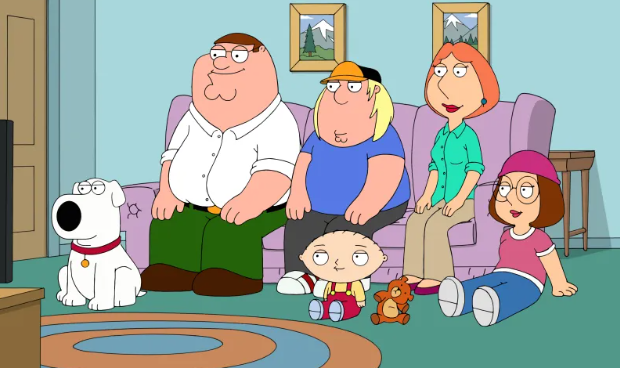
More Than a Cutaway: 10 Mind-Blowing Family Guy Secrets Every Fan Must Know
Since its inception, the animated world of Quahog has become a cornerstone of pop culture, blending surrealism, social satire, and a relentless barrage of cutaway gags. The Griffin family—led by the bumbling Peter, the sharp-tongued Lois, and the precocious Stewie—has navigated the treacherous waters of network television to become a global phenomenon. However, behind the colorful animation and the irreverent humor lies a history as complex and surprising as a Brian Griffin novel. From its humble beginnings as a student thesis to its unprecedented resurrection from the graveyard of cancellation, the story of how this show came to be is filled with hidden details that even the most dedicated fans might overlook.
This article serves as the ultimate introductory resource for anyone looking to peel back the layers of the Griffin household. We will explore the creative genius of Seth MacFarlane, the intricate production processes that bring each frame to life, and the real-world inspirations that ground the show’s more outlandish moments. Whether you are a casual viewer who enjoys the occasional “Chicken Fight” or a die-hard enthusiast who can quote every Mayor West line, these ten essential facts will deepen your appreciation for one of the most resilient and influential animated sitcoms in history.
1. The Larry and Steve Connection: The Show’s Secret Precursor
Long before Peter Griffin ever uttered a “freakin’ sweet,” his spiritual predecessor was born in the mind of a young animator named Seth MacFarlane. During his time at the Rhode Island School of Design, MacFarlane created a thesis film titled The Life of Larry. This short film featured a middle-aged, blue-collar man named Larry and his incredibly cynical, talking dog, Steve. The dynamic between the two was the primordial soup from which the Griffin family would eventually emerge. Larry’s design—portly, bespectacled, and often oblivious—is an unmistakable prototype for Peter, while Steve’s sophisticated, dry wit provided the foundation for Brian.
When MacFarlane was given the opportunity to pitch a show to a major network, he refined these characters and expanded the world around them. The core concept of a dysfunctional family anchored by a talking dog remained the central hook. If you watch those early shorts today, the DNA of the show is palpable; the timing, the vocal cadences, and the willingness to push boundaries were all present in those grainy, hand-drawn frames. It serves as a reminder that great creative works are rarely instantaneous but are instead the result of years of refinement, iteration, and a clear vision that begins long before the cameras—or the animation software—start rolling.
2. The Great Meg Griffin Voice Swap Mystery
For many viewers, Mila Kunis is the definitive voice of Meg Griffin, the family’s resident social pariah. However, the eldest Griffin child did not start out with that iconic rasp. During the show’s first full season, Meg was voiced by Lacey Chabert, known for her roles in teen dramas and holiday films. Because the show was still finding its footing and Meg’s character was relatively underdeveloped in the early episodes, the change was subtle enough that many casual fans didn’t notice the transition when it eventually occurred.
The switch happened not because of a creative falling out, but simply due to scheduling conflicts. Chabert was juggling multiple projects and ultimately had to step away from the recording booth. When Kunis took over, the writers began to lean more heavily into Meg’s role as the family’s “punching bag,” a shift that coincided with the show’s move toward a darker, more absurdist tone. Interestingly, the show has never shied away from referencing this bit of history, occasionally dropping “meta” jokes about Meg’s voice changing or her different “identities.” This transition is a fascinating footnote in the show’s history, illustrating how behind-the-scenes logistics can inadvertently shape the evolution of a character.
3. Stewie’s Accent Was Inspired by a Hollywood Legend
Stewie Griffin, the diabolical infant with aspirations of world domination, possesses one of the most recognizable voices in television history. His upper-class British accent and theatrical delivery are a far cry from the babbling typical of a one-year-old. This unique vocal choice was not a random decision; Seth MacFarlane based Stewie’s voice on the legendary actor Rex Harrison, specifically his performance as Henry Higgins in the classic film My Fair Lady. MacFarlane’s goal was to create a character that sounded like an old-world aristocrat trapped in a toddler’s body, lending an air of sophisticated menace to his early schemes.
This contrast is the engine that drives much of Stewie’s comedy. The juxtaposition of high-brow vocabulary and low-brow toddler problems—like being unable to reach a light switch or needing a diaper change—creates a comedic tension that has sustained the character for decades. Over time, the character evolved from a pure villain into a more nuanced, flamboyant adventurer, but that core Rex Harrison impression remains the foundation. It’s a testament to the power of vocal performance in animation; without that specific, regal cadence, Stewie might have just been another “evil baby” trope instead of a breakout star of the medium.
4. A Labor of Love: The Staggering Production Timeline
Because of the fast-paced, improvisational feel of the show’s humor, many fans are surprised to learn just how long it takes to produce a single episode. Unlike a live-action sitcom that can be filmed and edited in a matter of weeks, one episode of this animated series takes approximately one year to complete from script to screen. The process involves a massive global effort, beginning with the writers’ room and moving through storyboarding, voice recording, color design, and final animation, much of which is handled by specialized studios overseas.
This lengthy timeline creates a unique challenge for the writers: they must predict what will be relevant or funny a year in advance. This is why the show often focuses on evergreen themes or hyper-specific pop culture references that have a “nostalgia factor” rather than chasing the immediate news cycle. The “cutaway gags” also serve a practical purpose here; they are often the last things added to an episode, allowing for a slight bit of flexibility in the comedy. When you realize that the joke you are laughing at today was written twelve months ago, the precision and planning required to make the show feel “fresh” become even more impressive.
5. The Resurrection: How Fan Demand Saved the Show
The show’s history is famously marked by a period of silence that nearly ended the Griffin legacy forever. After three seasons of fluctuating time slots and declining ratings, the network officially canceled the series. It seemed destined to become a “cult classic” remembered only by a small group of devoted fans. However, something unprecedented happened in the world of home media. When the show was released on DVD, it sold millions of copies, shattering records for television animation. Simultaneously, reruns on late-night cable blocks began to draw massive, consistent audiences.
The sheer volume of DVD sales and high viewership numbers proved that there was a massive, underserved market for the show’s brand of humor. Recognizing their mistake, the network took the rare step of “un-canceling” the series, bringing it back for a fourth season and beyond. This was a watershed moment in television history, proving for the first time that fan passion and home media success could override traditional Nielsen ratings. The show didn’t just return; it came back stronger, more experimental, and with a renewed sense of purpose that has carried it through numerous subsequent milestones.
6. The Vocal Heavy Lifting of Seth MacFarlane
While the show boasts a talented ensemble cast, the sheer amount of work performed by its creator is staggering. Seth MacFarlane provides the voices for Peter, Brian, Stewie, and Glenn Quagmire, along with dozens of incidental characters and celebrity impressions. On any given page of a script, MacFarlane might be having a four-way conversation with himself. This vocal versatility is more than just a party trick; it allows for a specific comedic rhythm that can only be achieved when one person controls the timing of both the setup and the punchline.
Maintaining these voices for decades requires significant physical discipline. For instance, the voice of Peter is a strain on the throat, while the voice of Stewie requires precise diaphragmatic control to maintain that “haughty” tone. MacFarlane has often noted that his favorite character to voice is Brian, as the dog’s voice is essentially his own natural speaking voice with a bit more “pretension” added for comedic effect. This heavy involvement ensures that the core “soul” of the show remains consistent, even as different writers and directors cycle through the production office over the years.
7. Rhode Island Roots: The Real-Life Quahog
The fictional town of Quahog, Rhode Island, is as much a character in the show as the Griffins themselves. While Quahog isn’t a real place, it is a meticulously crafted composite of various cities in the smallest state in the U.S. Seth MacFarlane, having attended college in Providence, drew heavy inspiration from the local architecture, culture, and geography of the area. The skyline seen in the background of the show frequently features the “Superman Building” (the Industrial National Bank Building) in Providence, and the character of Mayor Adam West presided over a city that felt like a surreal version of a New England municipality.
The name “Quahog” itself is a nod to a type of hard-shell clam popular in the region, further anchoring the show in its New England setting. Fans often go on “pilgrimages” to Rhode Island to find real-life landmarks that resemble the Drunken Clam or the Griffin home. This grounded setting provides a necessary anchor for the show’s more fantastical elements. By placing a talking dog and a time-traveling baby in a mundane, recognizable suburb, the creators maximize the comedic impact of the “weirdness” that frequently descends upon the town.
8. The Musical DNA of Quahog’s Comedy
One element that sets this show apart from its peers is its deep, unironic love for the Great American Songbook and Broadway-style musical numbers. Seth MacFarlane is a classically trained singer with a passion for big band and orchestral music. As a result, the show features a full live orchestra for every episode—a rarity in modern television. From elaborate opening themes to spontaneous “Vaudeville” routines, music is woven into the very fabric of the series.
These musical numbers are not just filler; they are often the highlights of an episode, showcasing high production values and genuine musical talent. The show’s composers and lyricists have won numerous awards for their ability to blend crude humor with sophisticated arrangements. This musicality gives the show a “variety show” feel, reminiscent of the golden age of television. It’s an “evergreen” quality that allows the humor to transcend simple dialogue and become a full-sensory experience, proving that even a show about fart jokes can have the production value of a Broadway spectacular.
9. Approval from a Galaxy Far, Far Away
The show is famous for its “Blue Harvest” trilogy—a series of hour-long specials that parody the original Star Wars trilogy. What many fans find surprising is that these were not “unauthorized” parodies. The producers worked closely with Lucasfilm to ensure the episodes were as accurate to the source material as possible. Seth MacFarlane has noted in interviews that George Lucas himself was a fan of the show and gave his personal blessing for the creators to play in his sandbox.
This collaboration allowed the show to use the actual sound effects from the films, the iconic musical scores, and the precise ship designs, making the parody feel like an authentic (if ridiculous) version of the Star Wars universe. The relationship between the two franchises is a rare example of a major studio embracing a parody rather than litigating it. This level of access allowed the Griffin family to step into the roles of Luke, Leia, and Han Solo with a level of detail that delighted fans of both properties, cementing the show’s status as the king of pop-culture homage.
10. The Art of the Cutaway: Why It Works
The “cutaway gag” is the most polarizing and iconic feature of the show’s writing style. These are the “Remember the time I…” sequences that transport the viewer away from the main plot to a completely unrelated joke. While critics sometimes argue that they disrupt the narrative flow, the creators view them as a vital comedic tool. These gags allow the show to maintain a high “jokes-per-minute” ratio, ensuring that if a viewer doesn’t like the current plot point, a new joke is only seconds away.
Structurally, the cutaway gag is a descendant of the “blackout” sketches in old-school comedy revues. It allows for surrealism that wouldn’t fit within the logic of the episode’s main story. Over time, the writers have become masters of this format, using it to subvert expectations or provide social commentary in bite-sized chunks. It has become the show’s signature thumbprint, a unique comedic language that has been imitated by many but mastered by few. In the world of the Griffins, the journey from point A to point B is rarely a straight line, but it’s always filled with plenty of detours.
Further Reading
- Family Guy: The Official Episode Guide by Steve Callaghan
- A comprehensive look at the early seasons, detailing the creation and evolution of the show’s most iconic moments.
- Seth MacFarlane: A Biography by Rob Shone
- An exploration of the man behind the voices, covering his creative journey from student animator to media mogul.
- The Art of Family Guy by Frazer Brown
- A visually stunning collection of concept art, character designs, and behind-the-scenes insights into the animation process.
- 10 The Crown TV SHOW Facts That Keep People Watching
- 10 Futurama TV SHOW Facts That Still Hold Up
- 10 Things You Should Know About Speedy Gonzales – Looney Tunes
- 10 Things You Should Know About Yosemite Sam – Looney Tunes
- 10 Things You Should Know About Starlight From The Boys TV Show
- 10 Things You Should Know About Road Runner – Looney Tunes
- 10 Things You Should Know About Wile E. Coyote – Looney Tunes
- 10 Things You Should Know About Tweety Pie – Looney Tunes
- 10 Things You Should Know About Sylvester The Cat – Looney Tunes
- 10 Things You Should Know About Porky Pig – Looney Tunes



