
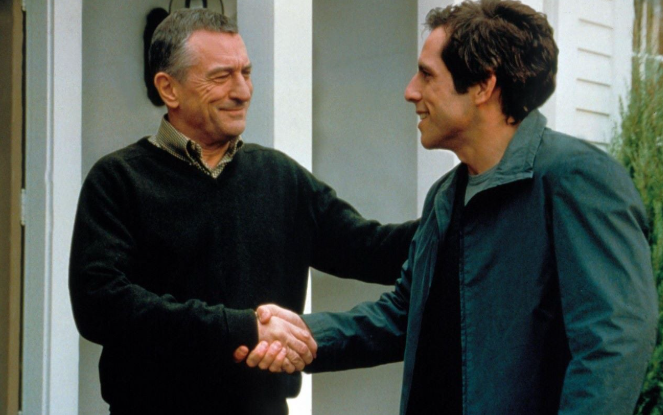
Entering the inner sanctum of a partner’s family is a universal rite of passage, fraught with anxiety and the potential for catastrophic social blunders. This high-stakes emotional landscape provides the fertile soil for the Meet the Parents movie franchise, a series that redefined the “cringe comedy” subgenre. By blending relatable domestic tension with slapstick humor and a legendary cast, the trilogy became a cornerstone of modern cinematic comedy.
To understand the franchise’s lasting appeal, one must look beyond the surface-level jokes. It is a masterclass in character archetypes: the well-meaning but accident-prone “Everyman” and the intimidating, overprotective “Patriarch.” The films tap into a primal fear—the fear of being judged and found wanting by those whose approval we crave most. This guide explores the intricate layers, production secrets, and cultural impact of the series that taught us all the precarious nature of the “Circle of Trust.”
1. The Humble Origins of a Comedy Giant
While many view the franchise as a quintessential big-budget Hollywood production, its roots are surprisingly modest. The concept did not originate in a high-powered boardroom but began as a small-scale independent film. This original iteration laid the groundwork for the core conflict: a man’s desperate attempt to impress his girlfriend’s family, only for every effort to blow up in his face.
When the story was eventually adapted for a wider audience, the creative team recognized that the premise was evergreen because it centered on the universal “meet the in-laws” anxiety. The transition from a low-budget indie project to a blockbuster required a delicate balance—retaining the raw, awkward intimacy of the original while scaling up the comedic set pieces. This origin story serves as a reminder that the best comedy often comes from simple, relatable human experiences that are then magnified through a cinematic lens. By focusing on the grounded reality of a nervous suitor, the franchise built a foundation that allowed for the more absurd elements of the sequels to feel earned rather than forced.
2. The Architecture of the “Cringe” Aesthetic
The franchise is often cited as a pioneer of mainstream “cringe” comedy. This style of humor relies on the audience’s empathetic embarrassment for the protagonist. In the case of Greg Focker, the humor is derived from his escalating series of lies and the subsequent, inevitable exposure. It is like watching a slow-motion car crash; you want to look away, but the execution is so precise that you are compelled to keep watching.
This aesthetic is achieved through a specific pacing. The films allow awkward silences to linger just a second too long, forcing the viewer to inhabit Greg’s discomfort. Whether it is a misunderstood joke at the dinner table or a literal mess involving a septic tank, the comedy is rooted in the “worst-case scenario.” For the audience, there is a cathartic relief in seeing Greg survive these ordeals, as it makes our own real-life social faux pas seem minor by comparison. The franchise mastered the art of making the viewer squirm, transforming social anxiety into a shared, hilarious experience that resonates across generations.
3. Robert De Niro’s Transformative Comedic Turn
Before this franchise, the world knew Robert De Niro primarily as a titan of dramatic cinema, famous for portraying intense, often violent characters. His role as Jack Byrnes represented a significant pivot in his career, proving that his legendary “tough guy” persona could be weaponized for comedy. By playing the role of the father-in-law with the same “Method” intensity he brought to his dramatic roles, De Niro created a character that was both terrifying and absurd.
Jack Byrnes is not a clown; he is a man who takes his daughter’s safety and his family’s integrity with deadly seriousness. This “straight man” approach is exactly what makes the performance so funny. When De Niro looks at Greg with narrowed eyes, the audience feels the weight of his intimidation, which makes the eventual comedic payoffs much more satisfying. This casting choice was a masterstroke, as it utilized the audience’s existing perception of De Niro to build instant tension. It essentially created a new archetype: the hyper-vigilant, ex-intelligence officer father who treats his home like a high-security compound.
4. Ben Stiller and the “Everyman” Evolution
If De Niro is the immovable object, Ben Stiller’s Greg Focker is the irresistible force of misfortune. Stiller’s portrayal of Greg is a masterclass in physical comedy and reactive acting. Unlike many comedy protagonists who are the architects of their own chaos through malice, Greg is inherently good-hearted. He simply suffers from a chronic need to be liked, which leads him to make increasingly poor decisions under pressure.
Stiller brings a specific “wound-up” energy to the role. You can see the gears turning in his head as he tries to navigate Jack’s minefield of expectations. His performance is relatable because everyone has, at some point, tried too hard to impress someone. Whether he is desperately trying to play a game of water volleyball or attempting to explain a suspicious suitcase, Stiller’s facial expressions convey a deep sense of mounting panic. This character arc—from an outsider trying to get in, to a man finding his own footing within a chaotic family dynamic—provides the emotional heartbeat of the entire franchise.
5. The “Circle of Trust” as a Cultural Touchstone
One of the most enduring contributions of the franchise to the popular lexicon is the “Circle of Trust.” This concept, introduced by Jack Byrnes, serves as both a plot device and a perfect metaphor for the exclusivity of family units. To be inside the circle is to be safe; to be outside is to be a suspect. This binary view of the world perfectly encapsulates Jack’s paranoid, protective nature.
The “Circle of Trust” resonates because it reflects real-world family dynamics, albeit in an exaggerated way. Every family has its own unwritten rules, internal shorthand, and levels of intimacy that outsiders must navigate. By formalizing this into a literal “circle,” the film provides a visual and verbal shorthand for the struggle of being an “in-law.” The phrase has since moved beyond the films, used in everyday conversation to describe the boundaries of friendship and loyalty. It is a rare example of a film creating a concept so relatable that it becomes part of the common language, symbolizing the universal desire for belonging and the fear of exclusion.
6. The Linguistic Comedy of the Name “Focker”
A significant portion of the franchise’s humor is built upon a single, simple linguistic joke: the protagonist’s last name. The name “Focker” is a classic comedic device, a “near-profanity” that allows the films to skate on the edge of edgy humor while maintaining a broad appeal. The brilliance of the gag lies in its repetition and the various ways it is integrated into the dialogue, especially when paired with the character’s first name, Gaylord.
The films mine this for every possible ounce of humor, from the sheer awkwardness of Jack Byrnes pronouncing it with stern gravity to the introduction of the wider Focker family. This naming convention serves a dual purpose. It marks Greg as an outsider—someone whose very name feels “wrong” in the buttoned-up world of the Byrnes family. It also highlights the clash of cultures between Greg’s more liberal, eccentric background and Jack’s rigid, traditionalist environment. The name becomes a symbol of the friction between two very different families trying to merge into one.
7. The Contrast of Parenting Philosophies
As the franchise expands, the central conflict evolves from a battle between two men to a clash between two entirely different worldviews. This is most evident in the introduction of Greg’s parents, the Fockers. Where Jack Byrnes represents discipline, surveillance, and “the old way” of doing things, the Fockers represent emotional openness, unconventional careers, and a lack of boundaries.
This contrast provides a rich source of comedy that goes beyond simple gags. It explores the different ways people express love and protect their children. Jack protects through walls and secrets; the Fockers protect through over-sharing and unconditional support. Watching these two sets of parents interact is like watching two different species try to communicate. This dynamic adds depth to the franchise, moving it away from a simple “boyfriend vs. father” story and into a broader exploration of how different backgrounds and values can collide when two people decide to build a life together.
8. The Power of the Supporting Cast
While Stiller and De Niro are the anchors, the franchise’s longevity is bolstered by an incredible supporting cast. The addition of legends like Dustin Hoffman and Barbra Streisand as Greg’s parents brought a new level of prestige and comedic energy to the series. Their performances provided a perfect foil to the more reserved Byrnes family, played with understated brilliance by Blythe Danner and Teri Polo.
Furthermore, the inclusion of characters like Kevin Rawley (played by Owen Wilson) adds a recurring layer of irritation for Greg. Kevin is the “perfect” ex-boyfriend—wealthy, spiritually “enlightened,” and beloved by Jack. He represents the person Greg feels he should be, and his presence serves to constantly highlight Greg’s perceived inadequacies. This ensemble approach ensures that the humor is multifaceted, ranging from the dry wit of the Byrnes household to the boisterous, eccentric energy of the Focker home. Every character serves a specific purpose in the comedic ecosystem, making the world of the films feel lived-in and fully realized.
9. Visual Gags and Physical Comedy Mastery
Beyond the dialogue and character work, the franchise is lauded for its high-quality physical comedy. The directors utilize the environment to create “Rube Goldberg” style sequences of disaster. A simple act, like trying to fix a toilet or using a hidden camera, spirals into a massive set piece that requires precision timing and physical commitment from the actors.
The “volleyball scene” is perhaps one of the most famous examples, where Greg’s desperation to prove his athleticism leads to a painful (and hilarious) injury for a family member. These moments are essential because they break up the dialogue-heavy scenes of psychological tension with “pure” cinema. Slapstick is a universal language, and by mastering it, the franchise ensured its appeal across different cultures. The physical comedy also serves as a visual representation of Greg’s internal state; as his lies and anxieties grow, his physical environment becomes increasingly chaotic and dangerous.
10. The Legacy of the “In-Law” Subgenre
The Meet the Parents franchise did not just entertain; it set the blueprint for the modern family comedy. Its influence can be seen in countless films and television shows that explore the friction between romantic partners and their extended families. It successfully balanced the “broad” humor required for a blockbuster with a surprisingly nuanced look at the psychology of male insecurity and father-daughter bonds.
The franchise proved that you could take a niche, indie-style premise and turn it into a global phenomenon by focusing on high-quality casting and universal themes. It remains a “go-to” recommendation for anyone looking for a film that captures the absurdity of domestic life. The legacy of the series is found in its ability to take the most stressful moments of a person’s life and turn them into a source of collective laughter, reminding us all that while meeting the parents might be a nightmare, it makes for an excellent story.
Further Reading
- The Art of Comedy Writing by James Cary
- Robert De Niro: A Biography by John Baxter
- Ben Stiller: The Making of a Movie Star by various contributors
- Directing the Film Comedy by Jay Roach (Essays and Interviews)
- Podcast Episode: Classic Films And Horror Icons
- 10 The Exorcist III (1990) Movie Facts You Didn’t Know
- 10 Scream (1996) Movie Facts That Changed Horror
- 10 The Lion King (1994) Facts That Made It Iconic – Classic Movie
- 10 Forrest Gump (1994) Facts That Make It Timeless – Classic Movie
- 10 Fight Club (1999) Facts That Still Surprise Fans – Classic Movie
- 10 Hostel (2005) Movie Facts That Shocked Viewers
- 10 Avatar (2009) Facts That Changed Cinema – Classic Movie
- 10 Hellraiser (1987) Movie Facts That Built Its Legacy
- 10 Jurassic Park (1993) Facts That Changed Movies Forever – Classic Movie



