
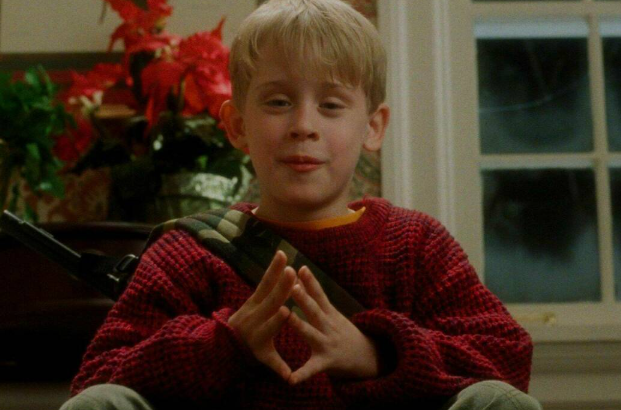
The image is iconic: a young boy with his hands pressed against his cheeks, mouth agape in a silent, high-pitched scream. This single frame has become the universal shorthand for festive chaos and childhood independence. However, beneath the surface of this slapstick masterpiece lies a treasure trove of production ingenuity, psychological depth, and cinematic “magic” that most viewers overlook while laughing at the Wet Bandits’ misfortune.
When this story of a forgotten child first graced the screen, it wasn’t just another holiday comedy; it was a subversion of the “family adventure” genre. It managed to capture the genuine anxiety of childhood—the fear of being left behind—and transform it into a triumphant tale of domestic defense. To truly understand why this film remains an evergreen staple of global culture, one must look at the meticulous details that went into its creation. From the fake movies-within-movies to the intense method acting used to keep a young lead performer on his toes, the lore of the McCallister household is as rich and layered as the house itself.
1. The Myth of “Angels with Filthy Souls”
One of the most convincing elements of the film is the black-and-white gangster movie Kevin uses to terrify the pizza delivery boy and the Wet Bandits. For decades, viewers searched video rental stores and film archives for Angels with Filthy Souls, only to discover it doesn’t actually exist. The production team shot this footage specifically for the film, utilizing a single set and authentic noir-style lighting to mimic the 1930s aesthetic. They even created a sequel, Angels with Even Filthier Souls, for the second installment of the franchise. This “fake” movie is a testament to the filmmakers’ attention to detail; they could have easily licensed real footage, but by creating their own, they were able to tailor the dialogue—like the legendary “Keep the change, ya filthy animal”—to perfectly sync with Kevin’s needs.
2. Joe Pesci’s Intimidating Method Acting
To ensure that the young actor playing Kevin McCallister felt a genuine sense of unease around the burglars, Joe Pesci employed a “method” approach on set. Pesci, already known for his intense roles in crime dramas, intentionally avoided the child star between takes. He wanted the boy to believe he was actually mean, fostering a distance that would translate into more authentic reactions during their shared scenes. During the sequence where the bandits hang Kevin on a coat hook, Pesci actually bit the young actor’s finger during a rehearsal, leaving a small scar that remains to this day. This “scared-for-real” energy is a key reason why the stakes feel surprisingly high for a family comedy; the chemistry between the predator and the prey was grounded in a very real, albeit professional, tension.
3. The High School Gym “Soundstage”
While the exterior of the McCallister home is a real residence located in Illinois, the interior was far too cramped for a full film crew, lighting rigs, and elaborate stunts. Consequently, the production team took over a nearby abandoned high school. They built the entire interior of the McCallister house—including the grand staircase and the basement—inside the school’s gymnasium. This allowed for the “magic” of the booby traps to be executed safely. For example, the flooded basement sequence was filmed in the school’s swimming pool area. This logistical ingenuity allowed the director to capture the sprawling, labyrinthine feel of a massive suburban home while maintaining the control of a professional studio environment, proving that cinematic scale is often a matter of clever architecture.
4. Daniel Stern’s Silent Tarantula Scream
In one of the most skin-crawling moments of the film, a real tarantula crawls across the face of Marv, one of the Wet Bandits. While many productions would use a mechanical prop, actor Daniel Stern agreed to have a live spider named “Axl” placed on his face for a single take. However, there was a catch: he couldn’t actually scream out loud. A sudden, piercing noise would have likely startled the tarantula, potentially leading to a bite. To capture the hilarious reaction we see on screen, Stern mimed a blood-curdling scream with his mouth wide open, and the actual sound effect was dubbed in during post-production. The sheer terror in his eyes is authentic, as he was effectively trapped in a “silent” standoff with a giant arachnid.
5. John Hughes’ Record-Breaking Screenplay
The legendary John Hughes, the creative force behind many definitive coming-of-age stories, wrote the screenplay for this film in an incredibly short window of time. Inspired by a looming family vacation and the frantic “what if” anxiety of leaving a child behind, Hughes reportedly finished the first draft in just nine days. His ability to tap into the universal rhythms of family bickering and the specific logic of a child’s imagination is what gives the film its enduring heart. The script perfectly balances the absurdity of the traps with the poignant loneliness of the protagonist. It’s a masterclass in efficient storytelling, showing how a simple, high-concept premise can be transformed into a narrative juggernaut through focused, rapid-fire creativity.
6. The Mystery of Uncle Frank’s True Nature
A popular piece of lore among enthusiasts involves the character of Uncle Frank, Kevin’s abrasive and “cheap” uncle. Many fans have analyzed his behavior—such as his refusal to pay for the pizza and his harsh dismissal of Kevin—as evidence of a more sinister undercurrent. While the film presents him as a comic foil, the actor’s performance adds a layer of genuine bitterness that anchors the family’s dysfunction. Interestingly, some early drafts and fan theories suggest that Frank was more than just a grumpy relative, possibly even being the one who orchestrated the “accident” of leaving Kevin behind. While the film stays lighthearted, the character of Uncle Frank serves as a reminder of the subtle, sometimes prickly realities of extended family dynamics that many viewers find relatable.
7. The Last-Minute Musical Masterpiece
The film’s score is so synonymous with the holidays that it’s hard to imagine it sounding any other way. However, the original plan was very different. The director initially had a different composer in mind, but when that fell through, he sent a “temp track” to the legendary John Williams. Williams, charmed by the film’s “Nutcracker-esque” potential, agreed to score it. He crafted the iconic “Somewhere in My Memory,” which perfectly captures both the whimsy of childhood and the melancholy of being alone. His music elevated the film from a standard slapstick comedy to a cinematic fable. The score acts as a guide for the audience’s emotions, telling us when to laugh and when to feel the weight of the protagonist’s isolation.
8. The Stunt Doubles’ Dangerous Reality
Before the advent of widespread CGI, the physical comedy of the film had to be performed by real people. The “falls” taken by the Wet Bandits are not just cinematic tricks; they are high-impact stunts performed by professionals who put their bodies on the line. The stunt double for Marv, for instance, had to perform the “swinging paint can” hit and the various slips on icy stairs with minimal padding to keep the costume looking realistic. The director frequently worried that the stuntmen were actually getting injured because the impacts sounded so violent on set. This physical commitment is why the slapstick still “hurts” to watch today—the gravity and the momentum were real, creating a visceral experience that digital effects struggle to replicate.
9. The Secret Behind the Ornaments and Micro-Machines
One of the most “painful” traps involves Marv stepping on glass ornaments after climbing through a window. To protect the actor while maintaining the visual of shattering glass, the production used “candy glass”—a brittle, sugar-based substance that looks identical to the real thing but breaks without sharp edges. Furthermore, for the scene where the bandits slip on Micro-Machines, the actors often wore special “rubber feet” or socks that were painted to look like bare skin but provided grip and protection. This blend of practical effects and clever costuming allowed for the cartoonish violence to feel grounded in a physical world, ensuring that the “payback” Kevin delivers feels satisfyingly “crunchy” to the audience.
10. The Accidental “Scream” Inspiration
The famous “hands-on-face” scream that defines the movie’s poster was not a scripted homage to Edvard Munch’s painting The Scream. Instead, it happened somewhat by accident. During the scene where Kevin applies aftershave, the young actor was supposed to slap his face and then move his hands away. Instead, he kept his hands glued to his cheeks as he screamed, finding the sensation of the sting combined with the physical contact to be a more natural reaction. The director loved the look so much that it became the central image of the entire marketing campaign. It’s a perfect example of how a spontaneous moment of “child logic” can become a more powerful cultural symbol than anything a marketing team could have engineered.
Further Reading
- The Films of John Hughes by Kirk Honeycutt
- Home Alone: The Classic Illustrated Storybook by Kim Smith
- Wild and Crazy Guys: How the Comedy Mavericks of the ’80s Changed Hollywood Forever by Nick de Semlyen
- John Williams’s Film Music: Jaws, Star Wars, Raiders of the Lost Ark, and the Return of the Classical Hollywood Music Style by Emilio Audissino
- Podcast Episode: Classic Films And Horror Icons
- 10 Things You Didnt Know About The Fifth Element (1997)
- 10 The Exorcist III (1990) Movie Facts You Didn’t Know
- 10 Scream (1996) Movie Facts That Changed Horror
- 10 Futurama TV SHOW Facts That Still Hold Up
- 10 Things You Should Know About The Making Of And History Of The Video Game – Diablo II
- 10 Things You Should Know About The Making Of And History Of The Video Game – The Legend of Zelda: Ocarina of Time
- 10 The Lion King (1994) Facts That Made It Iconic – Classic Movie
- 10 Forrest Gump (1994) Facts That Make It Timeless – Classic Movie
- 10 Fight Club (1999) Facts That Still Surprise Fans – Classic Movie



