
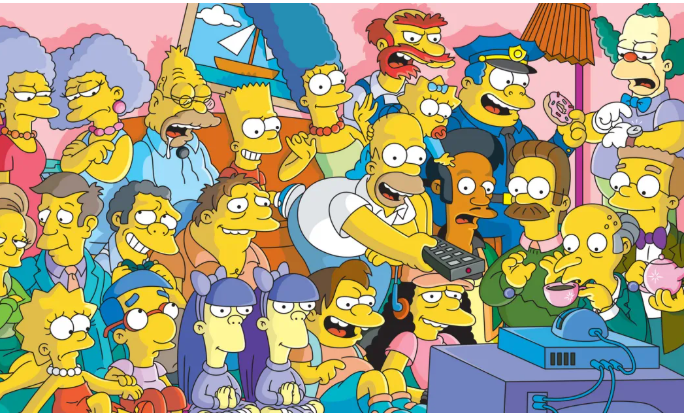
In the vast landscape of television history, few programs have managed to weave themselves into the very fabric of global culture as tightly as The Simpsons TV Show. What began as a series of crude animated shorts on a variety program evolved into a satirical powerhouse that redefined the boundaries of the “nuclear family” sitcom. With its vibrant yellow palette and sharp, multi-layered wit, the show serves as a funhouse mirror held up to society, reflecting our flaws, our triumphs, and our utter absurdity.
Walking through the streets of Springfield is akin to a masterclass in sociology and comedy. The show is built on a foundation of “everyman” relatability, centered on a family that remains perpetually the same age while the world around them undergoes constant transformation. It is a world where a safety inspector at a nuclear power plant can go to space, win a Grammy, and fight a heavyweight boxer, all while returning home in time for dinner. This guide explores the foundational elements that have made the series a permanent fixture of the small screen, offering deep insights into the genius behind the yellow skin.
1. The Hasty Origins: A Waiting Room Miracle
The creation of the world’s most famous animated family wasn’t the result of months of focus groups or corporate planning; it was a desperate act of creative preservation. When Matt Groening was invited to pitch an animated series of shorts, he initially intended to offer his existing comic strip, Life in Hell. However, upon realizing that pitching that property would require him to sign over the publication rights, he panicked. Sitting in the lobby of the production office, he feverishly sketched a new set of characters: a dysfunctional but loving family.
Groening named the characters after his own family members—Homer, Marge, Lisa, and Maggie—substituting “Bart” (an anagram for “brat”) for his own name. These crude sketches were handed over to animators who, famously, traced them exactly as they were drawn, preserving the jagged lines and overbites that would become iconic. This raw, unpolished beginning gave the show an edge that polished corporate cartoons lacked. It was born from a desire to maintain creative independence, a spirit that has permeated the writing for decades. The transition from these brief segments to a standalone half-hour program proved that audiences were hungry for a “human” story told through a medium previously reserved for children.
2. Why Are They Yellow? The Genius of Channel Surfing
One of the most frequent questions asked by newcomers is why the inhabitants of Springfield possess such a distinctive, jaundiced hue. The decision was purely strategic, devised by the show’s early animation team, specifically Gyorgyi Peluce. During the era when viewers would “surf” through channels with a remote, the bright, saturated yellow was designed to catch the eye instantly. If a viewer caught a flash of that specific yellow, they would immediately know they had landed on the Simpsons. It was a brilliant piece of visual branding that required no dialogue or logo to identify.
From a design perspective, the yellow skin also allowed the characters to pop against the colorful, often chaotic backgrounds of Springfield. Interestingly, the characters lack traditional hairlines; their hair simply grows out of the top of their heads like jagged extensions of their skulls. This surrealist choice, combined with their four-fingered hands and massive overbites, created a silhouette that is recognizable in any language. The color yellow has since become a shorthand for the series’ specific brand of irreverence, proving that sometimes the most impactful creative choices are those that prioritize being noticed over being realistic.
3. The Mythic “Anytown” of Springfield
The setting of the show is perhaps the greatest geographical mystery in television history. Springfield was chosen as the name specifically because it is one of the most common city names in the United States. By placing the family in a city that could be anywhere, the writers ensured that the show felt local to everyone. Over the years, the show has intentionally toyed with the audience’s desire to pin down the location, offering contradictory clues about which state Springfield resides in. One moment they are near a desert, the next they are bordering an ocean or a jagged mountain range.
This ambiguity allows Springfield to be a microcosm of the entire country. It can house a nuclear power plant, a sprawling forest, a bustling downtown, and a localized “Crakatoa” volcano all within driving distance. The city functions as a character in its own right, populated by a “Deep Bench” of secondary characters—from the miserly Mr. Burns to the cheerful but Flanders-ized neighbor, Ned. This flexibility in geography means the show is never limited by its setting; Springfield is a “state of mind” where the rules of physics and distance bend to the needs of the joke. It remains the ultimate “Anytown, USA,” inviting every viewer to see their own community reflected in its flawed, hilarious streets.
4. The Eerie Accuracy of “Simpsons Predictions”
One of the most discussed phenomena surrounding the series is its uncanny ability to “predict” future events. Fans have cataloged dozens of instances where a joke written years in advance seemingly came true in the real world. These range from the invention of smartwatches and video-calling technology to specific outcomes in sports and global political shifts. While some attribute this to a mystical foresight, the reality is a testament to the show’s sharp understanding of human nature and the logical progression of absurdity.
The writing staff has traditionally consisted of some of the most educated minds in comedy, including mathematicians and scientists. By following a trend to its most ridiculous conclusion, they often accidentally land on a reality that hadn’t happened yet. For example, mocking a celebrity’s trajectory or a corporation’s greed often leads to a scenario that eventually manifests in real life. It is a case of “life imitating art” because the art was so well-informed to begin with. These “predictions” have become a legendary part of the show’s lore, reinforcing the idea that the writers don’t just observe culture—they understand the gears that turn it.
5. The Vocal Chameleons: A Cast of Thousands
While the visual style is iconic, the soul of the show resides in the voices. The primary cast consists of a small group of incredibly versatile actors who provide the voices for nearly every character in the town. Dan Castellaneta, Julie Kavner, Nancy Cartwright, Yeardley Smith, Hank Azaria, and Harry Shearer have spent decades breathing life into hundreds of distinct personas. A single actor might perform a conversation between three different characters in a single scene, seamlessly shifting their pitch, cadence, and personality.
This vocal continuity is a major reason for the show’s longevity. Unlike live-action sitcoms where actors age out of roles or leave for other projects, the animated format allows these performers to maintain their characters indefinitely. The voices have become so ingrained in the collective consciousness that a simple “D’oh!” or a gravelly “Mmm… donuts” is instantly recognizable across the globe. The cast’s ability to find the humanity in even the most caricatured residents of Springfield—like the bumbling Chief Wiggum or the cynical Moe Szyslak—is what keeps the audience emotionally invested in a world that is essentially a cartoon.
6. Mastering the Art of Cultural Satire
The series is often cited as the gold standard for satire because it is an “equal opportunity offender.” It doesn’t just mock one political side or one demographic; it targets the universal follies of humanity. From the incompetence of local government and the greed of corporate titans to the flaws of the education system and the vapidity of the entertainment industry, no institution is safe from the show’s biting wit. It uses the “family” lens to make these complex social critiques accessible and hilarious.
The brilliance of the satire lies in its layering. A child can watch the show and enjoy the slapstick humor and physical comedy of Homer Simpson falling down a hill, while an adult can appreciate the subtle jab at industrial safety standards or existential dread. This “multi-generational” appeal is what allowed it to transition from a rebellious counter-culture show to a mainstream institution. It taught an entire generation how to be skeptical of authority while still maintaining a sense of optimism and love for one’s family. It is a show that celebrates the “small” lives of people who are constantly being buffeted by “big” historical and social forces.
7. Linguistic Legacy: “Cromulent” Words and Phrases
The impact of the series extends far beyond the television screen and directly into the English dictionary. The show is responsible for introducing—or popularizing—numerous words and phrases that have since become part of standard parlance. The most famous, of course, is Homer’s annoyed grunt, “D’oh!”, which was officially added to the Oxford English Dictionary. Other terms like “meh,” “yoink,” and the perfectly “cromulent” word “embiggens” have found their way into everyday conversation, often used by people who may not even realize their animated origins.
This linguistic influence speaks to the show’s dominance in the cultural zeitgeist. The writers took great joy in inventing pseudo-intellectual jargon or mangling common phrases to create something new and funny. This wordplay rewards attentive viewers and creates a “shorthand” among fans. When a character says something is “scrumtulescent” or refers to a “crispity crunchity” snack, it reinforces the show’s unique voice. It is a rare feat for a piece of fiction to not only reflect how people talk but to actually change the way they speak, cementing its status as a foundational pillar of modern communication.
8. A “Who’s Who” of Guest Star History
Over its extensive run, the show has hosted an unprecedented number of guest stars, holding the world record for the most celebrities featured in a TV series. Appearing as a guest in Springfield is considered a rite of passage for actors, musicians, athletes, and world leaders. These appearances range from “self-parody” cameos, where icons poke fun at their own public personas, to voiced roles of entirely new characters that become fan favorites.
The guest stars add a layer of prestige and variety to the episodes. Whether it’s a legendary rock band performing at a local festival or a high-profile scientist explaining the laws of physics to Lisa, these cameos connect the fictional world of Springfield to the real world. However, the show’s best guest spots are often those where the celebrity is willing to be the butt of the joke. This willingness to participate in the show’s satire highlights the respect the industry has for the program. It transformed the “celebrity cameo” from a cheap ratings ploy into a legitimate form of comedic art, further blurring the lines between animation and reality.
9. The Ever-Changing Opening: Couch Gags and Chalkboards
The opening sequence of the show is as famous as the episodes themselves, specifically due to its “variable” elements. Every episode features a different “chalkboard gag,” where Bart writes a repetitive punishment on a school blackboard, and a “couch gag,” where the family converges in the living room for a final comedic beat. These segments were originally designed as “buffers”—if an episode was too short, the producers could use a longer couch gag to fill the time. If it was too long, they could keep it brief.
Over time, these gags evolved into a playground for experimental animation. The show has invited famous guest animators and directors to create surreal, elaborate couch gags that sometimes last several minutes and depart entirely from the show’s standard art style. This tradition keeps the opening credits fresh even for viewers who have seen hundreds of episodes. It is a small but vital piece of “appointment television” that rewards the audience for tuning in from the very first second. The couch gag serves as a microcosm of the show itself: a familiar structure that is constantly being subverted by creativity and surprise.
10. The Blueprint for the Adult Animation Revolution
It is impossible to overstate how much the modern television landscape owes to this series. Before its success, “cartoons” were almost exclusively seen as children’s entertainment. The show proved that an animated medium could handle sophisticated storytelling, complex character arcs, and adult themes without losing its sense of wonder. By succeeding in prime time, it paved the way for an entire genre of “adult animation” that followed, from edgy satires to surrealist comedies.
The “Simpsons formula”—a dysfunctional family, a dense supporting cast, and a satirical edge—became the blueprint for dozens of other programs. It showed that animation allowed for a scale and a “stretchiness” that live-action couldn’t match; a character could survive a nuclear explosion in one scene and be perfectly fine in the next, provided it was funny. This legacy of “rule-breaking” has allowed the show to survive while countless other sitcoms have faded away. It remains the patriarch of the animated world, a show that taught television how to be smart, cynical, and heart-felt all at the same time.
Further Reading
- The Simpsons: An Uncensored, Unauthorized History by John Ortved: A deep dive into the behind-the-scenes drama, the creative battles, and the cultural rise of the show.
- Springfield Confidential: Jokes, Secrets, and Outright Lies from a Lifetime Writing for The Simpsons by Mike Reiss: A hilarious and informative memoir from a long-time writer and producer.
- The Simpsons and Their Mathematical Secrets by Simon Singh: An exploration of the hidden mathematical jokes and theorems tucked away in the show’s scripts.
- The Simpsons and Philosophy: The D’oh! of Homer by William Irwin: An academic but accessible look at how the show reflects various philosophical schools of thought.
- 10 The Crown TV SHOW Facts That Keep People Watching
- 10 Twin Peaks TV SHOW Facts That Still Puzzle Fans
- 10 Futurama TV SHOW Facts That Still Hold Up
- 10 Poltergeist (1982) Movie Facts That Are Still Creepy
- 10 Things You Should Know About Speedy Gonzales – Looney Tunes
- 10 Things You Should Know About Yosemite Sam – Looney Tunes
- 10 Hellraiser (1987) Movie Facts That Built Its Legacy
- 10 Things You Should Know About Starlight From The Boys TV Show
- 10 Things You Should Know About Road Runner – Looney Tunes
- 10 Things You Should Know About Wile E. Coyote – Looney Tunes



