Beyond the Cartel: 10 Shocking Secrets Behind the Making of “Narcos”
When the pulsing bass and haunting Spanish lyrics of the theme song begin, viewers are instantly transported into a world of shadow, sun-drenched violence, and complex morality. Narcos isn’t just a crime drama; it’s a sprawling epic that redefined how we consume international television. By blending gritty realism with cinematic flair, it turned a historical manhunt into a global obsession. But while the on-screen action is intense, the true stories behind the production are often more surprising than the scripts themselves.
For fans of the series, the allure lies in its authenticity—the feeling that you are a fly on the wall in the high-stakes rooms of the Medellín Cartel or the tension-filled offices of the DEA. However, achieving that level of realism required immense sacrifices, near-impossible physical transformations, and even real-life danger. Whether you are a long-time viewer or just discovering the “Plata o Plomo” lifestyle, these ten essential facts will change the way you see the rise and fall of the world’s most notorious kingpins.
1. The Leading Man Who Couldn’t Speak the Language
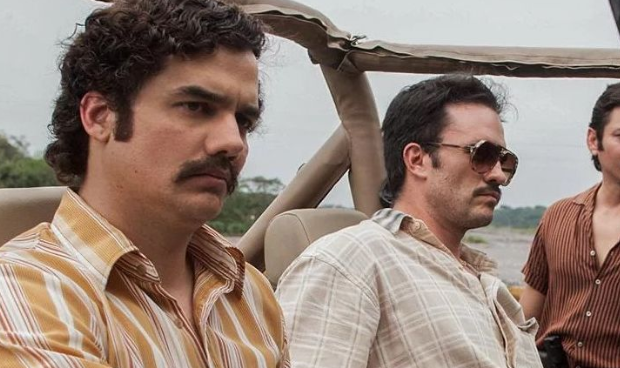
One of the most astonishing facts about the series is that Wagner Moura, who delivered a definitive performance as Pablo Escobar, did not speak a word of Spanish when he was cast. A native Brazilian whose first language is Portuguese, Moura faced a monumental task. To prepare for the role, he didn’t just attend a few language classes; he moved to Medellín six months before filming began. He enrolled in a local university to study Spanish alongside international students and spent his days immersing himself in the local culture to absorb the specific “Paisa” accent and slang that characterized the real Escobar.
This dedication was essential for the show’s bilingual format. While some native speakers noted subtle differences in his accent during the first season, his fluency became a point of pride for the production. Beyond the language, he had to unlearn his own natural charisma to adopt the heavy, brooding presence of the drug lord. This gamble by the casting directors paid off, as Moura’s “outsider” perspective arguably allowed him to analyze the character with a psychological depth that a local actor might have overlooked. It remains one of the most successful “immersion” stories in modern television history.
2. A Fatal Commitment to Filming on the Exact Rooftop
In the climax of the second season, the production achieved a level of historical fidelity that is rarely seen in television. The scene depicting the final shootout and the death of the kingpin was filmed on the actual rooftop in the Los Olivos neighborhood of Medellín where the real events took place. The production team tracked down the original building, which had remained largely unchanged in the decades following the incident. Filming in the exact location where the real blood was spilled added an eerie, somber atmosphere to the set that resonated with the cast and crew.
This choice wasn’t just about visual accuracy; it was about the weight of history. Being in that specific space allowed the actors to tap into the gravity of the moment, moving through the same narrow spaces that the “King of Cocaine” once tried to navigate in his final seconds. While it presented logistical challenges—working in a crowded residential neighborhood with a dark past—it ensured that the show’s conclusion felt grounded in reality. For the residents of Medellín, seeing the production recreate this moment was a reminder of a painful era, highlighting the show’s complex relationship with the city it brought to the world’s attention.
3. The Feature Film That Became Too Big for the Big Screen
Originally, the creators didn’t envision Narcos as a long-running series. The project was initially conceived as a high-budget feature film. However, as the writers and producers began their deep dive into the historical archives and interviews with the real-life DEA agents, they realized that the story was far too complex to be squeezed into a two-hour runtime. The rise of the cartels involved decades of political maneuvering, intricate international relations, and hundreds of key players, all of which would have been lost in a traditional movie format.
The decision to pivot to a television series allowed the show to breathe and explore the “butterfly effect” of the drug trade. By taking a serialized approach, the writers could dedicate entire episodes to the inner workings of the drug labs, the corruption of the local police, and the personal toll on the agents. This expanded canvas turned the show into an educational resource as much as an entertainment property. It also set a new standard for Netflix, proving that global audiences had the patience and the appetite for long-form, multi-lingual storytelling that didn’t shy away from dense historical detail.
4. The Theme Song’s Hidden Motherly Perspective
The haunting theme song, “Tuyo” (Yours), is instantly recognizable, but its lyrical inspiration is deeply personal and somewhat unexpected. The song was written and performed by Brazilian singer-songwriter Rodrigo Amarante, who sought to capture the “romantic” and delusional self-image that a man like Escobar might have held. Amarante didn’t write the lyrics from the perspective of a violent criminal; instead, he imagined the words as something Escobar’s mother might have said to her son, or perhaps how Escobar viewed his own relationship with power and his home country.
The lyrics—translated as “You are the air that I breathe”—sound like a standard love ballad on the surface, but when paired with the violent imagery of the show, they take on a chilling, obsessive quality. This juxtaposition reflects the central theme of the series: the toxic love between a man and his ambition, and the way a mother’s unconditional love can blind her to the monster her child has become. This creative choice makes the opening credits more than just an introduction; they are a psychological profile of the show’s protagonist, set to a melody that lingers long after the episode ends.
5. The Tragic Real-Life Danger of Location Scouting
While the show depicts extreme violence, the production was hit by a tragic real-life tragedy that underscored the very dangers the series explores. During the preparation for a later installment of the franchise, a veteran location scout was found shot to death in a rural area of Mexico. Carlos Muñoz Portal, a highly respected professional who had worked on major Hollywood blockbusters, was scouting locations alone when he was targeted. The incident sent shockwaves through the industry and briefly put the future of the series in question.
This tragedy served as a grim reminder that the territories being depicted on screen are often still controlled by dangerous organizations that do not welcome outsiders taking photographs of their “routes.” The cast, including lead actors like Pedro Pascal, spoke out about the need for increased security, stating that the show could not continue if the lives of the crew were at risk. It changed the way the production approached safety, leading to tighter protocols and a more cautious relationship with the environments they filmed in. It was a sobering moment where the “fiction” of the drug war collided violently with the modern reality of the trade.
6. The “One-Third Rule” of Historical Accuracy
One of the most fascinating aspects of the show’s development is the “one-third rule” shared by the real-life DEA agents who served as consultants. According to Steve Murphy and Javier Peña, the series is approximately one-third strictly accurate, one-third dramatized for effect, and one-third a blend of the two. While the show uses real news footage and historical names, many of the specific “hero moments” or romantic subplots were fabricated to keep the narrative moving. For instance, the timing of certain arrests and the involvement of the agents in specific shootouts were often altered for dramatic tension.
The real Murphy and Peña were heavily involved in the production to ensure that the spirit of the investigation remained true, even when the details were tweaked. They insisted that the show never glorify the criminals, a request the producers honored by showing the devastating impact of the cartels on innocent civilians. This collaboration between law enforcement and Hollywood creators is what gives the show its “insider” feel. It allows the audience to feel the frustration of the bureaucracy and the danger of the field, even if the “real” agents weren’t always in the exact room where the action happened.
7. The Vocal Disapproval of the Escobar Estate
While the show was a massive hit with global audiences, it found a fierce critic in the real Pablo Escobar’s son, Sebastián Marroquín (born Juan Pablo Escobar). Marroquín has been very public about his distaste for the series, claiming that it contains dozens of factual errors and that it paints an inaccurate picture of his family life. He has argued that the show’s portrayal of his father’s final days and his relationship with his wife and children was “insulting” and that the production prioritized entertainment over the messy reality of their lives.
This conflict highlights the ethical tightrope that creators walk when dramatizing real-life trauma. To the writers, these are characters in a historical epic; to Marroquín, they are his parents and his childhood. The estate’s disapproval also extended to legal threats regarding the use of the Escobar name and likeness. Despite this tension, the showrunners maintained that Narcos was always intended as a dramatization and a “tribute to the victims” rather than a definitive biography. This friction only added to the show’s notoriety, sparking endless debates among fans about where a creator’s responsibility to the truth ends and their duty to the story begins.
8. The Cinematic Influence of “Goodfellas”
Director José Padilha didn’t look to other television shows for inspiration; he looked to the masters of the gangster genre on the big screen. Specifically, the visual language and pacing of Narcos were heavily influenced by Martin Scorsese’s 1990 classic Goodfellas. You can see this in the show’s signature use of voiceover narration to explain complex systems, the rapid-fire editing during montage sequences, and the “cool but terrifying” depiction of criminal lifestyle. Padilha wanted the audience to feel the seductive allure of the money and power before hitting them with the brutal consequences.
The use of Javier Peña and Steve Murphy’s narration serves the same function as Ray Liotta’s character in Goodfellas—it provides a relatable guide through a world that seems alien to most viewers. This technique allows the show to deliver large amounts of historical exposition without feeling like a dry documentary. By adopting the “Scorsese style,” the producers were able to elevate the sitcom-heavy world of television into something that felt like a ten-hour prestige movie. It changed the “look” of Netflix originals, ushering in an era of high-style, high-substance global dramas.
9. A Dangerous Physical Transformation for Wagner Moura
Beyond learning a new language, Wagner Moura underwent a grueling physical transformation that took a toll on his health. To accurately portray the aging, “soft” look of Escobar in his later years, Moura gained roughly 40 pounds (18 kg). He accomplished this by eating a high-calorie diet that he later described as “miserable,” as it made him feel lethargic and physically ill. Even with the weight gain, he often had to wear a prosthetic stomach to achieve the specific “potbelly” silhouette that the kingpin was known for in the 1990s.
When his time on the show ended, Moura didn’t just lose the weight; he underwent a total lifestyle “detox.” He adopted a strict vegan diet and engaged in an intense exercise regimen to shed the pounds and “cleanse” himself of the dark energy of the character. He has since stated in interviews that he would never undergo such a drastic physical change for a role again, as the process of being “inhabited” by a man as dark as Escobar was emotionally and physically draining. His commitment to the physical reality of the role is a major reason why his performance remains so hauntingly believable.
10. Boosting Tourism and Changing Colombia’s Image
One of the most unexpected outcomes of the show’s success was its impact on Colombian tourism. While the series focuses on a dark chapter in the nation’s history, it also showcased the stunning beauty of the Colombian landscape, from the lush mountains of Antioquia to the vibrant streets of Bogotá. Fans of the show began flocking to Medellín to see the locations for themselves, leading to a surge in “Narcos tours.” Local guides—some of whom actually lived through the era—now take visitors to the Mónaco Building, the rooftops of Los Olivos, and even the grave of the kingpin.
However, this tourism is controversial. Many locals feel that the show focuses too much on the “villain” and not enough on the resilience of the people who rebuilt the city. In response, the city of Medellín has worked to pivot the narrative, focusing on “Memory Tours” that honor the victims and the police officers who died. The show’s global reach forced Colombia to confront its past on a world stage, ultimately helping to transition the country’s image from a “dangerous warzone” to a thriving cultural and tourist destination that is open about its history but defined by its future.
Further Reading
For those who want to separate the “plata” from the “plomo” and learn the true history behind the cartels, these books are essential:
- Killing Pablo by Mark Bowden
- Manhunters: How We Took Down Pablo Escobar by Steve Murphy and Javier F. Peña
- At the Devil’s Table by William C. Rempel (Focuses on the Cali Cartel)
- The Memory of Pablo Escobar by James Mollison
- Pablo Escobar: My Father by Sebastián Marroquín
- 10 The Crown TV SHOW Facts That Keep People Watching
- 10 Futurama TV SHOW Facts That Still Hold Up
- 10 Things You Should Know About Speedy Gonzales – Looney Tunes
- 10 Things You Should Know About Yosemite Sam – Looney Tunes
- 10 Things You Should Know About Starlight From The Boys TV Show
- 10 Things You Should Know About Road Runner – Looney Tunes
- 10 Things You Should Know About Wile E. Coyote – Looney Tunes
- 10 Things You Should Know About Tweety Pie – Looney Tunes
- 10 Things You Should Know About Sylvester The Cat – Looney Tunes
- 10 Things You Should Know About Porky Pig – Looney Tunes