
Pedal to the Metal: 10 Untold Secrets About Speed Racer That Redefined Racing History
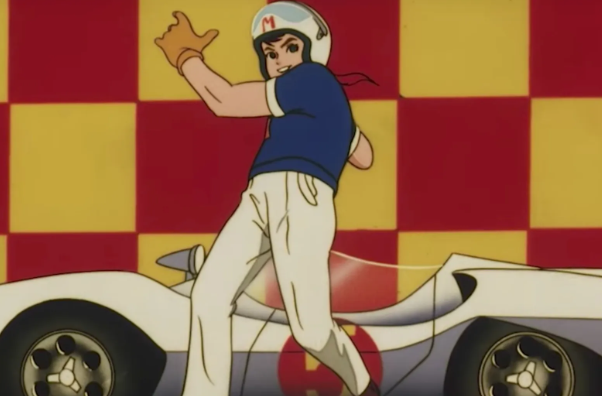
The roar of a high-octane engine, the screech of tires on a hairpin turn, and the iconic silhouette of a sleek white car with a crimson “M” on its hood—these elements defined a generation of television. For many, Speed Racer was more than just a cartoon; it was an introduction to a world of high-stakes drama, futuristic technology, and a rhythmic, fast-paced storytelling style that felt entirely alien to the Western world at the time. It wasn’t just a show about racing; it was a symphony of motion and emotion that captured the imagination of millions.
When the series first crossed the ocean, it brought with it a visual language that would eventually change the face of global media. Known in its homeland as Mach GoGoGo, the series was a pioneer in the “trans-Pacific” exchange of pop culture. It offered a blend of James Bond-style gadgetry and classic soap opera family dynamics, all wrapped in a vibrant, primary-colored aesthetic. To understand the true impact of this legendary franchise, we have to look under the hood and examine the fascinating details that made it a permanent fixture in the pantheon of animation.
1. The Mach 5 Gadgets Were Inspired by James Bond and Elvis Presley
The Mach 5 is arguably the most famous fictional car in history, and its creation was no accident. The creator of the series, Tatsuo Yoshida, was a massive fan of Western cinema. He specifically drew inspiration from two disparate but equally powerful icons: James Bond and Elvis Presley. The idea for a car packed with hidden gadgets came directly from the modified Aston Martin DB5 featured in Goldfinger. Yoshida wanted his hero to have a vehicle that could solve any problem, whether it was underwater travel or cutting through a dense forest.
The Elvis influence was more personal to the character of Speed himself. In the film Viva Las Vegas, Elvis played a racing driver, and his aesthetic—the neckerchief, the sleek hair, and the youthful bravado—became the visual blueprint for Speed Racer. This fusion of British spy sophistication and American rock-and-roll energy resulted in a hero and a vehicle that felt both familiar and revolutionary. The seven buttons on the Mach 5’s steering wheel (labeled A through G) became legendary, representing everything from “Auto Jacks” to the “Gia-Robot” homing pigeon. This level of tactical detail in a vehicle was unprecedented in animation, turning the car itself into a primary character with its own set of “superpowers.”
2. The Cultural Translation of the “M” and the Number 5
One of the most persistent misunderstandings among Western fans concerns the prominent “M” on the hood of the Mach 5. In the English-speaking world, many assumed it stood for “Mach” or perhaps “Meteors,” the family’s racing team. However, in the original Japanese context, the “M” stands for Mifune. The protagonist’s name in the original version is Go Mifune, named as a tribute to the legendary Japanese actor Toshiro Mifune, who was famous for his roles in Samurai cinema.
Similarly, the number “5” on the side of the car carries a clever double meaning. In Japanese, the word for the number five is “Go.” Therefore, when the car is seen on screen, it is a visual pun: “Go Mifune” and “Mach Go.” Even the title Mach GoGoGo is a triple pun, referring to the protagonist’s name, the number of the car, and the English word “Go!” as an encouragement to speed. When the show was localized for international audiences, these linguistic layers were lost, but the iconic nature of the design was so strong that it didn’t matter. The “M” simply became a symbol of speed and excellence, proving that great design can transcend cultural and linguistic barriers.
3. The Birth of the “Fast-Talking” Anime Dubbing Style
If you’ve ever watched the classic English dub of the show, you likely noticed the frantic, breathless pace of the dialogue. This wasn’t a stylistic choice made for the sake of excitement; it was a matter of technical necessity. The original Japanese dialogue was often written with many syllables, and the animation was timed to those specific mouth movements. When the American producers, led by Peter Fernandez, wrote the English scripts, they found that they had to cram a massive amount of information into very short windows of “lip flaps.”
To match the animation, the voice actors had to speak at a rapid-fire pace, often omitting pauses and adding signature filler words like “uh-huh” and “ha-ha” to keep the flow going. Peter Fernandez, who voiced both Speed and Racer X, became a master at this “narrative gymnastics.” This frantic delivery unintentionally became one of the show’s most endearing and recognizable traits. It gave the series an energetic, caffeinated feel that matched the high-speed action on the track. This dubbing style laid the groundwork for how anime would be localized for decades, establishing a precedent for maintaining the original visual timing at all costs.
4. Racer X and the Archetype of the Tragic Older Brother
One of the most compelling storylines in the series involves the mysterious Racer X, the masked driver who serves as both a rival and a secret guardian to Speed. Long before “secret identities” and “long-lost siblings” became standard tropes in animated dramas, the saga of Kenichi Mifune (known as Rex Racer in the West) provided a surprisingly emotional backbone to the show. Rex fled the family home years earlier after a falling out with his father, Pops Racer, over a racing accident, vowing to become the greatest driver in the world.
Racer X represents the “Masked Hero” archetype, a figure who must sacrifice his personal happiness and family connection for a greater cause—in this case, working as a secret agent to stop international crime. The dramatic tension of Speed constantly trying to prove himself to Racer X, unaware that he is competing against his own brother, added a layer of “soap opera” depth that was rare for a show aimed at younger audiences. It taught viewers about the complexities of family pride, forgiveness, and the heavy burden of secrets. Racer X was so popular that he frequently overshadowed the main protagonist in fan polls, embodying a cool, detached competence that every viewer aspired to.
5. Tatsuo Yoshida’s Vision: From Manga to Global Phenomenon
Before it was a television sensation, the story began as a manga (comic book) titled Pilot No. 1. The creator, Tatsuo Yoshida, was a visionary who co-founded Tatsunoko Production, a studio that would go on to create some of the most influential anime in history. Yoshida’s art style was distinct; it leaned away from the traditional, simplified “big eyes” look that was starting to dominate the medium and instead favored a more muscular, cinematic, and Western-influenced aesthetic.
Yoshida’s goal was to create stories that could appeal to a global market, long before “globalization” was a common concept in the entertainment industry. He focused on universal themes: the bond of family, the thrill of competition, and the battle between good and evil. His attention to detail regarding mechanical designs—engines, chassis, and tools—reflected a personal fascination with the burgeoning car culture of the mid-20th century. By grounding the fantastical gadgets of the Mach 5 in a world that felt visually “real” and gritty, Yoshida ensured that his creation would have a lasting impact far beyond the pages of a comic book or the flickering screen of a 60s television set.
6. The “Mammoth Car” and the Scale of Animated Villainy
In the world of this series, the villains were often as memorable as the heroes. Perhaps the most famous antagonist was not a person, but a vehicle: The Mammoth Car. Appearing in a two-part episode, this behemoth was a 200-yard-long red truck designed to smuggle stolen gold. It was a rolling fortress, capable of crushing anything in its path, and its sheer scale forced Speed to use every ounce of his wit and every gadget in the Mach 5 to survive.
The Mammoth Car represented a shift in the stakes of the series. It wasn’t just about winning a race; it was about David versus Goliath. The episodes featuring the Mammoth Car are often cited by fans as the pinnacle of the series’ creativity. The villainous “Cruncher Block” and his henchmen utilized the massive vehicle as a weapon of terror, highlighting the show’s recurring theme of “technology gone wrong.” The imagery of the giant, metallic beast roaring through the countryside remains one of the most vivid examples of how the show used scale and visual intimidation to create genuine suspense, proving that in animation, the only limit to a villain’s power is the artist’s imagination.
7. The Revolutionary Use of Visual Language and Speed Lines
The series was a masterclass in “limited animation,” a technique where only certain parts of the frame move to save time and budget. To compensate for the lack of fluid motion, the artists developed a brilliant visual shorthand to convey speed and intensity. This included the heavy use of “speed lines”—streaks of color and ink that filled the background to make a stationary car look like it was traveling at 200 miles per hour.
Another iconic visual trick was the “sliding background,” where a character would remain centered in the frame while a panoramic landscape zipped behind them. They also pioneered the use of extreme close-ups on eyes to convey shock or determination, a technique that has since become a staple of the anime genre. These stylistic choices weren’t just cost-cutting measures; they created a unique, high-energy aesthetic that emphasized the psychological state of the drivers. It turned every race into a mental battle, where the environment itself seemed to warp and bend under the pressure of the Mach 5’s velocity.
8. The Secret Agent Subplot and International Espionage
While the primary focus of the show was racing, it frequently veered into the territory of international espionage. This was a reflection of the global obsession with spy thrillers during the era of its creation. Speed often found himself entangled with criminal syndicates, corrupt governments, and mad scientists who wanted to use racing as a cover for their nefarious plans.
This “spy-fi” element gave the show a broader appeal than a standard sports cartoon. Speed wasn’t just an athlete; he was an accidental operative who had to navigate a world of high-tech sabotage and political intrigue. This often involved the Mach 5’s “G” button, which released a robotic homing pigeon capable of carrying messages or filming enemy activities. By blending the world of professional racing with the world of secret agents, the show offered a variety of storytelling possibilities that kept the formula fresh. It allowed for exotic locales and a rotating cast of villains, making the “World Grand Prix” feel like a truly global event with stakes that affected the entire world.
9. The Importance of Spritle and Chim-Chim for Comic Relief
Every great drama needs a release valve, and for this series, that role was filled by Speed’s younger brother, Spritle, and his pet chimpanzee, Chim-Chim. Often found hiding in the trunk of the Mach 5, this duo provided a lighthearted counterpoint to the life-or-death stakes of the races. Their antics usually involved candy, slingshots, and a level of bravery that bordered on the absurd.
However, Spritle and Chim-Chim served a deeper narrative purpose. They represented the “audience surrogate” for the younger viewers at home. Through their eyes, the dangerous world of professional racing was an exciting playground. Furthermore, they often played crucial roles in the plot, discovering hidden bombs or overhearing the villains’ secrets from their hiding places in the trunk. Their presence ensured that the show remained a family affair, balancing the gritty rivalry between Speed and Racer X with moments of genuine whimsy. The bond between the boy and his monkey became one of the most enduring images of the show, proving that even in a world of high-tech machines, the most important element was human (and primate) connection.
10. A Lasting Legacy: From the Wachowskis to Modern Racing Games
The influence of this 1960s classic is impossible to overstate. It served as the gateway for anime to enter the Western mainstream, paving the way for everything from Robotech to Dragon Ball Z. Decades after its debut, its DNA can be found in the hyper-kinetic visual style of modern action films. Most notably, the Wachowski sisters (directors of The Matrix) brought the series to life in a stylized live-action film that sought to replicate the “impossible” physics and vibrant colors of the original animation.
Beyond film, the series’ impact is felt deeply in the world of video games. The concept of “combat racing”—using gadgets and weapons during a high-speed chase—is the foundation for entire genres, from Mario Kart to F-Zero. The Mach 5 itself remains a design icon, frequently referenced in automotive concept art and pop culture parodies. It remains a testament to the power of a simple idea: a boy, a car, and a dream. As long as there are people who feel the “need for speed,” the legend of the Mach 5 and the family that drove it will continue to roar down the track of our collective memory.
Further Reading
- Speed Racer: The Official 50th Anniversary Guide by Elizabeth Moran and Kevin McKeever
- The Anime Encyclopedia: A Century of Japanese Animation by Jonathan Clements and Helen McCarthy
- Mach GoGoGo: The Complete Guide to the Classic Series by Tatsuo Yoshida (Collected Manga Volumes)
- Watching Anime, Reading Manga: 25 Years of Essays and Reviews by Fred Patten
- 10 Things You Should Know About Foghorn Leghorn – Looney Tunes
- 10 Futurama TV SHOW Facts That Still Hold Up
- 10 Things You Should Know About Speedy Gonzales – Looney Tunes
- 10 Things You Should Know About Yosemite Sam – Looney Tunes
- 10 Things You Should Know About The Looney Tunes
- 10 Things You Should Know About Road Runner – Looney Tunes
- 10 Things You Should Know About Wile E. Coyote – Looney Tunes
- 10 Things You Should Know About Tweety Pie – Looney Tunes
- 10 Things You Should Know About Sylvester The Cat – Looney Tunes
- 10 Things You Should Know About Porky Pig – Looney Tunes



