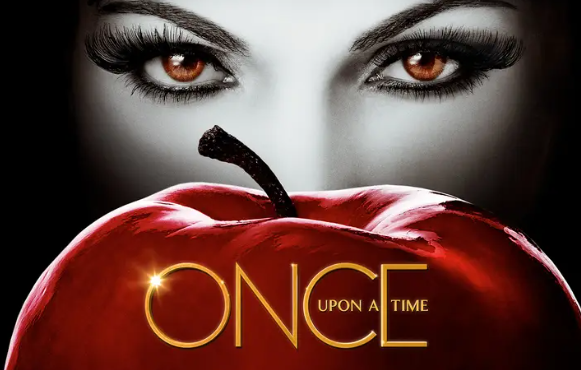
Imagine a world where the legends of your childhood are not just stories, but memories stripped away by a vengeful curse. For seven seasons, Once Upon a Time invited viewers into a tapestry of magic, where the lines between “hero” and “villain” were as blurred as the morning fog over a Maine harbor. This wasn’t just a show about fairy tales; it was a sophisticated reimagining of folklore that blended modern-day mystery with high-fantasy epic.
The creation of the “Whoniverse” of fairy tales—often called the “Once-verse”—required a monumental effort of world-building. From the physical streets of a real fishing village to the intricate threads of a leather doublet, every detail was designed to make the impossible feel tactile. Whether you are a “Dearie” who has watched every episode or a newcomer just discovering the “Savior,” understanding the mechanics behind this universe is key to appreciating its legacy. Here are the ten essential facts that built the world of Once Upon a Time.
1. The “Lost” DNA of the Narrative Structure
The world of Once Upon a Time was forged in the writers’ room of another television titan: Lost. Creators Edward Kitsis and Adam Horowitz were key writers on the island-based drama, and they brought its signature non-linear storytelling to the Enchanted Forest. The “flashback” structure wasn’t just a gimmick; it was the foundation of the show’s world-building. By juxtaposing a character’s cursed life in Storybrooke with their original life in the fairy tale realm, the show created a “dual-identity” mystery. This allowed for a level of character depth rarely seen in fantasy. We didn’t just see the Evil Queen being mean; we saw the heartbreak that curdled her soul. This structure also allowed the creators to hide “Easter eggs” throughout the series, rewarding eagle-eyed fans with subtle connections that tied the two worlds together, creating a sense of a pre-destined, clockwork universe where every action had a magical consequence.
2. The Savior: A New Archetype for a Modern World
The central pillar of the show’s world is Emma Swan, “The Savior.” Unlike the traditional “damsel in distress” archetypes of classic Disney films, Emma was designed to be a gritty, realistic protagonist. A bail bondsperson with a history in the foster care system, she represented the “Land Without Magic.” Her skepticism was the audience’s entry point; her refusal to believe in fairy tales provided the tension that fueled the entire first arc. Emma’s status as the daughter of Snow White and Prince Charming was a bold subversion—making her the same age as her parents due to the temporal mechanics of the curse. This created a unique family dynamic that grounded the high-stakes magic in relatable emotional conflict. Emma wasn’t just fighting dragons; she was fighting her own abandonment issues, proving that in this world, emotional truth is the most powerful magic of all.
3. Steveston: The Physical Soul of Storybrooke
To bring the “cursed” town of Storybrooke to life, the production didn’t build a set on a backlot; they took over the real-life village of Steveston in Richmond, British Columbia. This seaside community provided the “maritime Maine” aesthetic that defined the show’s real-world identity. The iconic Moncton Street became the heart of the show, with real businesses being transformed into Granny’s Diner, Mr. Gold’s Pawn Shop, and the Storybrooke Library. This physical location gave the show a sense of “lived-in” reality. When characters walked down the street, they were walking on real pavement under a real sky. Fans could (and still do) visit these locations, finding that the “magic” was rooted in a very real, welcoming community. This choice helped bridge the gap between the fantastical elements and the mundane, making the presence of a magic clock tower feel like something that could actually happen in a quiet coastal town.
4. The Alligator Skin: Designing Rumplestiltskin
One of the most complex characters in the world was Rumplestiltskin, played by Robert Carlyle. His visual design was a masterclass in world-building through costume. Costume designer Eduardo Castro wanted “The Dark One” to look like a creature of the earth—creepy, ancient, and dangerous. The breakthrough for his look came when a costume assistant brought in real baby alligator skins. These were used to create the scaled, leather doublet that became Rumple’s signature outfit. To complete the look, Carlyle underwent hours of makeup to have his skin painted with metallic beads and sand, giving him a reptilian, “otherworldly” sheen. This tactile design reflected the character’s internal corruption; as he took on more power, he looked less like a man and more like a monster. This commitment to visual storytelling ensured that Rumplestiltskin wasn’t just a villain, but a physical manifestation of the dark side of magic.
5. The Prince Charming Pilot Twist
In the original draft of the pilot script, Prince Charming was supposed to die. Creators Kitsis and Horowitz initially felt that his death would provide the ultimate stakes for Snow White and Emma. However, as they began to map out the world, they realized that the show was fundamentally about “hope.” Killing off the avatar of “True Love” felt like the wrong note to start on. They decided to put him in a coma instead, creating the character of “David Nolan” in Storybrooke. This change was crucial for the world-building because it established the show’s core philosophy: that even in the darkest curse, the potential for a “Happy Ending” remains. By keeping Charming alive, the show was able to explore the “Prince of the People” trope, showing a hero who gets his hands dirty and works for his family, rather than just waiting for a magical solution.
6. The Legend of the Dark One’s Dagger
Every great fantasy world needs a powerful “MacGuffin,” and in Once Upon a Time, that is the Dark One’s Dagger. This prop is a literal manifestation of the show’s rules regarding power and control. Whoever holds the dagger controls the Dark One; to become the Dark One, one must kill the previous holder with that very blade. This artifact built a “legacy of darkness” into the show’s lore, allowing the writers to trace the history of magic back through centuries of previous Dark Ones. The dagger represented the burden of power and the theme of “all magic comes with a price.” It wasn’t just a weapon; it was a curse in physical form. By centering so much of the plot on this single object, the creators gave the world a sense of historical weight and established the “laws of physics” for magic that governed the characters’ choices.
7. The Evil Queen’s “Human” Motivation
Regina Mills, the Evil Queen, is perhaps the most nuanced “villain” in modern television, and her character arc was a primary engine for the show’s world-building. Rather than being evil for the sake of it, Regina was motivated by a very human emotion: grief. Her hatred for Snow White was rooted in a perceived betrayal that led to the death of her true love, Daniel. This “origin of evil” changed the world from a simple “Good vs. Evil” dichotomy into a complex web of tragedy and consequence. Regina’s journey toward redemption—driven largely by her love for her adopted son, Henry—became the show’s emotional backbone. It taught the audience that in the Enchanted Forest, villains are often just heroes whose stories haven’t been finished yet. This humanization of the antagonist allowed the show to explore themes of forgiveness and the possibility of change.
8. Real-Life True Love: The “Gosh” Connection
Sometimes, the chemistry that builds a world happens off-camera. Ginnifer Goodwin (Snow White) and Josh Dallas (Prince Charming) famously fell in love during the filming of the first season. Their real-life romance, often referred to by fans as “Gosh,” infused their on-screen performances with an authenticity that couldn’t be faked. This real-life “True Love” became a meta-layer of the show’s world-building. When Snow and Charming spoke about finding each other “against all odds,” the audience could feel the genuine connection between the actors. This bond helped sell the show’s most difficult premise: that “True Love’s Kiss” is a tangible, magical force that can break any curse. Their marriage and children in the real world became a beautiful parallel to the “Happily Ever After” they were fighting for in the show, making the stakes feel even more significant for the fanbase.
9. The Disney Influence vs. Darker Folklore
While the show is an ABC production (and thus had access to Disney’s vast library of characters), the creators were careful to blend Disney’s versions with the original, darker folklore of the Brothers Grimm and Hans Christian Andersen. For example, while the show utilized Disney-style visuals for characters like Belle or Maleficent, it also leaned into the grittier elements of the original tales. Snow White was a “bandit” living in the woods, skilled with a bow and arrow; Little Red Riding Hood was actually the wolf herself. This “remixing” of sources built a world that felt both familiar and unpredictable. It allowed the show to comment on the nature of storytelling itself, suggesting that the “happy endings” we see in movies are often sanitized versions of much more complicated, human struggles. This duality is what made the “Once-verse” feel more “real” than a standard fairy tale.
10. The Iconic Props: The Book of Fairy Tales
The most important object in the entire series is the “Once Upon a Time” book held by Henry. This book is the “Bible” of the show’s world-building, acting as a bridge between the magic of the past and the reality of the present. Inside its pages are the stories of everyone in Storybrooke, serving as a reminder of who they truly are. The book represents the power of belief—the idea that stories have the power to change reality. Henry’s unwavering faith in the book is what eventually awakens Emma and breaks the curse. As the series progressed, the mystery of the “Author” of the book became a major plot point, exploring the idea of free will versus destiny. The book wasn’t just a prop; it was a character in its own right, symbolizing the show’s ultimate message: that we are all the authors of our own stories, and it’s never too late to change the ending.
Further Reading
- Alias Hook by Lisa Jensen
- Stealing Snow by Danielle Paige
- Heartless by Marissa Meyer
- Cinder by Marissa Meyer
- The Book of Lost Things by John Connolly
- 10 The Crown TV SHOW Facts That Keep People Watching

- 10 Futurama TV SHOW Facts That Still Hold Up

- 10 Things You Should Know About Speedy Gonzales – Looney Tunes

- 10 Things You Should Know About Yosemite Sam – Looney Tunes

- 10 Things You Should Know About Starlight From The Boys TV Show