
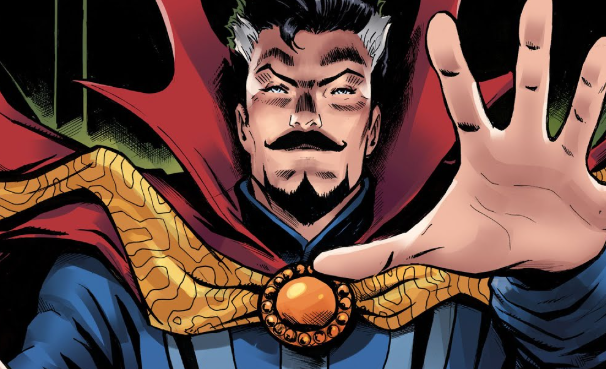
In a universe teeming with gamma-irradiated monsters, armored geniuses, and literal gods of thunder, one man stands as the final line of defense against the inexplicable: Doctor Stephen Strange. He is the Sorcerer Supreme, the guardian of our dimension, and a hero whose battlefield isn’t just the streets of New York, but the very fabric of reality itself.
To the uninitiated, Doctor Strange might seem like a figure of pure fantasy, but his story is deeply rooted in the very human struggle of ego, loss, and redemption. He is a character that bridges the gap between the surgical precision of modern science and the infinite, mind-bending possibilities of ancient magic. Whether he is banishing a demon to the Dark Dimension or consulting with the Avengers on a multiversal threat, Strange remains one of the most complex and visually stunning icons in the Marvel pantheon. Here are ten pillars of the Doctor Strange mythos that define the Master of the Mystic Arts.
1. The Arrogant Origins of a Brilliant Surgeon
Before he was a master of magic, Stephen Strange was a master of the scalpel. As one of the world’s most renowned neurosurgeons, he possessed a talent that was matched only by his staggering arrogance. Strange was not a man driven by a desire to save lives; he was driven by wealth, prestige, and the thrill of solving “unsolvable” medical cases. He was a celebrity in the medical world, a man who viewed his patients as puzzles rather than people, and whose hands were his most prized possessions.
This background is crucial because it provides the moral foundation for his later transformation. Strange’s journey is one of the “fallen idol.” When he eventually loses the one thing that gave him value—his steady hands—his entire world collapses. This origin story serves as a cautionary tale about the fragility of ego. It establishes that his power as a sorcerer didn’t come from a lab accident or a cosmic birthright, but from the wreckage of a life built on vanity. To become the Sorcerer Supreme, he first had to learn what it meant to be a humble student.
2. The Tragic Accident that Shattered a Legacy
The turning point in Stephen Strange’s life was a horrific car accident that effectively ended his surgical career. While driving his high-performance vehicle—a symbol of his status and speed—he crashed, suffering severe nerve damage to both hands. For a neurosurgeon, even a slight tremor is a professional death sentence; for Strange, the damage was catastrophic. He could no longer hold a needle, let alone perform the intricate brain surgeries that had made him famous.
Desperate to restore his former life, Strange spent his entire fortune on every experimental treatment and rumored cure he could find. He went from a wealthy socialite to a broken, desperate man living on the fringes of society. This “search for a cure” is what eventually led him to the peaks of the Himalayas. It is a vital part of his character arc because it highlights his tenacity—even when motivated by selfishness, Strange was a man who would traverse the globe to find an answer. This obsession with “fixing” himself was the bridge that led him from the world of science into the world of the supernatural.
3. Seeking Enlightenment at Kamar-Taj
Following whispers of a legendary healer, Strange traveled to Kamar-Taj to seek out a figure known only as the Ancient One. Expecting a medical miracle, Strange was instead met with a philosophy that challenged his materialistic worldview. The Ancient One refused to heal Strange’s hands through surgery or medicine, offering instead to teach him how to heal his spirit and tap into the mystical energies of the universe.
Strange’s time at Kamar-Taj was a rigorous period of physical and mental deconstruction. He had to unlearn everything he thought he knew about the laws of physics. Under the Ancient One’s tutelage, he practiced meditation, studied ancient Sanskrit scrolls, and learned to channel the “Seven Rings of Raggadorr” and other eldritch energies. This period transformed him from a man who only believed in what he could see under a microscope into a visionary who understood that the physical world is just one layer of a vast, multidimensional onion. Kamar-Taj remains his spiritual home, a place of peace and infinite knowledge hidden away from the prying eyes of the modern world.
4. The Weight of the Sorcerer Supreme Title
While many individuals practice magic in the Marvel Universe, there is only one Sorcerer Supreme of Earth’s dimension. This title is not just an honorific; it is a sacred duty. As Sorcerer Supreme, Doctor Strange is the primary protector of Earth against mystical and extradimensional threats. He is the “point man” for reality itself, tasked with ensuring that entities from other planes of existence do not invade or consume our world.
The title carries immense power but also a heavy burden. The Sorcerer Supreme has access to the most potent spells and artifacts in existence, but they must also make the “hard choices” that other heroes might shrink from. Strange often has to operate in the shadows, fighting wars that the public never even knows are happening. If he fails, it isn’t just a city that falls—it’s the entire dimension. This role often isolates him from his peers in the superhero community, as his priorities are often more cosmic and abstract than theirs. He is the ultimate gatekeeper, standing between humanity and the “unspeakable horrors” that lurk in the dark.
5. 177A Bleecker Street: The Sanctum Sanctorum
Every hero has a headquarters, but few are as lively or dangerous as the Sanctum Sanctorum. Located at 177A Bleecker Street in New York’s Greenwich Village, the Sanctum is a three-story Victorian brownstone that serves as Strange’s residence and personal library. On the outside, it looks like an ordinary, if slightly eccentric, building. On the inside, it is a shifting labyrinth of rooms that often defy the laws of space and time.
The Sanctum is built on a “focal point” of mystical energy, making it a natural lightning rod for supernatural activity. It houses a vast collection of occult artifacts, cursed books, and portals to other dimensions. The building is protected by powerful wards, but it is not uncommon for a “wrong turn” in the hallway to lead a visitor to a different planet or a prehistoric jungle. The most iconic feature is the Window of the Worlds, a large circular window with the Seal of the Vishanti, which acts as a protective barrier. Living in the Sanctum means being a constant neighbor to the infinite, making Strange’s home life just as adventurous as his superheroics.
6. Artifacts of Power: The Cloak and the Eye
Doctor Strange is rarely seen without his two signature tools: the Cloak of Levitation and the Eye of Agamotto. The Cloak is much more than a piece of clothing; it is a sentient, ancient relic that has a mind of its own. It allows Strange to fly and hover, but it also acts as an extra pair of hands in combat, capable of wrapping up enemies or protecting Strange from incoming attacks. Its loyalty to Strange is absolute, often acting on instinct to save him before he even realizes he’s in danger.
The Eye of Agamotto, housed in a golden amulet around his neck, is a powerful talisman that reveals the “truth” in all situations. It can emit an all-revealing light that dispels illusions, looks into the past, and even weakens evil mystical beings. In the comics, the Eye is one of the three primary artifacts of the Vishanti (the trio of god-like entities that empower the Sorcerer Supreme). Together, these items make Strange a formidable opponent. They are symbols of his authority and tools that extend his reach far beyond what any human magician could achieve on their own.
7. The Loyal Companion: Wong and the Masters
No man is an island, not even a Sorcerer Supreme. Strange’s most enduring ally is Wong, a master of martial arts and an expert in occult lore. In the comics, Wong comes from a long line of servants to the Sorcerer Supreme, but his relationship with Strange has evolved into a deep, mutual partnership. Wong is the “anchor” to Strange’s “balloon,” handling the day-to-day operations of the Sanctum and providing the physical muscle when magic isn’t the answer.
Beyond Wong, Strange is often supported by the Masters of the Mystic Arts, a global network of sorcerers who guard various “Sanctums” around the world. He also has a complex relationship with Clea, a powerful sorceress from the Dark Dimension who became his apprentice and eventually his wife. These relationships humanize Strange. Despite his cosmic responsibilities, he relies on a small circle of trusted friends who understand the toll that magic takes on a person’s soul. They are the ones who remind him of the man he was—and the hero he has become.
8. Archenemies Across the Multiverse
The threats Doctor Strange faces are far beyond bank robbers or world-conquering tyrants. His archenemy is Dormammu, the ruler of the Dark Dimension. Dormammu is a being of pure mystical energy whose goal is to merge our world with his own hellish realm. Their battles are legendary, often settled through wit and clever “bargains” as much as magical fireballs.
Other recurring foes include Baron Mordo, a fellow student of the Ancient One who turned to the dark arts out of jealousy, and Nightmare, the ruler of the Dream Dimension who feeds on the fears of sleeping humans. These villains represent the “flip side” of Strange’s own journey. Mordo is what Strange could have become if he never lost his ego; Dormammu represents the raw, unbridled power that magic can offer those who abandon their humanity. By fighting these entities, Strange isn’t just defending Earth; he is constantly reaffirming his own commitment to using magic for the greater good rather than personal gain.
9. The Visual Splendor of the Psychedelic Era
One cannot discuss Doctor Strange without mentioning the incredible artistic legacy of the character. Created by Stan Lee and Steve Ditko, the early Doctor Strange stories were a radical departure from the standard “punch-em-up” superhero fare of the 1960s. Ditko’s art featured surreal landscapes, melting dimensions, and abstract shapes that looked more like an LSD trip than a comic book. This unique aesthetic made Doctor Strange a “cult favorite” among the counterculture movements of the era.
This visual style is essential because it defines how magic “looks” in the Marvel Universe. It isn’t just sparkles and light; it is a warping of geometry, a distortion of perspective, and a journey into the “impossible.” Even as different artists have taken over the title throughout the decades, the DNA of that psychedelic, mind-bending imagery remains. It reminds readers that when Doctor Strange enters the fray, the rules of reality no longer apply. The art style serves to emphasize the “strangeness” of the character, ensuring that his stories always feel distinct from the rest of the Marvel lineup.
10. The Non-Team: The Defenders and the Illuminati
While he is occasionally an Avenger, Doctor Strange is best known for his role in two of Marvel’s most unique groups: the Defenders and the Illuminati. The Defenders were originally a “non-team” consisting of Strange, the Hulk, Namor, and the Silver Surfer—four powerful outcasts who only gathered when the threat was too big for any one of them to handle. This group showcased Strange’s ability to lead even the most volatile and independent personalities.
The Illuminati, on the other hand, is a secret cabal of the world’s most influential leaders (including Iron Man, Mr. Fantastic, and Black Panther). Within this group, Strange serves as the “mystical conscience” and the expert on cosmic threats. His participation in the Illuminati highlights his strategic mind and his willingness to work in the shadows for the long-term survival of the human race. Whether he is acting as a “non-leader” of a ragtag group or a “secret puppet master” for the world’s safety, Strange’s team affiliations prove that he is a vital pillar of the Marvel heroic community, even if he prefers to stand slightly apart from the crowd.
Further Reading
- Doctor Strange: The Oath – Brian K. Vaughan & Marcos Martin
- Doctor Strange & Doctor Doom: Triumph and Torment – Roger Stern & Mike Mignola
- Doctor Strange: The Way of the Weird – Jason Aaron & Chris Bachalo
- Doctor Strange: Into Shamballa – J.M. DeMatteis & Dan Green
- 10 Things You Should Know About Kang the Conqueror – Marvel Comics

- 10 Things You Should Know About The Sentry – Marvel Comics

- 10 Things You Should Know About Starlight From The Boys TV Show

- 10 Things You Should Know About Ghost Rider – Marvel Comics

- DC Comics: 10 Essential Things to Know About Shazam




One response to “10 Things You Should Know About Doctor Strange – Marvel Comics”
[…] 10 Things You Should Know About Doctor Strange – Marvel Comics […]