
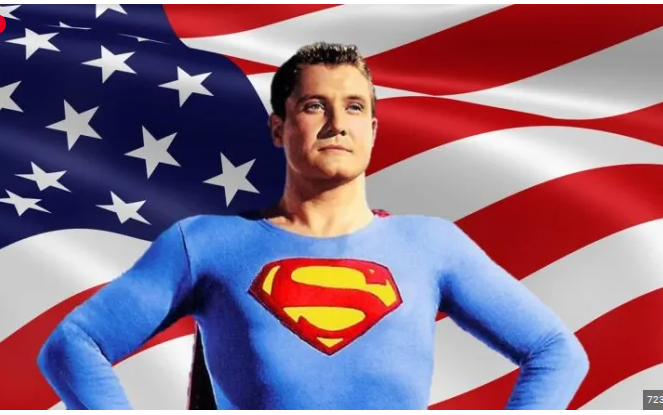
The image of a man in a red cape soaring through the clouds is more than just a cinematic visual; it is a global symbol of hope, justice, and the untapped potential within humanity. Since his inception in the pages of comic books, Superman has undergone a profound transformation through his various live-action iterations. Whether depicted on the silver screen in high-budget blockbusters or beamed into living rooms via serialized television, the Last Son of Krypton remains the definitive blueprint for the superhero genre.
The journey of Superman in live action is a fascinating study of cultural evolution and technological advancement. Each era has interpreted the character through its own lens, reflecting the societal values and anxieties of the time. From the earnest, patriotic champion of the mid-century to the complex, brooding deity of the modern age, the character of Clark Kent—and his powerful alter ego—has been played by a select group of actors who each left an indelible mark on the mythos. This guide explores the essential facets of the Superman franchise, uncovering the production hurdles, casting triumphs, and narrative shifts that have kept the Man of Steel flying for nearly a century.
1. The Super-Stakes of the “Superman Curse”
In Hollywood circles, few legends are as persistent or as somber as the “Superman Curse.” This urban legend suggests that playing the role of the Man of Steel brings misfortune to the actors and crew involved. The origins of this superstition are rooted in the tragic fates of the early pioneers. George Reeves, who portrayed the character in the first major television hit, met an untimely and controversial end that shocked the public. Years later, Christopher Reeve—the man who many believe defined the role for the blockbuster era—suffered a life-altering accident that paralyzed him, though he became a real-life hero through his advocacy for spinal cord research.
While skeptics argue that these events are merely tragic coincidences in a high-pressure industry, the “curse” has shaped how the role is perceived by upcoming talent. Some actors have flourished, while others found their careers plateauing after hanging up the cape, struggling to break free from the character’s immense shadow. Regardless of whether one believes in the supernatural, the legend highlights the psychological weight of the character. Taking on the mantle of Superman is not just a job; it is the adoption of a global icon, carrying with it a level of scrutiny and expectation that can be as heavy as the world itself.
10 Things You Should Know About Superman – DC Comics
2. Christopher Reeve: The Physicality of Two Men
When audiences think of the definitive Superman, the image of Christopher Reeve usually comes to mind. His 1978 debut was a watershed moment for cinema, famously marketed with the tagline, “You will believe a man can fly.” However, the true brilliance of his performance lay not in the flying sequences, but in the subtle physical distinction he made between Clark Kent and Superman. Reeve did not just change clothes; he transformed his entire skeletal structure. As Clark, he slumped his shoulders, tilted his head, and spoke with a slightly higher, more hesitant pitch.
As Superman, his posture became authoritative, his chest broadened, and his voice resonated with a calm, paternal confidence. This physical “acting-out” of the secret identity remains the gold standard for superhero performances. It provided a believable reason why the citizens of Metropolis failed to recognize that the bumbling reporter for the Daily Planet was actually the savior of the world. By treating Clark Kent as a performance by Kal-El, rather than the other way around, Reeve grounded the fantasy in a relatable human reality. His legacy continues to influence every actor who attempts to balance the dual nature of the character, emphasizing that the “man” is just as important as the “super.”
3. The “No Tights, No Flights” Rule of Smallville
The television landscape changed significantly with the arrival of Smallville, a series that focused exclusively on the formative years of Clark Kent before he became a costumed hero. The show’s creators famously instituted a strict “No Tights, No Flights” rule. This meant that for ten seasons, the audience watched Clark navigate high school, romance, and the discovery of his powers without ever seeing him in the iconic red-and-blue suit or seeing him take full flight until the very final moments of the series finale.
This constraint was a creative masterstroke. It forced the writers to focus on character development and the emotional burden of being “different.” By delaying the spectacle of the superhero, the show allowed viewers to form a deep bond with the teenage Clark as he grappled with his Kryptonian heritage and his human upbringing. It reinvented the mythos as a coming-of-age drama, proving that the character’s appeal was not dependent on his costume but on his heart. The show also pioneered the “super-powered procedural” format, paving the way for the modern explosion of superhero television by demonstrating that audiences were willing to follow a hero’s journey for hundreds of hours of serialized storytelling.
4. Decoding the “S” Shield as a Cultural Symbol
The “S” on Superman’s chest is one of the most recognized symbols in the world, second only to certain religious icons. However, its meaning has evolved significantly across different live-action iterations. In the earliest films and serials, the “S” simply stood for “Superman,” a name given to him by the public. But as the lore expanded, particularly in the later films and modern television shows, the shield was reimagined as a Kryptonian crest. In this context, it is the family seal of the House of El, representing the Kryptonian word for “Hope.”
This change added a layer of profound depth to the costume. It transformed the suit from a mere uniform into a sacred heirloom, a physical link to a lost civilization. The design of the shield has also subtly changed to reflect the tone of each production. The vibrant, primary-colored emblem of the mid-century gave way to textured, metallic, and more complex designs in the 21st century. This visual evolution mirrors the character’s journey from a simple “Big Blue Boy Scout” to a complex cultural savior. Every time a new actor puts on the shield, they are wearing a symbol that carries the collective hopes of two worlds: the dying Krypton and the evolving Earth.
5. Lois & Clark and the Romantic Heart of the Myth
While many Superman stories focus on cosmic battles and feats of strength, the 1990s television series Lois & Clark: The New Adventures of Superman shifted the focus toward the romantic and domestic life of the protagonist. This iteration leaned heavily into the “Clark Kent is the real person, Superman is the disguise” philosophy. The show functioned more as a romantic comedy-drama than a traditional action series, placing the relationship between the two lead reporters at the very center of the narrative.
By humanizing Clark in this way, the show explored the challenges of maintaining a marriage and a career while also being a god-like being. It emphasized that Clark’s greatest strength was not his heat vision or invulnerability, but his capacity for love and his commitment to his partner. This approach resonated with a broad audience, including many who were not traditional comic book fans. It highlighted that the “Super” family is the ultimate anchor for the character, providing a sense of normalcy and stakes that make his battles feel personal rather than just world-ending. The chemistry between the leads in this era remains a benchmark for how to successfully blend romance with the superhero genre.
6. The Modern Deconstruction of the Man of Steel
In the contemporary era of cinema, the character has undergone a significant deconstruction. Modern filmmakers moved away from the bright, optimistic tone of previous decades to explore the darker, more philosophical implications of a “god” living among men. This version of Superman is often depicted as an outsider struggling with the weight of his responsibilities and the fear that humanity might not be ready for him. The visual style reflects this change, utilizing a more muted color palette and epic, operatic action sequences that emphasize the destructive power of Kryptonian beings.
This “deconstructionist” approach asks difficult questions: What does it mean to be a savior in a cynical world? Can a being with absolute power truly be “good”? While this darker tone was a departure from the traditional portrayal, it allowed for a deeper exploration of the character’s internal life. It presented a Superman who had to choose to be a hero in the face of doubt and hostility, rather than one who was born into the role with effortless grace. This era of the franchise has sparked intense debate among fans, proving that the character remains a vital and provocative subject for artistic interpretation even after nearly a century of stories.
7. The Legend of the “Lost” Superman Projects
Not every Superman project makes it to the screen, and the history of the franchise is littered with fascinating “what-ifs.” Perhaps the most famous is a mid-90s project that would have featured a uniquely eccentric actor in the lead role, directed by a visionary known for his gothic aesthetic. This film, which progressed deep into pre-production with costume tests and script drafts, would have drastically reimagined the character, featuring a suit that looked more like an alien organism than traditional fabric.
Other stalled projects include proposed crossovers and sequels that were cancelled due to studio restructuring or creative differences. These “lost” films have become a subculture of their own, with fans obsessively studying leaked concept art and script treatments. They serve as a reminder of how difficult it is to capture the “magic” of the character on film. These failed attempts highlight that the successful Superman productions are the result of a delicate alignment of script, casting, and timing. The fact that the character survives these production “hells” and always returns to the screen is a testament to the enduring power of the icon.
8. The Black-and-White Serials: Where the Legend Began
To truly appreciate the scale of modern Superman films, one must look back at the original live-action serials of the 1940s. These were the first times audiences saw a real person take on the role of Clark Kent. Because technology was limited, the “flying” sequences were often achieved by transitioning the live-action actor into a crudely drawn animation for the flight scenes. While it might look primitive to modern eyes, at the time, it was groundbreaking entertainment that captivated a generation.
These serials established the core tropes that are still used today: the phone booth costume changes, the “look up in the sky” dialogue, and the perpetual conflict with villainous masterminds. The lead actor of this era brought a stocky, athletic energy to the role, portraying Superman as a direct action hero who solved problems with his fists and his wits. These early productions were the bridge between the comic strips and the blockbuster movies, proving that the character had the “legs” to survive in a visual medium. They laid the foundation upon which every subsequent skyscraper of the Superman franchise was built.
9. The Sonic Soul: John Williams and the Power of Theme
It is impossible to discuss the Superman movies without mentioning the music. The theme composed by John Williams for the 1978 film is widely considered one of the greatest pieces of cinematic music ever written. The triumphant brass fanfare and the soaring strings do not just accompany the action; they define the character. The music captures the “heroic” ideal, evoking a sense of nobility, flight, and moral clarity.
Even as different composers have taken over for sequels and reboots, the “Williams Theme” remains the sonic DNA of the franchise. Some modern versions have opted for a more ambient, percussion-heavy sound to match a grittier visual style, while others have incorporated motifs from the original to evoke nostalgia. The music serves as a shorthand for the character’s values. When that specific sequence of notes plays, the audience knows that the hero has arrived, and hope has been restored. It is a rare example of a musical score becoming just as iconic as the character’s costume or his powers, providing the “soul” for the Man of Steel across various media.
10. The Multiverse and the Infinite Supermen
In the modern landscape of television and film, the concept of the “Multiverse” has allowed multiple versions of Superman to exist simultaneously. Audiences can now follow a seasoned, fatherly Superman on one television network while watching a younger, developing version in another film series. This has led to incredible crossover events where different actors who have played the role in the past return to portray “alternate” versions of the character.
This development is significant because it honors the history of the franchise while allowing for new interpretations. It acknowledges that there is no “single” way to play Superman. One version can be a symbol of 1950s Americana, while another can be a modern-day immigrant story, and yet another can be a tragic figure from a ruined world. This flexibility ensures the franchise’s longevity. By embracing the Multiverse, the character is no longer tied to one specific timeline or one specific tone, allowing the legend of the Man of Steel to be endlessly reinvented for whatever challenges the future may hold.
Further Reading
- Superman: The High-Flying History of America’s Most Enduring Hero by Larry Tye
- The Krypton Companion by Michael Eury
- Superheroes!: Capes, Cowls, and the Creation of Comic Book Culture by Laurence Maslon and Michael Kantor
- Voices from Krypton: The Unofficial 75-Year Retrospective by Edward Gross
- DC Comics: 10 Essential Things to Know About Shazam
- DC Comics: 10 Essential Things to Know About Sinestro
- DC Comics: 10 Essential Things to Know About The Reverse Flash
- DC Comics: 10 Essential Things to Know About Hal Jordan
- DC Comics: 10 Essential Things to Know About The Green Lanterns
- DC Comics: 10 Essential Things to Know About Mr Freeze
- 10 Defining Chapters in the History of DC Comics Explained
- DC Comics: 10 Essential Things to Know About Poison Ivy
- DC Comics: 10 Essential Things to Know About Bane
- DC Comics: 10 Essential Things to Know About Two-Face



