
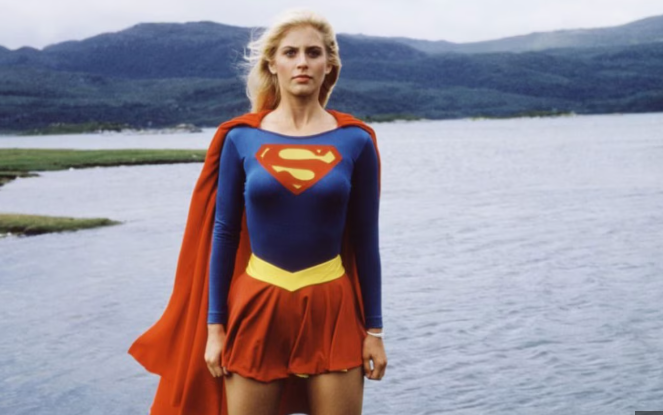
When people think of the golden age of superhero cinema, the mind often drifts toward the primary-colored majesty of the Man of Steel. However, soaring just behind him was a groundbreaking, if often misunderstood, venture into the cosmic and the magical: the 1984 Supergirl film. As the first major theatrical release centered on a female superhero, this movie occupies a unique place in cinematic history. It was a bold attempt to expand a burgeoning universe, blending the high-stakes science fiction of Krypton with a whimsical, almost fairy-tale-like sense of adventure. For enthusiasts and newcomers alike, understanding the DNA of this film is essential for grasping how the superhero genre evolved into the titan it is today.
The story of Kara Zor-El’s journey from Argo City to Earth is more than just a spin-off; it is a testament to the ambition of early comic book adaptations. From its star-studded cast to its legendary production hurdles, the film remains a fascinating artifact of its era. Whether you are a die-hard DC fan or a casual viewer curious about the history of the Girl of Steel, these ten pillars of production and lore provide a comprehensive look at a film that dared to fly solo.
10 Things You Should Know About Superman – DC Comics
1. The Search for a New Icon: Casting Helen Slater
The search for the perfect Kara Zor-El was a monumental task for the producers, who were looking to replicate the lightning-in-a-bottle success they found with Christopher Reeve. They needed someone who possessed an ethereal, otherworldly beauty but could also project the strength and innocence required for the role. After an exhaustive talent search that saw hundreds of actresses audition, the role went to a then-unknown teenager named Helen Slater. At just eighteen years old, Slater stepped into the boots of a legend, bringing a physical grace and a sincere, wide-eyed wonder to the character that remains the definitive portrayal for many fans.
Slater’s preparation for the role was intense. She underwent months of physical training to ensure she could handle the grueling wirework required for the flying sequences. Beyond the physical, she captured the essence of a girl thrust into a strange new world, balancing the character’s immense power with a relatable vulnerability. Her performance was widely cited as the heart of the film, providing a grounded center to a plot that often veered into the fantastical. Even as the film faced various criticisms, Slater’s debut was almost universally praised as a star-making turn that honored the spirit of the comics while adding a layer of cinematic gravitas.
2. The Superman Connection: A Shared Cinematic Universe
Long before the concept of a “cinematic universe” became a standard industry term, the creators of Supergirl were working to build a cohesive world connected to the iconic Superman films. The movie was produced by the Salkinds, the same team behind the first three Superman movies, and it was designed to exist within that same continuity. This is most evident through the presence of Marc McClure, who reprised his role as Jimmy Olsen. His appearance served as a vital bridge between the two franchises, giving the audience a familiar face and confirming that Kara’s adventures were taking place in the same world as her famous cousin’s.
Originally, the connection was intended to be even stronger. Early drafts of the script included a significant cameo by Christopher Reeve himself. The plan was for Superman to meet his cousin and perhaps provide a “passing of the torch” moment. However, due to scheduling conflicts or creative shifts, Reeve ultimately did not appear. To explain his absence, the film mentions that Superman is off on a mission in a distant galaxy. Despite his physical absence, the shadow of the Man of Steel looms large, from the familiar “S” shield to the orchestral echoes of the legendary John Williams theme, ensuring that Kara felt like a true part of the Kryptonian legacy.
3. A Masterclass in Villainy: Faye Dunaway as Selena
Every great hero needs a formidable foil, and Supergirl delivered one of the most eccentric and memorable villains of the era in Selena, played by the legendary Faye Dunaway. Moving away from the typical world-conquering megalomaniacs, Selena was a self-styled witch living in an abandoned carnival, obsessed with obtaining the Omegahedron to bolster her magical powers. Dunaway, an Academy Award winner, brought a high-camp, theatrical energy to the role that stood in stark contrast to the earnestness of Kara. Her performance is a masterclass in scenery-chewing, providing the film with a unique flavor that blended superhero action with dark fantasy.
Selena was not just a physical threat; she represented a psychological and magical challenge that the Man of Steel had rarely faced. Her motivation—fueled by a mix of vanity, romantic jealousy, and a thirst for power—made her a volatile and unpredictable antagonist. Supported by her bumbling sidekick Nigel, played by Peter Cook, Selena’s lair and her various hexes added a gothic, almost “wicked witch” vibe to the movie. This pivot toward the supernatural was a bold choice for a comic book movie at the time, showcasing that Kryptonians were vulnerable to more than just radioactive rocks; they were also susceptible to the whims of ancient magic.
4. The Quest for the Omegahedron: A High-Stakes Plot
At the center of the film’s narrative is a powerful Kryptonian artifact known as the Omegahedron. In the floating sanctuary of Argo City, this device serves as the primary power source that sustains the city’s life-support systems. When the device is accidentally lost and drifts toward Earth, Kara Zor-El takes it upon herself to retrieve it, knowing that without it, her home and her people will perish. This “MacGuffin” drives the entire plot, providing a ticking clock and a clear motivation for Kara’s arrival on Earth. It also creates the central conflict when the artifact falls into the hands of the sorceress Selena.
The Omegahedron is more than just a battery; it is a symbol of Kryptonian ingenuity and the fragility of their surviving culture. Its presence on Earth allows the film to explore the intersection of advanced alien technology and human mysticism. As Selena uses the device to create mountains out of molehills and summon demonic “shadow monsters,” the audience sees the potential danger of Kryptonian power in the wrong hands. For Kara, the mission is deeply personal. It isn’t just about saving the world she lands on, but about preserving the last remnant of her heritage. This adds an emotional weight to her journey that elevates the film beyond a simple “fish out of water” story.
5. The Grandeur of Argo City: A Visual Marvel
One of the most impressive aspects of the production is the realization of Argo City. While previous films had shown the icy, crystalline structures of Krypton, Supergirl offered a different aesthetic for this surviving pocket of Kryptonian life. Argo City was depicted as a surreal, bubble-like environment hidden within the “Inner Space.” The production design utilized translucent materials, glowing lights, and flowing fabrics to create a sense of advanced, peaceful civilization. It felt distinct from the coldness of the Fortress of Solitude, feeling more like a living, breathing community where the arts and sciences flourished side-by-side.
The sequences set in Argo City feature Peter O’Toole as Zaltar, a whimsical and rebellious artist who inadvertently causes the loss of the Omegahedron. O’Toole brings a Shakespearean weight to the role, acting as a mentor figure for Kara. The visual effects used to create the city—ranging from intricate miniatures to clever use of lighting—were cutting-edge for the period. Seeing Kara leave this shimmering sanctuary to enter the dark, gritty reality of Earth serves as a powerful visual metaphor for her coming-of-age. The contrast between the high-concept design of Argo City and the rural American landscape defines the film’s unique visual identity.
6. Practical Magic: The Art of Pre-CGI Flight
In an era before digital effects became the industry standard, creating a convincing flying superhero required a blend of ingenuity, bravery, and mechanical precision. To make Helen Slater soar, the production utilized complex wire rigs and front-projection systems. These techniques allowed the actress to be suspended in the air while backgrounds were projected behind her, creating the illusion of high-speed travel. The “flying” in this film has a certain tactile weight to it; you can see the effort in the poses and the way the cape catches the wind, which provides a sense of physical reality that is often lost in modern computer-generated imagery.
The stunt team, led by seasoned professionals who had worked on the Superman films, pushed the boundaries of what was possible with practical effects. Slater herself performed many of her own stunts, spending hours harnessed in painful rigs to achieve the perfect shot. This dedication is evident in the film’s climax, where Kara must battle Selena’s magical constructs in a storm-tossed landscape. The integration of physical sets, wind machines, and wirework creates a visceral experience. For enthusiasts of film history, Supergirl serves as a brilliant showcase of the peak of practical superhero effects, capturing a sense of wonder through manual craftsmanship.
7. The Musical Legacy of Jerry Goldsmith
While John Williams provided the definitive theme for the Man of Steel, the task of scoring the Girl of Steel’s adventures fell to another legendary composer: Jerry Goldsmith. Goldsmith was known for his versatility, having scored everything from Alien to Star Trek, and he brought a distinct, heroic energy to this project. His main theme for Supergirl is a soaring, brassy anthem that captures the optimism and strength of the character. It is often cited by film music aficionados as one of the best superhero scores ever written, standing tall alongside the most iconic themes in the genre.
Goldsmith’s score does more than just provide a heroic motif; it also leans into the film’s magical and whimsical elements. For the character of Selena and the scenes involving the Omegahedron, Goldsmith utilized synthesizers and eerie orchestral arrangements to create an atmosphere of supernatural menace. This blend of traditional orchestral power and experimental electronic sounds perfectly mirrored the film’s unique mix of sci-fi and fantasy. Even as the film’s reputation fluctuated over the years, the soundtrack remained a gold standard, often being released in expanded editions for collectors who recognize its brilliance as a standalone piece of art.
8. Multiple Visions: The Many Cuts of the Film
The version of Supergirl you see today may vary significantly depending on which edition you are watching. Like many ambitious productions of its time, the film underwent significant editing and re-shaping before it hit theaters. The initial international release was longer than the version seen in North American cinemas. Producers and distributors often cut scenes to maintain a faster pace or to reduce the runtime for more frequent theater screenings. This led to a theatrical version that many felt was disjointed, with certain character motivations and plot points feeling rushed or omitted entirely.
In later years, a “Director’s Cut” or “International Version” gained popularity among fans and collectors. These versions restore nearly twenty minutes of footage, including more development of life in Argo City and additional interactions between Kara and the supporting cast. These restored scenes provide a much-needed breath of life into the narrative, allowing the stakes to feel more earned and the characters more three-dimensional. The existence of these multiple cuts makes the film a fascinating study in how editing can change the tone and reception of a story, proving that there is often a much deeper movie hidden beneath the surface of a theatrical edit.
9. The Phantom Zone and the Darker Side of DC
While the film has many lighthearted and “campy” moments, it also delves into some surprisingly dark territory, particularly when Kara is banished to the Phantom Zone. In the DC mythos, the Phantom Zone is a desolate “zone of silence” used as a prison for Kryptonian criminals. In the movie, it is depicted as a bleak, rocky wasteland shrouded in perpetual twilight. This sequence is a turning point for Kara; stripped of her powers and her yellow sun-derived strength, she must rely on her innate courage and the guidance of a fallen mentor to escape.
This portrayal of the Phantom Zone adds a layer of peril and grit to the film. It challenges the protagonist in a way that physical combat cannot, forcing her to face despair and isolation. The visual design of the Zone, with its jagged peaks and swirling mists, evokes a sense of cosmic horror. It serves as a reminder that the universe of the Girl of Steel is not just filled with bright cities and heroic deeds, but also with ancient, unforgiving voids. This exploration of the darker corners of the DC universe helped set the stage for later adaptations that would lean more heavily into the “sci-fi” and “cosmic” aspects of the lore.
10. A Trailblazing Legacy for Heroines
When looking at the landscape of modern cinema, it is impossible to ignore the path that Supergirl blazed. At a time when the “action hero” was almost exclusively male, a movie featuring a female lead who was physically more powerful than any man on the planet was a revolutionary concept. While it may not have been a massive box office hit upon its initial release, it proved that there was an audience for female-led superhero stories and that the character of Kara Zor-El could carry a film on her own merits without being a mere sidekick.
Over the decades, the film has gained a significant cult following. It is celebrated for its earnestness, its imaginative production design, and Helen Slater’s definitive performance. It served as a vital bridge between the comic book page and the screen, demonstrating that the themes of hope, identity, and sacrifice are universal, regardless of the hero’s gender. Today, the Girl of Steel is a staple of both the small and large screen, but it all traces back to this 1984 venture. The film stands as a bold, colorful, and essential chapter in the history of superhero cinema, reminding us that sometimes, you have to take a leap of faith to learn how to fly.
Further Reading
- The Making of Supergirl by B.B. Hiller
- DC Comics: Sixty Years of the World’s Favorite Comic Book Heroes by Les Daniels
- The Superhero Book: The Ultimate Encyclopedia of Comic-Book Icons and Hollywood Heroes by Gina Misiroglu
- The Art of Superman and Supergirl by various authors
- Podcast Episode: Classic Films And Horror Icons
- 10 The Exorcist III (1990) Movie Facts You Didn’t Know
- 10 Scream (1996) Movie Facts That Changed Horror
- 10 The Lion King (1994) Facts That Made It Iconic – Classic Movie
- 10 Forrest Gump (1994) Facts That Make It Timeless – Classic Movie
- 10 Fight Club (1999) Facts That Still Surprise Fans – Classic Movie
- 10 Hostel (2005) Movie Facts That Shocked Viewers
- 10 Avatar (2009) Facts That Changed Cinema – Classic Movie
- 10 Hellraiser (1987) Movie Facts That Built Its Legacy
- 10 Jurassic Park (1993) Facts That Changed Movies Forever – Classic Movie



