
Indiana Jones and the Temple of Doom is often remembered for its frantic mine-cart chase, creepy palace rituals, and darker tone. But beneath the adventure lies a film packed with clever storytelling choices, behind-the-scenes movie facts, and hidden details that reveal just how ambitious the production really was. Whether you are a casual fan or a longtime admirer of the fedora-wearing archaeologist, this movie rewards repeat viewings. Every set, prop, performance beat, and action sequence seems to hide another layer.
What makes Temple of Doom especially interesting is that it does not simply repeat the formula of its predecessor. It takes risks. It shifts tone. It leans into pulp serial energy while also exploring fear, greed, courage, and redemption. That boldness is one reason the film continues to spark debate and fascination.
Here are ten things worth knowing about this unforgettable chapter in the Indiana Jones series.
1. Temple of Doom Is Actually a Prequel to Raiders of the Lost Ark
One of the most surprising Indiana Jones and the Temple of Doom facts is that the story takes place before Raiders of the Lost Ark, even though many viewers assume it is a straightforward sequel. This detail gives the movie a different meaning when you look at Indiana Jones as a character. He begins this story more cynical, more self-interested, and less emotionally open than the hero many people remember from later adventures.
That choice helps explain his attitude in the opening stretch of the film. He is bargaining for wealth, trying to secure a valuable artifact, and operating with more swagger than idealism. As the story unfolds, however, he is pushed into becoming a protector rather than a treasure hunter. By the end, he has moved away from selfish motives and toward a more heroic identity.
This prequel structure also gives the filmmakers room to experiment. They did not need to escalate everything directly from Raiders. Instead, they could show an earlier version of Indy still growing into the man audiences associate with the franchise. It is a subtle storytelling trick, but it adds depth to the movie’s emotional arc. What looks like nonstop action is also a character study in disguise.
2. The Opening Musical Number Feels Like a Different Movie on Purpose
The dazzling nightclub opening is one of the boldest tonal swings in the franchise. Before the snakes, caves, and cult horror begin, the film launches with a glamorous musical sequence featuring Willie Scott performing in a glittering Shanghai club. It feels playful, colorful, and almost old-Hollywood in style. That contrast is not accidental. It is designed to pull viewers into a world of spectacle before the story drops them into chaos.
This scene announces that Temple of Doom will be louder, stranger, and more theatrical than people expect. The polished dance number also gives Willie an entrance that immediately defines her. She is not introduced as a hardened adventurer. She enters as a performer built for bright lights, soft fabrics, and civilized comforts. That makes her later jungle ordeal even funnier and more effective.
The sequence also reflects the film’s love of classic pulp entertainment. Indiana Jones movies have always borrowed from old serials, but this opening adds nightclub glamour and screwball energy to the mix. Instead of starting in a dusty ruin, the film begins with champagne, music, and danger hidden beneath elegance. It tells the audience right away that this adventure will be a roller coaster with sharp tonal turns, not a simple repeat of what came before.
3. Short Round Is More Than Comic Relief
It is easy to remember Short Round for his one-liners, fast driving, and infectious confidence, but reducing him to comic relief misses how important he is to the film. He acts as Indiana Jones’s emotional anchor. He is brave, loyal, observant, and often more grounded than the adults around him. In many scenes, he becomes the audience’s point of identification because he responds with a mix of fear, wonder, and determination.
More importantly, Short Round reveals a gentler side of Indy. Their relationship gives the film warmth in the middle of all its darkness. Indiana Jones is not just rescuing strangers or chasing artifacts here; he is mentoring a child who clearly trusts him completely. That makes the stakes feel more personal. When danger closes in, the threat is no longer abstract.
Short Round also plays a direct role in the plot instead of tagging along passively. He helps with escapes, notices clues, and even becomes central to breaking Indy out of the story’s most disturbing turn. That is a smart writing choice. He matters.
For many viewers, Short Round is one of the most memorable parts of the film because he adds heart. Adventure movies often rely on sidekicks, but few sidekicks feel this capable or this emotionally necessary.
4. The Movie’s Dark Tone Is a Defining Feature, Not a Flaw
Among Temple of Doom hidden details, the biggest may be tonal rather than visual: the film is deliberately darker than other Indiana Jones adventures. It dives into fear, menace, and nightmare imagery with unusual commitment. There are scenes of ritual sacrifice, underground prisons, child enslavement, and psychological corruption. That intensity is exactly why the movie stands apart.
Rather than being a simple treasure hunt, this story feels like a descent into a nightmare world. The palace above ground is elegant and controlled, but below it lies a hidden realm of chains, fire, and cruelty. That contrast makes the film more unsettling. It suggests that evil can wear a polished face while hiding something monstrous underneath.
This darker atmosphere also raises the emotional payoff. When Indy fights back, rescues the children, and rejects the forces trying to control him, the victory feels earned. He is not just outrunning traps; he is climbing out of literal and symbolic darkness.
The movie’s tone has divided audiences for years, but that risk-taking is part of its identity. It is the Indiana Jones film most willing to flirt with horror, and that choice gives it a powerful mood all its own. Even people who rank it lower often admit it is unforgettable.
5. The Palace Feast Scene Uses Disgust as Storytelling
The infamous banquet scene is remembered for eyeball soup, chilled monkey brains, and other shocking dishes, but it does more than generate gross-out reactions. It works as a deliberate storytelling device. The meal signals that the heroes have entered a place where social rules are distorted and appearances cannot be trusted.
On the surface, the palace presents itself as sophisticated. The guests are greeted formally. The setting looks luxurious. But the food immediately tells another story. Everything feels wrong. The feast becomes a warning disguised as hospitality. It unsettles both the characters and the audience, preparing everyone for the revelation that something far more sinister is hidden inside the palace walls.
The scene also cleverly deepens the dynamic between the main trio. Willie reacts with horror and revulsion, which fits her character perfectly. Short Round is wary but game. Indy tries to remain composed, though even he seems increasingly suspicious. Their responses help sharpen who they are.
What makes the sequence memorable is that it turns dinner into suspense. Instead of using action to create dread, the film uses etiquette, decor, and bizarre cuisine. It is one of the clearest examples of how Temple of Doom blends adventure with dark comedy. The scene is outrageous, but it is also carefully designed to make the audience feel trapped in a world where normal expectations no longer apply.
6. The Mine Cart Chase Is a Masterclass in Escalation
Few action scenes in adventure cinema are as beloved as the mine-cart chase, and for good reason. It is not just fast. It is structured brilliantly. The sequence keeps escalating in a way that feels both chaotic and precise. Every turn adds a new layer of danger: collapsing tracks, sharp curves, pursuing enemies, and the constant threat of flying off the rails.
What makes it work so well is clarity. Even at high speed, the audience always understands where the heroes are, what they are trying to avoid, and why the stakes matter. That is harder to achieve than it looks. Great action depends on geography, rhythm, and visual storytelling, and this sequence excels at all three.
The scene also reflects the film’s larger style. It takes an old serial concept and executes it with huge technical ambition. The mine-cart chase feels playful and terrifying at the same time, which is exactly the sweet spot Indiana Jones movies aim for.
There is also a character dimension to the action. Indy is determined, Short Round is fearless, and Willie is thrown into pure survival mode. Their personalities continue to bounce off one another even in the middle of mechanical chaos.
It is easy to remember the chase as pure spectacle, but it is really a lesson in how to build momentum, tension, and character all at once.
7. The Bridge Scene Reveals Indy at His Most Desperate and Brilliant
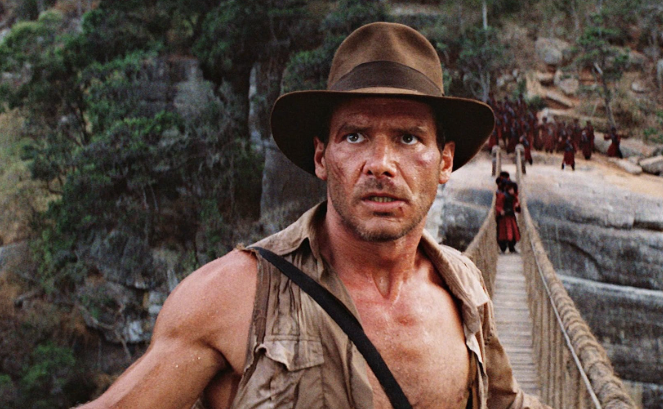
The rope bridge climax is one of the defining moments in the entire Indiana Jones series because it captures the character’s daring in its purest form. Faced with armed enemies, a deadly drop, and almost no good options, Indy chooses the kind of solution that seems insane until it works. That is classic Indiana Jones: intelligence under pressure mixed with reckless courage.
This moment also shows how the film understands suspense. The bridge is visually simple compared with underground temples and giant action machinery, yet it feels enormous. Every plank, rope, and sway adds tension. The danger is immediate and easy to understand. You do not need a complicated setup to feel the peril.
On a deeper level, the scene symbolizes the film’s moral conflict. Indy is no longer chasing fortune. He is risking everything to stop evil and protect others. The man who began the story bargaining for a diamond is now willing to gamble his own life for justice. That transformation gives the climax emotional force.
The bridge sequence also works because it lets the hero win through nerve rather than brute force. He is outnumbered, but he refuses to think like his enemies. He changes the rules of the confrontation. That is one reason the scene stays so vivid in memory. It is thrilling, but it is also the clearest expression of who Indiana Jones is when cornered.
8. Willie Scott Is Designed as the Opposite of Marion Ravenwood
A fascinating hidden detail in Indiana Jones and the Temple of Doom is how intentionally Willie Scott contrasts with Marion Ravenwood from Raiders of the Lost Ark. Rather than giving Indy another rough-and-ready partner who matches his toughness, the film presents someone with entirely different instincts. Willie is glamorous, expressive, easily horrified, and thoroughly unprepared for jungle survival.
That contrast changes the energy of the movie. Willie brings comedy, friction, and vulnerability. Her reactions amplify the danger because she responds the way many ordinary people might if dropped into this nightmare. She screams, complains, panics, and resists discomfort at every turn. In another film, that might feel one-note, but here it serves a structural purpose. She makes the adventure feel less controlled and more chaotic.
Willie also highlights the film’s screwball side. Her banter with Indy keeps scenes lively, and her exasperation offsets his rugged confidence. Together they create a different romantic dynamic than the one fans saw before.
Most importantly, Willie helps the film avoid becoming too self-serious. In a story filled with child slavery, cult rituals, and subterranean horror, the movie needs bursts of comic tension. Willie provides that release. She is not meant to be another Marion. She is meant to throw the whole adventure off balance, and that makes her more interesting than she often gets credit for.
9. The Movie Helped Define the “Adventure as Ordeal” Formula
Many adventure films send heroes on quests. Temple of Doom sends its heroes through an ordeal. That difference matters. The movie is less about solving a mystery piece by piece and more about surviving a cascade of escalating physical and moral tests. Once the characters leave the nightclub world behind, the film keeps stripping away comfort, control, and certainty.
They crash from the sky. They wander through a dangerous landscape. They enter a village in crisis. They are lured into a palace with hidden evil. Then the story plunges underground into a world of fire, chains, and oppression. It is a descent pattern, and many later adventure movies borrowed from it. The heroes are not simply uncovering clues; they are being tested at every level.
This structure gives the film unusual intensity. It feels relentless because it is built that way. Every victory is temporary, every safe place is suspect, and every escape leads to a new danger. That design keeps the pace urgent.
The result is a movie that feels almost physical to watch. You do not just observe the adventure; you endure it with the characters. That is one reason Temple of Doom remains so memorable. It is not merely a quest story. It is a survival story wrapped in pulp spectacle, and that formula has influenced countless adventure tales ever since.
10. The Film Endures Because It Is Bold, Messy, and Unforgettable
Some movies are easy to admire and easy to forget. Indiana Jones and the Temple of Doom is not one of them. Its greatest strength may be that it commits so fully to its own personality. It is darker, stranger, louder, and more chaotic than many fans expect from an Indiana Jones film, and that very unpredictability keeps it alive in popular culture.
The movie contains images that stick: the opening performance, the ominous palace corridors, the glowing ritual chamber, the mine carts, the bridge hanging over a ravine. It is packed with moments that feel larger than life. Even its tonal swings, which some viewers find jarring, are part of what makes it memorable. It can go from comedy to horror to romance to action in a heartbeat.
That boldness also invites reappraisal. Viewers often discover more to appreciate with time: the prequel angle, Indy’s character arc, Short Round’s importance, the careful escalation of the action, and the way the film commits to mood. It may not be the smoothest entry in the series, but smoothness is overrated when compared with imagination.
In the end, Temple of Doom survives because it dares to be distinctive. It does not play it safe. It takes the adventure formula and drives it straight into nightmare territory, creating a film that fans still debate, quote, and revisit.
Further Reading
The Complete Making of Indiana Jones — J. W. Rinzler
Indiana Jones: The Ultimate Guide — James Luceno
George Lucas: A Life — Brian Jay Jones
Steven Spielberg: A Biography — Joseph McBride
Easy Riders, Raging Bulls — Peter Biskind
- 10 Twin Peaks TV SHOW Facts That Still Puzzle Fans
- 10 Poltergeist (1982) Movie Facts That Are Still Creepy
- 10 Hellraiser (1987) Movie Facts That Built Its Legacy
- 10 Essential Facts About Predator (1987) – Movie Facts
- 10 Things You Probably Didn’t Know About The Actor Eddie Murphy
- 10 Things You Should Know About Ferris Bueller’s Day Off (1986) – Movie Facts and Hidden Details
- 10 Things You Should Know About Beverly Hills Cop (1984) – Movie Facts and Hidden Details
- 10 Things You Should Know About Ghostbusters 2 (1989) – Movie Facts and Hidden Details
- 10 Things You Should Know About The Thing (1982) – Movie Facts and Hidden Details
- Stranger Things – Season 5 Full Recap and Spoilers Explained



