
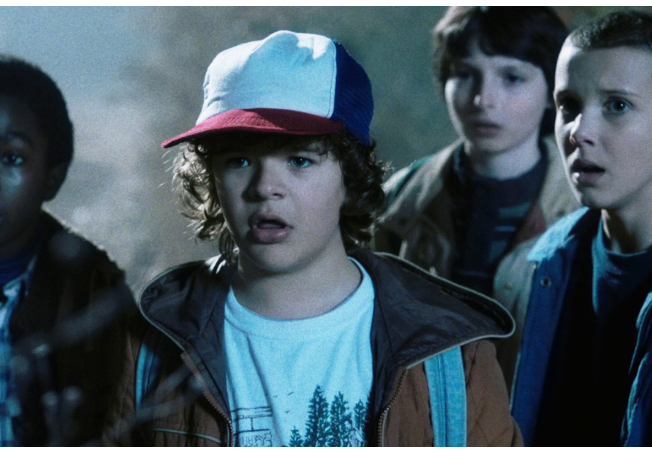
Welcome to the Upside Down: 10 Mind-Bending Truths and Plot Twists from Stranger Things Season 1
The air is thick with the scent of pine and mystery in a small, sleepy town where nothing ever happens—until everything does. When a young boy vanishes into thin air on a dark road, it sets off a chain reaction that unearths government conspiracies, supernatural horrors, and a young girl with terrifying powers. This is a world where the monsters under the bed are real, and the only thing more dangerous than the dark is the people trying to hide what’s in it.
This story serves as a quintessential love letter to classic investigative thrillers and coming-of-age adventures. It balances the nostalgia of walkie-talkies and basement role-playing games with a visceral, modern dread. To truly grasp the weight of what happened in that first chapter of the Hawkins saga, one must look beyond the surface of the missing persons posters. From the psychic trauma of a secret lab to the bioluminescent rot of a parallel dimension, these ten pillars explain the core mysteries and emotional beats that defined the beginning of this modern phenomenon.
1. The Catalyst: The Vanishing of Will Byers
The story ignites with a moment of pure, relatable terror. Four friends—Mike, Dustin, Lucas, and Will—finish a grueling session of a tabletop fantasy game, only for the youngest and most sensitive among them to disappear on the ride home. Will Byers doesn’t just go missing; he is hunted. The opening sequence establishes that the threat isn’t a person, but something that can bypass locks and manipulate electricity.
This disappearance is the engine that drives every other plot thread. It forces a grieving, frantic mother to confront the skepticism of her community and pushes three young boys into the role of investigators. Will’s absence creates a “void” in the town, a metaphorical and literal hole that the rest of the characters must fill. It introduces the theme of the “invisible child”—the one who is often overlooked but becomes the center of a cosmic struggle. The sheer helplessness of Will’s situation, trapped in a cold, decaying version of his own home, sets a high-stakes tone that persists throughout the narrative.
2. The Arrival of “Eleven” and the Psychic Bridge
While one boy leaves the board, a mysterious girl enters. Known only by the number tattooed on her arm, Eleven (or “El”) is a buzz-cut enigma with an affinity for frozen waffles and a terrifying command over telekinesis. Escaping from a nearby government facility, she is found by Will’s friends. She isn’t just a runaway; she is the “missing link” between our world and the supernatural threat.
Eleven’s character arc is the emotional heart of the story. She represents the trauma of exploitation, having been raised in a sterile laboratory under the watchful, cold eye of a man she calls “Papa.” Her psychic abilities—her “magic”—are shown to be a physical burden, causing her nose to bleed and leaving her exhausted. She is the bridge. Without her, the boys would never have known that Will was still alive, and without her, the door to the other side would never have been opened. Her journey from a weapon of the state to a child with friends is the most poignant transformation in the early chapters of this saga.
3. The Mythology of the Upside Down
Perhaps the most iconic element of the story is the introduction of the “Upside Down.” It is a dark, parallel dimension that mirrors our own but is shrouded in a permanent, sickly blue twilight and covered in pulsating, organic growth. It smells of sulfur and decay, and the air is filled with floating, ash-like spores. This isn’t just a “dark world”; it is a predatory ecosystem.
The concept is explained through the analogy of “The Acrobat and the Flea.” While humans are like acrobats walking on a tightrope (the three dimensions we perceive), a flea can crawl on the side or the underside of the rope. Eleven’s psychic trauma acted as a bridge, a “tear” in the fabric of space-time that allowed the flea’s world to bleed into ours. The Upside Down is a reflection of Hawkins, Indiana, but one devoid of life and warmth, serving as a physical manifestation of the characters’ fears and the literal home of the monster hunting the town’s children.
4. Joyce Byers and the Language of Light
While the police search the woods, Will’s mother, Joyce, discovers a way to communicate that defies logic. She realizes that her son can manipulate the electromagnetic fields in their home from the other side. This leads to the legendary “Christmas light” sequence, where she paints an alphabet on her wall and strings up lights to let Will spell out messages from the void.
This plot point is more than just a visual gimmick; it is a testament to the power of maternal intuition. Joyce is initially dismissed as having a mental breakdown, but her refusal to accept the “official” narrative is what ultimately saves her son. The lights symbolize hope in the literal darkness of the Upside Down. When Will spells out “R-U-N,” it transitions the story from a mystery into a survival horror. It also establishes the “rules” of the supernatural: the two worlds are layered on top of one another, and while they cannot see each other, they can “touch” through energy and vibration.
5. The Sinister Secrets of Hawkins National Laboratory
Every horror story needs a human villain, and in this case, it is the Department of Energy—specifically, Hawkins National Laboratory. Under the direction of Dr. Martin Brenner, the lab was conducting “Project MKUltra” style experiments, using sensory deprivation and hallucinogens to expand human psychic potential. Their goal was Cold War espionage, but they inadvertently discovered something far more dangerous.
The lab represents the “cold” side of the story—the clinical, detached cruelty of a government that views children as assets. Dr. Brenner, or “Papa,” is a master of psychological manipulation, using a soft voice and a fatherly facade to mask his horrific treatment of Eleven. The lab is the source of the “Gate,” the bleeding wound in the basement that allows the monster into our world. The mystery of the lab’s true purpose and the extent of their cover-up—including planting a fake body to mimic Will Byers—adds a layer of political thriller to the supernatural chaos.
6. The Tragedy of Barb Holland and the “Forgotten” Victim
One of the most discussed plot points involves Nancy Wheeler’s best friend, Barb. While Nancy is distracted by her burgeoning romance with the popular Steve Harrington, Barb is snatched from the edge of a swimming pool by the creature. Her death is swift and unceremonious, occurring in the lonely, cold confines of the Upside Down.
Barb’s fate serves a specific narrative purpose: it raises the stakes. While Will is a survivor, Barb’s death proves that the monster is lethal and that “plot armor” doesn’t protect everyone. However, her disappearance also highlights the town’s tunnel vision. Because she wasn’t a “star” child and because her disappearance was shadowed by the Byers case, she was largely ignored by the authorities. This sparked a massive cultural reaction among viewers, who identified with the “reliable friend” who was left behind. Her presence in the story is a reminder of the collateral damage caused by the collision of two worlds.
7. Chief Jim Hopper’s Path to Redemption
Chief Jim Hopper begins the story as a cynical, pill-popping lawman who just wants to be left alone. He is haunted by the loss of his own daughter to cancer years prior, a trauma that has left him emotionally numb. However, as he digs into the Byers case, his protective instincts are reignited. He stops being a small-town cop and starts being a relentless investigator.
Hopper’s arc is about a man finding a reason to care again. His daughter’s death made him a man who has nothing left to lose, which makes him the only person brave enough to break into a high-security government facility or cut open a “corpse” to find it filled with cotton. His partnership with Joyce Byers creates a bridge between the “logical” and “intuitive” worlds. By the end of the first chapter, Hopper has transformed from a bystander into a warrior, willing to make a deal with the “devils” at the lab just to bring a child home.
8. The Party: A Fellowship of Outsiders
The dynamic between Mike, Dustin, and Lucas provides the story’s levity and its moral compass. They view the unfolding events through the lens of their favorite game, Dungeons & Dragons. To them, Eleven is a “Mage,” the monster is a “Demogorgon,” and the parallel world is “The Vale of Shadows.” This framework isn’t just for fun; it is how they process the impossible.
Their friendship is tested by the arrival of Eleven. Lucas is skeptical and protective of the group’s safety, while Mike is drawn to Eleven’s vulnerability and strength. Dustin acts as the diplomat, keeping the peace with logic and humor. This “fellowship” represents the purity of childhood loyalty. While the adults are bogged down by grief and bureaucracy, the boys are the ones who use science (and a ham radio) to track down the truth. Their bond is the “protection spell” that keeps them safe when they are forced to confront horrors beyond their understanding.
9. The Evolution of the Teen Triangle
While the younger kids are playing detectives, the teenagers—Nancy, Jonathan, and Steve—undergo their own transformation. Nancy Wheeler starts as a studious girl-next-door but evolves into a monster hunter with a penchant for firearms. Jonathan Byers, the “creepy” loner with a camera, finds his courage in his love for his brother. Steve Harrington, the stereotypical “jock,” avoids his predictable path by showing genuine remorse and bravery.
Their story is about breaking out of the boxes society puts them in. By the climax, these three have formed an unlikely alliance, setting traps and fighting the Demogorgon in the Byers’ house. This subplot adds a “slasher film” energy to the series, focusing on physical preparation and direct confrontation. It also subverts expectations: the popular boy isn’t just a villain, the loner isn’t just a victim, and the girl isn’t just a damsel. They all become essential players in the defense of their town.
10. The Final Stand and the Egg Cliffhanger
The resolution of the first chapter is a bittersweet victory. In a final showdown at the middle school, Eleven uses every ounce of her strength to disintegrate the Demogorgon, vanishing along with it. Will is rescued from the Upside Down, but he is changed—coughing up a slug-like creature and seeing flashes of the dark dimension while standing in his own bathroom.
The “ending” isn’t an ending at all, but a transition. Will’s return to the dinner table seems like a happy conclusion, but the lingering presence of the rot inside him suggests that the “infection” of the Upside Down is ongoing. Furthermore, Chief Hopper is seen leaving food—specifically waffles—in a box in the woods, hinting that Eleven survived her sacrifice. The government’s presence remains a shadow over the town, and the “Gate” is still open. It leaves the audience with a haunting realization: they didn’t stop the evil; they only survived the first wave.
Further Reading
- Stranger Things: Worlds Turned Upside Down by Gina McIntyre (The official behind-the-scenes companion).
- The Body by Stephen King (A classic novella that heavily influenced the “kids on a journey” aspect of the show).
- Stranger Things: Suspicious Minds by Gwenda Bond (A prequel novel focusing on Eleven’s mother and the origins of the lab).
- Paper Girls by Brian K. Vaughan (A graphic novel series that captures a similar “kids versus the supernatural” vibe).
- 10 The Crown TV SHOW Facts That Keep People Watching
- 10 Futurama TV SHOW Facts That Still Hold Up
- 10 Things You Should Know About Speedy Gonzales – Looney Tunes
- 10 Things You Should Know About Yosemite Sam – Looney Tunes
- 10 Things You Should Know About Starlight From The Boys TV Show
- 10 Things You Should Know About Road Runner – Looney Tunes
- 10 Things You Should Know About Wile E. Coyote – Looney Tunes
- 10 Things You Should Know About Tweety Pie – Looney Tunes
- 10 Things You Should Know About Sylvester The Cat – Looney Tunes
- 10 Things You Should Know About Porky Pig – Looney Tunes



