
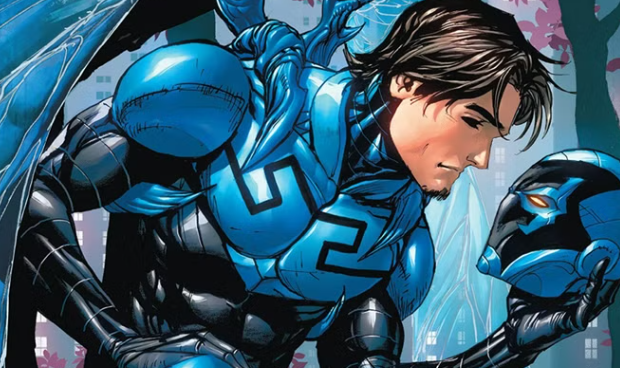
Beyond the Scarab: 10 Essential Facts Every Fan Needs to Know About Blue Beetle
In the vast, star-studded tapestry of the DC Universe, few heroes possess a history as rich, varied, and technically complex as Blue Beetle. Often overshadowed by the “Big Three” of Batman, Superman, and Wonder Woman, Blue Beetle represents something unique in comic book lore: a legacy that spans generations, genres, and even different publishing companies. Whether he is an archaeologist fueled by a mystical talisman, a billionaire inventor relying on his wits, or a teenager bonded to a piece of sentient alien weaponry, Blue Beetle remains a symbol of resilience and adaptation.
To understand Blue Beetle is to understand the evolution of the superhero genre itself. He has transitioned from the Golden Age of mystery-men to the Silver Age’s focus on gadgetry and science, finally landing in the modern era where legacy and identity take center stage. For beginners, the mantle can seem confusing—after all, three different men have worn the bug-themed costume. However, once you peel back the layers of the Scarab, you find a story about family, responsibility, and the terrifying, wonderful burden of power. This guide explores the essential components of the Blue Beetle mythos, ensuring you are fully equipped to appreciate one of DC’s most vibrant icons.
1. A Legacy of Three: The Men Behind the Mask
The Blue Beetle is not a single person, but a storied mantle passed down through three distinct individuals, each representing a different era of storytelling. The first was Dan Garrett, a Golden Age hero who originally gained powers from a special vitamin before the story was retconned to involve an ancient Egyptian scarab. He was a classic pulp adventurer, blending mysticism with crime-fighting. Following him was Ted Kord, a brilliant inventor and athlete who took up the name but was never able to make the Scarab work for him. Ted became the “everyman” hero, relying on high-tech gadgets and a sharp sense of humor.
The modern era belongs to Jaime Reyes, a teenager from El Paso, Texas. Jaime’s discovery of the Scarab changed the legacy forever, as the artifact finally revealed its true nature as a piece of extraterrestrial technology. While the three men are vastly different in their backgrounds and power sets, they are linked by a common thread: the desire to do good in a world filled with gods. This generational hand-off is a cornerstone of DC Comics, illustrating how a hero’s identity can evolve while keeping its core values intact. Understanding these three iterations is the first step toward mastering Blue Beetle lore.
2. The Ancient Mystery of Dan Garrett’s Scarab
The origins of the Blue Beetle begin with Dan Garrett, an archaeologist who discovered a blue scarab in the tomb of Pharaoh Kha-ef-re. In the earliest iterations of the character, Garrett was a police officer, but his most enduring origin portrays him as a scholar who unearthed a source of incredible power. Upon uttering the phrase “Khaji Da,” Garrett was granted superhuman strength, flight, and the ability to fire energy blasts. For years, the Scarab was treated as a purely mystical object, a relic of ancient magic that chose a worthy champion to defend the innocent.
This mystical foundation provided a supernatural flavor to the Blue Beetle’s early adventures. Garrett’s time as the Beetle was defined by his battle against exotic threats and ancient evils. However, this era also established the “curse” of the Scarab—the idea that the artifact was a fickle source of power that did not always behave as expected. While Dan Garrett eventually fell in battle, his discovery set the stage for everything that followed. He proved that the Blue Beetle was more than just a man in a suit; he was the guardian of a power that predated modern civilization, even if the true source of that power remained a mystery for decades.
3. Ted Kord: The Hero Who Mastered the Mind Over Magic
Ted Kord is perhaps the most beloved iteration of the character for fans of classic team-ups and comedic action. Unlike his predecessor, Ted was never able to unlock the powers of the Scarab. Despite his best efforts to study the artifact, it remained dormant in his possession. Rather than giving up, Ted used his genius-level intellect and vast resources to become a hero through sheer force of will and engineering. He was a world-class acrobat and a brilliant inventor, creating iconic tools like the “Bug”—a massive, solar-powered mobile headquarters and transport vehicle shaped like a beetle.
Ted Kord’s tenure was defined by his humanity. He didn’t have invulnerability or super-strength; he had a utility belt, a “BB gun” that fired blinding light and compressed air, and a quick wit that he used to mask his insecurities. He was a staple of the Justice League International, where he became one half of the most famous friendship in comics. Ted proved that the spirit of the Blue Beetle wasn’t just about the Scarab; it was about the ingenuity and courage required to stand alongside legends. His legacy is one of “gadgetry over godhood,” a human heart in a world of super-powered beings.
4. Jaime Reyes: The Reluctant Host of Alien Tech
When Jaime Reyes stumbled upon the Scarab in a vacant lot in El Paso, he had no idea he was about to become the most powerful Blue Beetle in history. Unlike Dan Garrett, Jaime didn’t just hold the Scarab; the device crawled onto his spine and fused with his nervous system. This began a complex, often frightening relationship between a teenager and a sentient piece of bio-organic technology. Jaime’s version of the Blue Beetle is a fusion of “coming-of-age” drama and high-concept science fiction, as he struggles to balance his high school life with the demands of an alien weapon.
Jaime’s introduction brought a much-needed perspective to the DC Universe. As a Mexican-American youth with a strong, supportive family, his stories often focus on community and the difficulties of keeping secrets from loved ones. Unlike many heroes who keep their identities hidden, Jaime’s family eventually becomes his biggest support system. This shift from the “loner” hero trope makes Jaime’s journey unique. He isn’t just fighting supervillains; he’s trying to ensure that the alien device inside him doesn’t take control, all while trying to navigate the complexities of being a young adult in the modern world.
5. The Reach: The Dark Truth Behind the Suit
For decades, the Scarab was thought to be a magical Egyptian artifact. However, Jaime Reyes’ era revealed a much more sinister truth: the Scarab is actually a “world-killer” created by an ancient, predatory alien race known as The Reach. The Reach are intergalactic conquerors who use the Scarabs as a subtle “Trojan Horse” method for invading planets. They send a Scarab to a world, wait for a local inhabitant to bond with it, and then use the Scarab’s programming to subvert the host’s will, turning them into a vanguard for the Reach’s invasion fleet.
The Scarab Jaime wears, designated as Khaji Da, was damaged by mystical energies during its time on Earth, which severed its connection to the Reach’s hive mind. This malfunction allowed Jaime to maintain his free will, effectively “purifying” the weapon and turning it against its creators. This revelation reframed the entire Blue Beetle history. It turned the hero from a mystical champion into a cosmic rebel. Understanding The Reach is essential because it explains the constant tension Jaime feels; he is essentially wearing a dormant enemy soldier on his back, one that could theoretically be “re-activated” by the Reach at any time.
6. Khaji Da: The Sentient Voice in the Head
One of the most defining characteristics of the modern Blue Beetle is the internal dialogue between Jaime Reyes and the Scarab, which identifies itself as Khaji Da. Because the Scarab is sentient, it has its own personality—often one that is cold, logical, and prone to “lethal” solutions for simple problems. In the beginning, the relationship is adversarial, with the Scarab suggesting violent tactics that Jaime finds morally abhorrent. However, over time, the two develop a symbiotic bond, with Jaime teaching the Scarab about human emotion and morality, while the Scarab learns to protect Jaime’s friends and family.
This dynamic creates a “buddy cop” atmosphere within a single body. The Scarab provides Jaime with tactical data, translates alien languages, and warns him of incoming threats. In return, Jaime provides the Scarab with a moral compass. This internal conflict is a literal representation of the struggle between our base instincts and our higher ideals. When the Scarab speaks, it is often in a distinct, mechanical font, emphasizing its non-human nature. Their growth as a duo is the heart of the Jaime Reyes run, as they evolve from a boy and his weapon into a true partnership.
7. The Adaptive Armor: A Swiss Army Knife of Power
The powers of the Jaime Reyes Blue Beetle are arguably some of the most versatile in the DC Universe. The Scarab creates a suit of bio-organic armor that can manifest almost anything Jaime can imagine. This includes plasma cannons, sonic disruptors, grappling hooks, and retractable wings for high-speed flight. The armor is also capable of shifting its density to provide shields or creating sharp blades for close-quarters combat. Because the suit is tied to Jaime’s nervous system, it reacts at the speed of thought, often deploying defenses before Jaime is even consciously aware of a threat.
Beyond simple weaponry, the armor is a sophisticated sensory suite. It can see through cloaking devices, track energy signatures across dimensions, and provide a full medical analysis of Jaime’s body. It can even generate specialized tools, such as staples to mend wounds or atmospheric filters to allow Jaime to survive in the vacuum of space or deep underwater. The limit of the Blue Beetle’s power is often Jaime’s own imagination and his willingness to let the Scarab take the lead. This “technological shapeshifting” makes him a wildcard in any superhero battle, capable of adapting to any opponent’s strategy.
8. The Blue and Gold: An Iconic Heroic Partnership
You cannot discuss the history of Blue Beetle without mentioning his best friend, Booster Gold. During Ted Kord’s time with the Justice League International, he paired up with the fame-seeking hero from the future to form the “Blue and Gold” duo. Their relationship is legendary for its humor, featuring get-rich-quick schemes, hilarious bickering, and a deep, brotherly bond that transcended the typical “superhero teammate” dynamic. While they were often seen as the “class clowns” of the League, their loyalty to one another was unwavering, often leading them to take on threats far above their pay grade.
The Blue and Gold partnership is significant because it humanized the superhero experience. Through their friendship, readers saw heroes who struggled with bills, popularity, and feelings of inadequacy. When Jaime Reyes took over the mantle, Booster Gold became a mentor figure to the young hero, bridging the gap between the old generation and the new. This friendship ensures that even when the mantle changes hands, the legacy of the Blue Beetle remains rooted in the idea of partnership. It serves as a reminder that being a hero isn’t just about the powers you have, but the people you stand beside.
9. Watchmen and the Charlton Comics Connection
An interesting piece of comic book trivia is that the Blue Beetle was not originally a DC Comics character. He started at Fox Feature Syndicate, moved to Charlton Comics, and was eventually purchased by DC in the 1980s. When writer Alan Moore was developing the seminal graphic novel Watchmen, he originally intended to use the Charlton characters, including Blue Beetle. However, DC wanted to integrate those characters into their main universe, so Moore created “pastiche” versions instead. This led to the creation of Nite Owl (Dan Dreiberg), who is a direct homage to the Ted Kord version of Blue Beetle.
Both Nite Owl and Ted Kord share a love for aeronautics, use a ship shaped like an owl/bug, and rely on gadgets and hand-to-hand combat rather than superpowers. Understanding this connection adds a layer of “meta” depth to the character. It shows how influential the Blue Beetle archetype—the tech-savvy, insect-themed adventurer—has been on the history of graphic fiction. While Nite Owl explored the darker, more deconstructive side of the hero, Blue Beetle continues to represent the optimistic, core superhero tradition within the DC Multiverse.
10. The Bridge Between Earth and the Stars
Ultimately, Blue Beetle serves as a vital bridge between the street-level heroics of Earth and the sprawling cosmic epics of the DC Universe. Because the Scarab is an alien artifact with ties to ancient Earth history, Blue Beetle is uniquely positioned to handle threats ranging from local gang violence in El Paso to intergalactic wars against the Reach or the Green Lantern Corps. He is a character who is equally at home in a high school cafeteria as he is on an alien mothership. This versatility is why the character has remained relevant across multiple decades and reinventions.
As a member of teams like the Teen Titans and the Justice League, Jaime Reyes brings a youthful perspective to cosmic problems, while the memory of Ted Kord provides a grounded, human legacy. The Blue Beetle is a testament to the idea that heroes are made, not just by the powers they possess, but by how they choose to use them. Whether it’s through magic, science, or technology, the Blue Beetle continues to be a shining example of how a “legacy” character can honor the past while carving out a bold, futuristic path for the next generation of fans.
Further Reading
- Blue Beetle: Shellshocked by Keith Giffen, John Rogers, and Cully Hamner
- The definitive origin story for Jaime Reyes, detailing his discovery of the Scarab and his first encounters with the DC Universe.
- Justice League International Vol. 1 by Keith Giffen and J.M. DeMatteis
- The best resource for experiencing the classic “Blue and Gold” era of Ted Kord and his time with the League.
- Blue Beetle: Graduation Day by Josh Trujillo and Adrian Gutierrez
- A modern exploration of Jaime Reyes as he finishes high school and navigates his place among the world’s greatest heroes.
- Showcase Presents: Blue Beetle by Steve Ditko
- A collection of the original Silver Age adventures of Ted Kord, illustrated by the legendary co-creator of Spider-Man.
- DC Comics: 10 Essential Things to Know About Shazam
- DC Comics: 10 Essential Things to Know About Sinestro
- DC Comics: 10 Essential Things to Know About The Reverse Flash
- DC Comics: 10 Essential Things to Know About Hal Jordan
- DC Comics: 10 Essential Things to Know About The Green Lanterns
- DC Comics: 10 Essential Things to Know About Mr Freeze
- 10 Defining Chapters in the History of DC Comics Explained
- DC Comics: 10 Essential Things to Know About Poison Ivy
- DC Comics: 10 Essential Things to Know About Bane
- DC Comics: 10 Essential Things to Know About Two-Face



