
Nature’s Deadly Embrace: 10 Essential Secrets Every Fan Must Know About Poison Ivy
In the shadow-drenched alleys of Gotham City, where colorful rogues and dark knights dance an eternal tango, one figure stands out not for her gadgets or her madness, but for her primal connection to the Earth itself. Poison Ivy is more than just a “Batman villain.” She is a force of nature, a tragic genius, and a radical protector of a world that is slowly being choked by industrialization.
For those just stepping into the lush, dangerous world of DC Comics, understanding Poison Ivy requires looking past the green skin and the vine-entwined costumes. She is a character of immense depth, evolving from a simple femme fatale into one of the most complex anti-heroes in modern fiction. To truly appreciate the “Rose of Gotham,” one must understand the thorns that protect her heart.
1. The Tragic Transformation of Dr. Pamela Isley
Before she was the queen of the botanical world, she was Dr. Pamela Lillian Isley, a brilliant but shy botanist with a passion for the natural world. Her origin story is a classic tale of betrayal that serves as the foundation for her deep-seated mistrust of humanity. While studying advanced botanical biochemistry, Pamela fell under the influence of her professor, a man who exploited her brilliance and her heart.
Under the guise of scientific advancement, she was subjected to experimental injections of rare poisons and ancient herbal toxins. These experiments didn’t kill her; instead, they rewrote her molecular structure. The trauma of this betrayal, combined with the chemical alteration of her brain and body, fractured her psyche. Pamela Isley died in that laboratory, and Poison Ivy was born from the wreckage. This origin is essential because it frames her villainy not as a choice made out of greed, but as a survival mechanism. She is a victim of human cruelty who decided that the only things worth saving were the ones that didn’t have voices to scream: the plants.
2. Her Divine Connection to “The Green”
While many street-level villains in Gotham rely on guns or puzzles, Poison Ivy taps into a cosmic, elemental force known as “The Green.” In the DC Universe, The Green is a mystical collective consciousness that connects all botanical life on the planet. This puts Ivy in a very exclusive club of “elementals,” alongside figures like the Swamp Thing.
Because of this connection, Ivy is never truly alone. She can feel the pain of a forest being cleared thousands of miles away and can hear the “whispers” of the grass under a person’s feet. This connection elevates her from a local criminal to a global powerhouse. When she is at her strongest, she isn’t just controlling plants; she is an avatar for the planet’s will. This link also explains her erratic behavior; she is constantly bombarded by the collective suffering of the environment. Imagine hearing the screams of every tree being felled for paper—it is no wonder she views humanity with such a cold, judgmental eye.
3. The Science of Seduction: Pheromone Manipulation
One of Ivy’s most terrifying tools is her ability to manipulate human behavior through pheromones. She doesn’t just rely on her natural beauty to get what she wants; she uses complex biochemical cocktails to strip others of their free will. These plant-based chemicals can induce lust, mindless devotion, or paralyzing fear.
This power is a dark reflection of pollination in the wild. Just as a flower lures a bee with nectar, Ivy lures her prey with scents that bypass the rational mind. She has used these pheromones to bring entire cities to their knees and has even successfully mind-controlled powerful heroes. For a beginner, it is important to realize that Ivy’s “seductress” persona is often a tactical choice. She uses the human heart’s weaknesses against it, viewing humans as little more than biological machines that can be re-programmed with the right chemical key. It is a subtle, invasive power that makes her one of the few villains Batman truly fears getting close to.
4. Chlorokinesis: More Than Just Growing Vines
The most visually stunning of her powers is chlorokinesis—the mental ability to control plant life. However, this goes far beyond making a rose bloom out of season. Ivy can accelerate the growth of plants to a supernatural degree, turning a handful of seeds into a lethal jungle in a matter of seconds. She can command vines to act as crushing tentacles, create massive walls of thorns, and even animate “plant-human hybrids” known as Sporelings.
Her control is so precise that she can use the root systems of trees as a massive surveillance network or a transportation system. She often creates “thrones” or mobile platforms out of woven branches, showcasing a level of artistic flair in her botany. In combat, she is a master of the environment; any park, garden, or even a crack in the sidewalk becomes a weapon in her hands. She doesn’t need to carry a weapon because the entire world is her armory. This mastery over flora makes her nearly impossible to contain in a standard prison, as even a stray seed can provide her with the means for a spectacular escape.
5. A Living Poison: Biological Immunity and Toxicity
As her name suggests, Poison Ivy’s very biology is a lethal hazard. Over the years, her transformation has progressed to the point where her blood, skin, and breath are saturated with a variety of toxins. She is completely immune to all known poisons, viruses, and bacteria, making her something of a biological marvel. This immunity often makes her the first line of defense—or the greatest threat—during a pandemic or a chemical attack.
Her “toxic touch” is perhaps her most famous trait. She can choose to secrete poisons through her skin at will. A single kiss from Ivy can be a source of mind control, a healing balm, or a fatal dose of venom. This creates a tragic barrier between her and the rest of the world; she is a being that cannot be touched without risk. This physical isolation fuels her loneliness and her resentment toward the “meat-based” world. To Ivy, her toxicity isn’t a curse—it’s an evolution. She has moved beyond the frailties of human flesh to become something more durable and dangerous.
6. The Heart of the Rose: Her Relationship with Harley Quinn
One of the most significant developments in Ivy’s history is her bond with Harley Quinn. Originally meeting as partners in crime, their relationship blossomed into one of the most celebrated romances in comics. This connection is vital because it provides the “human” anchor for a character who frequently tries to abandon her humanity.
Harley is often the only person Ivy treats with genuine tenderness. Through Harley, Ivy learns that not all humans are “blight” upon the Earth. Their dynamic is a fascinating study in contrasts: Harley is chaotic, loud, and impulsive, while Ivy is calculated, reserved, and focused. Ivy often plays the role of the protector, helping Harley move on from her toxic past and encouraging her to find her own strength. This relationship has transitioned Ivy from a two-dimensional villain into a nuanced anti-hero. It shows that even a woman who wants to see the world reclaimed by the forest can still find beauty in a single, chaotic human soul.
7. Radical Environmentalism: Villain or Visionary?
Poison Ivy is often described as an “eco-terrorist,” but her motivations are far more complex than simple destruction. Unlike many villains who want to rule the world or amass wealth, Ivy’s goal is preservation. She views herself as a freedom fighter for the natural world. In her eyes, the human race is a parasite that is killing its host—the Earth.
Her “crimes” are usually directed at corporations that pollute, real estate moguls who destroy habitats, and a society that prioritizes profit over the environment. This makes her a uniquely relatable antagonist for many readers. While her methods are extreme—often involving kidnapping or murder—her core argument is one that resonates in a world facing ecological crises. She is a character born of the tension between industry and nature. When she attacks, she isn’t doing it for spite; she is doing it for the survival of the planet. This moral gray area is what makes her stories so compelling; sometimes, you can’t help but feel she might be right.
8. The Complex Rivalry with the Dark Knight
Batman and Poison Ivy share a fascinating and often tense relationship. Batman views her as a major threat to public safety, but he also respects her scientific genius. On more than one occasion, the two have been forced to work together when a threat emerges that endangers both the city and the environment.
Batman represents the pinnacle of human discipline and technology—the very things Ivy often despises. However, she also recognizes that Batman is a protector in his own way. Their interactions are often a battle of wills, with Ivy trying to seduce or break the Caped Crusader, and Batman trying to find the lingering spark of Pamela Isley beneath the thorns. Interestingly, Ivy often views Batman as a “misguided” protector who saves the wrong things. Their clashes are rarely just about physical strength; they are debates about the value of human civilization versus the sanctity of the natural world.
9. Evolution of Her Physical Form
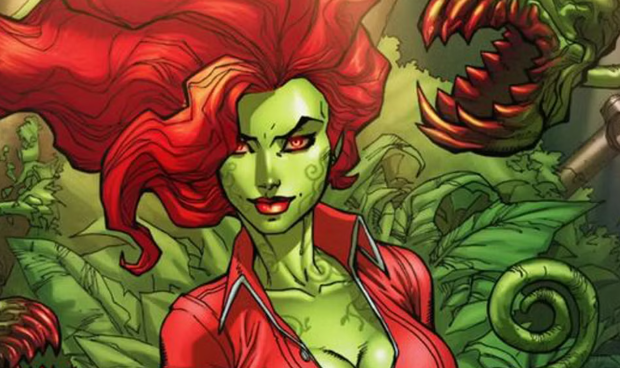
Ivy’s appearance has undergone a dramatic evolution over the decades, reflecting her deepening connection to The Green. In her early days, she appeared as a woman in a leaf-themed costume. As the years passed, her character designs became more overtly botanical. In many interpretations, her skin has turned a permanent shade of chlorophyll-green, and her hair behaves like living vines.
There are versions of the character where she is barely human at all, possessing the ability to photosynthesize and enter a state of dormancy during the winter. This physical change mirrors her internal shift away from human society. The more she embraces her powers, the less she looks like the woman she once was. This metamorphosis is a key part of her tragedy; she is literally “becoming” the forest she loves, losing her humanity in exchange for god-like power over the earth. For fans, these design changes signify the level of power Ivy is currently wielding in a particular story arc.
10. The Path of the Anti-Hero: Redemption and The Sirens
While she started as a member of Batman’s “Rogues Gallery,” Poison Ivy has frequently walked the path of an anti-hero. She was a founding member of the Gotham City Sirens, a trio consisting of herself, Catwoman, and Harley Quinn. During this time, Ivy focused more on protecting her friends and carving out a safe space for them in a city that hated them.
She has also served on teams like the Suicide Squad and the Birds of Prey, showing that she can be a formidable ally when her goals align with the “greater good.” Her status as an anti-hero allows for stories that explore her vulnerability and her capacity for growth. She isn’t interested in world domination for its own sake; she just wants a world where the green can grow in peace. This nuanced position makes her one of DC’s most versatile characters, capable of being a terrifying monster in one story and a protective, motherly figure in the next.
Further Reading
If you want to dive deeper into the root system of Poison Ivy’s history, these books are essential additions to your collection:
- Batman: Poison Ivy by John Francis Moore
- Poison Ivy: Cycle of Life and Death by Amy Chu
- Gotham City Sirens by Paul Dini
- Batman: The Long Halloween by Jeph Loeb (Featuring a classic Ivy appearance)
- Harley Quinn and Poison Ivy by Jody Houser
- 10 Things You Should Know About Kang the Conqueror – Marvel Comics
- 10 Things You Should Know About The Sentry – Marvel Comics
- 10 Things You Should Know About Starlight From The Boys TV Show
- 10 Things You Should Know About Ghost Rider – Marvel Comics
- DC Comics: 10 Essential Things to Know About Shazam
- DC Comics: 10 Essential Things to Know About Sinestro
- DC Comics: 10 Essential Things to Know About The Reverse Flash
- DC Comics: 10 Essential Things to Know About Hal Jordan
- DC Comics: 10 Essential Things to Know About The Green Lanterns
- DC Comics: 10 Essential Things to Know About Mr Freeze



