
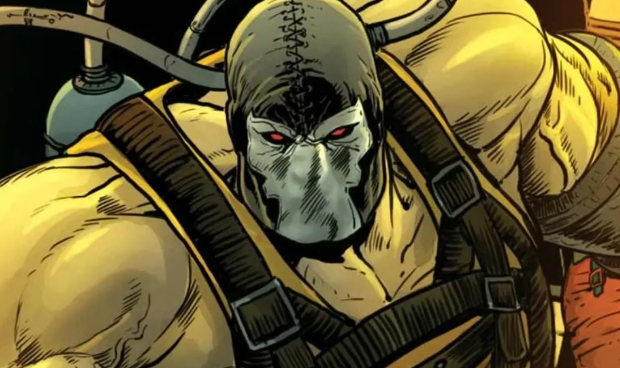
The Man Who Broke the Bat: 10 Essential Truths About Bane’s Brutal Legacy
In the vast, shadow-drenched gallery of Gotham City’s rogues, most villains are defined by a single gimmick: a chilling laugh, a coin flip, or an obsession with ice. But Bane is different. He is not merely a monster of muscle or a chaotic force of nature; he is a dark mirror to the Dark Knight himself. Often misunderstood by the casual observer as a simple, “Venom-fueled” brute, Bane is actually one of the most intellectually gifted and strategically disciplined individuals in the DC Universe. He is the only man to have truly conquered Batman, both physically and mentally, earning a permanent place in the pantheon of comic book legends.
To understand Bane is to understand the terrifying potential of a human being pushed to the absolute limit. Forged in the fires of a hellish prison and tempered by a radical chemical enhancement, he represents a unique blend of primal strength and cold, calculating logic. He didn’t just stumble into Gotham; he studied it, dissected it, and dismantled its protector with the precision of a surgeon. Whether you are a newcomer to the comics or a long-time reader of the Caped Crusader’s exploits, these ten essential facts reveal the complex, tragic, and formidable reality of the man behind the luchador mask.
1. Born into Darkness: The Sins of the Father
Bane’s story does not begin with a laboratory accident or a desire for wealth; it begins with a child serving a life sentence for a crime he did not commit. Born in the subterranean nightmare of Pena Dura, a prison in the fictional Caribbean Republic of Santa Prisca, Bane was condemned to carry out the sentence of his revolutionary father. This meant that from the moment he drew his first breath, his world was defined by iron bars, stone walls, and the most violent criminals on the planet. This upbringing turned his childhood into a literal “survival of the fittest” experiment.
Instead of breaking under the pressure, the young boy who would become Bane used the prison as his university. He spent his days reading every book he could get his hands on and his nights honing his body to physical perfection. He learned that in a world of monsters, intelligence was the only weapon that truly mattered. By the time he reached adulthood, he had established himself as the “king” of the prison, a position earned through a combination of terrifying violence and an unbreakable will. This origin story is vital because it explains why Bane is so resilient; he didn’t just learn to fight—he learned to survive a world that wanted him dead before he was even born.
2. The Genius Behind the Giant: A Polyglot Tactician
One of the most common misconceptions about Bane is that he is a “dumb muscle” character. In reality, Bane possesses a genius-level intellect that rivals that of Bruce Wayne or Lex Luthor. During his time in Pena Dura, he mastered multiple languages, including English, Spanish, Portuguese, and Latin. He didn’t just learn to speak them; he studied the philosophy, history, and military strategy of the cultures behind them. He is a master of deductive reasoning and possesses a photographic memory, allowing him to memorize the layouts of entire cities and the psychological profiles of his enemies.
This intelligence is his most dangerous trait. While other villains might try to outpower Batman, Bane focuses on outthinking him. He views conflict as a game of chess, often moving pieces months in advance to ensure his eventual victory. He is a master of “The Long Game,” capable of orchestrating complex social upheavals or massive prison breaks to distract his opponents while he prepares a final, fatal strike. To underestimate Bane’s mind is the most common mistake his enemies make, and it is usually the last mistake they ever make. He is a scholar of war who just happens to have the physical power to back up his theories.
3. The Double-Edged Sword of the Venom Drug
Bane’s physical prowess is famously augmented by a super-steroid known as “Venom.” This chemical is pumped directly into his brain via a series of tubes connected to a wrist-mounted activator. When the drug enters his system, his muscles expand, his reflexes sharpen, and his threshold for pain becomes almost non-existent. It transforms him into a juggernaut capable of lifting several tons and shrugging off high-caliber gunfire. However, this power comes at a devastating cost: the drug is highly addictive and carries severe psychological side effects.
The relationship between Bane and Venom is one of the most compelling “addiction” narratives in comic book history. While it makes him an unstoppable force, it also makes him vulnerable. If the tubes are severed, he undergoes a violent and debilitating withdrawal process. Over the course of his history, Bane has struggled to kick the habit, recognizing that the drug clouded his superior intellect and made him a slave to his impulses. Some of his most heroic—and most terrifying—moments occur when he is “clean,” proving that even without the chemical enhancement, his natural strength and discipline are more than enough to challenge the gods of the DC Universe.
4. The Tactical Masterpiece of “Breaking the Bat”
Bane is most famous for the “Knightfall” saga, where he achieved what no other villain could: he defeated Batman in his own home. But it wasn’t a lucky punch that did it; it was a masterful tactical campaign. Bane recognized that a direct assault on a fully rested Batman was a gamble. Instead, he orchestrated a massive breakout at Arkham Asylum, releasing every single one of Batman’s deadliest enemies at once. He then sat back and watched as the Dark Knight spent weeks without sleep, rounding up the escaped lunatics one by one until he was physically and mentally shattered.
Only when Batman was at his absolute breaking point did Bane strike. He waited for Bruce Wayne inside Wayne Manor, revealing that he had deduced Batman’s secret identity simply by observing his body language and “shattered” gait. The ensuing fight was less of a battle and more of an execution. It culminated in the iconic image of Bane hoisting Batman over his head and slamming him down onto his knee, shattering the hero’s spine. This moment changed the landscape of comics forever, proving that Batman was not invincible and that Bane was the ultimate strategist who understood that a warrior’s greatest weakness is his own sense of duty.
5. A Twisted Sense of Honor and Morality
Unlike the Joker, who seeks only chaos, or Penguin, who seeks only profit, Bane operates under a very strict, albeit twisted, moral code. He views himself as a conqueror and a ruler, not a common criminal. He values discipline, loyalty, and strength above all else. This has occasionally led him into the role of an anti-hero. He has been known to protect children and has a deep-seated hatred for those who prey on the innocent or the weak—a remnant of his own defenseless childhood in the pits of Pena Dura.
This code of honor makes him a remarkably complex character to interact with. He has, at various times, allied himself with Batman to take down common enemies or to stop the spread of dangerous drugs. He views Batman not just as an enemy, but as a “worthy adversary” whom he respects. In Bane’s mind, his victory over Batman was a necessity to prove his own superiority, not an act of petty malice. This sense of nobility, however warped, gives him a gravitas that other villains lack. He doesn’t want to burn the world; he wants to prove he is the only one fit to rule it.
6. The Quest for the Father: King Snake
For much of his early life, Bane was haunted by the mystery of his parentage. He knew that he was serving his father’s sentence, but he didn’t know the identity of the man who had abandoned him to the darkness. This led to a globetrotting quest that briefly saw him wondering if Thomas Wayne might be his father—a theory that would have made him Bruce Wayne’s half-brother. This search for identity added a layer of human vulnerability to a character who usually seems made of granite.
Eventually, he discovered his true father: the international mercenary and martial artist known as King Snake (Sir Edmund Dorrance). The meeting was not a happy reunion; instead, it was a violent confrontation that allowed Bane to finally sever the ties to his past. By facing the man whose “sin” had defined his life, Bane was able to transition from a prisoner seeking revenge to a man seeking his own destiny. This character arc humanized Bane, showing that beneath the Venom and the mask, he was a man searching for a sense of belonging and a way to reconcile with his traumatic origins.
7. The Secret Six and the Found Family
While Bane is often portrayed as a solitary figure, one of his most significant character developments occurred during his time with the mercenary group known as the Secret Six. In this team of outcasts and villains, Bane found something he had never truly had: a family. His relationship with characters like Scandal Savage was particularly poignant, as he took on a protective, almost fatherly role. He showed a capacity for genuine care and self-sacrifice that surprised both his teammates and the readers.
During this era, Bane often struggled with his addiction to Venom, using his teammates as a support system to stay clean. He expressed a desire to be a “good man,” even if his methods remained brutal. His time with the Secret Six highlighted the tragedy of his character—that under different circumstances, his brilliance and loyalty could have made him one of the world’s greatest heroes. It proved that Bane is not inherently evil; he is a product of a world that never gave him a choice, and when given the chance to belong, he chose loyalty over power.
8. Physicality Beyond the Mask: A Master Martial Artist
It is a mistake to think that Bane’s combat skills start and end with his size. He is one of the most accomplished martial artists in the world, having spent years in prison mastering various fighting styles. Even without the use of Venom, Bane is a formidable combatant who can go toe-to-toe with masters like Nightwing, Robin, and even Batman himself. He utilizes a brutal, efficient style that focuses on pressure points, joint locks, and utilizing his opponent’s momentum against them.
His physical discipline is legendary. Bane treats his body like a temple, maintaining a rigorous training schedule that would kill an ordinary man. He is capable of incredible feats of endurance, such as swimming through shark-infested waters or surviving for days without food or water in the desert. This physical mastery is a direct reflection of his mental discipline. To Bane, his body is just another tool in his arsenal, and he ensures that it is always sharpened to a razor’s edge. Whether he is using a sophisticated weapon or his bare hands, he is a lethal presence on any battlefield.
9. The Iconography of the Mask: A Symbol of Fear
Bane’s appearance is iconic, particularly his mask, which is inspired by the luchadores (professional wrestlers) of Latin American culture. This is not just a fashion choice; the mask serves several functional and psychological purposes. Functionally, it often houses the delivery system for his Venom, protecting the delicate tubes and valves that feed the chemical into his system. Psychologically, it conceals his identity and projects an image of an unfeeling, inhuman monster.
In the culture of Santa Prisca, the mask is a symbol of power and tradition. For Bane, wearing it is a way of reclaiming his heritage and turning a symbol of “entertainment” into a symbol of terror. Over the years, the design of the mask has evolved, but it always retains the menacing eye-slits and the mouth-cover that muffled his voice into a chilling, calculated rasp. The mask is his “face” to the world, a reminder that the man who was born in a pit has risen to become a king, and he has no intention of ever showing the world the vulnerability of the child he once was.
10. His Role as a Cultural Icon and Narrative Equalizer
Bane’s importance to the DC Universe extends beyond his role as a villain; he is a narrative “equalizer.” In a world filled with aliens who can fly and gods who can move planets, Bane represents the absolute peak of human potential—both for good and for ill. He serves as a constant reminder that with enough will, discipline, and intelligence, a “normal” human can bring the world’s greatest heroes to their knees. He is the ultimate proof that the most dangerous weapon in the universe is the human mind.
He remains a fan-favorite because he is a “self-made” man. He wasn’t born with powers, and he wasn’t chosen by a magic ring; he built himself out of the mud and blood of Pena Dura. His story is one of radical self-actualization, albeit a dark and violent one. Whether he is acting as a brutal dictator, a calculating strategist, or a protective teammate, Bane commands respect. He is the man who broke the Bat, but more importantly, he is the man who refused to let his circumstances define his soul, carving his name into history through sheer, unadulterated force of will.
Further Reading
- Batman: Knightfall by Chuck Dixon, Doug Moench, and Alan Grant
- Bane: Conquest by Chuck Dixon and Graham Nolan
- Secret Six: Villains United by Gail Simone and Dale Eaglesham
- Batman: I Am Bane by Tom King and David Finch
- DC Comics: 10 Essential Things to Know About Shazam
- DC Comics: 10 Essential Things to Know About Sinestro
- DC Comics: 10 Essential Things to Know About The Reverse Flash
- DC Comics: 10 Essential Things to Know About Hal Jordan
- DC Comics: 10 Essential Things to Know About The Green Lanterns
- DC Comics: 10 Essential Things to Know About Mr Freeze
- 10 Defining Chapters in the History of DC Comics Explained
- DC Comics: 10 Essential Things to Know About Poison Ivy
- DC Comics: 10 Essential Things to Know About Bane
- DC Comics: 10 Essential Things to Know About Two-Face



