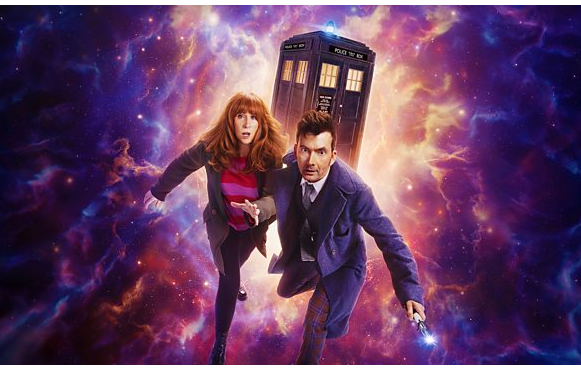
Since its debut in the mid-20th century, Doctor Who has evolved from a quirky British experiment into a global cultural phenomenon. It is a show that defies the typical boundaries of television, blending hard science fiction with historical drama, horror, and whimsical comedy. At its heart is a simple yet profound premise: a mysterious traveler from another world wanders through time and space in a ship that looks like a vintage police box, righting wrongs and exploring the wonders of the universe. Yet, for the uninitiated, the sheer scale of “Whovian” lore can feel as vast and intimidating as the cosmos itself.
To understand Doctor Who is to understand the power of change. It is a series that has survived for over sixty years by making reinvention its core mechanic. Whether you are a newcomer curious about the “blue box” or a returning fan looking to brush up on the essentials, this guide serves as your definitive manual to the Whoniverse. From the biology of a Time Lord to the terrifying ideology of the Daleks, here are the ten fundamental things you need to know about the greatest adventure in time and space.
1. The Enigma of the Nameless Traveler
The protagonist of the series is known simply as “The Doctor.” Despite the show’s title, “Doctor Who” is a question, not a name. The Doctor is an alien—specifically a Time Lord from the planet Gallifrey. While they often appear human, their biology is distinctly extraterrestrial, most notably featuring a binary vascular system, or two hearts. This biological quirk allows them to survive trauma that would be fatal to a human. The Doctor’s real name remains one of the universe’s most closely guarded secrets, often whispered to have the power to “open the Tomb of Gallifrey” or signify a darker past. By choosing the title “The Doctor,” the character made a vow: “Never cruel or cowardly. Never give up, never give in.” This choice of name reflects a commitment to healing and helping rather than conquering, distinguishing them from the more traditional warriors of science fiction.
2. The Art of Rebirth: The Science of Regeneration
Perhaps the most ingenious concept in television history is “regeneration.” When a Time Lord is mortally wounded or dying of old age, their body undergoes a total cellular transformation. Every cell in their body is rewritten, resulting in a completely new physical appearance and a fresh personality, while retaining all the memories of their previous lives. This narrative device was originally invented to allow the show to continue when the lead actor’s health declined, but it has become the show’s greatest strength. Each “incarnation” of the Doctor brings a new flavor to the role—some are grumpy and professorial, others are manic and eccentric, and some are deeply romantic or battle-worn. This cycle of death and rebirth ensures the show never grows stale, as each new Doctor offers a “jumping-on point” for a new generation of viewers.
3. The TARDIS: More Than Just a Blue Box
The Doctor’s primary mode of transport is the TARDIS, an acronym for Time And Relative Dimension In Space. While it looks like a 1960s British police telephone box on the outside, it is famously “bigger on the inside.” This is achieved through “trans-dimensional engineering,” meaning the interior exists in a different dimension from the exterior. The TARDIS is not a mere machine; it is a sentient, living entity grown on Gallifrey, sharing a telepathic bond with its pilot. Its appearance as a police box is the result of a “chameleon circuit” that broke during a visit to 20th-century London, leaving the ship stuck in that specific form. The TARDIS acts as the show’s home base, a sanctuary that can travel to any point in history or any corner of the galaxy, powered by the “Eye of Harmony,” a captured collapsing star.
4. The Essential Perspective of the Companion
The Doctor rarely travels alone. Almost every adventure involves a “companion”—usually a human from Earth—who serves as the audience’s surrogate. The companion’s role is vital for two reasons: they provide the emotional groundedness that an ancient alien lacks, and they act as the Doctor’s moral compass. While the Doctor sees the “big picture” of time and space, the companion cares about the individual lives affected by the monsters of the week. Over the decades, these companions have ranged from schoolteachers and journalists to soldiers and shop assistants. They are the ones who ask the questions the audience is thinking, and more importantly, they are the ones who remind the Doctor why the universe is worth saving. The bond between the Doctor and their companions is the beating heart of the show, transforming cold sci-fi into a deeply human story.
5. The Daleks: A Legacy of Universal Terror
If the Doctor represents hope and curiosity, the Daleks represent the ultimate expression of hate. Originating from the planet Skaro, the Daleks were once humanoid beings called Kaleds who were mutated by the scientist Davros into hateful, tank-like cyborgs. Encased in “travel machines” equipped with a single eye-stalk and a deadly laser, their goal is simple: the total “extermination” of all non-Dalek life. They are often viewed as a metaphor for fascism, obsessed with genetic purity and conformity. Despite their clunky, pepper-pot appearance, they are the most feared race in the universe, having fought the Time Lords in a devastating “Great Time War” that nearly destroyed reality itself. Their cold, electronic voices and relentless drive make them the Doctor’s most enduring and iconic adversaries, appearing in almost every era of the program.
6. Cybermen and the Horror of Emotionless Evolution
The Cybermen provide a different kind of terror: the fear of losing one’s soul to technology. Originally humans (or humanoids from the twin planet Mondas), the Cybermen sought to survive by replacing their organic parts with plastic and steel. In the process, they “upgraded” their brains to remove all emotion, believing that feelings like love, grief, and fear were weaknesses. They do not want to destroy life; they want to “convert” it. To a Cyberman, turning a human into a silver, emotionless drone is an act of mercy. This body-horror element makes them uniquely chilling, as they represent a dark mirror of our own reliance on technology. While they lack the fiery hatred of the Daleks, their cold, logical persistence makes them an unstoppable force that has haunted the Doctor across multiple timelines.
7. The Master: A Dark Mirror to the Hero
Every great hero needs an equal and opposite force, and for the Doctor, that is The Master. Also a Time Lord from Gallifrey, the Master was once the Doctor’s childhood friend. However, while the Doctor chose a life of service, the Master chose a path of absolute power and chaos. The Master is a genius-level intellect who uses their knowledge of time and technology to manipulate empires and enslave worlds. Because they are both Time Lords, their relationship is complex—filled with a mix of mutual respect, deep-seated rivalry, and tragic loss. Like the Doctor, the Master also regenerates, appearing in various forms over the decades, sometimes as a refined aristocrat and other times as a manic, destructive force. They serve as a constant reminder of what the Doctor could become if they ever abandoned their moral code.
8. Navigating the “Timey-Wimey” Nature of History
Time travel in Doctor Who follows a set of rules that are famously described as “wibbly-wobbly, timey-wimey.” While the Doctor can change many things, there are certain “Fixed Points in Time” that cannot be altered without causing a catastrophic paradox that could unravel reality. These fixed points usually involve major historical events or moments of great personal significance. Outside of these points, time is fluid and “in flux.” The show often plays with non-linear storytelling, where the Doctor might meet a friend in the “wrong” order—meeting them for the first time when the friend is seeing the Doctor for the last. This complexity allows the show to explore deep philosophical questions about destiny, free will, and the responsibility that comes with having the power to change history.
9. The Sonic Screwdriver: The Ultimate Non-Violent Tool
One of the most famous gadgets in fiction, the sonic screwdriver is the Doctor’s “magic wand.” It uses sonic waves to perform a staggering variety of tasks: opening locked doors, hacking computer systems, scanning medical vitals, and even disabling weapons. Crucially, the Doctor rarely carries a gun. The sonic screwdriver is a tool of ingenuity rather than destruction (though it famously “doesn’t do wood”). Its design changes with almost every new incarnation of the Doctor, reflecting their personality. It symbolizes the show’s core philosophy: that intelligence, curiosity, and a clever piece of technology are more effective than brute force. When the Doctor reaches for their sonic screwdriver, it signals that they are about to think their way out of a problem rather than shoot their way out.
10. A Sixty-Year Odyssey: The Show’s Global Legacy
Doctor Who holds the Guinness World Record for the longest-running science fiction television series. Its longevity is a testament to its flexibility. Over the decades, it has transitioned from a low-budget educational show for children into a high-octane global blockbuster with state-of-the-art visual effects. It has survived cancellations, hiatuses, and multiple “reboots,” always emerging stronger. The show’s impact on popular culture is immeasurable, influencing generations of scientists, writers, and filmmakers. It has become a symbol of British identity while maintaining a universal appeal that resonates with fans in every country. By constantly changing its face but never its heart, Doctor Who has proven that as long as there is a story to tell and a universe to explore, the TARDIS will always have a reason to land.
Further Reading
- Doctor Who: The Writer’s Tale by Russell T Davies
- Shada by Douglas Adams and Gareth Roberts
- Doctor Who: Whotopia: The Ultimate Guide to the Whoniverse by Simon Guerrier
- Scratchman by Tom Baker
- 10 Futurama TV SHOW Facts That Still Hold Up

- 10 Avatar (2009) Facts That Changed Cinema – Classic Movie

- 10 Essential Facts About Predator (1987) – Movie Facts

- 10 Surprising Game Of Thrones Facts You Might Not Know

- A Newcomer’s Guide to Star Trek: Where to Start and What to Know