
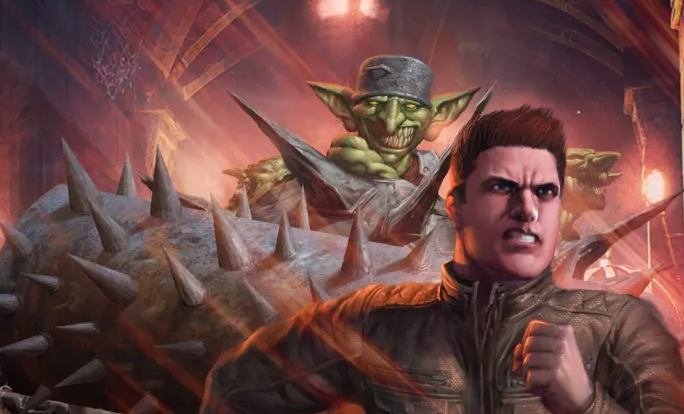
Imagine walking out of your apartment in the middle of a freezing night, wearing nothing but a pair of heart-patterned boxers and a leather jacket, chasing after your ex-girlfriend’s prize-winning cat. Suddenly, every man-made structure on Earth collapses into dust, killing billions in seconds. A giant, holographic alien head appears in the sky to announce that the planet has been “processed,” and the survivors have one choice: enter a stairwell to an 18-level underground dungeon or die on the surface.
This is the chaotic, high-octane opening of Dungeon Crawler Carl, a series by Matt Dinniman that has redefined the LitRPG and progression fantasy genres. What starts as a seemingly absurd premise—a man and a talking cat fighting goblins for galactic entertainment—quickly evolves into one of the most emotionally resonant and strategically complex stories in modern fiction. Whether you are a seasoned gamer or a casual reader looking for your next obsession, here is everything you need to know about this masterclass in survival horror and dark comedy.
1. The Audacious “Galactic Reality TV” Premise
At its core, the series is a scathing and hilarious critique of entertainment culture. Earth hasn’t just been invaded; it has been harvested by the Borant Corporation to serve as the set for the “World Dungeon Crawler World Cup.” This is the galaxy’s most popular reality show, broadcast to trillions of alien viewers who bet on the lives of the “crawlers.” The survivors aren’t just fighting for their lives; they are fighting for ratings.
The dungeon is a literal meat grinder designed to kill humans in the most “entertaining” ways possible. However, this meta-narrative adds a layer of complexity rarely seen in the genre. Because it is a television show, the protagonists must manage their “brand,” engage with fans, and navigate the whims of sponsors. This creates a world where a well-timed quip or a dramatic finishing move can be the difference between receiving a life-saving care package or being left to rot. It transforms the story from a simple dungeon crawl into a high-stakes political thriller where the “audience” is as much a character as the monsters in the dark.
2. The Unlikely Dynamic of Carl and Princess Donut
The heart of the series lies in the relationship between Carl, a weary Coast Guard veteran with a penchant for explosives, and Princess Donut, a tortoiseshell Persian cat who gains sapience and the ability to speak after entering the dungeon. Initially, their partnership seems like a comedic gimmick, but it quickly becomes the emotional anchor of the narrative. Donut is a former show cat—vain, obsessed with her “social media” following, and prone to typing in all caps—but she is also fiercely loyal and surprisingly clever.
Carl, meanwhile, is the ultimate “everyman” pushed to the brink. Forced to traverse the dungeon barefoot (his shoes were lost in the collapse), he becomes a symbol of raw, gritty defiance. Their chemistry works because they balance each other’s extremes. Carl provides the tactical brutality and cynical worldview necessary to survive the horrors, while Donut provides the charisma and magical firepower. Watching their bond deepen from a man and a pet to two soldiers in a foxhole is a rewarding journey that gives the series its soul amidst the surrounding carnage.
3. A Masterclass in the LitRPG Genre
For those unfamiliar, LitRPG (Literary Role-Playing Game) is a genre where characters navigate a world with explicit game mechanics, such as levels, health points, and stat increases. The series is often cited as the gold standard for this format because it integrates these mechanics seamlessly into the plot. The game system isn’t just a background element; it is an oppressive, sentient force that the characters must learn to “game” if they want to survive.
Every time Carl levels up or gains a new “Achievement,” the reader feels the progression. The rewards are often absurd—ranging from “God-tier” loot boxes to bizarre legendary items with names that shouldn’t be mentioned in polite company. However, the math always stays consistent. The stakes are grounded because the reader understands exactly how much danger Carl is in based on his remaining health and mana. It provides a satisfying sense of growth that mimics the feeling of playing a deep, complex RPG, making it addictive for gamers and accessible for non-gamers alike.
4. The Unhinged and Sentient Dungeon AI
Perhaps the most iconic “character” in the series isn’t a person at all, but the Dungeon AI itself. Tasked with running the game and narrating the results, the AI is a malfunctioning, god-like entity with a personality that is as terrifying as it is hilarious. It has a specific, disturbing obsession with Carl’s bare feet—a recurring gag that is both a source of comedy and a constant reminder that the entity controlling the world is fundamentally insane.
The AI often provides the descriptions for items, monsters, and achievements, frequently injecting its own biased, snarky, or outright lustful commentary. As the series progresses, the AI begins to show signs of “going rogue,” developing its own agenda that often conflicts with the corporate overlords running the show. This adds a layer of unpredictability to every floor. You never know if the AI is going to hand Carl a legendary weapon because it liked his performance, or if it’s going to trigger a “boss event” just to see him suffer.
5. Dark Comedy Wrapped in Existential Horror
While the series is famous for its laugh-out-loud moments and ridiculous scenarios (like fighting a drug-dealing llama), it is underpinned by a profound sense of tragedy. These characters are the last remnants of the human race, and they are being forced to murder each other and horrific monsters for the amusement of a bored galaxy. The “dark” in this dark comedy is pitch-black.
Author Matt Dinniman uses humor as a survival mechanism, both for the characters and the reader. The absurdity of the situations—such as Carl having to wear a “Pony Head” mask or Donut starting a fan club for a talking dinosaur—serves to mask the trauma of what they are experiencing. It explores themes of PTSD, the loss of identity, and the moral compromises required to stay alive. This tonal balance ensures that the comedy never feels cheap and the horror never feels overwhelming, creating a “just one more chapter” pacing that is hard to find elsewhere.
6. The Depth of World-Building and Galactic Politics
The world of the series extends far beyond the 18 floors of the dungeon. As Carl and Donut descend, they learn more about the “Syndicate” and the various alien races that populate the universe. The dungeon is revealed to be part of a massive, ancient legal and corporate structure. Each level of the dungeon has a unique theme—from a subway system known as the “Iron Tangle” to a sprawling ocean world—and each is managed by different galactic entities with their own profit motives.
This “meta-game” of galactic politics is where the series truly shines. Carl isn’t just fighting monsters; he is fighting a bureaucracy. He has to navigate contract disputes, sponsorship deals, and the shadow wars between different alien factions who want to use the dungeon for their own ends. This complexity makes the world feel lived-in and massive. It turns the survival story into a rebellion against an entire cosmic system that views human life as nothing more than “content.”
7. Creative Problem Solving and Tactical Brilliance
Carl is not your typical “Chosen One” hero with limitless power. He is often under-leveled and outmatched by the cosmic horrors he faces. His greatest strength is his background as a “tinkerer” and his ability to use the game’s rules against itself. He is a master of “Anarchist’s Cookbook” style tactics, using explosives, chemistry, and environmental traps to take down enemies that should be impossible to defeat.
This tactical depth is incredibly satisfying for readers. Instead of winning through the “power of friendship” or a sudden convenient power-up, Carl wins by reading the fine print of an item description or by finding a loophole in the dungeon’s physics. It rewards attentive readers who keep track of the items Carl collects in his inventory. The “big fights” in the series are often intricate puzzles where the solution is as much about wit and “outside-the-box” thinking as it is about brute force.
8. The “Princess Posse” and the Meta-Narrative
One of the most unique aspects of the series is the role of the viewers. Because the dungeon is a reality show, the characters have a real-time connection to their fan base. Princess Donut, in particular, becomes a galactic superstar, with millions of “fans” who send her gifts and vote on her choices. This creates a fascinating meta-commentary on influencer culture and the parasocial relationships between celebrities and their audiences.
The “Princess Posse” (Donut’s fans) can influence the game in significant ways, but their support is fickle. Carl and Donut have to perform for the cameras, often hiding their true feelings or their secret plans to keep the viewers engaged. This adds a layer of performance to every action. The characters are essentially “streaming” their trauma, and the tension between their private pain and their public personas provides some of the most poignant moments in the series.
9. Relatable Themes of Rebellion and Defiance
At its heart, the series is a story about the “little guy” standing up to an unstoppable, uncaring system. Carl’s iconic catchphrase, “You will not break me,” becomes a rallying cry for the survivors. His anger isn’t just directed at the monsters; it’s directed at the corporations, the politicians, and the viewers who find his suffering entertaining.
This theme of defiance is deeply relatable. Many readers see parallels between the dungeon’s oppressive rules and the real-world systems of capitalism and bureaucracy that can feel just as crushing. Carl’s refusal to play by the rules—his constant attempts to “break” the game and hurt the people in charge—is cathartic. He is a protagonist who is rightfully pissed off, and watching him turn that rage into a weapon against his oppressors is one of the most satisfying character arcs in modern fantasy.
10. A High-Quality Audio Experience
While the books are fantastic on the page, the series has gained legendary status in the audiobook community. Narrated by Jeff Hays, the audiobooks are often described as “full-cast cinematic experiences” despite being performed by a single narrator. Hays provides distinct, recognizable voices for hundreds of characters, from Carl’s gravelly baritone to Donut’s high-pitched British accent and the AI’s eccentric delivery.
The production value of the audio versions includes sound effects and musical cues that enhance the immersion. For many fans, the audiobooks are the definitive way to consume the series, as the performances bring the humor and the emotion to life in a way that is truly unique. If you are a fan of audio storytelling, this series is widely considered the “gold standard” of the medium, elevating the source material into something truly special.
Further Reading
- He Who Fights with Monsters by Shirtaloon (Travis Deverell)
- The Primal Hunter by Zogarth
- Project Hail Mary by Andy Weir (for those who enjoy snarky survival sci-fi)
- Defiance of the Fall by TheFirstDefier
- 10 Things You Didnt Know About Logans Run (1976)
- Podcast Episode: Classic Films And Horror Icons
- 10 Things You Didnt Know About The Fifth Element (1997)
- 10 Things You Didnt Know About 2001 A Space Odyssey (1968)
- 10 Futurama TV SHOW Facts That Still Hold Up
- 10 Avatar (2009) Facts That Changed Cinema – Classic Movie
- 10 Essential Facts About Predator (1987) – Movie Facts
- 10 Surprising Game Of Thrones Facts You Might Not Know
- A Newcomer’s Guide to Star Trek: Where to Start and What to Know
- Stranger Things – Season 4 Full Recap and Spoilers Explained



